Tuesday, December 27, 2016

The Joffrey's New Nutcracker

I don't get out to see the Joffrey Ballet's Nutcracker every year, but last year when we learned it was their final time producing their classic version we made it out to Chicago to soak it all in one last time. This month I got to see Christopher Wheeldon's new take on it.

I've seen other more local productions too throughout the years, and various movie versions/youtube clips, and typically each company doesn't vary too much from the classic story, scenes, and characters. The new Joffrey Nutcracker is certainly unique-it's set the Christmas before the opening of the Chicago World's Fair of 1893 (which introduced the first Ferris Wheel to the world, among other novelties-you're welcome, Earth!). Clara (whose name went back to Marie...possibly a nod to the Hoffman story?) is now the daughter of one of the immigrant workers on the Fair.  Her family lives in a shack on the developing Fair Grounds-one that was based on a historical photo.

So it's an interesting choice for a setting, although it may hold less appeal for out of towners. One of the most significant differences is that Marie is now poor, and the Christmas party scene looks very different. Purely from a visual perspective, the party scene isn't nearly as colorful or lush, but it makes for good exploration of what Christmas might have been like for most families around that time who couldn't necessarily afford the luxuries that Clara's family does in most ballets. From the program notes: "Instead of receiving luxurious and rare presents at a magnificent party in a vast house and then dreaming of even more presents and candy, our story offers a small gathering of immigrant workers coming together to celebrate the holiday with the things they have, filling the air with music and their vivid imaginations." When the tree transforms, it's significant not just because the tree magically grows, but because the tree originally started out as basically a cheap, Charlie Brown Christmas Tree that disappoints Marie, and it becomes a more lush and decorated tree in the process of growing.

The score is the same classic Tchaikovsky music, although with a few minor changes-during the party scene, some of the dances were played by three onstage musicians, as characters playing for the festivities. It added a sense of authenticity, although there were times I missed the full orchestra. The dance of the Sugar Plum Fairy (who is now the Queen of the Fair) was moved to earlier in Act 2 and I think at least one variation was removed (the Nutcracker or Cavalier's solo after the big Pas de Deux).

I like Chicago history as much as the next person,probably even more, and although the setting was interesting I almost felt by the end like we were being hit over the head with it, in almost propaganda-like fashion: "The Chicago World's Fair of 1893 was the greatest anyone could ever dream of!!!" The Fair isn't merely the setting with interesting themes to explore, it became the thing the ballet revolves around. The opening scene has a huge billboard advertising the coming of the Fair; instead of mechanical dolls at the party the Drosselmeyer character (the Great Impresario, modeled after the Fair's chief architect Daniel Burnham) creates a silhouette model of the Fair for the children; the Waltz of the Snowflakes was performed with the Fair in the background and the entire Land of Sweets was replaced by the Dream Fair. To be fair (haha...no pun intended), the setting did make sense of the dancers from all around the world, as the program compared the World's Fair to Disney World's Epcot, giving you a "taste" of different countries' cultures from around the world. Still, in the old Joffrey production that element was tied together by the dolls that came to life under the tree, each representing one of the dances in the second act.

One of the more disappointing changes for me, personally, was replacing the Russian dance with a Buffalo Bill's Cowboy Show. Although there really was a Buffalo Bill's Cowboy Show at the original Fair, making it historically accurate, the Trepak is one of the most iconic dances in the ballet- but really I just found the choreography to be unimpressive. I feel like they could have done more with Cowboy Bill than swinging a lasso, the saloon girls hardly did anything, and the dance lacked the energy of the Russian dance-but the rest of the audience loved that one. I also thought the choreography was poor for the Mother Ginger dance-which used to feature children doing tumbling and ballet, and is now child dancers in walnut costumes that frankly made me feel like I was watching a local dance studio's production of Nutcracker and not one of the top ballet companies in the country. Yet again, others disagreed-one reviewer called that dance the most hilarious part of the show.

So overall, it was an interesting look at the Nutcracker story and I enjoyed it. Still, for the traditionalists in our group, we kind of missed the ballet we knew and loved. Yet not everyone agreed with us-I overheard a woman afterwards saying she liked this better than the old ballet, and critics have given it great reviews. It will depend on what you're used to and expect when it comes to Nutcracker-some people may be itching for a new way to look at the story, but others of us love the nostalgia of recreating old traditions at Christmas-one of my favorite Christmas memories has just been replaced by a totally different ballet. Although I did like the concept, I don't know that I'll be dying to see this as often as I did the classic version (just as well, since it will be harder to get to it in future with a baby!). Speaking of which...one cool thing was that one of the party guests in the first act was "pregnant"-I think it's probably pretty rare to have a pregnant character in any ballet!

Although I really will miss my favorite element of the old ballet: one year, a child showed up to audition in a wheelchair, and so a character in a wheelchair was made part of the cast every year after that, participating naturally with the other boys in their party shenanigans. At the very end of the party scene, Drosselmeyer would give that child a magical "blessing" and it always made me tear up (I teach music to people with disabilities).

I don't know that I have a lot of local Chicagoland readers, but if anyone else has seen the new Nutcracker I'd love to hear what you think! Gypsy posted on it a few days ago, with several excerpts from other reviews, for more on what the experts have to say and not just my sentimental reaction ;).

Thursday, December 22, 2016

Tatterhood

If you hear noise and clatter this Christmas Eve, it may not be Santa's reindeer, but a band of witches and trolls coming to party:

"One Christmas eve...there arose a frightful noise and clatter in the hallway outside the queen's apartment. Tatterhood asked what it was that was making such a noise outside.

"Oh," said the queen, "it isn't worth asking about."

But Tatterhood wouldn't give in until she found out all about it; and so the queen told her it was a pack of trolls and witches who had come there to celebrate Christmas. So Tatterhood said that she would just go out and drive them away. In spite of all they could say, and however much they begged and asked her to leave the trolls alone, she just had to go out and drive the witches off. She begged the queen to be careful and keep all the doors shut tight, so that not one of them would open the least bit."

-Excerpt from Tatterhood, a Norwegian fairy tale collected by Asbjornsen and Moe. You can read the full text here, which I would highly recommend: it's a tale that features an strong, active heroine who not only saved the castle from the trolls and witches, but then saved her sister who had been turned into a calf, and engineered marriages for both of them. The heroine is also very ugly, but as often happens in the world of fairy tales, transforms at the end into a beautiful bride. It's similar to Cinderella, where objects are one by one turned into gorgeous finery, but in this tale she is the one who transforms herself. Which makes it seem as though she had the power to transform all along, but chose to stay in her ugly state. It's a very empowering tale for girls and women everywhere, especially those who may not conform to society's expectations for desirability, and one that I would love to see become more well known.

Images- John Bauer, Lauren A. Mills

Monday, December 19, 2016

He Sees You When He's Creepin': Tales of Krampus

Kate Wolford and the lovely folk at World Weaver Press were kind enough to send me a copy of He Sees You When He's Creepin': Tales of Krampus. While I haven't had as much time as I would like to curl up by the tree and read, I've been able to read a few of the stories here and there!

Book description:

Krampus is the cloven-hoofed, curly-horned, and long-tongued dark companion of St. Nick. Sometimes a hero, sometimes a villain, in this anthology, he’s always more than just a sidekick. You’ll meet manifestations of Santa’s dark servant as he goes toe-to-toe with a bratty Cinderella, a guitar-slinging girl hero, a coffee shop-owning hipster, and sometimes even St. Nick himself. Whether you want a dash of horror or a hint of joy and redemption, these 12 new tales of Krampus will help you gear up for the most “wonderful” time of the year. 

The character Krampus is a fascinating one, so I was eager to learn more about him. I was excited to see the first two stories in the book were by authors whose stories I had particularly enjoyed from Frozen Fairy Tales. Steven Grimms' "Villainess Ascending" is the first-his twisted reworkings of fairy tales are well written and I enjoyed his imagining of Krampus interacting with a Cinderella in Vienna around 1800 (and another fairy tale character makes an appearance too!). I also enjoyed the historical details, such as using Schonbrunn Palace as the setting:

In the next story, Lissa Marie Redmond's character James made his second appearance since Frozen Fairy Tales. This modern story is much more lighthearted in tone. For example, I laughed at the line "So I did what any millenial with a problem would do, I went upstairs and googled it." (So true!)


One of the interesting things about reading a collection of Krampus stories is seeing the various ways he is portrayed-sometimes he's a clear villain, others he's really the victim or the hero. It's an interesting concept to explore what would go on in the mind of the monster who is sent each year to violently harm naughty children...does he relish his work? Is it just a job to him? Is he trapped in that role? Along with that, there are some interesting looks into what might motivate Santa/St. Nicholas (and warning-he is not always the classic jolly old soul!). As Wolford points out in the introduction, Krampus in folklore isn't viewed as the anti-Santa, a demon to be destroyed, but his partner. Although his methods might be extreme, his role provides a balance to the gift-giving St. Nicholas. In fact, it's interesting that many authors (of the stories I've read so far) are more sympathetic to Krampus than capitalized on the opportunity to make him into a Christmas horror story.

I've been pondering our own, modern cultural Santa/behavior myths as well. I wouldn't advocate giving children no presents, or coal, on Christmas if they've been especially "naughty" that year, but the threats we tend to give (Elf on the Shelf reporting on your behavior to Santa, for example) are so empty, it seems like a cheap way to influence behavior if there will be no follow through (I'm a teacher, and threats without consequences are a recipe for chaos, not better behavior!).

Austrian Greeting Card

So far another standout story I've also really enjoyed Anya J. Davis' "The Business of Christmas." It's a clever look into how Santa and Krampus might have developed their operations over time to fit in with our modern culture and technology.

While some of these stories might be a little more dark or cynical than typical holiday fare (which might be a perk for some people tired of extra cheesy Christmas entertainment), not only are they thought provoking, but they retain a sense of the wonder and magic of Christmas. I look forward to reading more!

Thursday, December 15, 2016

Giveaway: The Original Folk and Fairy Tales of the Brothers Grimm

21981650Princeton University is hosting a giveaway over at Goodreads for the chance to win a copy of The Original Folk and Fairy Tales of the Brothers Grimm, edited by Jack Zipes! I LOVE my copy and the ability to compare and contrast their earliest published versions of tales with later ones-and to read tales that get left out of most "complete" collections of Grimm tales.


Hop on over to enter-you have until New Year's Eve! Unfortunately (for some of you), it's open to US readers only.

And if you're interested, here are some of the tales I've been able to explore this year using this book:

Castle of Murder
Grimms and the Elves
Frog King vs. Frog Prince
Spinners Tales
The Twelve Brothers
Bluebeard

Monday, December 12, 2016

Icelandic Yule Lads

Despite the sensationalized title of the Buzzfeed article, The 13 Horrifying Christmas Trolls of Iceland, I didn't think these trolls were all that horrifying. But I do find the concept interesting-instead of one night in which there is a supernatural visitor who either gifts or punishes, in Iceland there are visitors for 13 nights straight! Unlike the 12 Days of Christmas, which start on Christmas Day and traditionally end before Epiphany on January 6, these lads visit in the nights leading up to Christmas. The article has images of each troll, as well as the night they visit.
The visits begin tonight, with Stekkjarstaur, the Sheep Harasser! Although the Lads aren't nearly as terrifying as Krampus, if children are naughty they will stuff their shoes with rotting potatoes instead of gifts-definitely worse than our American idea of coal! Other Lads to come:
Spoon Licker

Door Slammer

Sausage Swiper


Sunday, December 4, 2016

La Bella e La Bestia

I found out about this via Megan Kearney's Beauty and the Beast tumblr-an Italo-Spanish mini series Beauty and the Beast. Starring Alessandro Preziosi and Blanca Suarez, it retells the classic story in two episodes, which Kearney provides links to here.
IMDB summary:

The story starts with Bella Dubois, daughter of a merchant/Sea captain. She decides to be a maidservant at Leon's castle because her father couldn't afford the debt at the moment. When Leon first meets Bella he has passionate feelings for her because of her bravery and she seems to understand his anguished memories.Their love is developing beautifully but encounters opposition in the form of his jealous cousin. Prince Leon finally convinces Bella that she is not a bet. He cancels her father's debt, frees her and they marry.
^This poster definitely gives the Beast more of a Phantom of the Opera vibe. Has anyone seen this/have opinions??

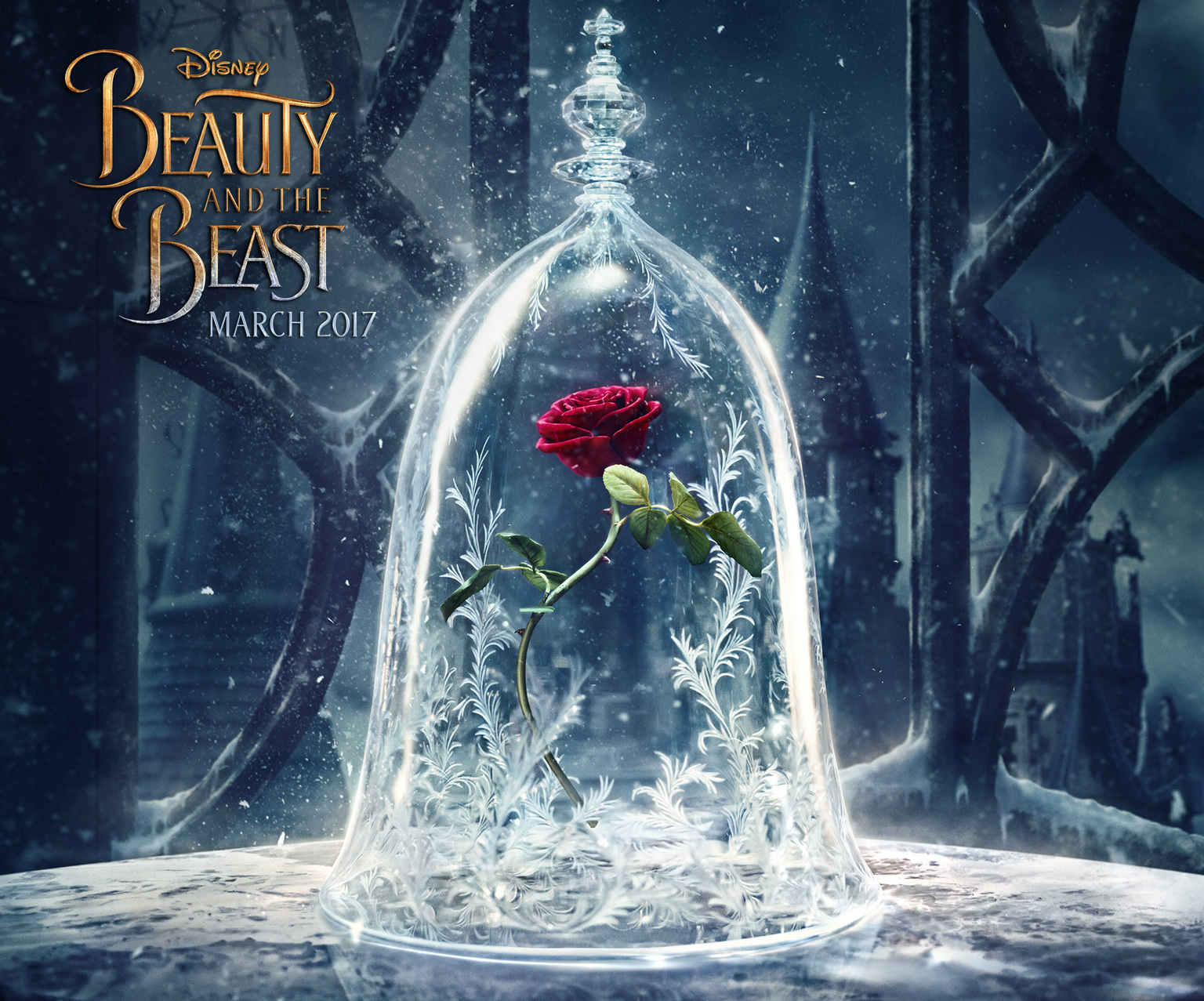
Speaking of BATB media...I haven't posted anything on the upcoming Disney version, mostly because my fellow bloggers have been covering it quite well, and you've probably seen the trailer floating around the internet by this point. I'm trying not to get my hopes up too much, but have to admit I'm excited about it. I especially love that they seem to be returning to the tale's roots more so than just reinventing the Disney cartoon-referencing the French literary version/even McKinley's "Beauty."

Also from Kearney recently-a helpful answer to anyone who says BATB is about Stockholm Syndrome, and a link to a good article on Fairy Tales and the Necessity of Fear

Friday, December 2, 2016

Mindy Kalilng's Holiday GIF Cards- Fairytales

A couple of years ago, celebrity Mindy Kaling released these Holiday GIF cards that look at some of our favorite fairy tales with a bit of sarcastic humor.

There are a couple more here but the above were my favorites! Happy beginning of the holiday season!


Monday, November 28, 2016

Rumpelstiltskin Tales-What Else is at Stake?

I haven't really read many other versions/about other versions of Rumpelstiltskin, so when Ozfan95 brought up something in the comments of a recent post it was completely new to me! The only versions I've read of are those in which the dwarf demands the protagonist's baby if she cannot guess his name.

But actually, there are multiple versions in which the Rumpelstiltskin character wants to marry the girl himself, and naming him is the only way to escape it. The tale "Doubleturk" below is a short but sweet example of this:

Doubleturk

Germany

Once a prominent dwarf fell in love with a beautiful girl and wanted to force her to marry him. To be sure, the girl had a great aversion toward him because he was so small and not at all good looking, and she would not agree to marry him. However, he won over her father by offering him much money and land, so she finally had to accept his proposal. Nevertheless, he agreed to release her from her promise and to leave her alone if she could succeed in discovering his name. The girl searched a long time, but to no avail. However, in the end fate came to her aid.

One night a fish dealer was traveling along the road to Greifswald. Coming to a place where he saw a large number of dwarfs joyfully dancing and jumping about in the moonlight, he stopped with amazement. Then he suddenly heard one of the dwarfs call out with joy, "If my bride knew that my name is Doubleturk, she wouldn't take me!"

The next day the fish dealer related this experience in a tavern in Greifswald. The bride heard about it from the tavern keeper's daughter. She immediately assumed that it had been her lover, and when he came to her, she called him Doubleturk. Then the dwarf disappeared in great anger, and that was the end of their courtship.

This same idea where the dwarf wants to marry the maiden/take her away also happens in "Dwarf Holzruerhlein Bonnfuerlein," "Hoppetinkin," "Purzinigele," "Krizimugeli," "Mistress Beautiful," "Tom Tit Tot," "Diffy and the Devil," "The Girl Who Could Spin Gold from Clay and Long Straw," and "Kugerl." The fact that the woman is married doesn't necessarily deter the dwarf from demanding to take her with him. "Tarandando" begins just like the traditional Rumpelstiltskin tale, but not only does the dwarf demand the wife instead of her baby, the tale ends just like "The Three Spinners," in which an old aunt helps her cleverly get her way out of spinning by showing her niece's husband how spinning deforms your beauty.

"In Peerifool," a giant not only threatens to take away girls who protest that he is stealing their kale (hipster giant really into superfoods?), but we get a violent description of what he does to many girls before our heroine, peeling off their skin. (The heroine then restores all the other girls and together with her mother they destroy the giant. Great strong female protagonist tale!). Also, in "Kinkach Martinko," the dwarf reveals that had she not guessed his name, he would have torn her to pieces.

In "Naegenduemer," the main character is a lazy spinner, and by guessing the dwarf's name he is forced to spin for her.

"Zirkzirk" is a blend of this and the traditional story-the dwarf promises to spin for a lazy married woman, if she will give him "what she was carrying under her apron." She agreed, not realizing she was pregnant. "Whuppity Stoorie" is another tale in which the dwarf demands a baby.

In "Winterkolbl," the dwarf raises the young maiden as a father, and the guessing of the name is a test in order for the King of the land to be able to marry his daughter-a tale where there is no threat at all (other than the King not being able to marry the maiden). Also, in "Gwarwyn-a-throt" the dwarf befriends young maidens and works only for food, but disappears when he is named (and also gets very savage if a something else is given to him, even by accident).

In "Penelop," a fairy is kidnapped by a mortal, and it's by his naming her that she becomes his wife. She bears him two children and according to the tale they "lived happily" together, although that's hard to imagine...

"The Rival Kempers" has a touch of "Diamonds and Toads" in it. Two girls are in a spinning contest to win the same man for a husband. A mysterious old woman comes to town and visits each of the girls. One is kind to her, and the woman promises that if the girl guesses her name, she will help her win the contest. The other girl is not as kind, so she does not get the same promise, and the kinder one wins the man.

These tales are all available to read in full on D.L. Ashliman's Name of the Helper Fairy Tale Page. It's ironic that folklorists will try and read into the fact that Rumpelstiltskin wants a baby when really, that's only a rare feature of the story (at least as far as this collection shows!). Most often the girl's life is at stake-in some, through marriage to a dwarf, and others are more vague about what the dwarf wants by taking her away with him, since we see some examples of violence and cruelty and not dreams of domestic wedded bliss from the mysterious man with a strange name.

One theme that carries through nearly all of these naming stories is spinning, and the heroine is often a lazy spinner who is able to get out of her chores by the end. I wonder why there is such a strong connection between spinning and naming though?

The other common element is that the name is always found out by accident-it is overheard, and then usually casually mentioned to the damsel in distress. This heightens the tension, because the solution is found at the last minute and only by chance, but I find myself wishing that sometimes the heroine would go seek out the solution by herself-maybe even put together clues to work out what his name is?

Illustrations by Arthur Rackham

Wednesday, November 23, 2016

Dancing, Desire, and Death: The Role of Footwear in Fairy Tales


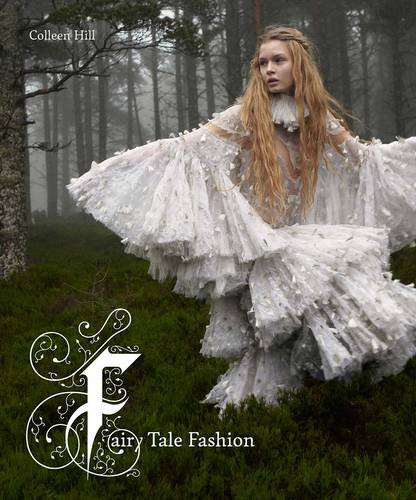
In the last section of Colleen Hill's fabulous Fairy Tale Fashion, she included some essays by other writers. I was really excited to read Ellen Sampson's "Dancing, Desire, and Death: The Role of Footwear in Fairy Tales." Twelve Dancing Princesses is one of my all time favorite tales and it's one I wish would be discussed more often; plus, the role of dancing in fairy tales can be so ambiguous and often contradictory.

There is a section specifically on footwear, although that topic has been discussed before here, so if you're interested in further reading on shoes, you can read about the significance of shoes in Perrault's time, Red shoes in fairy tales and history,  or Kathrine Langrish's excellent essay Slippers of Glass, Slippers of Fur on Seven Miles of Steel Thistles.

The subject of dancing in fairy tales, though, is a pretty bleak one at the outset for feminists. Sampson reminds us that many fairy tales were aimed to promote obedience in women-the Victorian versions we're most familiar with reflected the values of the day. "In fairy tales, women's bodies are strictly regimented and disciplined. They are controlled physically (putting Sleeping Beauty or Snow White to sleep), spatially (locking Rapunzel in a tower), maritally (gifted to Rumpelstiltskin as a reward), or sexually. Their bodies may be transformed (into geese or trees), altered (made handless or footless, smaller or larger) or even consumed, but they are rarely inhabited or possessed by their owners for long." I'm not sure which version of Rumpelstiltskin she's been reading...the protagonist is never given to him in marriage, but the King, but there are plenty of other tales where a princess is also given away in marriage, even against her will, so the point stands.

Sampson also points out that women who stray from the culturally accepted humility and dare to long for beautiful shoes, or to dance the night away, are severely punished. Karen in "The Red Shoes" eventually gets her feet amputated, similar to the stepsisters in Cinderella whose feet are mutilated in an attempt to fit into the slipper. Then, of course, there's the stepmother in Snow White whose punishment is to be danced to death in red hot iron slippers, fresh from the fire. "The animation of the body that shoes induce is punished in the most violent and spectacular manner...The production of stillness and silence is the aim of fairy tale violence-it renders the (female) body docile." Even for Cinderella and the Twelve Dancing Princesses, who may not be directly punished, through marriage they are given to the authority of another man and their dancing is stopped. The essay ends with the uncomfortable description of Karen's confession followed by her amputation.

Yet can that really be the whole symbolism of dancing in folklore? That is just represents women who are rebellious and must be tamed? I had wondered about the different uses of dancing-sometimes it leads to death, but in Cinderella's case it is both her reward and it's the catalyst that leads to another reward, the Prince/escaping a life of servitude. Sampson explains this by saying it's all about the context-women may dance at the proper time, the proper steps, in a formal setting-but must not dance out of passion and desire, like the twelve Princesses who dance the night away in an underground kingdom. Many scholars see the twelve Princesses as symbolic of women who are mobile and capable of rebellion-they spend the night exploring, dancing in a forbidden context, and the fact that their shoes are completely worn through by morning indicates the passion and extent to which they are dancing. They weren't performing a few courtly dances, but having a wild night of excessive dancing. In many fairy tales that feature shoes, it's even ambiguous as to who's controlling shoes-the Red Shoes force Karen to dance, and maybe it's the dancing shoes that brought the twelve sisters to the underground Kingdom and forced them to dance as well.

Scholars also interpret the Princess' underground nightly romps as being sexual in nature. It makes sense, but when I was younger it never occurred to me that you would need any other excuse to sneak out at night than to have access to an enchanted Kingdom in your own bedroom to explore, and fancy balls to attend. And here it  is that we see the often confusing logic of fairy tales-characters (and vicariously through them, the readers) are rewarded with the same things they are punished for desiring. We see many tales in which the main character is rewarded for being unmaterialistic-by being given great material wealth (such as in "Beauty and the Beast"). In Cinderella, the stepsisters must have chunks of their feet cut off for daring to desire the wonderful slipper and the royal life it represents-yet Cinderella is rewarded with both. Karen longs for the red shoes when she sees a count's daughter wearing them. Karen is punished, in a way, not for wanting beautiful things, but for wanting things that don't belong to her station in life-the red shoes are appropriate for the count's daughter, not for Karen; just as the slippers are meant for Cinderella and not her stepsisters. In a way it seems unfair, especially to our modern minds where we view class distinctions as less important than most other cultures.

And, although Sampson briefly mentions "Juniper Tree" as an example of how acquiring new shoes can be satisfactory, I think it's very important to contrast to the other tales, especially "Red Shoes." In that tale, Marlene is rewarded with a pair of red shoes. It's clear that she desires and enjoys them, and they are not seen as inappropriate for her, though she is poor, because she has a good heart. It's also important to remember that "Red Shoes," the most extreme example of a preachy tale concerning shoes and dancing, is not true folklore in the sense that the story has circulated around many cultures for generations with a similar structure, but was a literary invention of one man, Hans Christian Andersen.

Even in the tales in which dancing must be quelled, there is still a level of irony. Even if the Underground Kingdom is destroyed, the reader delights in the women's adventures there each time the tale is read or heard. Even if Cinderella doesn't dance any more after marriage, the descriptions of her dress and her own nightly adventures are the most thrilling part of her story (and frankly, her forbidden journeys to the ball are not that unlike the Twelve Dancing Princesses, and the twelve are hardly ever punished either for their so-called "indiscretions"). The very stories themselves betray their morals, as listeners delight in what is officially termed bad by the "lesson" we supposedly learn afterwards.

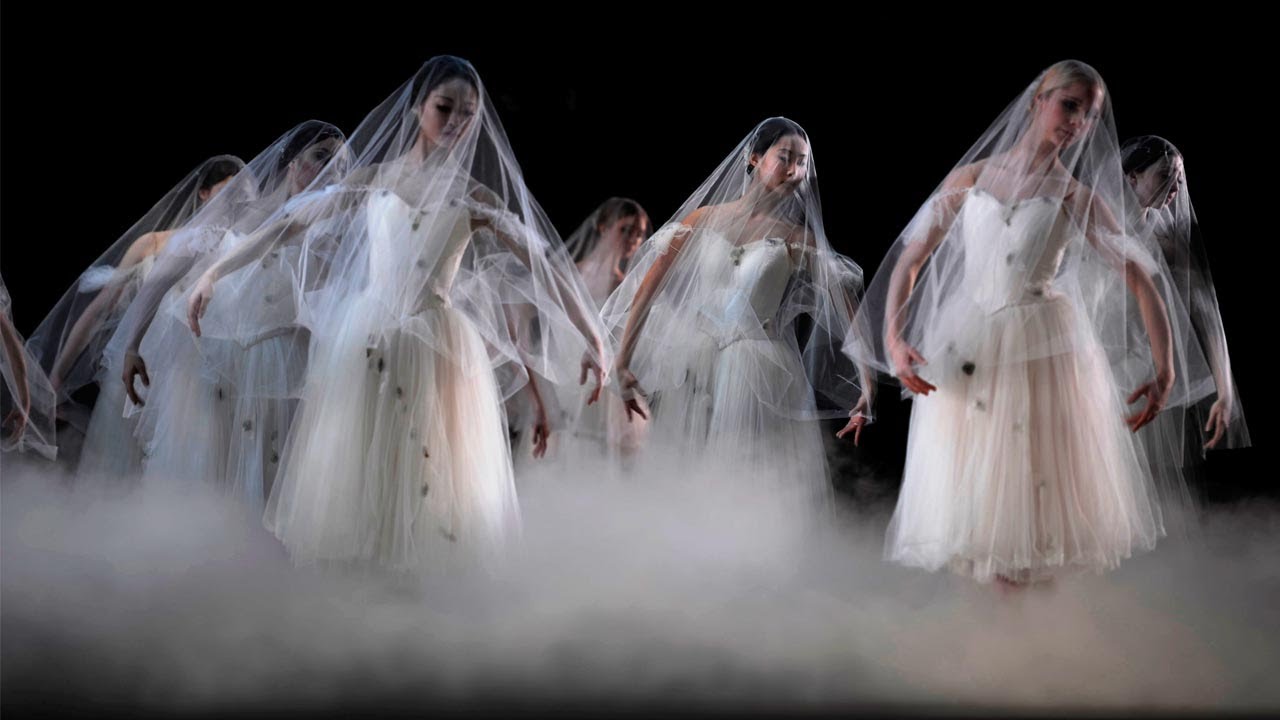
And, one story I wish Sampson had touched on is the ballet "Giselle." It's technically not a fairy tale, but neither is "Wizard of Oz" which she referred to many times. The haunting plot involves a group of Wilis, or supernatural women who force men to dance to their deaths. The idea of Wilis came from a passage by Heinrich Heine, but they are related to the Vila, a Slavic version of nymphs. In the context of the ballet, the women are said to be jilted lovers, and that is why they prey on men. So in a way, although they are the villains, the actions they perform reflect the original wrong, done to them by men-sort of like a gender-swapped version of King Shahryar in 1001 Nights, killing women because his first wife cheated on him. The very image of men being danced to death is a contrast to the popular tales referenced earlier, in which women's dancing is primarily described and their partners merely an afterthought.

How do you see the role of dancing in fairy tales?

Illustrations-"Twelve Dancing Princesses" by Kay Nielsen, "Red Shoes" by Anne Andersen, "Cinderella"-A.H. Watson, "Juniper Tree," by LBarrett, Wilis from "Giselle"-the SF Ballet

Saturday, November 19, 2016

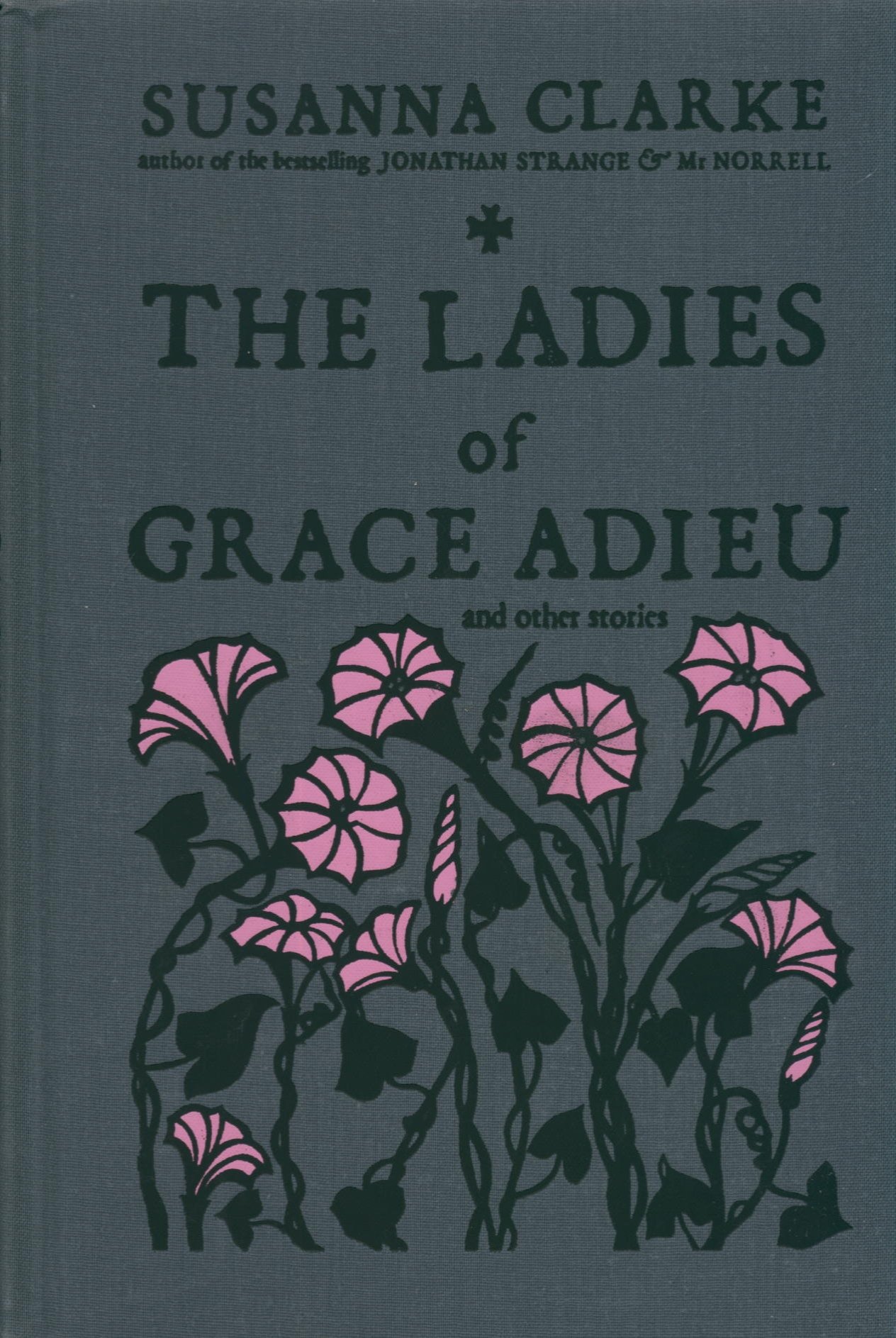
The Ladies of Grace Adieu

I've referenced the book Jonathan Strange and Mr. Norrell here before; it's not exactly a fairy tale but it does describe the world of Faerie in a way that I love. Though there is magic in the world, it is dangerous and unpredictable, much like many faeries in folklore. It is literally one of my all time favorite books, so if you like well-written period fantasy, I highly recommend it.  (Plus, you could really argue that it incorporates "Twelve Dancing Princesses" as well). 

I've been wanting to reread the book again, but not sure if I'd have the time, so I was thrilled to find this book at the library instead: a collection of short stories by the author, Susanna Clarke, The Ladies of Grace Adieu, set in the world of Jonathan Strange.
Some of the stories overlap with characters, even exploring situations not fully explained in the book; but most of them are stories of powerful Faeries and people's interactions with them. For fairy tale fans, one story is a version of Tom Tit Tot (Rumpelstiltskin). The stories aren't quite as masterful as the novel, although I enjoyed getting to revisit certain characters. I'm not sure if readers would enjoy it as much who haven't read Jonathan Strange, but it is perfect when you don't quite have the time to commit to the full (800+ page) novel. It's still pretty highly rated on Amazon.