Showing posts with label Sea Maids. Show all posts

Saturday, August 5, 2017

Merfolk of Scandinavia

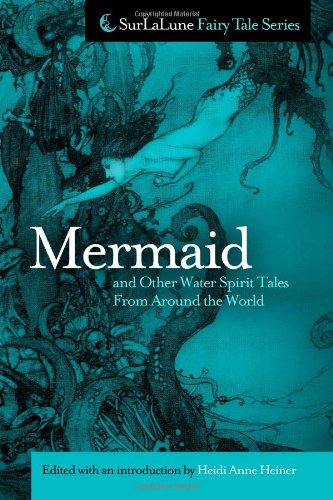
Merpeople are such a fascinating study- I've been reading all about different tales and beliefs about the Sea Spirits of Scandinavia in Surlalune's Mermaid Tales From Around the World.

*The children of merpeople are called Marmaeler in Norway. If caught, they can give you knowledge of the future, but it's still best not to seek them out-seeing a Mermaid or Merman is a sign of a coming storm, and harming them is dangerous

*On the other hand, they can also help to protect people who have shown them kindness. There's one story from Norway in which a fisherman saw a merman shivering from cold and gave him his hose to wear-later the same merman warned him of a coming storm and he got to shore just in time.

*The River Spirit is called a Neck. He might sit on the water with a red cap on his head (interesting potential connection to Red Riding Hood??), but may also appear as a centaur, horse, or an old man with a long beard. They might punish cruel humans, such as haughty women who spurn their lovers, but may also themselves fall in love with a human woman and be a kind suitor.

*Necks are also excellent musicians, playing gold harps. It's possible to get lessons from them, if you present them with a black lamb and the promise of salvation.

*Sea creatures seem very concerned about their salvation in Scandinavia. There are multiple tales in which a neck cries and flings away his harp when told he will not be saved, but they cheer up if told that the opposite is true. In one story, a Neck asks a priest if he will have salvation, and the priest replies, "sooner will this cane sprout flowers." However, later on, his cane DOES sprout flowers, so he goes back and tells the Neck. This sheds some light on the motivation of Andersen's Little Mermaid-we often forget that she sacrifices her voice and the pain of her legs not just for the chance of love, but also to gain immortality.

*There is a tale in Sweden with many variations, "The King's Son and Messeria." In it, a Mermaid has power over a young boy, usually because she tricks his parents into promising him to them (using the old "promise me what is under your girdle" trick to a woman who doesn't yet know she's pregnant, "promise me the first thing you meet on land," or just plain old "give me your firstborn or you'll die in this storm at sea.") They attempt to keep the boy away from the Mermaid, either keeping him in a high tower or away from water, but of course he eventually ends up close to the water and she drags him into her underground kingdom.

There, he meets a beautiful young girl, also a captive of the Mermaid, and falls in love. The Mermaid gives him impossible tasks to do. Usually, impossible tasks in fairy tales are made possible because the protagonist was kind to animals along his or her journey, and they help them, so it almost feels like they were really a test of character-anyone who shows kindness will succeed-but these were truly meant to be impossible. Only by his lover helping him with magic, unbeknownst to the Mermaid, does he succeed. Mermaids in these stories are kidnappers; cruel, and unambiguously villains, functioning as a witch would in similar tales. The lovers manage to escape her, and sometimes she dies in spectacular ways-bursting because she tries to drink the sea (because the lovers transformed into ducks) and took in too much water, or splitting in two when she sees the sun.

*There's a creepy Sea Nymph in Sweden whose hand will appear through a door in a fishing hut where the fishers are all asleep for the night. Wise fishers know to ignore the hand, but a boastful man claimed he wasn't afraid; he took the hand and it drew him out, and he disappeared for three years. He returned on the day of his wife's remarriage, for he was presumed dead, but disobeyed the Nymph's warning not to step inside the church, and he died three days later.

Like any creatures, Sea folk can be kind, cruel, or neutral; but their supernatural abilities and elusive nature make them alluring and mysterious. If you happen to be in Scandinavia, especially around the water, watch out for the Sea Nymph, take cover if you spot any merpeople while out on the water, but assure any Necks who ask you that they can indeed have salvation :)

Illustrations by John Bauer

*I have already posted on the Danish mermaid tales found in this book, if you want to read about more Scandinavian sea creatures!

Wednesday, August 3, 2016

The Fisherman Who Had Seven Sons: An Irish Mermaid Tale


Jean-Baptiste Monge | Siren: Once there was a poor fisherman with three sons. One night, he was trying unsuccessfully to fish, and a mermaid approached him. She told him that if he and his wife would give them their unborn son at the age of 21, she would make them rich. Neither he nor his wife has any problem agreeing to this, and the next night he finds more gold than he can carry, and becomes very prosperous.


He went on to have a total of seven sons, but was burdened by the knowledge that he must lose one of them. Finally he revealed to the son in question that he had sold him to a mermaid and the time was nearly up, so the son decided to leave. Although his father was troubled at his going, the son took expenses and food and left.

The son traveled until he was tired and sat down to rest, and saw a lion coming towards him. He thought he was dead for sure, but the lion offered to carry him. The lion carried him a long way and brought him to the house of a shoemaker.


The shoemaker told the traveler that the next day, the King's daughter was going to be devoured by a sea monster, unless someone could defeat it. With nothing but an old rusty sword used for cutting vegetables, the son took a boat to where the Princess was waiting. No one but the young man had the courage to fight the monster, and he killed it. The Princess would only marry him.

Shortly after, the mermaid approached, and revealed that her intention all along had not been to kill him, but to bring him to his present Kingdom to rescue the Princess. The mermaid left and was not seen again.


Illustrations-

Siren by Jean-Baptiste Monge
"Andromeda's Fate" by PaulHectorT

Source: Surlalune's Mermaid and Other Water Spirit Tales From Around the World, summarized by me

Wednesday, June 17, 2015

Mermaids from South America

Even if you're not headed to the beach this summer, all things nautical start popping up in advertisements at this time of year and we're told that the ideal summer includes time at the shore. For me, this means that I tend to consider mermaids as an especially "summery" interest, so recently I've turned to Surlalune's Mermaid and Water Spirit Tales from Around the World.

This book is one of the thickest volumes in the series, which means there's so much to explore. I've posted on Historical Mermaid Accounts, Mermaid Hoaxes, and Danish Mermaid Tales, all courtesy of this volume, and have only scratched the surface. This time around I was interested in some of the tales from areas around the world that were least influenced by Western culture, such as those from South America (although, once a tale has been told and translated into English, there's no guarantee it wasn't also influenced by Western tales).
Howard Pyle

In Charles Daniel Dance's essay on mermaid folklore in Guyana, he states that "the attachment of the Water Spirit to human beings is mostly sexual." And while you can find stories of mermaids who threaten the lives of children, it's true that the vast majority of mermaid tales across the globe seem to be explorations of tragic romances and fatal attractions. The well known beautiful and dangerous sirens of mythology have their counterparts around the world, but there are also mermen who prey on females. In Herbert H. Smith's words about the Brazilian mermaids, called Oiara, Uauyara, or Yara, he says "The Uauyara is a great lover of our Indian women; many of them attribute their first child to this deity, who sometimes surprises them when they are bathing, sometimes transforms himself into the figure of a mortal to seduce them, sometimes drags them under the water, where they are forced to submit to him. On moonlight nights the lakes are often illuminated, and one hears the songs and the measured tread of the dances with which the Uauyara amuses himself."
H. J. Ford

As I read the tales from Brazil, I was struck by how powerful the force of these siren/sea maids were, and how no man was able to resist them, even to the point of altering his personality. Elizabeth Brown Chase recounts that the Brazilian Yara, this time also called a water-witch, "lured young men by her marvelous singing. After seeing her the youth would become melancholy and would haunt the river day and night where he had first beheld her. His friends and people would remonstrate with and warn him of the enchantress "whose smile is death", but the youth, be he chief or simple Indian would not listen; he would go to the river. There the beautiful being would appear and as he rushed to embrace her the waters would divide, and the two would disappear."

There is a beautiful Brazilian tale found in Andrew Lang's Brown Fairy Book, titled "The Story of the Yara," in which the young lover Alonzo struggles to heed the warnings of his beloved fiancee Julia and stay away from the river where he encountered the Yara. (The Yara have no qualms enticing men who are committed, in fact it almost seems they delight in destroying romances and marriages.) The fact that he has seen the Yara causes him to act differently, to even laugh differently, and despite his intentions to listen to Julia, to go back to the river. (Read the rest online to see how true love conquers all in this rare happy ending).

These stories, and the power attributed to the sirens and mermen who destroy as they entice, could simply be literal warnings (belief in such creatures was pretty universal until relatively recently in human history), or warnings against sexual temptations. But the obsession and altered character of the victim of the Sea Maid sounds a lot to me like someone who has developed an addiction to drugs or alcohol.

I'm not sure if this interpretation even works historically-I know that in the past, alcohol was more diluted and drugs were not as strong, although drunkenness is certainly not a new problem. But considering that physical abuse is one of the primary themes of folklore, and the strong connection between substance abuse and domestic violence, it's a theme that seems like it's begging to be explored through stories.
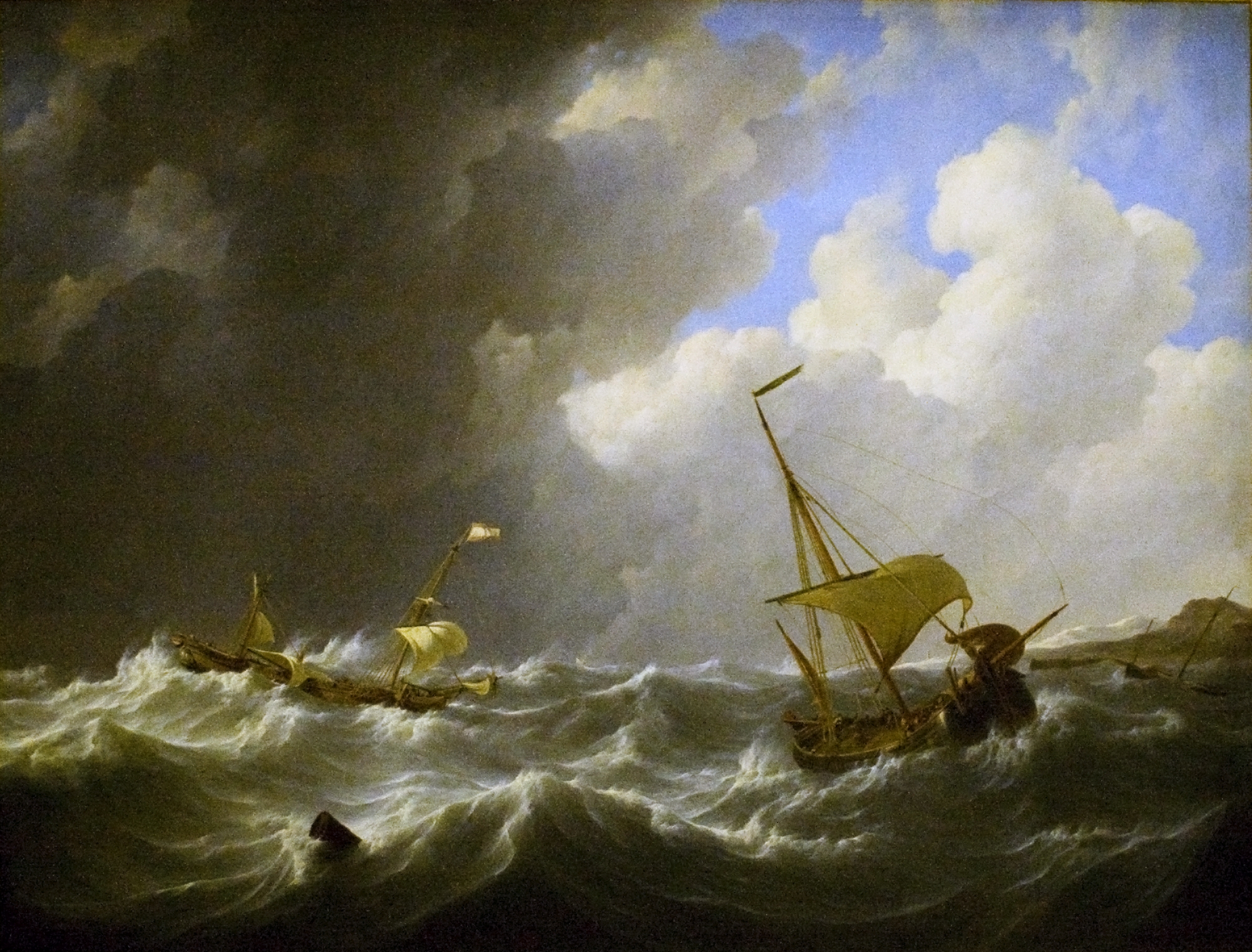
Johannes Christiaan Schotel, "Storm on the Sea"

But it's also interesting to note that mermaid beliefs and legends are really quite similar around the globe. We are fascinated by them, but have always attributed a sense of danger and the threat of death with them. This is likely a reflection of how dangerous water and sea travels could be, such as is revealed in a series of North American children's ballads, with a chorus like this one: "The raging sea goes roar, roar, roar, and the stormy winds they do blow, while we poor sailors are drowning in the deep, and the pretty girls are standing on the shore." Although most of the tales seem to warn of the dangers of seduction more so than sailing, every culture seems to agree that great caution should be heeded around water spirits.

Friday, February 6, 2015

Fairy Tale Romance

Probably the biggest problem people find with fairy tales is that promise of a "fairy tale romance"-the love at first sight and implied message that if you find romance, your life will be complete and all your problems over. I myself don't like the idea of love at first sight (one of the reasons I love "Beauty and the Beast" so much). And while fairy tales involve incredibly dark, scary, traumatic experiences for the main characters, it's true that they never include breakups. Conflicts often start at home with parents and siblings and end by entering into a new family situation-as husband and wife.
Eleanor Vere Boyle, "Beauty and the Beast"

But a huge reason for this is simply: fairy tales come out of a time in history where there was no dating. Marriages were largely arranged for much of human history, sometimes as business transactions, often just out of necessity so that the people could help each other out in all the work it took to feed and clothe themselves. People got married much younger, meaning there wasn't this time of limbo in which people could dream and wonder about what their spouse might be like; their options were much more limited in small rural communities. In the 1700s the idea of individuals choosing their own marriage partner began to take hold, but even then dating looked a lot different-gentlemen callers would woo a lady in her own home, under the supervision of a chaperone. Dating as we know it today-two young people going out on their own, potentially to see if they are compatible for marriage but sometimes just for fun and to enjoy each other's company, has really only been around for about 100 years.

So fairy tales don't reflect our current issues involved with dating; breakups and heartbreak, the stresses of figuring out what to look for and expect out of a partner, because they couldn't. However, although many fairy tales end with a marriage that leads to the cliche "happily ever after," many fairy tales also reveal some of the problems that can happen within a marriage.

Arthur Rackham

In "The Fisherman and His Wife," an unhappy wife is never content with their current situations. Her demands on her husband and the magical fish he found become too much.
Carolyn Emerick

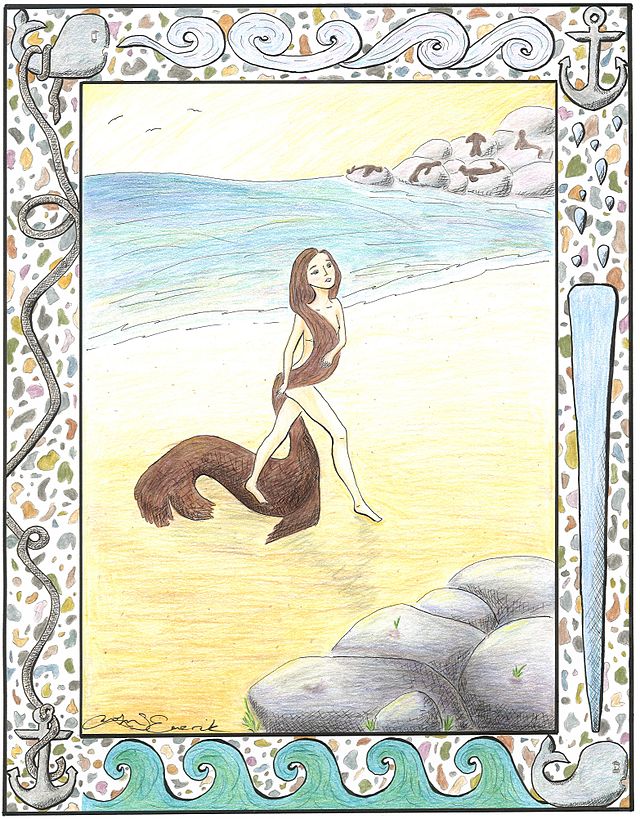
In the line of Selkie tales, magical sea creatures who turn into women are tricked into becoming wives of the men who hide their selkie skin. While they may appear to live happily for a time, the Selkies long for their true home (sometimes their original husbands,) and as soon as they find their skins, they leave their mortal husbands and go back to the sea.
A. H. Watson

In Rumpelstiltskin, we see a marriage that was based off of a father's deception. As a result, the nameless bride must labor under the threat of death from her husband. She was naturally distraught and only escaped that harsh punishment by a strange little man who manipulated her into promising to give him her first child.
Walter Crane

How about the parents from Rapunzel? The mother was overdramatic and demanding about her pregnancy cravings-"if I don't get some rampion to eat...I know I shall die." Her husband then agreed to give the witch the child he and his wife longed for so much, so you know there was lots of marital strife in their house when the mother found out.
Edmund Dulac

That couple as well as many others-such as the parents in Sleeping Beauty-begin their tale unhappy because they are childless ("so sorry that it cannot be expressed"). Then they have to deal with the stress of having a death curse put on their only child. Although their marriage itself may have been healthy, their married life was far from perfect.
Jessie Wilcox Smith

How about the wife from Hansel and Gretel who convinces her husband to abandon their children in the woods? And the host of fairy tales featuring domineering wives who abuse the children in their care, Cinderella, Snow White, Wild Swans, and Juniper Tree-the husbands, when present, are weak enough to be overpowered while his wife takes over and tries everything in her power to get rid of his children.
Kay Nielsen

What about East of the Sun, West of the Moon? The wife soon became sorrowful because she was left completely alone all day and ended up looking at her husband at night when she wasn't supposed to. He was taken from her, and she had to go on a long, arduous journey and win him back from another woman.
Hermann Vogel

Then of course, Bluebeard is the ultimate example of a warning about the potential dangers found within a marriage. It can be read on a more symbolic level as well as literal-sometimes the person you are dating has figurative skeletons in his (or her) closet. As much as you can, make sure that your partner is totally trustworthy before you marry.

So although many tales end with a marriage and a "happily ever after" (although there are many different ways to end a fairy tale), that turns out to be simply a convenient way to wrap up a story. If we look at fairy tale as a generational pattern-that the children, who usually enter adulthood by the end of their story, will end up being the parents who later traumatize their own children in some way-we see that fairy tales actually paint a fairly bleak picture of marriage. Can you think of any fairy tale characters who have been married for any length of time and live an idyllic life?

We seem to have the idea that "happily ever after" means "perfect in any way with no struggles at all." How did we get to that conclusion? A perfect life is not attainable for anyone, no matter if you're single or in a relationship. But finding happiness and joy, despite your struggles, is possible and it's worth hoping for and working towards.

Thursday, July 31, 2014

Fairy Tale Photography of Viona Ielegems


"I love fairy tales because they are so realistic: we all face wolves and want to go to the ball. Their realism is on another level, a symbolic level. But they are fundamentally about what we fear and desire. That is why they have lasted so long and are continually rewritten. They are about the deepest, most fundamental part of ourselves." -Theodora Goss


Photography by Viona Ielegems and poetry by Theodora Goss were featured in the latest issue of Faerie Magazine. I included mainly recognizable fairy tale photographs in here, but Viona's site has many more fairy and fantasy inspired shoots, often dark and creepy.

Monday, July 21, 2014

Other Danish Mermaid Tales

Andersen's "The Little Mermaid" is the most well-known Danish mermaid tale, although that was based on literary French stories. So it's interesting to compare this famous story with other tales that have been recorded around the same time. These are from Surlalune's Mermaid and other Water Spirit Tales From Around the World book.

"Agnete and the Merman" by Jens Baggesen is a creepy and tragic tale. It tells of a merman who comes from the sea, professing his deep love for the human Agnete (a gender reversal of the Melusine/Undine/Little Mermaid stories). She loves him too and agrees to go down into the sea with him; they live for two years happily and she bears him two sons.
Margaret Tarrant

But Agnete hears church bells coming from land and desires to go back; she promises her husband to return by morning. She follows the midnight church bells and sees her mother. Her mother pleads with her to come back to land; she has abandoned not only her parents by joining the merman, but her two human daughters. Agnete claims she must go back to her new family, but then she is told that her father, after searching for her in vain, killed himself; the church bells she had heard were for his funeral. She then turns around and sees her mother's name on a grave-time passes differently under the sea (as it often does in Faerie) and the conversation with her mother was either with her ghost or vision from the past.

The poem "Agnes" by Adam Gottlob Oehlenschlager is essentially the same story with some minor differences, Agnes stays underwater 8 years and bears 7 children instead of two; she does not encounter her parents' funerals or tombstones but seems to die randomly after returning to the surface.
W. Heath Robinson

There were different versions of this old Danish ballad floating around, even Andersen himself had written a version of Agnete and Merman earlier in his life.

Another mermaid story, "The Mermaid's Prophecy," illustrates a mermaid that was captured by the King and Queen to tell their fortune. Unfortunately for the Royal couple, the Queen's death is predicted.
Arthur Rackham

It seems that a vast majority of folk mermaid tales are tragic. In romances, they center on lovers from two different worlds, and whether the maiden was originally human or from the sea (as in selkie stories), whether she actually loves her husband from a new land or not, she tends to inevitably feel the pull back to her original home.

Other non-romance tales focus on the supernatural abilities of mermaids. Not all of these are tragic-there is a humorous tale from Denmark called "Hans, the Mermaid's Son." The offspring of a mermaid with a human has super strength and ventures onto land to find work. He is disliked for his odd ways and how effortly he shows up the workers around him; his boss keeps trying to kill him off. Yet the mermaid's son is ignorant of all these attempts to hurt or kill him; he is so strong he is practically immune to their tricks. The story is similar to many fairy tales of the simple, yet kind-hearted fool who ends up victorious-in the end he makes sure everyone around him has plenty of riches, and being tired of living among mortals, goes back to the sea.
Edmund Dulac

When you compare these and other mermaid tales to "Little Mermaid" and the other literary tales of the time, you notice that the mermaids of lore who are so otherwordly and powerful have been reduced to foolishly lovesick teenagers. Yet while many see this as mysoginist, Andersen himself identified with the Little Mermaid, as have many others, male and female (such as Zemlinsky the composer), who experienced non-requited love. While most people today are shocked at the tragic ending, that part is actually the most consistent with traditional mermaid tales.

Monday, June 9, 2014

Debussy's Sirens


The third of Debussy's Nocturnes, "Sirens." When I heard this my first thought was sirens, but I'm also aware that my brain is now kind of wired to connect anything and everything to fairy tales and fairy creatures. I was happy to find that in this instance I was right!

This otherworldly and beautiful piece would be the perfect music to accompany reading fairy tales  (not just siren tales!).

Saturday, May 24, 2014

Schonwerth's Bavarian Folktales: Mermaids


I'm about halfway through this book and have yet to find more than a handful of stories that I would call "fairy tales" rather than legends, or parallels to familiar fairy tales. There was one story that started like Rumpelstiltskin, with a lazy daughter who didn't want to spin, but instead of being told to spin gold and helped by a funny looking little man, she was cursed to go spin in the Moon.

But I'm always fascinated by mermaid tales. And if there's anything we know about mermaid folklore, it's that these mermaids are entirely different than Hans Christian Andersen's suffering, lovesick young girl. Mermaids are dangerous and creepy, known to entice men to their lair below the surface, where the men often forget their families for a time. If they do return to land, they are often cursed, as are the offspring of men and mermaids.
Edmund Dulac

As far as origins, according to the beliefs of the people of Germany's Upper Palatinate, "The Mermaid was once a fair and beautiful princess, but also very cross and fitful, whereupon her own father cursed her and banished her to the sea where she would be able to do whatever she wanted. Thus she became half woman and half fish, living in the sea, where she announces through a very distinct song that a storm will occur in 24 hours."

Here's a shorter mermaid tale from the collection that gives you a good idea of what they are like. Apparently, the Mermaid in this tale demanded some sort of regular human sacrifice from sailors. Although this Mermaid shows mercy there is still a very dark side to interacting with sea maids:
Edmund Dulac

"A ship on the ocean had run out of corpses for the Mermaid, and it had to be decided by lot who among the crew should be sunk into the waters. A handsome young man drew the lot. But the Mermaid had mercy on him because his bride was already waiting for him with longing on the shore of the country nearby, and she carried him to the shore, and gave him as a present three little bags full of gold, silver, and pearls. In return, the bridal couple had to promise her the seventh child born to them.

When that child came into the world, the Mermaid appeared and took delivery of it; for she is allowed to assumed human form on every seventh day of the week; she comforted the grieving parents by assuring them that the little one would be treated well.

A long time had passed, when the oldest son, against his parents' will, chose a poor girl for his wife, and they cast him out. Thereupon the Mermaid reappeared, brought back the seventh child, who had grown up to become a handsome young man, and brought rich presents for the unhappy bridal couple, but once again, in return for their promise that the seventh child of the marriage would belong to her.
Gennady Spirin

To this day, the Mermaid is the kind and protective spirit for this family; when misfortune strikes, she comes to help; but always she has a child from the family circle with her in her palace of glass under the sea, and once this child has grown into a young man, she puts him back and takes another."

Monday, March 24, 2014

Anton Konashuk's Mermaid Tale


These pictures by Anton Konashuk portray a rather depressing take on a mermaid tale, and perhaps a statment about marriage and how it often turns out far differently than expected for many. It's also one of those interpretations that most audiences probably see as a clever, "modern" or "realistic" take on fairy tales, when it actually echoes fairy tales older than the Hans Christian Andersen idea of the mermaid, and much older than Disney's (whose influence is so strong most people don't even realize Andersen's "The Little Mermaid" ends without true love). This story portrayed is closer to the selkie tales in which human men steal the sea maids' seal skins and the maidens agree to marry him...but as soon as they recover their seal skins they return to their home in the sea. The photographer's site doesn't mention his inspiration though, so his hearkening back to such tales may or may not be intentional.


Sunday, January 26, 2014

Mermaid hoaxes

In the study of mermaids, sometimes the most surprising thing is not that people have believed in other species that are now believed to never have existed, but the lengths to which some people have gone to convince others of the truth of the elusive sea creatures. Think of Santa Claus and all that some parents do to keep alive the tradition and convince younger children that he is the one who leaves presents and eats the cookies and milk.
Mermaid mummy from 1682, Zuiryugi Temple in Osaka, Japan

Throughout history, and in virtually all cultures, there has been widespread belief in mermaids/mermen, sirens, nixies, or other creatures that haunt the waters. Yet we should avoid the oversimplified belief that people in the past were all gullible and believed anything they were told. There were early doubters, such as the ancient Pliny, who stated "I do not believe in sirens." Yet stories still persisted throughout the centuries-and not just in folklore and legends, but history holds numerous accounts of eyewitnesses who claim to have seen such creatures. Many of the claims even had "great scientific merit." Many highly respected people were among those who reported mermaid sightings, including Christopher Columbus, who met with three sirens "dancing on the water." A fisherman in India joined the body of an ape with that of a fish in the early 1800s, and attracted many "experienced men" who dedicated much time to research what they thought was newly discovered scientific evidence, and it was sold for a high price.

The agreed upon scientific explanation for these scores of accounts now attribute the sightings to sea creatures such as manatees and seals, and it's likely that many of the witnesses were drunk at the time. There is a story of a drunk sailor who was grabbed by a seal in the port of Constantinople and dragged into the water-it's easy to see how, in an inebriated state, the soldier might have attributed the strange circumstance to a siren who had fallen madly in love with him.

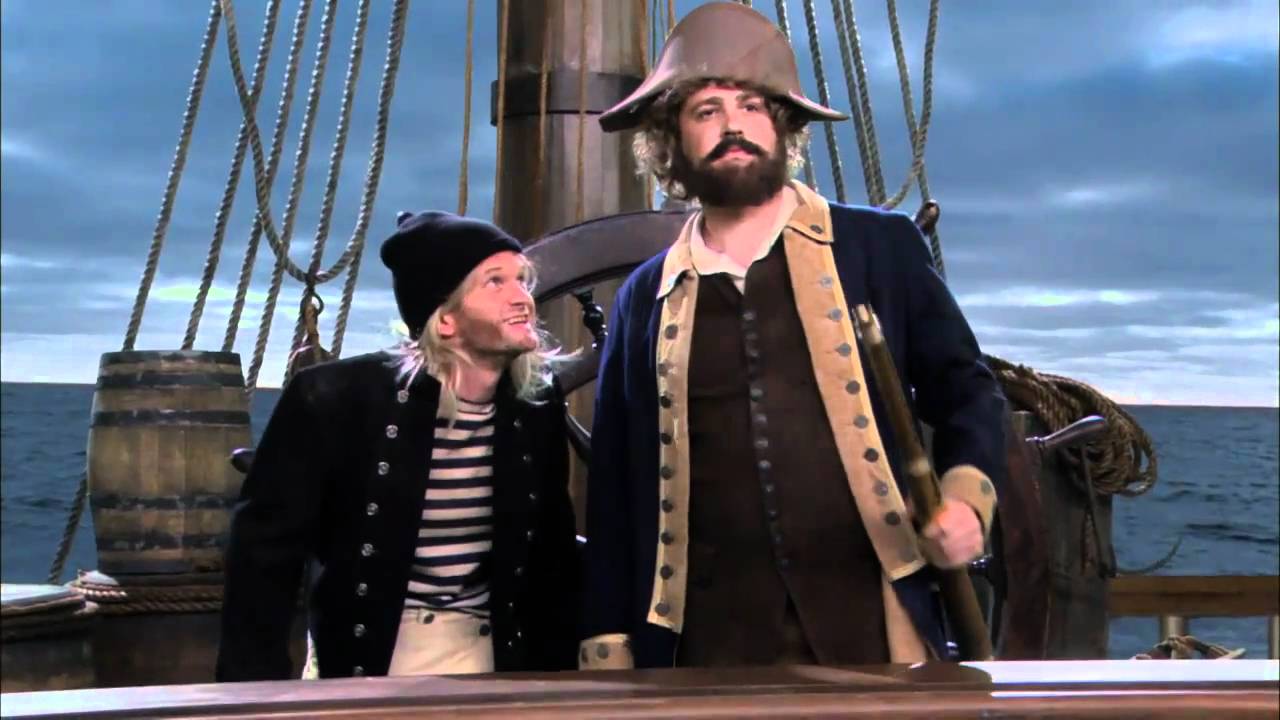
The t.v. show "How I Met Your Mother" has an episode entitled "Mermaid Theory" in which the character Barney explains the existence of mermaids as the result of sailors, who, after months and months at sea and with women in sight, eventually began to go a little crazy and see manatees as beautiful women. Unlike many of Barney's theories on the show, this one isn't entirely wrong. I'm sure strange things can happen to men trapped on a boat with no land in sight for months at a time.

Maximilian Schele de Vere describes the many humanlike characteristics of several sea creatures, who might cry when mistreated, have big emotive eyes, and some can even be taught to say "Papa." Yet I still think you'd have to be extremely drunk to mistake a seal or manatee for a beautiful woman combing her long golden locks...many descriptions of mermaids are quite detailed, down to eye color. I think in addition to drunkenness and the loneliness of sailors at sea, there must have been some other explanations, either intentional deception or simply seeing what you want to see/have always believed.

Creating mermaid remains was at a peak during Victorian times, when live mermaids or "mermaid mummies" were common carnival attractions. According to Timothy Schaffert, such mermaids were created from a variety of sources, from the remains of other animals to papier-mache, and some would even rob human graves in an attempt to make their mermaids more realistic. Not all live mermaids were willing-De Vere cites an instance when some Quakers started an investigation and rescued a woman who had been forced to wear a fish tail and comb her hair in front of spectators. Some mermaid hoaxes became quite famous, such as P.T. Barnum's Feejee Mermaid.
Replica of P.T. Barnum's Feejee Mermaid

Schaffert claims that many in the audience who flocked to see such exhibits were not themselves believers (although some staunchly believed), but were almost more interested in discovering for themselves how the mermaid had been created-there is a certain appeal to being the one to figure out how it was done, much like watching a magic show and trying to see the strings, or the appeal of mystery and detective stories.

Victorian mermaid mummy
 
The desire to delude people with hoaxes exists today in tabloids and internet claims. Some people delight in attempting to pull one over on the masses; and we masses tend to eat up sensational stories, if for nothing else to prove that we are too sophisticated to believe what the gullible do. Yet I strongly agree with this quote by De Vere: "There is, however, quite enough that is truly marvelous in some of the greater denizens of the deep, to engage our interest, and to find in them the originals of the fabled beings of whom we have spoken, without resorting to such gross and cruel deception." As with the search for fairies, if we were to discover that such things existed as diminuitive flying creatures that resemble humans, or some creature has evolved that is a combination of fish and mammal, what would that prove? Does the world need these specific combinations of beauty and wonder to be considered marvelous? I hope that the excitement that fairies and mermaids brings us can help us not to be disappointed if they don't exist, but to realize how incredible each part of creation already is.
 
 Sources:
Maximilian Schele de Vere, Wonders of the Deep: A Companion to Stray Leaves from the Book of Nature, 1869. Found in Surlalune's Mermaid and Other Water Spirit Tales From Around the World
 
Timothy Schaffert, Mermaid Hoaxes, from the Mermaids issue of Faerie Magazine: Number 25
 
Mermaid mummy images from Bayberrygallery.com