Showing posts with label beauty and culture. Show all posts

Thursday, July 14, 2016

Fairy Tale Fashion: The Little Mermaid


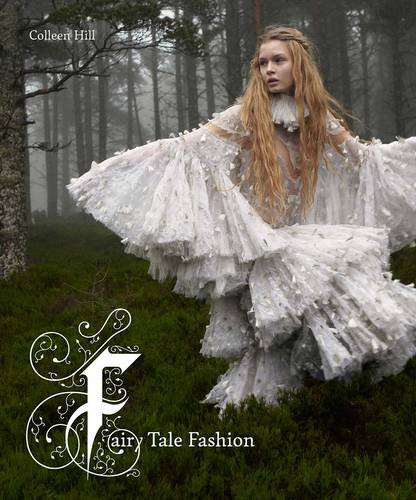
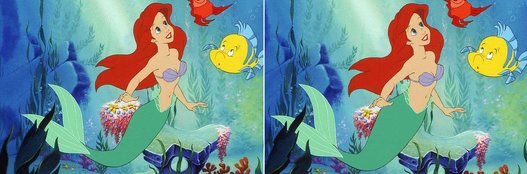
At first I thought "Little Mermaid" was an ironic choice for a fashion book, since usually a mermaid's distinctive look involves no clothes other than possibly modesty seashells. But not only has the mermaid been an inspiration for formal wear for almost a century, Colleen Hill also has some interesting insights into the tale itself.
Charles James, La Sirene

Andersen's tale is somewhat tragic, as it depicts a young mermaid who gives up her home and family, loses her tongue, and must endure pain every time she walks on her new legs, all for a Prince who never even returns her love. Although it's almost better for it to end the way it does-if the Mermaid got the Prince, the message would read more along the lines of "girls, you must give up all of your own hopes and dreams for the sake of a guy, and it will all be worth it" (of course, as Hill points out, the mermaid is also motivated to get an eternal soul and not just a Prince, so in that aspect it's actually a happy story. This fact often gets overlooked when people analyze the tale).

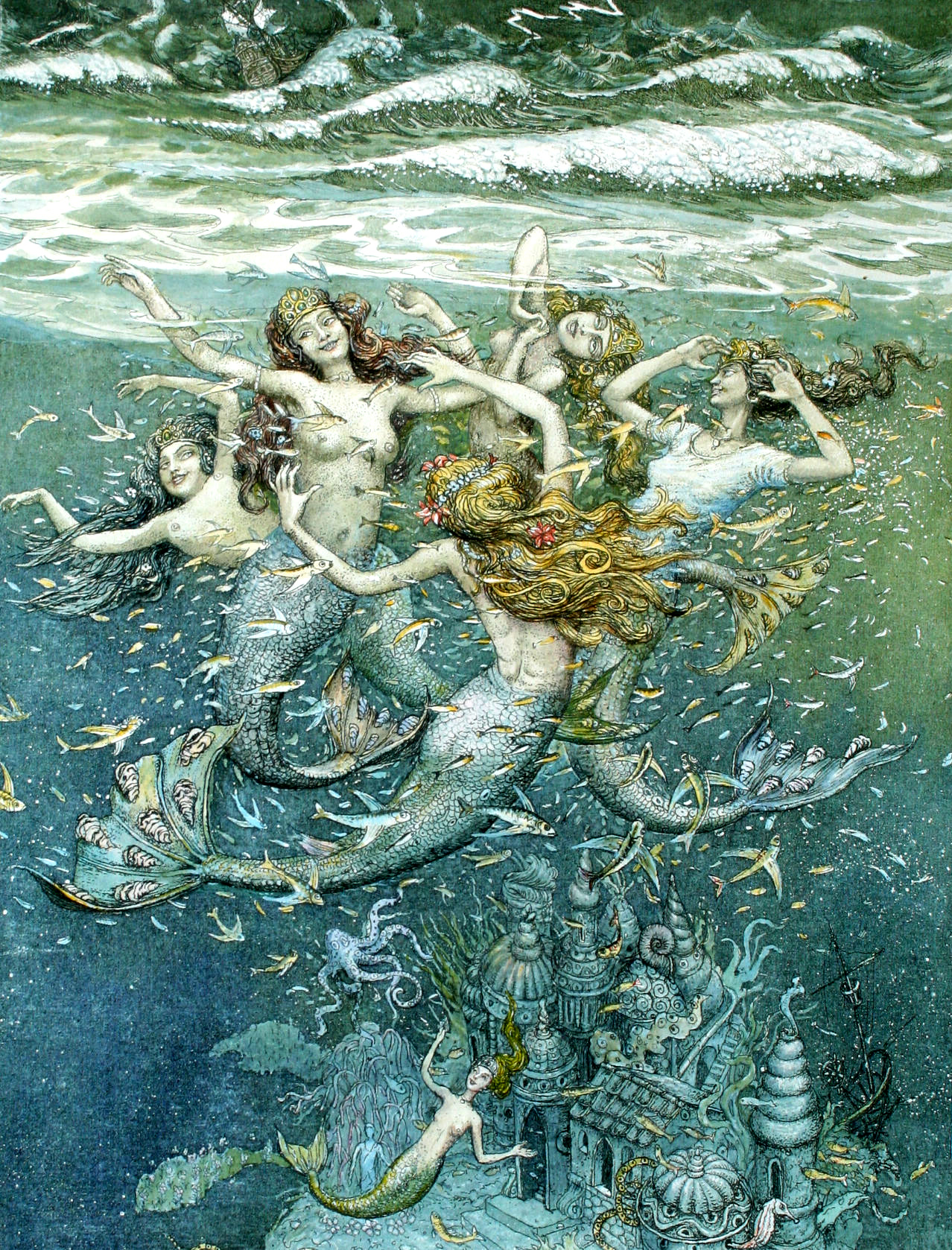
But Hill points out a detail that I, at least, had completely forgotten-even when a mermaid, the heroine must endure physical pain. Her grandmother fixes eight oysters onto the princess' tail, and the Little Mermaid protests because they hurt, but her grandmother insists that she wear them to show her high rank. This really changes the meaning of the story-it's not about choosing to endure pain, but which pain.
Boris Diodorov

I think this can be read on a couple levels. It could represent, more generally, the pain of growing up, and the fact that any relationship or new stage in life is going to require some sacrifice. It could also be Andersen's critique of expectations for beauty. This may have been more true in an age of corsets, but even now formal events often require less than comfortable heels (although this doesn't just apply to women-I always feel sorry for men stuck in suits and jackets in the summer, and I'm sure their dress shoes aren't the most comfortable thing either). What do you think Andersen is saying through this story?

Despite the pain associated with this most famous mermaid, the image has been an inspiration for designers and women for years.  A mermaid silhouette dress is still a popular choice for formalwear; it hugs the curves of the body until it flares out at the knees. Depending on the dress I would assume some would be quite difficult to walk in, if it was tight around the thighs, which could remind us of Andersen's Little Mermaid, struggling to take steps in her strange new body...
Thierry Mugler, 1988, "The Little Mermaid"

Sunday, June 5, 2016

Fairy Tale Fashion: Snow White

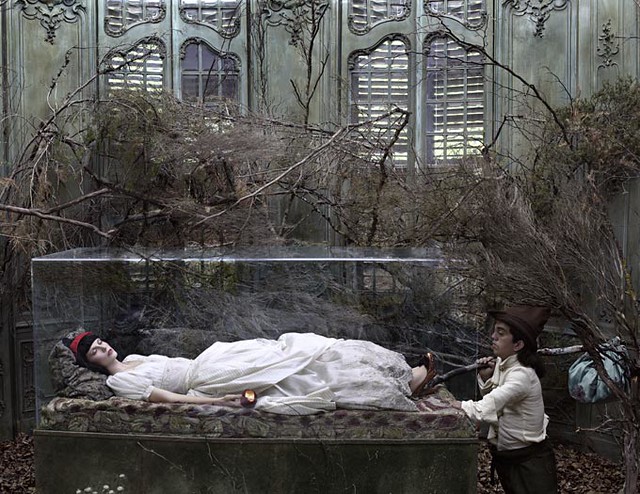
Snow White is one of the most well known fairy tales, and because it's such a definitive story in the genre, it's easy to forget that it's a tale that actually breaks some typical fairy tale stereotypes, especially when it comes to physical appearance and beauty.

In the world of fairy tales, beauty and goodness are almost always synonymous-physical beauty is usually representative of inner character. The witch is intriguing because she is evil and yet beautiful. She is not only murderous, but cannibalistic, wanting to eat Snow White's heart and liver (perhaps to somehow absorb her youth and beauty through the act).

Snow White herself stands out because of her black hair. When a beautiful fairy tale heroine's hair is described, it is almost always blonde-and not just "blonde" but "golden," so we are reminded of more than fair hair, but also of wealth and royal status. Thus "Snow White embodies a peculiar dichotomy; whereas her stepmother is bad but beautiful, Snow White is good, but raven-haired." So the characters' very appearances, which are integral to the plot, stand out against other fairy tales. (EDIT: Julia Mavroidi mentioned in the comments that Snow White's hair was not always black-in fact, in the first edition of the Grimms, it was her eyes that were ebony!)
A.H. Watson

The apple is the most iconic image of Snow White, but the apple only comes after two other temptations-stay laces and a poisoned comb. Other people have analyzed these objects as representing Snow White's vanity, an observation that chillingly likens her to the witch. And while there are other reasons to suppose that Snow White is potentially in danger of placing too much value on her own beauty, maybe that assessment of the temptation objects is a little unfair.

First of all, in my opinion, we have to remember that the disguised witch offered the goods to Snow White. There's a difference between seeking things out and accepting what is offered-she is not like the sisters in Beauty and the Beast who seek out dresses and jewels.
Dolce and Gabbana Fall 2014
Fairy tale inspired line

But Colleen Hill also reminds us that Snow White was a princess. She was used to having a vast wardrobe of the latest fashions, and also probably someone to dress her. Even though the story doesn't indicate she is discontent with her new life with the dwarfs, it's safe to assume she might miss some of her old pleasures from the castle. In fact, the witch begins by a not-so-subtle insult; "Oh, my child, what a sight you are. Come, let me lace you up properly." In addition to that immediate pressure to improve on her looks, Hill says, corsetry "had other connotations as well, such as beauty, social rank, and morality." We know that Snow White values neatness and cleanliness in her new duties as housekeeper for the dwarfs, so it's natural that the desire to have a tidy home would also extend to a desire for a well kept appearance.

Probably the thing that most hints towards Snow White's vanity is the fact that the apple is described as being appealing to look at-"white with red cheeks"-just like Snow White. Yet those who condemn Snow White for desiring a pretty apple don't condemn the Prince for desiring Snow White for that same feature (while dead/in a coma)-although in the Grimms' version he really should be.
Eugene Recuenco

Hill also points out how much pressure was put on royal females to appear beautiful. Queens would be sharply critiqued for perceived flaws in appearance, yet paradoxically also condemned for being too vain. You could say that the Queen witch was really a product of her culture, just as young Snow White's desires for pretty things came not only naturally but through passed down values. In fact, this pressure contributed towards historical figures who were more or less real life evil Queens-Catherine de Medici supposedly tried to eliminate Louis de Conde with a poisoned apple, and St. Ludmila (the grandmother of King Wenceslaus) was strangled with a veil by her mother in law.

The pressure to look beautiful is not an archaic relic from a misogynist past, but alive and well today, as women are continually pressured by media to find value in their looks, and told that men will only love them if they adhere to certain standards. Which is why Snow White is still such a powerful tale, and just as it indicates that the desire for beauty is passed down through generations, so it is hundreds of years later...

Sunday, February 21, 2016

Mirror, Mirror on the Wall


Snow White by P.J. LynchI find the history of mirrors kind of fascinating (nerd alert), but especially because it does have an impact on certain fairy tales and how we look at them-most notably Snow White.

It's hard for me to wrap my mind around it, but for the majority of human history, a decent mirror has been a luxury that only a few had access to. Most early mirrors were made of polished metal, so even the best ones would have dark, uneven reflections. The first glass mirrors were still "always slightly curved, and always slightly colored." Once the Venetians started mastering glass mirrors, they became an incredibly valuable commodity. The trade secrets were worth kidnapping for, as eventually happened when the French decided they needed to manufacture the luxury themselves (and as a rule, Italian mirror makers' families would be held hostage whenever they traveled, to insure loyalty).

Even when mirrors became more broadly produced, they were incredibly expensive. Most cultured ladies would have a pocket mirror that was very valuable-there is an anecdote of one lady trading a wheat field for a mirror. It was only the extreme indulgence of Louis XIV that pushed mirror makers to discover a way to make mirrors larger, and thus create the famed Hall of Mirrors.

The majority of humans in history would have only seen reflections of themselves in smooth surfaces, such as water. It's no surprise that in many versions of Snow White, the evil Queen does not ask a mirror to proclaim the fairest of them all, but other objects of nature, such as the sun or moon, or even an animal such as an eagle or trout. It makes more sense to imagine a woman, in a world in which you could never really see what you look like, to wonder how you compare to the other beautiful women you see, and ask someone else for their opinion. The sun, moon, or eagle would have authority to make a pretty good judgment, for they would see a great number of people as they made their way across the sky (not sure about the trout, but that's not as common).

By the time Snow White variants started featuring mirrors, they would have represented not only the Queen's narcissism, but the fact that she was extremely wealthy. I would guess that most people who couldn't afford mirrors had a sort of love/hate relationship with them-desiring one in a way, yet suspicious of the negative affects of being able to preen in front of one. I can imagine that, being able to see oneself clearly for the first time in human history would be incredibly unsettling, like we might feel if we were cloned or realized we had an identical twin.

A. W. Bayes' Snow Queen
A. W. Bayes, "The Snow Queen"

Ford Snow QueenIn fact, this suspicion of mirrors is reflected (hah!) in Anderson's "Snow Queen," which starts with a mirror that is inhabited by a demon, and distorts the reflections of everything seen in it, so that the beautiful seems vile. The shard that becomes lodged in Kay's eye changes his personality, causing him to be negative and cruel; eventually Gerda's love saves him and her tears wash away the piece of mirror.

Mirrors have great capacity for new boundaries in art, science, and self-reflection. Yet mirrors also have dangers, ones that we tend to take for granted, especially now that we see images of ourselves more often than ever on social media and the ubiquitous selfie. In a way, we are all now the Queen, whenever we look at a picture of ourselves and contrast our looks with others (and if we're honest, don't we all do it?). In an incredibly visually oriented world that promotes conventional beauty as the ideal, it becomes more and more difficult to avoid assigning value by physical appearance.

Sources:
The History of a Mirror: Through a Glass Darkly by Stephanie Lowder
The Essence of Style by Joan deJean
Sleeping Beauty and Snow White Tales from Around the World by Surlalune

Illustrations: P.J. Lynch, John Patience, Hans Juttner, A. W. Bayes, H.J. Ford

Thursday, November 5, 2015

Beastliness and Body Hair

So just to preface, this topic might be uncomfortable for some people-it's sort of become a taboo subject that we don't really talk about even though it's part of all of our lives: body hair, specifically women and shaving.
Anne Romby

It's not something I thought about much at all after I started to shave my legs years ago. But I just recently read this post on Delightfully Tacky in which Elizabeth describes her experience deciding not to shave for 10 weeks. It had never really occurred to me, but it really is kind of unfair that men are considered handsome with all of their natural hair whereas it's considered ugly, disgusting, and unprofessional on women. When women do try to go against the standards that say a woman must make her body smooth and more conventionally attractive, she often feels shame when out in public, and struggles to find herself beautiful, but then often feels guilt that she feels that way.
Ron Perlman as Beast and as self

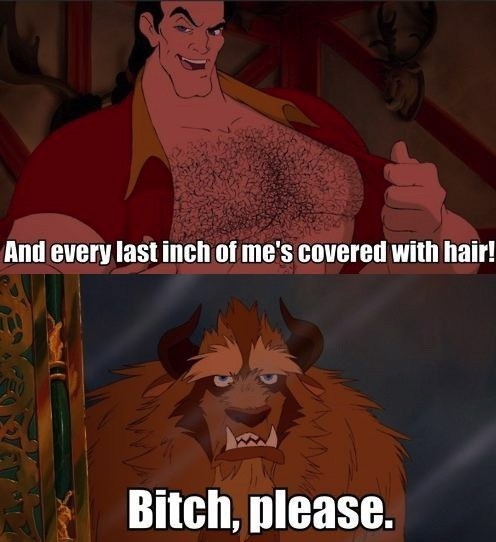
When I first started this blog, one topic I was very passionate about was the double standards of beauty and cultural expectations. Especially as seen through modern adaptations of fairy tales-male beasts are not only acceptable, but actually considered desirable. Whether they're a brooding vampire, a deformed genius living under the Paris Opera House, or a more animalistic creature actually covered with hair, women tend to have a soft spot for these misfits. It somehow seems more flattering to be singled out by someone supernatural. As Sue Bursztynski mentioned in the comments of my recent post on the Beast in Lion form, Ron Perlman has said he was never considered attractive to women until after he played the part of the Beast in the 80s TV show. My most viewed post of all time is my post on Beastly Females, but the majority of people who click on it aren't there to read about Animal Bride variants of tales-but because so many people are googling images of Gerard Butler in his Phantom makeup.
Here you go, world

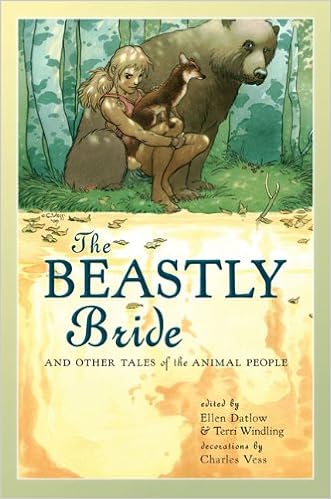
Yet when it comes to portrayals of women, in fairy tales or just in general, ugly women-or really even average women-are much harder to come by. There are a few examples, such as Gail Carson Levine's "Fairest," the D'Aulnoy fairy tale "Green Snake," and the movie "Penelope." Even when women are animals in folklore, they tend to be beautiful, graceful animals such as cats or swans-sometimes even slimy frogs or seals, but hardly ever hairy beasts like wolves or bears, which males often find themselves as (I'm not familiar with any females in folklore that turn into hairy beasts, but I'm sure there must be some exceptions out there? EDIT: There are actually many examples of hairy animal disguises for females, check out this list of Animal Brides. Thanks, Sue!). But most of those examples are unknown or forgotten today, especially by males, although the message of loving females who look unconventional is important for both genders. But in general, whether it's a very traditional story or a more feminist action heroine, the one thing main female characters have in common is that they're conventionally beautiful. Sexy females sell products, are looked at longer on billboards or magazine pages, and are generally desired by viewers of both genders.

And one thing that's become ingrained in all of us is that part of that beauty formula means to have perfectly smooth, hairless skin-or to remove ourselves from what our natural form is. I'm a huge proponent of appreciating natural beauty, in yourself and others. Not that I think it's wrong to get tattoos or dye your hair, but when the message becomes "you have to change in order to be beautiful," that should be a big warning bell. For most of human history, women never shaved, yet in the last 100 years, as women were able to shed layers of clothing, the standards for beauty and etiquette all decreed that the "objectionable hair" should be removed (see A Quick History of Women and Shaving).
Katerina Plotnikova Photography

Back when Enchanted Conversations came out with a Beauty and the Beast issue, there was a story I really liked that has stuck with me. The link doesn't work any more so I can't credit the author or title (let me know in the comments if you can!), but it was a story about the daughter of Beauty and the Beast. Her parents were separating and the Beast had reverted to his beastly form because the spell was no longer valid. The daughter was worried that maybe the spell would have been passed on to  her.
"Daughter" by Kiki Smith
Smith's combining aspects of LRRH with the wolf causes an emotional reaction 

Then one day, she started noticing hair growing. Day after day, all over her body, getting longer and thicker. She was pulling a Parent Trap at the time to get her parents to get back together, to save her father and herself from the spell. The Parent Trapping worked and her parents renewed their love, and her father became human, but-she, the daughter, was still hairy! Dismayed, she finally let her mother in on her secret. And her mother assured her that that was the natural body hair of puberty.

I thought it was a sweet way to look back at adolescence, and that terror when your body starts changing and doing things you don't necessarily want it to. But really the story also helps to illustrate very pointedly: on a woman, any body hair is considered Beastly. In a way, we all have that spell on us and we're all (or mostly) trying very hard to fight it! We spend money on razors and shaving creams and lots of time removing that hair that keeps stubbornly coming back. And it's so arbitrary when you think about it-long hair on women's heads is coveted, arm hair is acceptable, and yet on legs and armpits, hair causes people to recoil and feel strong emotions of disgust.
Haha

I'm not saying we should all stop shaving, necessarily (I certainly haven't), but it's been something I've been more conscious of lately. And while it does make me sad that women are so judged for their beauty, it's not like guys are completely off the hook. I've read that male eating disorders are on the rise-they have Hollywood standards to compare to as well. And while women may be drawn to the obvious Beasts in fiction, we tend to be pretty judgmental when it comes to average guys who are maybe just a little bit overweight or nerdy or whatever isn't your "type". When someone is obviously different we tend to be hyper aware of our reactions and all of our politically correct sensors go off, but all of us tend to judge by appearance on some level (often women are the guiltiest of severely judging ourselves). Cultural beauty standards can seem like they're impossible to change, but over time we can readjust our thinking, and we can do our part by doing our best to appreciate the many forms of beauty we see around us.

Tuesday, September 22, 2015

Thoughts on Cinderella: Beauty and Class


The tale of Cinderella is often looked down on for being shallow and materialistic; Cinderella is only beautiful when she's in  a dress, and the prince only likes her because she's beautiful.

But I think we have to remember how significant the class difference was between Cinderella and the Prince, and how truly big of a deal that union would have been hundreds of years ago. Even today there are some circles where it's really important if you come from money; but those class distinctions and judgments have grown much less significant. Especially here in America, where we tend to respect people more if they came from nothing and worked really hard to get where they are.

But the lines between royalty and servants were so untouchable we lose sight of the sacrifice the Prince made in being willing to marry Cinderella, a servant, even though she was found in her rags. It wasn't just her physical appearance, it was her station in life. The Prince instructed the shoe was to be tried on everyone, not just nobles and royals. It's interesting to compare Cinderella to the Villeneuve version of "Beauty and the Beast"-the whole thing is almost a parody of the class system, because she shows people judge others who aren't "good enough for them" (the Beast's/Prince's mother does not approve of Beauty, a commoner), then we find all the expectations of classes being turned upside down-in beauty verses ugliness, wealth verses poverty, royalty verses peasant, even fairy verses human.


In fact, I would argue that physical appearance is now one of the things we tend to judge other people by the most. It's almost our new version of ranking by class. I like to think that a modern version of Cinderella in the same spirit would be something like: a guy and a girl meet at a party, and he finds her very attractive and never forgets her. Years later he finds her, but now she has gained a lot of weight or in some other way become not as beautiful by cultural standards-yet he knows she is the same person from that party and because he fell in love with that girl he wants her no matter what. It can be read as a love that transcends cultural rules rather than falls into them, we've just morphed our rules a bit. Love at first sight in French Salon Fairy Tales is not the complete solution, but it was a step towards solving the problem of marriages that were arranged only for social status, regardless of the feelings of the people who would actually have to enter into that marriage and have their lives forever changed.
Illustrations by Walter Crane

Thursday, April 9, 2015

Disney Princesses in the News

Saw this article that caught my eye-

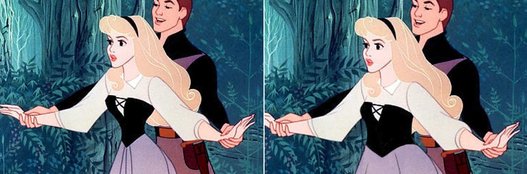
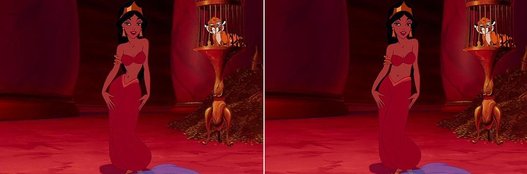
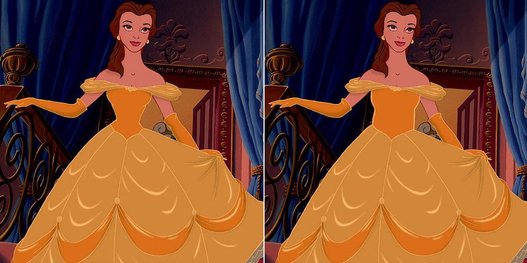
When a four year old was nervous about dressing up as a princess to see Cinderella, her 25 year old uncle, Jesse Frank Nagy, dressed as a princess as well to give her confidence. "If it's going to make her happy, I'll do it," he said. Just look at her face-


Then at the bottom of that article, these images of Disney Princesses with realistic waistlines:

(Hmm..maybe to this collection we could add Lily James in the Cinderella costume in the movie, with and without a restricting corset in which she was unable to eat solid foods?)
I should note that in Hollywood, it's considered completely normal for many actors (of both genders) to diet severely for a part, especially one with a particularly revealing costume or if the character is supposed to be especially thin. It's not something that's limited to Disney movies, but something that is of concern across the board where media is concerned.

Sunday, December 28, 2014

The Evolution of the Beast

Our perceptions of the beastly will not only affect how we read the story of "Beauty and the Beast", but other fairy tales such as "Little Red Riding Hood" and numerous others that feature animals.
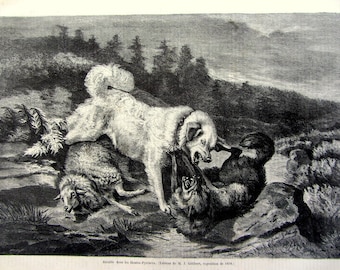
Dog fight illustration-1870

To audiences hundreds of years ago, animals such as a wolf in the forest or a Beast demanding your daughter would have been truly frightening. When much of the land people lived in still contained wild animals, attacks would have been a regular risk. We tend to only see wild animals contained in zoos or translated into cute, fluffy toys for children-even the teddy bear is a relatively recent invention, thanks to Teddy Roosevelt.
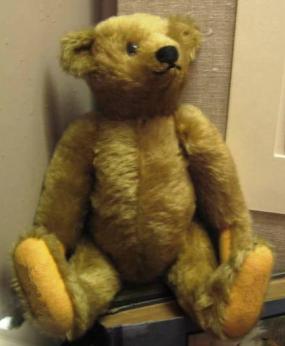
Replica of the original Teddy Bear

Older folk versions of Animal Bridegroom tales feature husbands that were clearly ugly and undesirable. They were not man/beast hybrids that were essentially more hairy and masculine men; they were straight up animals who could also talk and desire brides. The Beast has been everything from pig to frog to snake. This unusual husband was never meant to be attractive.
Eleanor Vere Boyle, 1875

In Villeneuve's 1740 story that sparked the "Beauty and the Beast" tradition as we know it, although she was possibly the first to make the Beast a hybrid creature; he was, if anything, a more horrifying combination of animals-a trunk like an elephant and a scaly covering that clanked when he moved.
Anne Anderson, 1935
Anonymous, for the Charles Lamb poem-1887


Beaumont's 1756 story, a shorter version of Villeneuve's, was directed towards young girls as part of their moral education. In hers, the Beast is never given a specific description. For years, illustrators had full range of imagination when creating the Beast, but he was still, in general, animalistic, and completely undesirable husband material.
W. Heath Robinson, 1921
Charles Robinson, 1911

It may seem disturbing to indicate bestiality, or imagine such a union. There are a couple explanations for why authors suggested such a marriage. I think some of the tellers of earlier tales may have been trying to communicate the horrors of arranged marriage-young girls being forced to marry older men, sometimes abusive or domineering, but with no other option. By the time Beaumont wrote her version, the moral was more along the lines of how an obedient wife could transform a beastly husband into a gentleman. But Villeneuve is clear about her message: the importance of marrying not for looks, money, or wit, but how kindness and character are the most important qualities to look for in a husband.  The moral is enforced even more in some versions (such as Eleanor Vere Boyle's 1875 story) by contrasting Beauty's happiness to her sisters, who married for looks and wealth and regretted their decisions when their husbands ceased to treat them well. This moral is still often attached to the story today, the idea of looking beneath the surface: "do not judge by appearances, for beauty is found within."
Edmund Dulac-1910
H.J. Ford, 1889


But the image of the Beast has changed drastically since the days of Villeneuve and Beaumont. Two main things have happened: he has become tamed, and sexualized.

The more man took control of animals, the less fearsome wild animals became. They were now exciting, something to see in a circus or zoo or take home as a pet. Some images of the Beast became downright cute and cloying.
My own plush Disney Beast doll
Jessie Wilcox Smith, 1911
A.L. Bowley, 1920
Margaret Evans Price, 1921

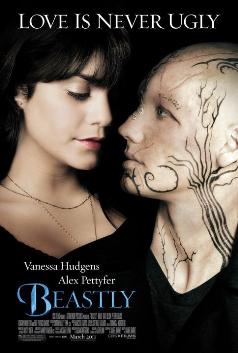
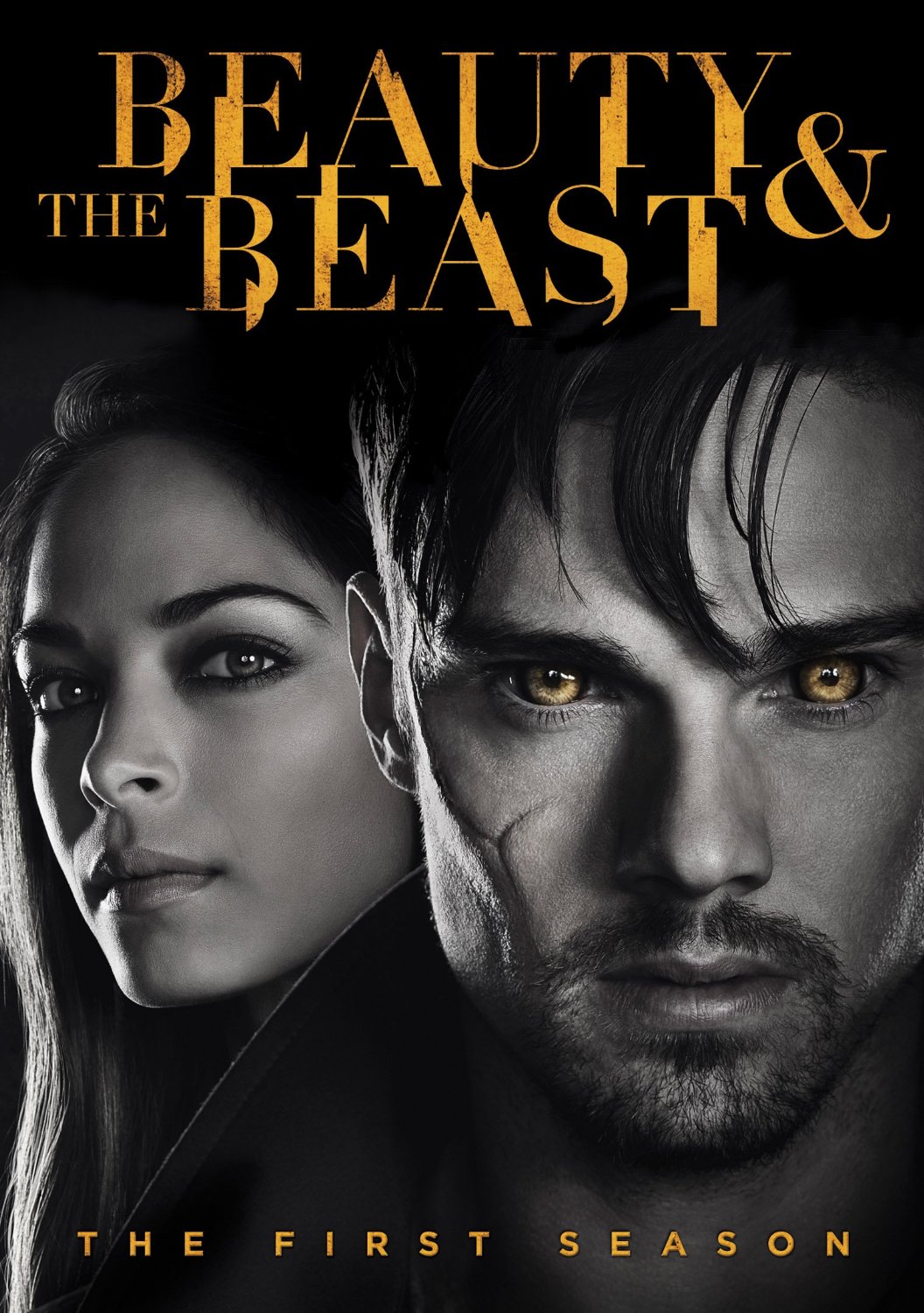
Over time, the Beast has also become more and more attractive. First he became more human, and now some versions of the "beast" aren't the least bit Beastly. You can think of the Phantom of the Opera as a modern version of BATB, and the Twilight series, to the men from the film "Beastly" and the CW show in which the men just have tattoos or, as one commentator said, "one tiny scar on his pretty pretty cheek."
Phantom of the Opera Film-2004 (Musical-1986, book-1909)
First Twilight book published 2005
Beastly-2011
The CW's Beauty and the Beast-2012-present
Once Upon a Time-Rumpelstiltskin/Beast-2011-present

These are the mainstream versions of BATB that most people are still familiar with. There are some more foward thinking authors who have taken the next step, which is to embrace the Beast's animal nature-he might not transform, he is considered atttractive the way he is; sometimes the Beauty character turns into an animal as well-in the writings of Angela Carter, Tanith Lee, Francesca Lia Block, and Robin McKinley. With these stories, his animalistic nature is thought to represent his sexual nature, which we no longer suppress the way they did in Victorian times. 
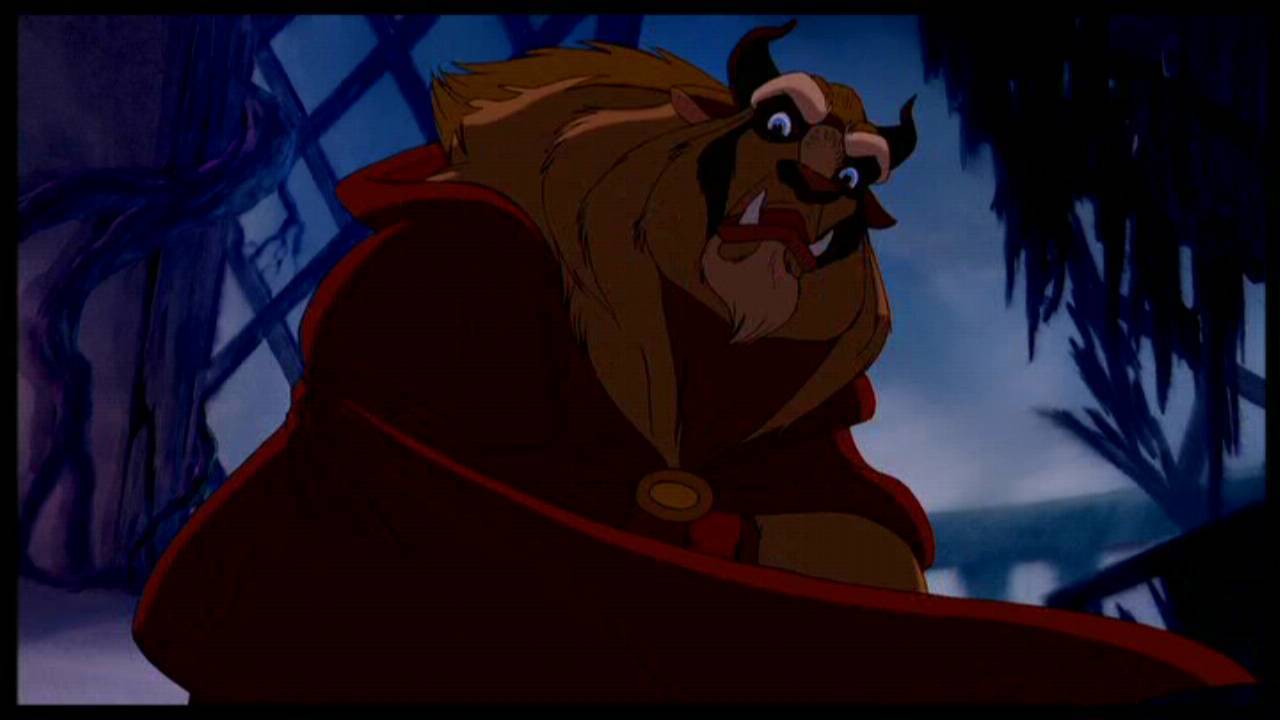
Disney's Beast-1991

Yet these examples, while they might represent some of the most modern takes on BATB, are ones that are generally read only by people who actively search out versions of BATB and other fairy tales, not by the general population. For the masses, the Beast is still a Disney buffalo-like creature, or a series of storybook illustrations. We don't find him fearsome anymore, in fact, there's this idea that it's Beauty's role to find him attractive-yet there are virtually no examples in which men are rewarded for loving a less-than-attractive woman ("Shrek" is a parody; other examples, like Gail Carson Levine's "Fairest," will probably never be read by boys anyway-other older fairy tales, such as "Green Snake" or variants of "Frog Princess", are virtually unknown). Many women are intrigued by the idea of loving the brooding, misunderstood genius, but we've lost that element of horror associated with marriage to a Beast.