Showing posts with label Steadfast Tin Soldier. Show all posts

Monday, January 25, 2016

LaliBlue's Fairy Tale Necklaces

fairytale-necklaces-scenes-inside-laliblue-gemma-arnal-jerico-1
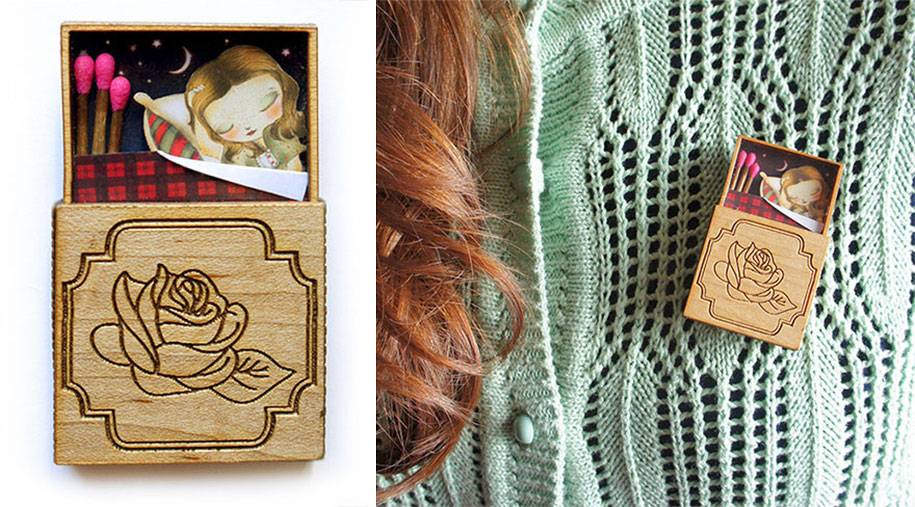
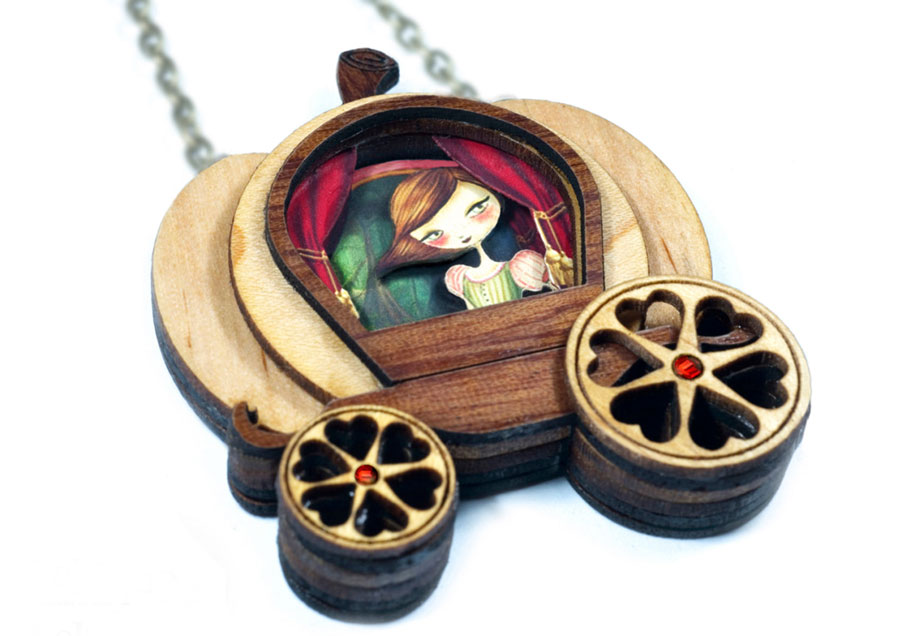
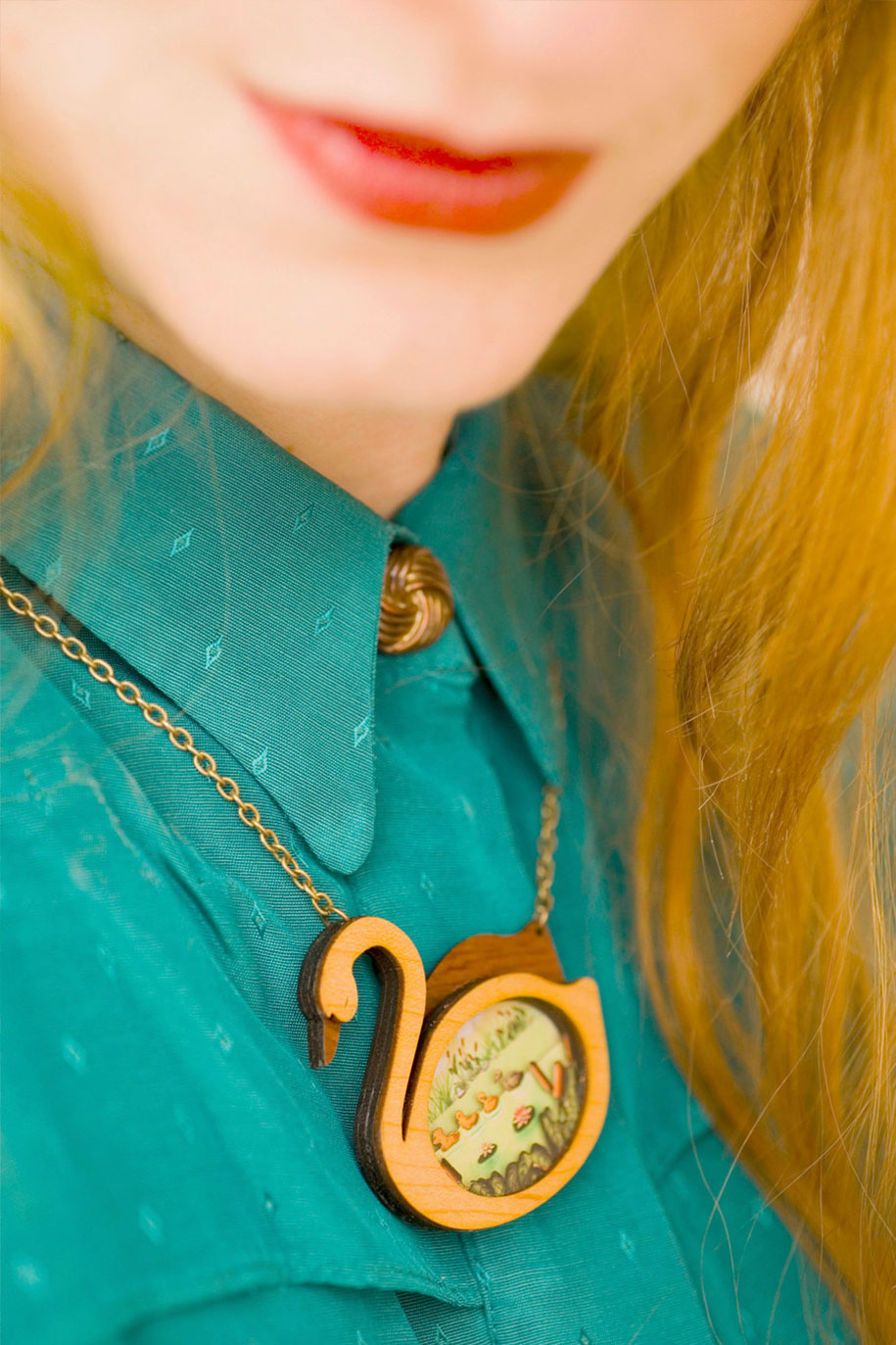
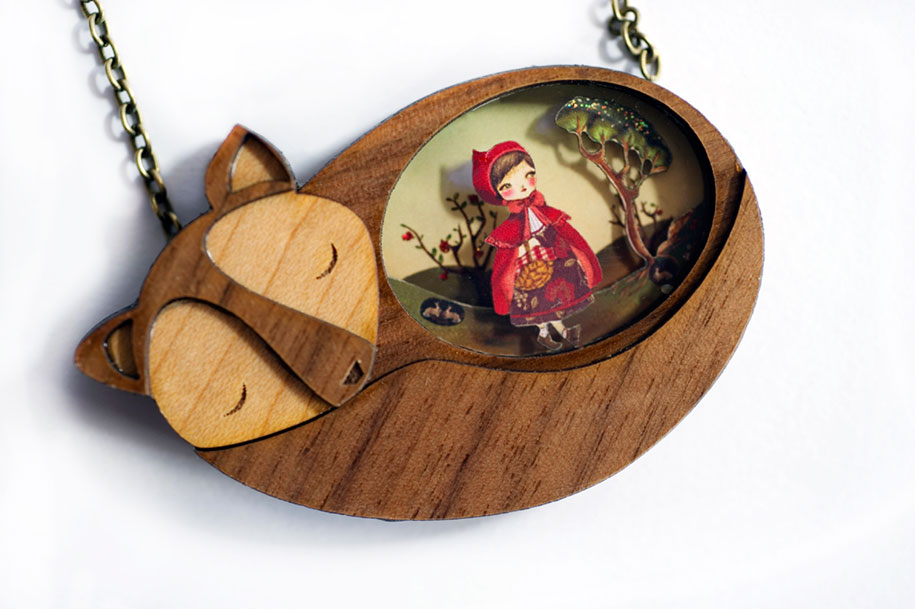
Some beautiful fairy tale necklaces can be found at Etsy's LaliBlue shop (or the original Spanish site)! There are the usual suspects (Little Red, Cinderella) alongside some other fairy tale characters you don't usually see in jewelry form, such as Donkeyskin and the Steadfast Tin Soldier.


fairytale-necklaces-scenes-inside-laliblue-gemma-arnal-jerico-5
fairytale-necklaces-scenes-inside-laliblue-gemma-arnal-jerico-3
fairytale-necklaces-scenes-inside-laliblue-gemma-arnal-jerico-8

Thursday, November 6, 2014

Stravinsky's Petroushka: Inspired by Steadfast Tin Soldier?

Stravinsky's "Petroushka" was his second ballet, which premiered in 1911, telling the story of a puppet caught on the unfortunate end of a love triangle. I've never heard anyone compare it to the plot of Hans Christian Andersen's "Steadfast Tin Soldier," but to me the similarities are obvious.
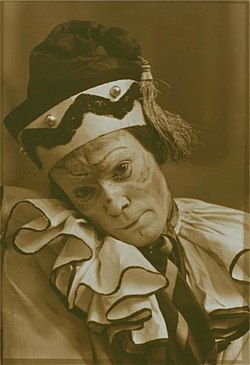
Nijinsky, the famous dancer who played the original Petroushka in 1911

Stravinsky's first ballet, "Firebird," was inspired by traditional Russian fairy tales. It's possible that he would have drawn from another fairy tale for his next ballet, but as he was stretching his music in more modern ways, he could have been even subconsciously influenced by Andersen's 1838 fairy tale, which which was also a less traditional story. He was also in the middle of composing a piece based on the Andersen fairy tale, "The Nightingale."
Marcia Brown

Looking at both stories, you can see the parallels:
"Steadfast Tin Soldier" features three main characters; a toy tin soldier, the ballerina he is in love with, and the jack-in-the-box that is his rival.
"Petroushka" features another toy, this time a puppet, who is also in love with a ballerina, and the puppet Moor who is his rival.
Tuscon production of "Petroushka" 

The Tin Soldier embarks on a journey when he falls out of the window, which ends up with him back in the same nursery room, by chance. Petroushka breaks out of his cell to rescue the ballerina from the Moor's seduction, but she does not want to be rescued-the Moor chases Petroushka outside and he finds himself back at the Shrovetide Fair where we first met him performing.
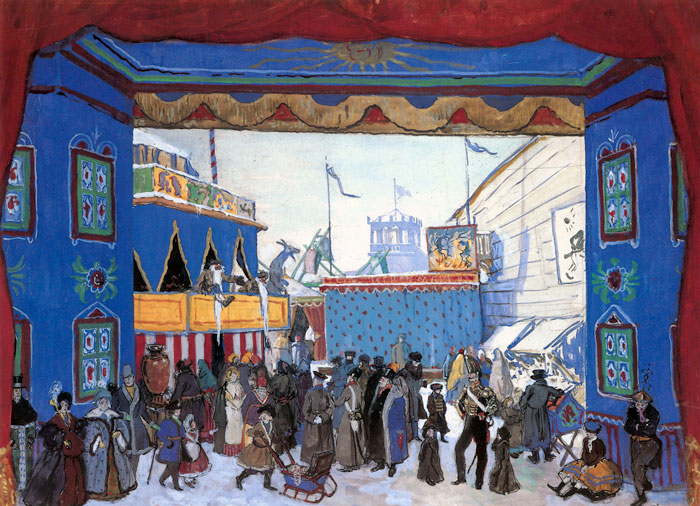
Set for the Shrovetide Fair, by Benois

1911 "Petroushka" souvenir program

Both stories are also characterized by the helplessness of the main characters, and their unfortunate ends. Neither of them can gain the love of the ballerina they desire, and in the end they both die. The Tin Soldier was inexplicably thrown into the fire by the boy who owned him, and the Moor killed Petroushka in front of the Shrovetide Fair crowd. The charlatan (who owns the puppets) showed the crowd that he was just a lifeless puppet, but after the crowd leaves, Petroushka's ghost is seen shaking his fist at the Charlatan, but then collapses on top of the puppet both, "his arms swinging to and fro in the night."
Final scene in "Steadfast Tin Soldier," Marcia Brown

Stravinsky wrote in his autobiography that "in composing the music, I had in my mind a distinct picture of a puppet, suddenly endowed with life, exasperating the patience of the orchestra with diabolical cascades of arpeggios. The orchestra in turn retaliates with menacing trumpet blasts. The outcome is a terrific noise which reaches its climax and ends in the sorrowful and querulous collapse of the poor puppet."  From there, the ballet was further developed by Diaghilev, creator of the Ballet Russes and commisioner of Stravinsky's ballets, and Alexandre Benois, the production designer. Given that Andersen's fairy tales had become famous world wide by the dawn of the 20th century, it's likely that at least one of the men who worked on the ballet would be familiar with the earlier fairy tale. Again, it could have been subconcsious influence, or it could have been coincidence-but the similarities are quite striking.
Design for street dancer by Benois

Sunday, September 28, 2014

Fairy Tale Endings: Happy, Bittersweet, Tragic

Roland Risse

Fairy Tales are often criticized for being simplistic, and for providing unrealistic happy endings. Of course, when you begin to familiarize yourself with more fairy tales, you realize this simply isn't true in all cases; however, many of the most well-known fairy tales do end happily, and happy endings remain true to the "fairy tale formula."
John Batten, "Tattercoats"
Beloved stories like "Cinderella," "Jack and the "Beanstalk," "Sleeping Beauty," "Frog Prince," and so many more end in the most traditional way: usually a wedding, while the villain gets punished. Yet even among the favorites, there are exceptions. There are unhappy versions of Cinderella (see here and here), Andersen originally wanted his Little Mermaid to end with her death and had to adjust the story to please his editors, Perrault's "Little Red Riding Hood" is eaten at the end.

Yet still, fairy tales that have become popularized are predominantly happy.

Kay Nielsen

But the "happily ever after" stories aren't the only form of fairy tales. There's another category I would call "bittersweet." Although there is a form of resolution at the end, it isn't perfect; there is still some physical evidence of trauma left after the story is done. For example, in the tale Juniper Tree; while in the Grimms' version the bird is transformed back into a boy, in other versions, such as the English The Rose Tree or the Scottish "Pippety Pew", the child remains a bird. But they aren't completely tragic stories; the bird is a beautiful creature, who sings a song which reveals the truth, rewards the kind father and daughter, and kills the evil mother. There is still life after tragedy, but the life is different than it was before. There's a sort of comfort and realism in this fact-it's not an empty assurance that things will be fine, but hope that a horrible situation can be redeemed.
Eleanore Vere Boyle

Another fairy tale with a bittersweet ending is "The Wild Swans." The princess is united with the good King and her brothers transformed back into humans-all except the last one, who will forever remain with a wing for an arm; a reminder of their enchanted state, and the fact that curses will often have consequences. Andersen's "Little Match Girl" is another very sad tale in which the Match Girl dies, although the story makes it clear that her life is very unhappy, and in her visions she sees her Grandmother welcome her into Heaven, so even in that unfortunate tale, there is hope.
Anne Anderson

Then, there are the fairy tales that are completely tragic. You won't find these in collections of children's tales, but they abound in the collections of Schonwerth, the Grimms, and Andersen. Hans Christian Andersen just loves to feature helpless creatures with no control over their destiny; besides "Little Mermaid," which I mentioned before, "The Steadfast Tin Soldier" ends with him being burned in the furnace. Throughout the whole tale, he never makes a move or utters a word to help himself; I like to think Andersen was playing on the fact that, while he might have had feelings, at least in the eyes of the child who played with him, he was, ultimately, a toy; incapable of actually doing anything to defend himself.
Kay Nielsen

Along the same vein, a random little story of Andersen's called "The Money Pig" is about a toy piggy bank. After describing some of the games the toys played in the nursery, the money pig falls off the shelf, shatters, and his pieces are swept into the dustbin. The tale leaves you with no sense of purpose or hope.

Of all the tales I've ever read, I still think the creepiest is the Grimms' "How children played Butcher with each other." It's not just that there's a tragic death, which happens in other tales-but there's no villain or motive; it's just children being shockingly ignorant and cruel.

Many of the stories in Schonwerth's collection weren't meant as much to entertain, but to warn people about local superstitions. You might find stories about certain events which were interpreted as foretelling doom or death; warnings about how to recognize Drudes or witches, or stories such as "Death of a Woman in Childbed" in which a woman dared to comb her hair after giving birth, on a Sunday while everyone else was in church, and died because of her unbelief. Or this other, very short and sad tale, "Till Death..."

"A girl had committed herself to being eternally faithful to her beloved; he died serving in the war, and she began a new relationship. One night, her former beloved appeared on a white horse and took her away to his grave where she was found dead in the morning."


Edmund Dulac

I think there's a place and purpose for each kind of tale. Sometime we just need an escape: a happy, predictable tale to comfort or give us hope. Other times we want a little more realism, and sometimes we want send warnings, or just to be a little scared, which is a form of challenging ourselves/having fun with friends and giggling at ghost stories. It's unfortunate, though, that few people realize the spectrum of fairy tales that are out there; some people think fairy tales are too violent and old-fashioned and unsuitable entertainment for children; others think they're too simplistic and perfect, and not realistic enough. But whatever your preferences and purposes, there's always some fairy tale, in some version, that could be helpful.

Saturday, May 8, 2010

The Steadfast Tin Soldier

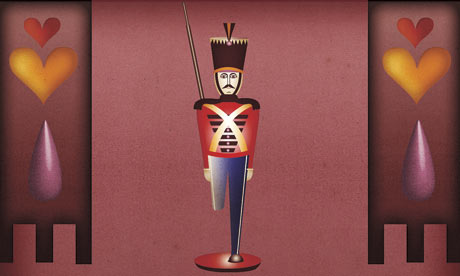
Hans Christian Andersen's "Steadfast Tin Soldier" gained fame through Disney's Fantasia 2000, set to Shostakovich's 2nd piano concerto.


With Disney, you can expect at least something to be changed from the original source. While the journey through the sewer and all the dangers entailed may seem like movie makers trying to beef up the story a bit to make it more enticing, that's actually all from the fairy tale. In fact, the short follows the story pretty closely until the very end, in which the evil jack-in-the-box (which is really a goblin who lives in a snuff box) does not fall out of the window, and the soldier and the ballerina do not live in perfect bliss. No, true to Disney style, Andersen's more tragic endings have been covered up. In the real story, the child puts the soldier in the oven, for no reason, and the ballerina is carried in as well. The tin soldier burns and melts into a heart, and all that's left of the ballerina is her tinsel rose.

Emily Forgot


Now, backing up-I adore this fairy tale. The reader's heart immediately goes out to the one-legged tin soldier. I love anything that relates to Beauty and the Beast, and there are two levels-there are actual versions of the tale, that involve most of the plot and prop elements, such as the father and the rose and Beauty staying at the castle of the Beast. Then there's a broader level, where any story in which there is an outcast character because of some physical deformity or difference is also distantly related to Beauty and the Beast. So in that way, the Steadfast Tin Soldier is like a Beast figure. He also would like to marry the ballerina, but "she is too grand."


I also love any story in which toys come to life. Everyone knows that this happens when people leave the room, and we have proof from The Christmas Toy and Toy Story. And yet, though the whole thing is from the perspective of the Tin Soldier, there's an eerie juxtaposition between him as a tin toy and him as a thinking being. The whole time, he comes up with reasons for why he doesn't cry out for help (he's too proud as a soldier) or speak to the rat in the sewer, etc. Critics relate this to Andersen's passivity, but you wonder if it's really because, as a toy soldier, he simply can't move, though he thinks he can. The only action he instigates is laying himself down to get a better look at the dancer, but that could possibly be that the soldier was knocked over. It adds to the helplessness of the characters and the pointlessness of the unhappy ending, yet leaving the reader freedom to imagine either circumstance.

Mayken Gonzalez Backlund


The story almost needs the depressing ending to justify the miraculous return of the soldier from the belly of the fish, to the very playroom from which he started. The ending at least gives it more realism, and the shape of the heart and the rose left make it bittersweet and tragically beautiful. Critics seem to view the ballerina as being punished for not returning the soldier's love, but it seemed to me that maybe the wind blowing her into the oven was maybe so that they could die together rather than having her live alone without him. Maybe I'm hopelessly romantic, but she does leave a rose behind, which is very symbolic of love.


This morbid image by Kay Nielsen is my favorite
One more thing-this type of tale, in which the protagonist is a toy or animal, is part of a tradition of insinuating that the ultimate villain is one who is MEAN TO THEIR TOYS or wouldn't go to any length for the sake of a pet. Now I love animals and toys, and I think we should be kind to animals and it's probably a red flag if a young child doesn't show some level of affection for toys that resemble humans and animals, so I don't really mind. But this level of thought reached new levels in the movie The Brave Little Toaster, in which the protagonists are all household appliances. This movie freaked me out when I was little, and it's even pretty horrifying to me now. It's incredible how they make a man who recycles used appliances into evil personified, and how the boy almost dies in an attempt to rescue his childhood toaster. Going back and rewatching this movie made me think about how I perceived it as a child-I only remembered the scary parts, I didn't remember any of the resolutions. I think there's a lot that goes into how a child perceives a story and it's often much different than the intended message-but that's a whole other topic.