Showing posts with label Beauty and the Beast-significance and meaning. Show all posts

Saturday, January 28, 2017

Megan Kearney on BATB

I love Megan Kearney's impressively concise summary of the history of the relationship development between Beauty and the Beast over time! Read her whole reply here, summary below:
 "So, in trying to sum up, traditionally Beauty and the Beast has been a story about a young woman’s journey to accepting an unconventional male partner. In the twentieth century, it become a popular metaphor for the awakening of female sexuality and power. Now, more and more, we see it as a metaphor for the channeling of negative masculinity into positive masculinity. The story evolves. We pull new meaning from it, stretch it this way and that, examine it in the mirror, and take it apart to see how it ticks. It changes to suit our cultural needs, and it will continue to change."

Art by David Sala

Wednesday, January 25, 2017

From the Archives: Beauty and the Beast as a Socio-Historical Tale

One of Jerry Griswold's purposes in The Meanings of Beauty and the Beast: A Handbook is to outline the major interpretations critics have assigned to the tale. He divides them into the following categories: psychological, socio-historical, and feminist (which, ironically, includes two very opposite interpretations: those who see the story as victimizing women, and those who find it to be very empowering to women). I've posted before on the psychological as well as the various feministic interpretations, and if you do any type of digging into Beauty and the Beast you're bound to come across them, but I don't think I've ever read about this particular aspect of the tale before, so I was intrigued:

According to Jack Zipes, if we look at the story in its historical context, we will see that it is a story of class struggle. The very presence of a merchant is unusual in the history of fairy tales, which usually feature the poorest of peasants and the most elite royals, but in this story we see the emergence of a middle class.

At the time that de Villeneuve and Beaumont were penning what would become the most famous version of one of the most classic and popular tales (18th century France), the middle class was gaining the upper hand. The members of nobility were increasingly getting poorer, but at least had their status; while the middle class were becoming richer through their businesses. It was a common thing to see a merchant's daughter entering into an arranged marriage with a destitute nobleman, allowing one family to contain both a title and wealth at the same time.

The story of Beauty and the Beast certainly explores the rise and fall of Beauty's family in society-her father starts out as a wealthy merchant, her sisters as materialistic and greedy and always wanting to improve their situation. When Beauty's father loses his money, we are reminded that status based on wealth is not always secure, and the family becomes poor farmers, where it is Beauty's contentedly cheerful, hard-working nature that keeps the family afloat. 

Then we meet the Beast-although Beauty has the upper hand in looks, he certainly has the upper hand in wealth, status, and material goods. We of course later find out that he is a prince.

This was actually the opposite kind of situation that was really happening all over France. In this story we have a nobleman whose wealth is supplied by magic and therefore cannot run out, who is generous to the poor family of Beauty-a family who you could argue has been chided for being social climbers and encouraged to become simple, hard-working farmers. According to Griswold, "In other words, in the midst of changing times, Beaumont seems to offer a kind of backwards-looking endorsement of the nobility, a flattering and conservative portrait of the ancien regime." In Zipes' words, the aim of Beaumont is to "put the bourgeoisie in their place."

This is where I don't understand why scholars refer only to Beaumont's version. Beaumont did not add anything essential to the tale, she only simplified Villeneuve's. The negative portrayal of the materialistic sisters, the fall in status of the family, were all originally Villeneuve's. But when I read the Villeneuve version, it seems to me that the message is to clearly poke fun at strict class boundaries, since each of the characters seem to change status in relationship to each other multiple times, and there is a very clear moral near the end where the good fairy is trying to convince the Queen (the Beast's mother) that Beauty is a worthy bride for her son because of her character, NOT her status (before finally unveiling the truth of Beauty's true identity, being a fairy Princess, therefore pacifying the Queen).  So ultimately, Villeneuve's original story probably wasn't pushing for the merchant class to go "back to the farm and become once again hardworking and uncomplaining peasants" as Griswold indicates was Beaumont's goal. (Plus, wasn't Beaumont a member of the middle class herself? She ended up as a governess, probably employed by merchant class families-if they all went back to the farm she wouldn't have had a job or the ability to write fairy tales on the side).

And of course there's the irony present in many fairy tales that, while Beauty is praised for being content as a hardworking peasant, she is the one who is rewarded with unimaginable wealth and no more need for working for the rest of her life. Yet another example where I think the actual events of the tale, mixed with the reader's own natural desires, end up being a much stronger message than the supposed "moral", if that was even what Beaumont was trying to portray.

Illustrations by Eleanor Vere Boyle

Thursday, June 2, 2016

Jenny Prater's And He Became a Handsome Prince

Be sure to check out Jenny's series on transformations in fairy tales, "And He Became a Handsome Prince", over in Halfway to Fairyland. She explores different versions of Beauty and the Beast/Animal Bridegroom tales, as well as other related tales with transformations, from the curse to the process of finding love and healing, and the ultimate restoration. She has lots of great insights and reading it reminded me of why Beauty and the Beast is my favorite fairy tale!

Disney Concept Art for the Beast

Thursday, May 5, 2016

Lives of the Writers of BATB Stories


"Beauty and the Beast" emerged from a long line of Animal Bridegroom tales in France around the 1700s. Some sources credit Madame de Beaumont as the author of the tale, but her version is heavily influenced by other stories that preceded her. In a tale that revolves around marriage ideals, it's a story that can be very personal, and the lives of the authors influenced their versions of the classic fairy tale.

1696-1698- Marie-Catherine d'Aulnoy's The Ram

Beauty and the Beast Image 3 by DulacAt the young age of 15, d'Aulnoy was married off to a man notorious for a reputation as a gambler and extramarital lover. She took some lovers on the side herself, but it was a very unhappy marriage. d'Aulnoy attempted, later in life, to have her husband hung for high treason, but the attempt failed; her husband retaliated by charging herself and her lover. She fled to Paris where she became a successful writer.

d'Aulnoy wrote several fairy tales, but her Animal Bridegroom tale, "The Ram," ends tragically, with the Beast figure/Ram dying of heartache just outside of the castle gates, where his wife was attending his sister's wedding. d'Aulnoy wrote other stories with happier endings, but it's interesting that her attempt at killing her actual husband found outlet in this story. She certainly wasn't naive about what could happen in marriage when she penned her version of this romantic line of fairy tales.


1712-1714-Jean-Paul Bignon's Princess Zeineb and King Leopard

Beauty and the Beast Image 4 by Dulac
Jean-Paul Bignon was a priest and a scholar. Perhaps not surprisingly, the emphasis in his Animal Bridegroom tale seemed to be on sexual restraint; King Leopard spends every night in bed with Princess Zeineb but does not touch her, while the villains attempt to have one night stands (but are hypnotized by Princess Zeineb into doing monotonous tasks through the night instead-although the other "morals" in this tale seem a little more arbitrary, that scene is very humorous).

Jack Zipes estimates that it was very likely Villeneuve knew this story. Interestingly, in her version, there's an episode that was removed later by Beaumont, in which after Beauty accepts the Beast's proposal, there's basically a repeat of the initial bedroom scene from Princess Zeineb-the Beast comes in to bed, lies down, but makes no move.


1740-Madame de Villeneuve's "Beauty and the Beast"

It's difficult to find much information on Villeneuve, even the very excellent books exploring the tradition of Beauty and the Beast by Betsy Hearne and Jerry Griswold gloss over her life and version of the tale and instead focus on Beaumont, which is a shame in my opinion.  Villeneuve certainly borrowed from tales like the ones above, but she clearly created the story we know of today as Beauty and the Beast, so knowing more about her would seem to shed more light on the tale.

Beauty and the Beast Image 5 by DulacVilleneuve was married at 21 but requested a separation after only 6 months, because her husband was squandering all of their wealth. Just a few years later, at the age of 26, she was widowed. She lost her fortune and had to work for a living. She lived with a boyfriend for the rest of her life and worked as a writer, a lifestyle virtually unheard of for the time.

Her version of the story set up the essential details we associate with the BATB tradition, with lengthy descriptions of what went on in the castle and detailed backstories included for the Beast and Beauty that tie together all the details. One emphasis of the tale was on marrying for kindness and not looks, wit, or class. Having experienced two significant relationships, Villeneuve had more perspective on what helped relationships work better in the long run-character and equality.


1756- Madame LePrince de Beaumont's "Beauty and the Beast"

Beaumont, like Beauty in her tale, was very well educated. She (like the women above) also entered into an arranged marriage with a womanizing man, and the marriage was annulled after 2 years. Beaumont moved to England and became a governess, also writing more than 70 books. At the age of 51 she returned to France and remarried, this time resulting in a happy marriage.

Beaumont simplified Villeneuve's longer story to create the beloved classic (without giving any credit to Villeneuve, incidentally). Her version (as well as Villeneuve's) empowered the female to have choice in marriage, yet did not go to the extreme of most French salon writers whose characters were swept up in passion and love at first sight (more on this in my post Beaumont on Arranged Marriages).

Beauty and the Beast Image 7 by Dulac
And of course, there are countless other tale tellers and audiences, whose life details we will never really know. How interesting, though, that in the French fairy tale salon period, perhaps the most influential versions of BATB were written by those on the outside of happy marriages (for most of their lives). Their stories contributed to the then-new idea of marrying for love and not just for social standing, and helped to make one of the most female empowered fairy tales that remains well known today.

Sources:
Jerry Griswold, "The Meanings of Beauty and the Beast: a Handbook"
Jack Zipes, "Beauties, Beasts, and Enchantments: Classic French Fairy Tales"
Wikipedia article on Villeneuve

Illustrations by Edmund Dulac

Monday, April 25, 2016

Post-Feminist Fairy Tales

Tom Shippey has a great article titled "Transformations of the Fairy Tale in Contemporary Writing" (which can be found in A Companion to the Fairy Tale). Fairy tale scholarship itself has gone through phases-at certain points, academics have been more concerned with fairy tale origins or psychoanalysis. Around the 70s, feminism was sweeping through folklore research as well as the rest of the Western world. We still see the effects of this today in much writing about fairy tales-it's very common to hear concerns about gender representation, especially the dreaded stereotype: the passive fairy tale Princess who does nothing but sit around and wait for her prince to save her.

While some scholars have fully embraced certain methods of looking at fairy tales, some theories are more controversial. It can be easy to dismiss other claims, but Shippey has, I think, a very well rounded outlook-recognizing both the flaws and the values in various trends. Sexism in fairy tales is still a very important topic, but sometimes going too far in one direction can actually hurt your cause. I appreciated reading a male perspective that seems a little more moderate than Jack Zipes (who appears to be way more offended by female roles in fairy tales than I am).

A large part of the reason for unbalanced gender portrayals in stereotypes is simple the culture of the Victorian period that ultimately determined what we now consider to be "classic" versions of "standard" fairy tales. It was a patriarchal culture and this was reflected in the tales that were collected, told, edited, and retold. Yet, Shippey says, "Fairy tales may be transparently patriarchal, but once this is grasped they need be so no more; they can be rewritten with an entirely different, or inverted, orientation." Yet, how does one go about rewriting fairy tales in a non-patriarchal lens? It's not necessarily as simple as it might appear.

Some authors have decided to write more active heroines who play the traditional "hero" role, sometimes doing the rescuing, sometimes rejecting the Prince to show independence. Things things can be done well...they can also be done poorly, or simply too much. Shippey points out that these kinds of stories may still be just as moralistic as the Victorian ones that were meant to train young girls into being the ideal, submissive wives. The fact that it's an opposite moral doesn't take away from the fact that stories can lose their power when they become more about making a point (even a good one) than telling a good story. They come across as preachy (and can also suffer from being very unrealistic, especially when authors set feminist heroines in historical contexts without necessarily grasping the culture well).
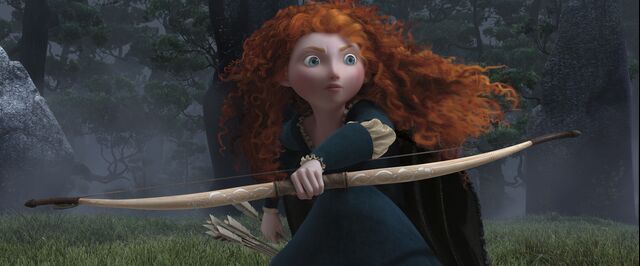
Merida from "Brave" and Danielle (Cinderella) from "Ever After", modern weapon-weilding Princesses

The irony is that as more and more authors write feminist tales that reverse traditions, they are actually embedding those traditions in the fairy tale realm. If a princess rescues a prince, there is still a victim that needs rescuing and a hero that does it; if one gender is presented as negative and the other positive, that's still sexist, just reversing sexes.

The other ironic factor is that, by choosing the most well known passive princesses to use as the basis for a "twisted fairy tale," we are still only being exposed to those core Princess tales that tend to feature passive females, rather than exploring  other types of tales. There are countless dark or inverted versions of Snow White, Cinderella, Little Red Riding Hood, Rapunzel, etc. out there-yet the public still tends to think of the Grimm/Perrault versions of these tales as the "real" versions, and a twisted version as only that-not the new normal. Why not expose the public to Kate Crackernuts or Janet from Tam Lin? What about the many tales that don't involve romance or rescuing at all? What about "Snow White and Rose Red", a tale that shows sisters with very opposite personalities,but both seen in a positive light (because, just as we can't all fit into the prim, dainty, Victorian ideal woman, we can't all fit into the bold, athletic, feminist stereotype either!) There are countless wonderful folktales that have positive messages for modern culture (see Multicolored Diary for lots of examples!) while still having the timeless, "authentic" quality that most people crave who desire fairy tale entertainment.
Andrea Adams, illustration for "Kate Crackernuts"

Don't get me wrong, I love a good feminist tale and it's very important to question certain elements of old tales and reinvent them, but there can be dangers in going to the opposite extreme. Especially since it's been decades now and the feminist formulas are, frankly, getting kind of old. The first "twisted" fairy tales I read were very powerful experiences for me, and for some people, being exposed to this is still a fairly new concept.

Shippey also points out something really interesting-even among fairy tales themselves, the idea of "transforming" or "reversing" the stories already exists! "Bluebeard" and "Beauty and the Beast" are like opposite tales-"the one tale of an ideal husband who becomes a monster, and the other a tale of the monster who turns into an ideal husband." There's also Sleeping Beauty, waiting for a kiss to come back to life, verses the Beast, waiting for love to bring him back to his former life. Of course, I find it interesting that in the two contrasting examples he uses, he compares tales to "Beauty and the Beast." It's a tale that doesn't fit the traditional mold-it's essentially the story of a helpless male who needs to be rescued by a woman. (And yet, nobody gets all up in arms because this implies that males are helpless! Our very idea that a helpless woman in a story translates into "all women are innately helpless" is in itself kind of sexist...but I digress).

Another concern I have with the gender-focused approach to fairy tales is that, by being so fixated on gender and stereotypes, we're further emphasizing the divide between genders, whereas I would love to see children encouraged to relate to and empathize with characters of all kinds. In the words of Kate Bernheimer, "While I appreciate the celebration, both in scholarship and in popular culture, of the strong female characters in fairy tales, I think that, first and foremost, our devotion to fairy tales is with 'the whole of the mind' and not with our gender." Yes, it's important to realize that gender is usually a huge part of our identity, but it doesn't need to define us and our experiences, especially in negative ways.

Shippey makes an intruiguing suggestion: "Are all female-protagonist fairy-tales, then, all versions of each other?" An interesting thing to think about, especially when you realize that there really are dozens of versions of each of the standard Princess tales. You can find versions that end unhappily, versions in which the heroine is more passive or more active, versions that combine elements from other stories-it becomes clear that fairy tales themselves aren't sending out certain "morals" or messages, unless that message is that situations play out differently for different people, in different circumstances, at different times.

And of course, there are many authors who have written feminist tales and done it very well. He spends a lot of time discussing the stories of Angela Carter, among others. It's a great article that goes into more topics than addressed here. He ends with reminding us that the future of fairy tales in this century is yet to be determined.

What do you see as the future of fairy tales in the 21st century? How should fairy tales (or really stories in general) portray genders, and what would you  like to see in terms of either reinventing the classic tales, digging into unknowns, or creating new stories?

Friday, February 19, 2016

Megan Kearney on Relationship Development in BATB

Check out this fascinating post by Megan Kearney on BATBComic on the history of Beauty and the Beast, specifically focusing on character development.
Beauty and the Beast by Pavel Tartarnikov:
Here are a couple excerpts:

"Most older variants of the story are interested in Beauty getting what she deserves —wealth, station and an appropriate mate. This makes sense, as it’s a story about a woman told by women —first at great length in Villeneuve’s novella, and then in a much shorter bowdlerized form by Beaumont. The primary concern of the story is Beauty being respectfully courted by a remarkable patient and good hearted, but ugly, individual. This is, heartbreakingly, a deeply romantic fantasy when we consider that its authors were women who had been foisted into loveless political marriages with less than kindhearted men — it’s the story of hoping the man with whom you are forced co-habitate will turn out to be a kind prince, in spite of first seeming to be an unknowable monster..."
Beauty and the Beast by Pavel Tartarnikov:
And the conclusion:
"So, in trying to sum up, traditionally Beauty and the Beast has been a story about a young woman’s journey to accepting an unconventional male partner. In the twentieth century, it become a popular metaphor for the awakening of female sexuality and power. Now, more and more, we see it as a metaphor for the channeling of negative masculinity into positive masculinity. The story evolves. We pull new meaning from it, stretch it this way and that, examine it in the mirror, and take it apart to see how it ticks. It changes to suit our cultural needs, and it will continue to change."
Beauty and the Beast by Pavel Tartarnikov:
Illustrations by Pavel Tatarnikov

Also...today Tales of Faerie turns six! A sincere thank you to all of you who have helped me on my journey to learning more about fairy tales!
Absolutely amazing fairy tale cake!:
cake image

Sunday, February 14, 2016

Roses in Fairy Tales: Beauty's Request


Roses are often associated with "Beauty and the Beast," whether people are familiar with the tales in which Beauty requests a rose from her father which he finds in the Beast's garden, or the Disney one that signals the end of the period in which the Beast's curse can be ended. People have found different meanings in the classic fairy tale's rose; it is generally thought to represent Beauty's character, since she appreciates nature and is not vain and materialistic like her sisters. Yet it's ironic, because the dresses and jewelry her sisters request are actually practical and will last a long time; flowers, especially roses, are beautiful for a few days and then fade.

Bowley's Beauty and the BeastI've even seen it argued that Beauty's request for a rose in the middle of winter means that she is giving her father an impossible request, but in the Villeneuve version it's made clear that her request is made in the summer and her father was simply on a very long journey. ( Yet, in the Italian "Zelinda and the Monster," the request is made in January, and the other sisters' requests were easily found, so it seemed this Beauty was more demanding and less practical).

It's also interesting to look at folktale versions of BATB from around the world in Surlalune's collection. Some stories don't even have the episode with the request.

In some, Beauty's request is there to emphasize her wisdom and restraint. Like Villeneuve, who tells us that Beauty realized her father may not be left with much money after paying off his debts, Beauty requests something she thinks will be cheap and easy to find; the heroine in an Italian version states, "this is not the time to spend money, and I love flowers." In most versions, Beauty initially requests nothing, saying she only wants her father to come back safely and/or in good health; but he presses her, for he wants to get her something. In the Italian "Bellindia," both the father and her sisters think her foolish for only requesting a rose tree. In this tale, it seems that money really is no longer a problem, and Bellindia could have had anything she wanted-her father later feels "no inclination to comply with Bellindia's wish."

Bowley's Beauty and the BeastSuch a request, naturally, makes her sister jealous, and later on when the Beast demands their father's life, the sisters bring it back to Beauty, claiming that her request was made only to set herself apart and now put her father's life in danger. Although they're being unfair, given the nature of sibling relationships, I would suspect there was at least a tiny bit of Beauty that found satisfaction in being a "better person" than her sisters...
Some Beauties don't ask for roses, although the majority of them do. In the Spanish "Lily and the Bear", the youngest daughter asks for a lily, saying, "We have many roses in our garden but I have never had a lily." (Interestingly, her eldest sister asks for a rose-colored dress).

In the Portuguese "Maiden and the Beast," this daughter is so emphatic that her father not buy her anything, she asks for that which does not exist-"a slice of roach off a green meadow" (?)-yet the supernatural beast is able to provide her father with...whatever that is...in order to demand that she be brought to him. In most versions, it's really the Beast who manipulates an innocent request into getting a potential date-although to be fair, he's pretty short on options. (The Villeneuve once again explains this away, and we are told that being threatened with her life before coming is the only way a woman can actually break the Beast's spell. It's a pretty complex curse.)

Whatever we may read into Beauty's request, it's usually essential to the story to simply bring her and the Beast together at some point. It shows that Beauty is different from her sisters and connects her to the Beast.

Illustrations by A. L. Bowley

Tuesday, October 20, 2015

Beast as Lion

"Beauty and the Beast" by Emily Winfield Martin

I recently shared that Emily Winfield Martin was having a showing of her collection, "Wolves and Wonders," featuring many images of women with beasts, which brings many classic fairy tale images to mind. I was excited to see this BATB painting, and here's her description:
"Beauty & the Beast is one of my favorite stories. I think it is such a lovely metaphor for reckoning with the savage & civilized parts we're all made of. And even if it was originally a an instructive parable about arranged marriages (this is the word on the street), I also think it holds a lot of significance about the contemporary idea of true love." 

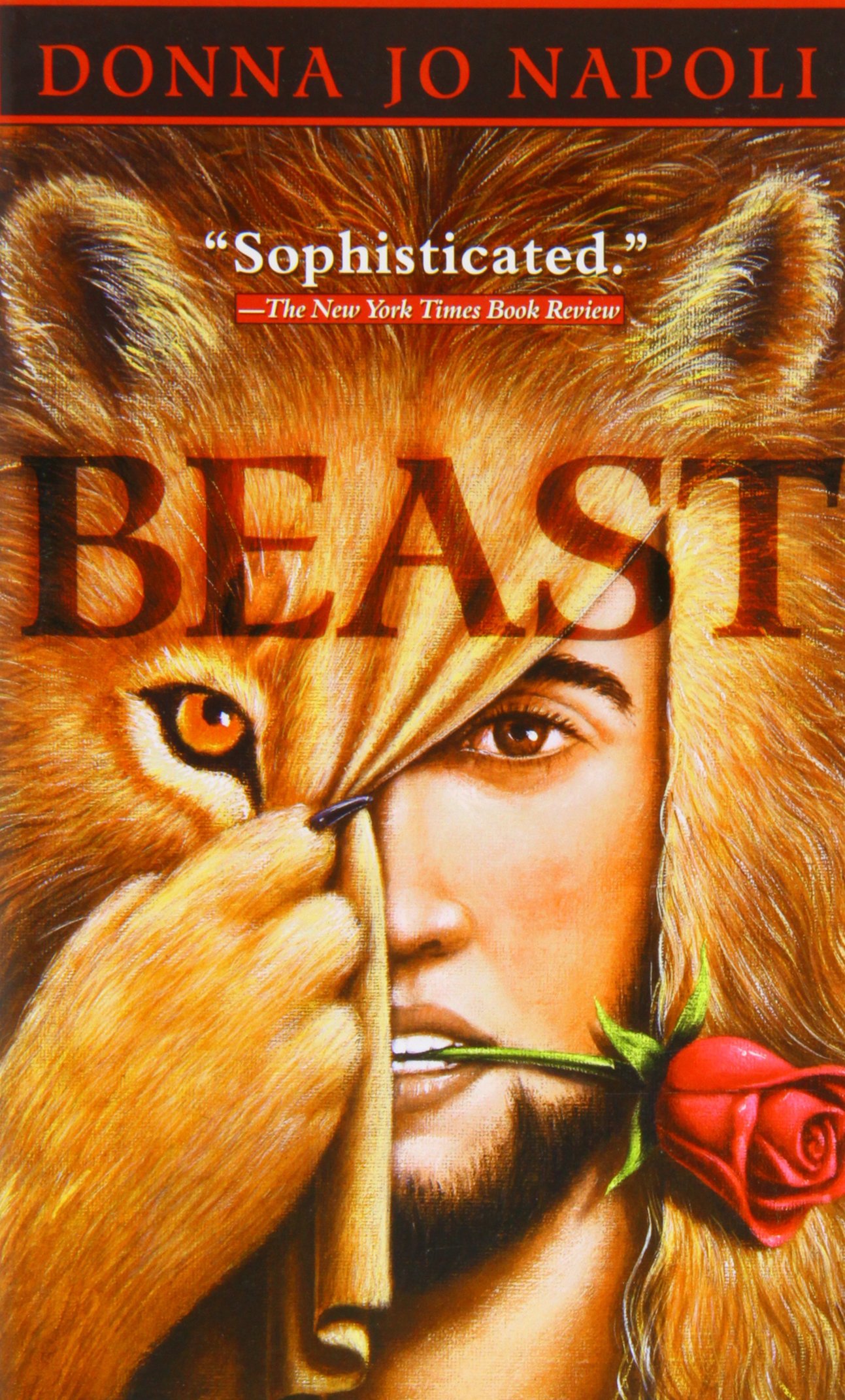
Be sure to check out her illustration of Angela Carter's The Tiger's Bride, too! Above, Emily chose to portray the Beast as a lion, and despite the fact that most classic versions of the tale don't specify a certain animal, I feel like the lion has become a more trendy form for the Beast to take lately.
Donna Jo Napoli's novel "Beast"
The television show from the 80s has a very lion-like Beast
Annie Leibovitz' shoot for Vogue in April 2005
Alexandra Banti
Jun Suemi
Jean Cocteau's 1946 film (Thanks, Adam!)
Even this incarnation of the X-men superhero Beast! (Again, thanks Adam!)


I'm sure there are many others (feel free to share in the comments!). Traditional Western fairy tales were much more likely to feature bears or wolves, dangerous animals that people were familiar with, so it's interesting that we've been more interested in the exotic lion recently. (I still have yet to find anyone attempt to illustrate the Beast as described by Villeneuve-with scales that clanked and an elephant's trunk). 

Lions tend to represent strength, nobility, and (maybe ironically) are usually considered very beautiful animals. I don't necessarily agree with this website, but supposedly, here are some interpretations of what it could mean to dream about a lion (which could arguably be similar reasons for creating fairy tales involving lions):

"Lion is a symbol of strength, courage and royal and proud thinking. Lion in a dream is seen usually by those who are really freed from prejudices that prevent many people from doing what they like.

A Lion, which is seen in a dream of a single girl, means that she will meet her life partner, who will completely take under control everything in their relations. Even such situation is possible when the life of the girl will be subordinated to this man. Therefore it is necessary to know what lion means in the particular dream."

Wednesday, May 6, 2015

BATB: The Beast as MALE Victim of Rape

Pavel Tartarnikov

We've been doing some discussion of Cinderella as an abuse victim, especially with the latest blockbuster Cinderella movie. Jenny from Halfway to Fairyland has a very interesting discussion on "Beauty and the Beast" and what it says about our culture that we have moved the Beast from innocent victim, to his beastliness as a deserved punishment.

Disney Beast Concept Art

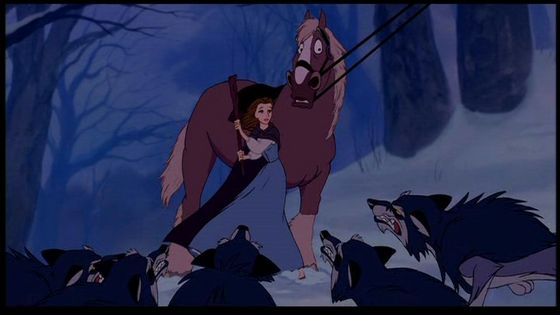
Usually critics of BATB harp on the Stockholm Syndrome and how it could encourage abusive relationships. This always makes me leery, not only because I get defensive of my all time favorite childhood movie, but because Disney makes it very clear that the Beast makes changes over time and that Belle only starts to love him once she sees him making changes-especially sacrificing himself to save her from wild wolves.

But this is a new way of thinking about the fairy tale-that males CAN be victims just as much as women, and that in either case it's never okay to blame the victim.
Denis Godeev

In Jenny's words:
"Now, let’s talk about what we’ve done to this story over the years, and what it says about us as a society.
This awful thing that happened to the Beast was his own fault, naturally. A very young man is sexually abused, essentially, by an older woman who is supposed to be taking care of him, and we change this into the story of an unpleasant young man being justly punished by a good woman. And then—then we do the exact same thing Beauty spent the entire story learning not to do. We immediately assume that ugliness of body must signify ugliness of spirit, and we adjust the story accordingly.
This is meant to be a story about a girl learning to see past appearances—about Beauty becoming a better person. Instead it’s become the exact opposite—Beauty helping the Beast to become better. It’s a redemption story now. The Beast never needed to be redeemed. He needed to be rescued."
(Emphasis mine)

The change from Beast as a victim of sexual harassment in Villeneuve's to a spoiled child in Disney became the new norm for many BATB interpretations, but not all. For example, Robin McKinley's Beasts are always perfect gentlemen. But if you asked the average person on the street why the Beast was cursed, chances are the vast majority will tell you it's because he was a jerk and deserved it. Now, I do think this is a very interesting interpretation of the tale-a good way to explore beastliness as being an outward expression of what is on the inside-but the fact that this has become the new cultural BATB plot means that how we interpret the tale changes, and quite significantly.

Brent Hollowell

Basically, Halfway to Fairyland has a lot of really thoughtful posts on the evolution of fairy tales and you should read them if you haven't already

*Also-most of the images in this post can be found on Once Upon a Blog's/Gypsy's BATB Pinterest-a must-visit for BATB fans!
Julie Falques

Wednesday, April 15, 2015

Seasons in Beauty and the Beast


This winter was extra cold in the American Midwest, so the changing of the seasons is even more welcome than usual. In fact, multiple season changes is an aspect of the fairy tale "Beauty and the Beast", and the seasons are symbolic, according to Betsy Hearne in Beauty and the Beast: Visions and Revisions of an Old Tale.

Edmund Dulac

"The seasonal cycle is either signified or fully developed in every version of "Beauty and the Beast." The merchant sets out in reasonable weather, but his trip carries him into winter-the winter of his old age and to some extent, defeat. His is unable to recoup his losses or satisfy Beauty's request for a summer rose." (emphasis mine)
Marianna Mayer

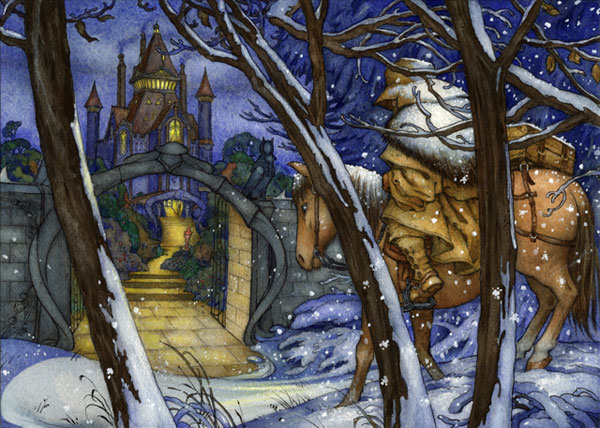
"Lost in a snow-storm, he finds the Beast's palace surrounded by summer, the proper age for courtship. Before Beauty makes her decision to return to the Beast's palace, the Beast's world begins to die with him and turn to winter." Then, of course, the happy ending is always associated with spring. Just as spring is the time when barren branches bloom, seeds turn into flowers, and caterpillars will begin their metamorphosis into butterflies, the Beast's transformation is echoed by the season of growth and renewal.
Angela Barrett