Showing posts with label Madame de Villeneuve. Show all posts

Wednesday, January 25, 2017

From the Archives: Beauty and the Beast as a Socio-Historical Tale

One of Jerry Griswold's purposes in The Meanings of Beauty and the Beast: A Handbook is to outline the major interpretations critics have assigned to the tale. He divides them into the following categories: psychological, socio-historical, and feminist (which, ironically, includes two very opposite interpretations: those who see the story as victimizing women, and those who find it to be very empowering to women). I've posted before on the psychological as well as the various feministic interpretations, and if you do any type of digging into Beauty and the Beast you're bound to come across them, but I don't think I've ever read about this particular aspect of the tale before, so I was intrigued:

According to Jack Zipes, if we look at the story in its historical context, we will see that it is a story of class struggle. The very presence of a merchant is unusual in the history of fairy tales, which usually feature the poorest of peasants and the most elite royals, but in this story we see the emergence of a middle class.

At the time that de Villeneuve and Beaumont were penning what would become the most famous version of one of the most classic and popular tales (18th century France), the middle class was gaining the upper hand. The members of nobility were increasingly getting poorer, but at least had their status; while the middle class were becoming richer through their businesses. It was a common thing to see a merchant's daughter entering into an arranged marriage with a destitute nobleman, allowing one family to contain both a title and wealth at the same time.

The story of Beauty and the Beast certainly explores the rise and fall of Beauty's family in society-her father starts out as a wealthy merchant, her sisters as materialistic and greedy and always wanting to improve their situation. When Beauty's father loses his money, we are reminded that status based on wealth is not always secure, and the family becomes poor farmers, where it is Beauty's contentedly cheerful, hard-working nature that keeps the family afloat. 

Then we meet the Beast-although Beauty has the upper hand in looks, he certainly has the upper hand in wealth, status, and material goods. We of course later find out that he is a prince.

This was actually the opposite kind of situation that was really happening all over France. In this story we have a nobleman whose wealth is supplied by magic and therefore cannot run out, who is generous to the poor family of Beauty-a family who you could argue has been chided for being social climbers and encouraged to become simple, hard-working farmers. According to Griswold, "In other words, in the midst of changing times, Beaumont seems to offer a kind of backwards-looking endorsement of the nobility, a flattering and conservative portrait of the ancien regime." In Zipes' words, the aim of Beaumont is to "put the bourgeoisie in their place."

This is where I don't understand why scholars refer only to Beaumont's version. Beaumont did not add anything essential to the tale, she only simplified Villeneuve's. The negative portrayal of the materialistic sisters, the fall in status of the family, were all originally Villeneuve's. But when I read the Villeneuve version, it seems to me that the message is to clearly poke fun at strict class boundaries, since each of the characters seem to change status in relationship to each other multiple times, and there is a very clear moral near the end where the good fairy is trying to convince the Queen (the Beast's mother) that Beauty is a worthy bride for her son because of her character, NOT her status (before finally unveiling the truth of Beauty's true identity, being a fairy Princess, therefore pacifying the Queen).  So ultimately, Villeneuve's original story probably wasn't pushing for the merchant class to go "back to the farm and become once again hardworking and uncomplaining peasants" as Griswold indicates was Beaumont's goal. (Plus, wasn't Beaumont a member of the middle class herself? She ended up as a governess, probably employed by merchant class families-if they all went back to the farm she wouldn't have had a job or the ability to write fairy tales on the side).

And of course there's the irony present in many fairy tales that, while Beauty is praised for being content as a hardworking peasant, she is the one who is rewarded with unimaginable wealth and no more need for working for the rest of her life. Yet another example where I think the actual events of the tale, mixed with the reader's own natural desires, end up being a much stronger message than the supposed "moral", if that was even what Beaumont was trying to portray.

Illustrations by Eleanor Vere Boyle

Friday, July 8, 2016

Sarah Winter's Beauty and the Beast

Exploring fairy tale titles on Amazon, this description caught my eye for Sarah Winter's Beauty and the Beast (Fairy Tales Reborn Book 1):

"As a child, Prince Leopold Villeneuve unleashed his aristocratic cruelty on an old woman by the bank of the River Chaud. On his eighteenth birthday, the old crone returns to find the same ignorant boy in the body of a beautiful young man. In a night shrouded in mystery, his parents King Alaric and Queen Adele died and Leopold himself disappeared. For years, villagers are frozen in fear of a mysterious and terrifying creature that haunts the town at night. 

 Armand Babineaux, once the wealthiest merchant in the village of Fontainbleu, must secure his daughter Jolie to the unpleasant but enormously wealthy Quentin Garamonde, or condemn her to a life of servitude and poverty. His eldest daughter, Mireille, has already married well, but Jolie will be left all alone in the world if he does nothing to safeguard her future. Once the task is done, he must travel to Port Lucerne to recover his last ship or face the same fate in his old age. On his return trip, he is caught in a winter storm and finds himself far from the beaten path, at the foot of Villeneuve Castle. 

 Armand seeks shelter in the castle, and once inside, he is forced to confront the reality of what happened to the royal family so many years ago. The next morning, when he picks a beautiful rose for Jolie, he is brought face to face with the creature of local legend and must make a decision that will change all of their lives forever."

I love the nod to Villeneuve's version just in the naming of the royal family! The curse scene seems to be clearly influenced by Disney, but that is a really fascinating aspect of the story to explore more, and this seems to fill some of the holes the Disney version left (where are the Prince's parents? Why is a mere child punished, since it's years before his 21st birthday, in Disney's initial release? And what happened to their royal subjects, why don't they seem to notice their Prince is missing?) It seems this author has done her research (for example, the presence of another sister). I'm definitely going to keep my eye out for this one! Have any of you read it yet?

Thursday, May 5, 2016

Lives of the Writers of BATB Stories


"Beauty and the Beast" emerged from a long line of Animal Bridegroom tales in France around the 1700s. Some sources credit Madame de Beaumont as the author of the tale, but her version is heavily influenced by other stories that preceded her. In a tale that revolves around marriage ideals, it's a story that can be very personal, and the lives of the authors influenced their versions of the classic fairy tale.

1696-1698- Marie-Catherine d'Aulnoy's The Ram

Beauty and the Beast Image 3 by DulacAt the young age of 15, d'Aulnoy was married off to a man notorious for a reputation as a gambler and extramarital lover. She took some lovers on the side herself, but it was a very unhappy marriage. d'Aulnoy attempted, later in life, to have her husband hung for high treason, but the attempt failed; her husband retaliated by charging herself and her lover. She fled to Paris where she became a successful writer.

d'Aulnoy wrote several fairy tales, but her Animal Bridegroom tale, "The Ram," ends tragically, with the Beast figure/Ram dying of heartache just outside of the castle gates, where his wife was attending his sister's wedding. d'Aulnoy wrote other stories with happier endings, but it's interesting that her attempt at killing her actual husband found outlet in this story. She certainly wasn't naive about what could happen in marriage when she penned her version of this romantic line of fairy tales.


1712-1714-Jean-Paul Bignon's Princess Zeineb and King Leopard

Beauty and the Beast Image 4 by Dulac
Jean-Paul Bignon was a priest and a scholar. Perhaps not surprisingly, the emphasis in his Animal Bridegroom tale seemed to be on sexual restraint; King Leopard spends every night in bed with Princess Zeineb but does not touch her, while the villains attempt to have one night stands (but are hypnotized by Princess Zeineb into doing monotonous tasks through the night instead-although the other "morals" in this tale seem a little more arbitrary, that scene is very humorous).

Jack Zipes estimates that it was very likely Villeneuve knew this story. Interestingly, in her version, there's an episode that was removed later by Beaumont, in which after Beauty accepts the Beast's proposal, there's basically a repeat of the initial bedroom scene from Princess Zeineb-the Beast comes in to bed, lies down, but makes no move.


1740-Madame de Villeneuve's "Beauty and the Beast"

It's difficult to find much information on Villeneuve, even the very excellent books exploring the tradition of Beauty and the Beast by Betsy Hearne and Jerry Griswold gloss over her life and version of the tale and instead focus on Beaumont, which is a shame in my opinion.  Villeneuve certainly borrowed from tales like the ones above, but she clearly created the story we know of today as Beauty and the Beast, so knowing more about her would seem to shed more light on the tale.

Beauty and the Beast Image 5 by DulacVilleneuve was married at 21 but requested a separation after only 6 months, because her husband was squandering all of their wealth. Just a few years later, at the age of 26, she was widowed. She lost her fortune and had to work for a living. She lived with a boyfriend for the rest of her life and worked as a writer, a lifestyle virtually unheard of for the time.

Her version of the story set up the essential details we associate with the BATB tradition, with lengthy descriptions of what went on in the castle and detailed backstories included for the Beast and Beauty that tie together all the details. One emphasis of the tale was on marrying for kindness and not looks, wit, or class. Having experienced two significant relationships, Villeneuve had more perspective on what helped relationships work better in the long run-character and equality.


1756- Madame LePrince de Beaumont's "Beauty and the Beast"

Beaumont, like Beauty in her tale, was very well educated. She (like the women above) also entered into an arranged marriage with a womanizing man, and the marriage was annulled after 2 years. Beaumont moved to England and became a governess, also writing more than 70 books. At the age of 51 she returned to France and remarried, this time resulting in a happy marriage.

Beaumont simplified Villeneuve's longer story to create the beloved classic (without giving any credit to Villeneuve, incidentally). Her version (as well as Villeneuve's) empowered the female to have choice in marriage, yet did not go to the extreme of most French salon writers whose characters were swept up in passion and love at first sight (more on this in my post Beaumont on Arranged Marriages).

Beauty and the Beast Image 7 by Dulac
And of course, there are countless other tale tellers and audiences, whose life details we will never really know. How interesting, though, that in the French fairy tale salon period, perhaps the most influential versions of BATB were written by those on the outside of happy marriages (for most of their lives). Their stories contributed to the then-new idea of marrying for love and not just for social standing, and helped to make one of the most female empowered fairy tales that remains well known today.

Sources:
Jerry Griswold, "The Meanings of Beauty and the Beast: a Handbook"
Jack Zipes, "Beauties, Beasts, and Enchantments: Classic French Fairy Tales"
Wikipedia article on Villeneuve

Illustrations by Edmund Dulac

Tuesday, October 20, 2015

Beast as Lion

"Beauty and the Beast" by Emily Winfield Martin

I recently shared that Emily Winfield Martin was having a showing of her collection, "Wolves and Wonders," featuring many images of women with beasts, which brings many classic fairy tale images to mind. I was excited to see this BATB painting, and here's her description:
"Beauty & the Beast is one of my favorite stories. I think it is such a lovely metaphor for reckoning with the savage & civilized parts we're all made of. And even if it was originally a an instructive parable about arranged marriages (this is the word on the street), I also think it holds a lot of significance about the contemporary idea of true love." 

Be sure to check out her illustration of Angela Carter's The Tiger's Bride, too! Above, Emily chose to portray the Beast as a lion, and despite the fact that most classic versions of the tale don't specify a certain animal, I feel like the lion has become a more trendy form for the Beast to take lately.
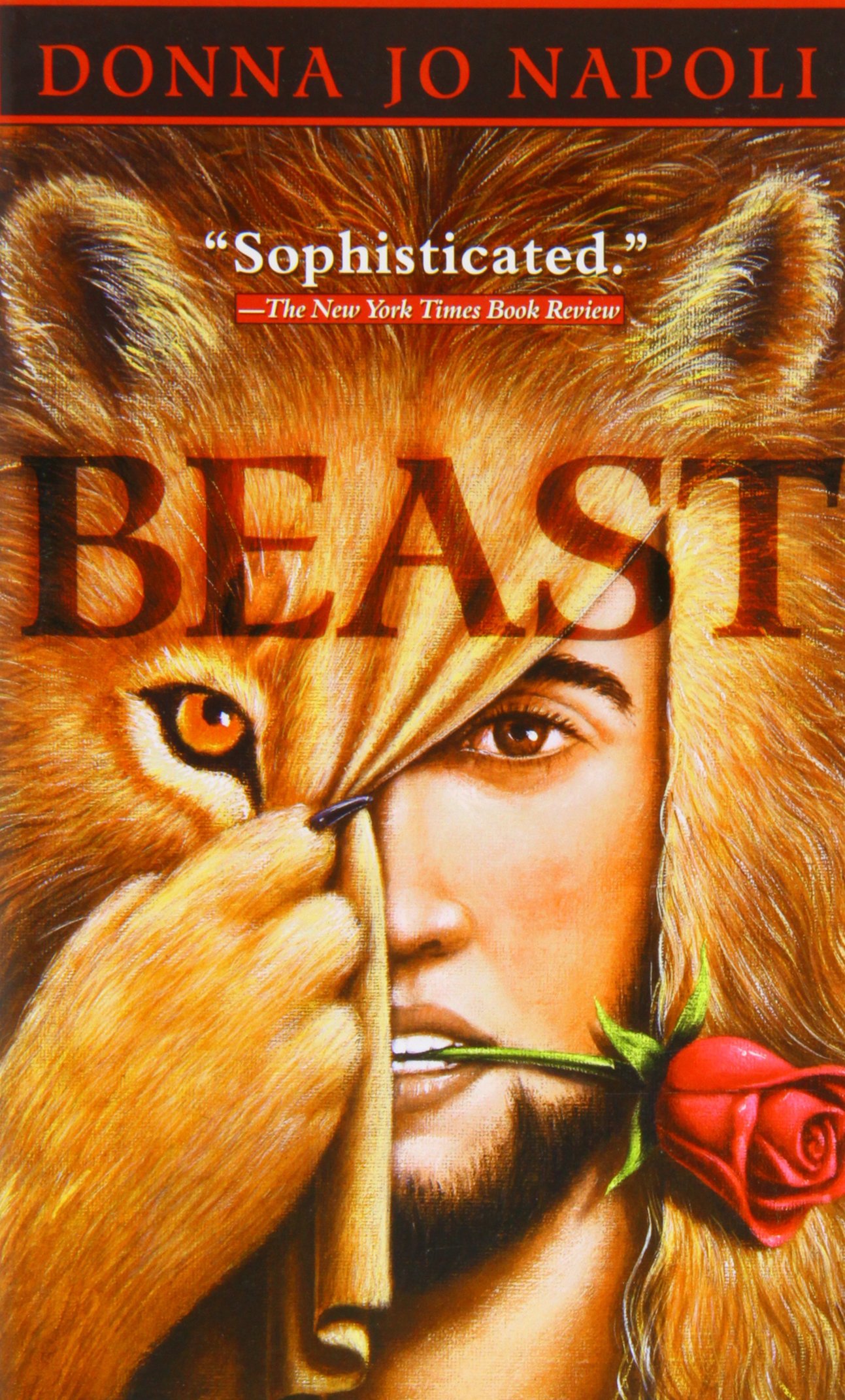
Donna Jo Napoli's novel "Beast"
The television show from the 80s has a very lion-like Beast
Annie Leibovitz' shoot for Vogue in April 2005
Alexandra Banti
Jun Suemi
Jean Cocteau's 1946 film (Thanks, Adam!)
Even this incarnation of the X-men superhero Beast! (Again, thanks Adam!)


I'm sure there are many others (feel free to share in the comments!). Traditional Western fairy tales were much more likely to feature bears or wolves, dangerous animals that people were familiar with, so it's interesting that we've been more interested in the exotic lion recently. (I still have yet to find anyone attempt to illustrate the Beast as described by Villeneuve-with scales that clanked and an elephant's trunk). 

Lions tend to represent strength, nobility, and (maybe ironically) are usually considered very beautiful animals. I don't necessarily agree with this website, but supposedly, here are some interpretations of what it could mean to dream about a lion (which could arguably be similar reasons for creating fairy tales involving lions):

"Lion is a symbol of strength, courage and royal and proud thinking. Lion in a dream is seen usually by those who are really freed from prejudices that prevent many people from doing what they like.

A Lion, which is seen in a dream of a single girl, means that she will meet her life partner, who will completely take under control everything in their relations. Even such situation is possible when the life of the girl will be subordinated to this man. Therefore it is necessary to know what lion means in the particular dream."

Thursday, July 2, 2015

Read Villeneuve's BATB ONLINE!!

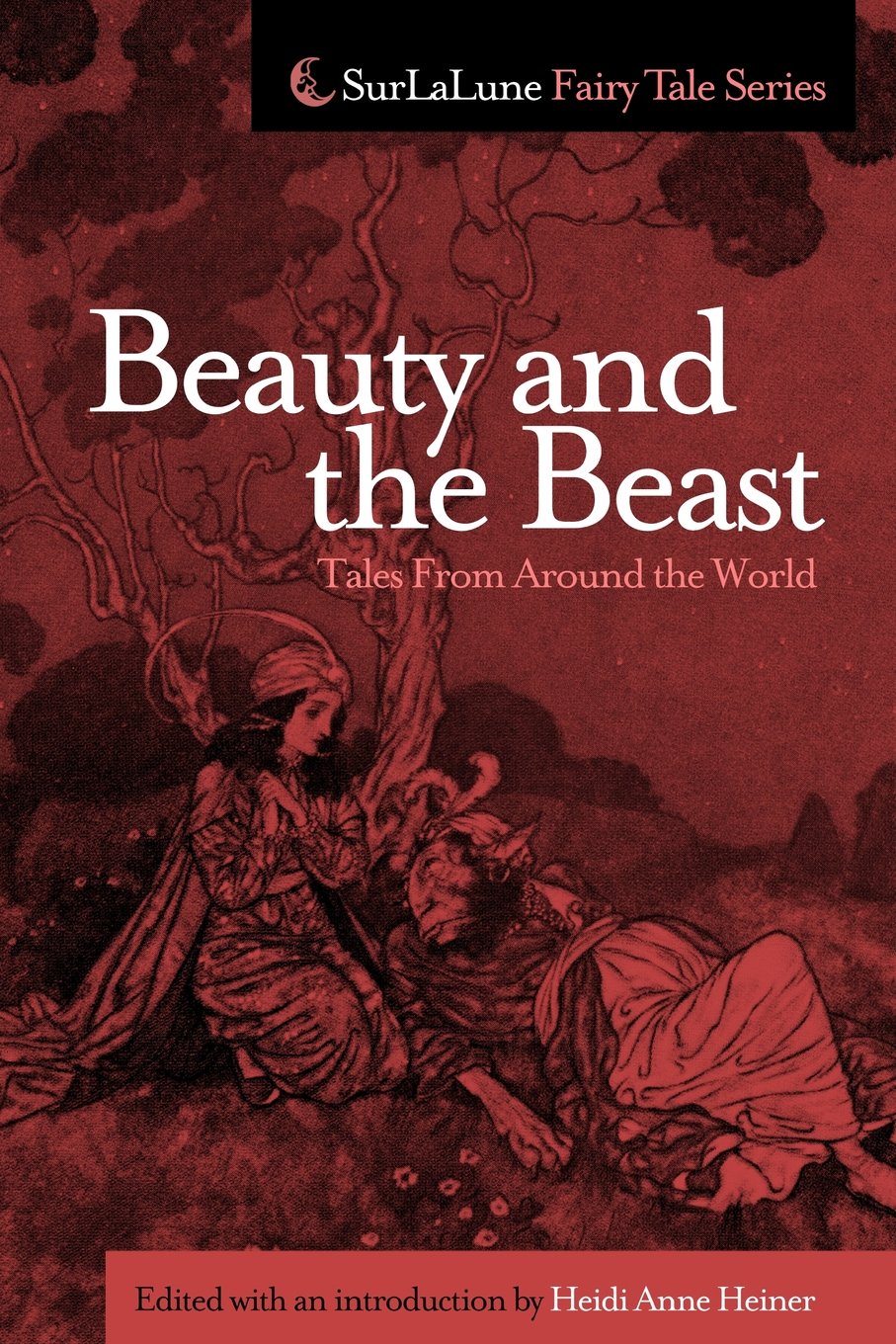
Sometimes I get asked where one might find an English translation of Madame de Villeneuve's "Beauty and the Beast," and I've been more than happy to refer people to the Surlalune collection of Beauty and the Beast Tales From Around the World-before this book it was a lot harder to get hold of.

But thanks to Persinette in the Tower I have just discovered you can also read the full text online!

Here is a link to the translation by J.R. Planche, and here is a link to download the translation by Ernest Dowson. Dowson is the one who translates the Beast as (correctly) asking Beauty to sleep with him, not to marry him, which clearly has different implications (I've written about this before). The great thing about the Surlalune collection is that Heidi Anne Heiner included both translations for comparison, and in many ways print is easier to read and flip through than online,  but I really wish I had known about this link a few years ago when I first started searching for BATB history!
Illustration by Edward Corbould

I'm also adding the link to my link list on the right, so it should be easily accessible in the future.

Thursday, February 19, 2015

A Tour with Tales of Faerie (With Once Upon a Blog as Guest): [3] The Grounds


"This morning she decided to amuse herself in the garden, for the sun shone, and all the fountains were playing; but she was astonished to find that every place was familiar to her, and presently she came to the brook where the myrtle trees were growing where she had first met the prince in her dream, and that made her think more than ever that he must be kept a prisoner by the rich beast."
(Madame de Villeneuve)
Welcome back readers. I'm glad you're following along on the tour! Now that I'm dressed a little more practically for the outdoors, let's go get Gypsy and I'll show you all the grounds and gardens.

K: *Calls through french doors*  Gypsy? You there?

G: *hurries outside*  I'm so sorry. There are so many lovely paintings, I lost track of time. Those boots look amazing by the way.

K: Thank you. I do like having an occasion to show them off and they are good for walking the grounds.*links arms with Gypsy* I have so much to show you.

*leads Gypsy toward some formal looking hedges*

G: Is this a maze? And those little statues, wow - they all look like different versions I've seen of the Beast in different books!

K: I do so love to be reminded of the different variations of my Beast. But just to clarify, I am not in any way calling my wonderful husband Tony a Beast...he is a true Prince Charming, in character and appearance!

G: You are a lucky girl. Beasts - and Princes - truly come in many forms. *touches pig-looking snout of a gargoyle thoughtfully* Speaking of variations,  which versions of the Beauty and the Beast fairy tale are your favorites and can you tell me a little of how and why you came to love Villeneuve's version so much?

K: One of my favorite things about it is how it answers so many of the questions people have about the fairy tale. Why did the Beast get so upset about a stolen rose? It's all in the Villeneuve story, as well as rich back stories for Beauty and the Beast that describe why the Beast was cursed in the first place, as well as a secret history of Beauty and the faerie folk most people aren't aware of!

G: You wrote a post recently on roses in fairy tales - which appear often. Are there things you think you've learned as a direct result of their being part of the Beauty and the Beast tale?


K: Roses can symbolize so many different things, even from version to version of the tale. Beauty's request for a rose was supposed to indicate her appreciation of nature over materialistic things. Yet in the Disney version, the rose is linked to the Beast's life and represents a ticking clock in which Belle has to break the spell, adding a heightened sense of tension. Roses are on the one hand simple, wild, and innocent, yet at the same time represent passion, romance, and luxurious decadence. They are multi-faceted, just like the tale itself!

G: What might say to you "this is a Beauty & the Beast scene"? (For example, motifs, iconic scenes etc)

K: Well, obviously roses and a castle! Some of my favorite interpretations of the castle have a more eerie, almost creepy interpretation of the magic there, such as the disembodied hands holding torches in the Cocteau film. And of course one of those scenes would have to be a library, like the one Beast gifted Belle with in the Disney version! In fact, let's head in the direction of the Tales Of Faerie library now. We'll take the long way round so I can show you my favorite roses before we get there though.

G: Ooh - yes please!

K: We'll meet everyone else there around mid-afternoon, say 4 o'clock-ish? I've asked for coffee and refreshments to be waiting for us.

G: Perfect!

Note: All illustrations used, unless otherwise indicated, are from the picture book version of Beauty and the Beast, written by Max Eilenberg, Illustrated by the amazing Angela Barrett (2006).

_________________________________________________________________________________
Next stop: [4] THE LIBRARY 

Sunday, December 28, 2014

The Evolution of the Beast

Our perceptions of the beastly will not only affect how we read the story of "Beauty and the Beast", but other fairy tales such as "Little Red Riding Hood" and numerous others that feature animals.
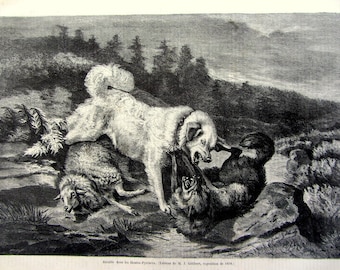
Dog fight illustration-1870

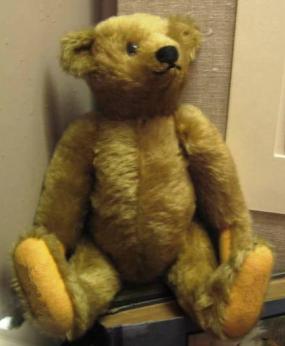
To audiences hundreds of years ago, animals such as a wolf in the forest or a Beast demanding your daughter would have been truly frightening. When much of the land people lived in still contained wild animals, attacks would have been a regular risk. We tend to only see wild animals contained in zoos or translated into cute, fluffy toys for children-even the teddy bear is a relatively recent invention, thanks to Teddy Roosevelt.
Replica of the original Teddy Bear

Older folk versions of Animal Bridegroom tales feature husbands that were clearly ugly and undesirable. They were not man/beast hybrids that were essentially more hairy and masculine men; they were straight up animals who could also talk and desire brides. The Beast has been everything from pig to frog to snake. This unusual husband was never meant to be attractive.
Eleanor Vere Boyle, 1875

In Villeneuve's 1740 story that sparked the "Beauty and the Beast" tradition as we know it, although she was possibly the first to make the Beast a hybrid creature; he was, if anything, a more horrifying combination of animals-a trunk like an elephant and a scaly covering that clanked when he moved.
Anne Anderson, 1935
Anonymous, for the Charles Lamb poem-1887


Beaumont's 1756 story, a shorter version of Villeneuve's, was directed towards young girls as part of their moral education. In hers, the Beast is never given a specific description. For years, illustrators had full range of imagination when creating the Beast, but he was still, in general, animalistic, and completely undesirable husband material.
W. Heath Robinson, 1921
Charles Robinson, 1911

It may seem disturbing to indicate bestiality, or imagine such a union. There are a couple explanations for why authors suggested such a marriage. I think some of the tellers of earlier tales may have been trying to communicate the horrors of arranged marriage-young girls being forced to marry older men, sometimes abusive or domineering, but with no other option. By the time Beaumont wrote her version, the moral was more along the lines of how an obedient wife could transform a beastly husband into a gentleman. But Villeneuve is clear about her message: the importance of marrying not for looks, money, or wit, but how kindness and character are the most important qualities to look for in a husband.  The moral is enforced even more in some versions (such as Eleanor Vere Boyle's 1875 story) by contrasting Beauty's happiness to her sisters, who married for looks and wealth and regretted their decisions when their husbands ceased to treat them well. This moral is still often attached to the story today, the idea of looking beneath the surface: "do not judge by appearances, for beauty is found within."
Edmund Dulac-1910
H.J. Ford, 1889


But the image of the Beast has changed drastically since the days of Villeneuve and Beaumont. Two main things have happened: he has become tamed, and sexualized.

The more man took control of animals, the less fearsome wild animals became. They were now exciting, something to see in a circus or zoo or take home as a pet. Some images of the Beast became downright cute and cloying.
My own plush Disney Beast doll
Jessie Wilcox Smith, 1911
A.L. Bowley, 1920
Margaret Evans Price, 1921

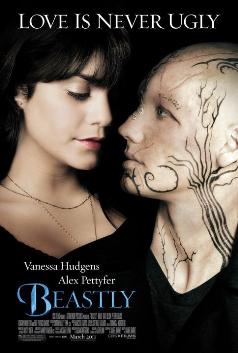
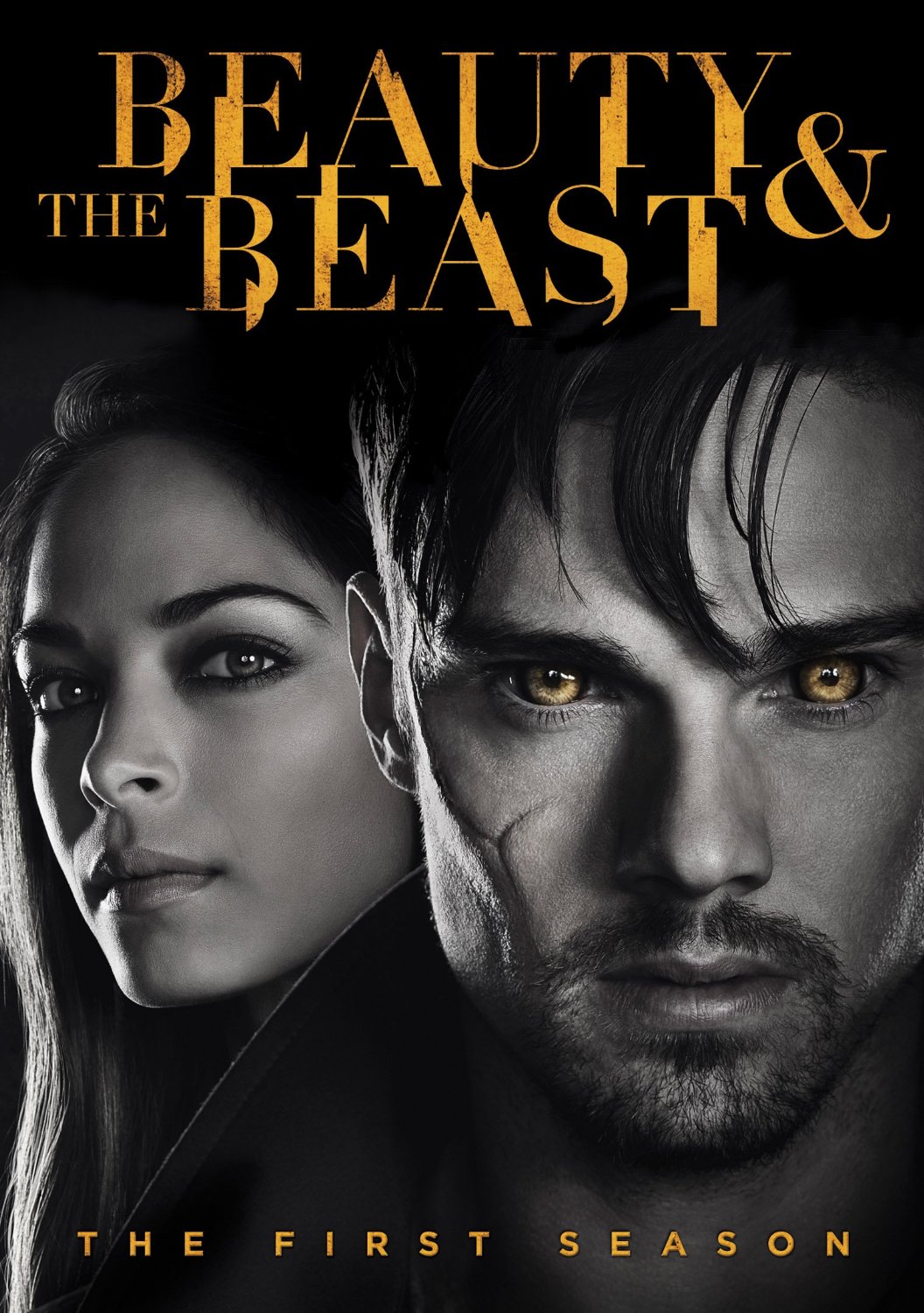
Over time, the Beast has also become more and more attractive. First he became more human, and now some versions of the "beast" aren't the least bit Beastly. You can think of the Phantom of the Opera as a modern version of BATB, and the Twilight series, to the men from the film "Beastly" and the CW show in which the men just have tattoos or, as one commentator said, "one tiny scar on his pretty pretty cheek."
Phantom of the Opera Film-2004 (Musical-1986, book-1909)
First Twilight book published 2005
Beastly-2011
The CW's Beauty and the Beast-2012-present
Once Upon a Time-Rumpelstiltskin/Beast-2011-present

These are the mainstream versions of BATB that most people are still familiar with. There are some more foward thinking authors who have taken the next step, which is to embrace the Beast's animal nature-he might not transform, he is considered atttractive the way he is; sometimes the Beauty character turns into an animal as well-in the writings of Angela Carter, Tanith Lee, Francesca Lia Block, and Robin McKinley. With these stories, his animalistic nature is thought to represent his sexual nature, which we no longer suppress the way they did in Victorian times. 
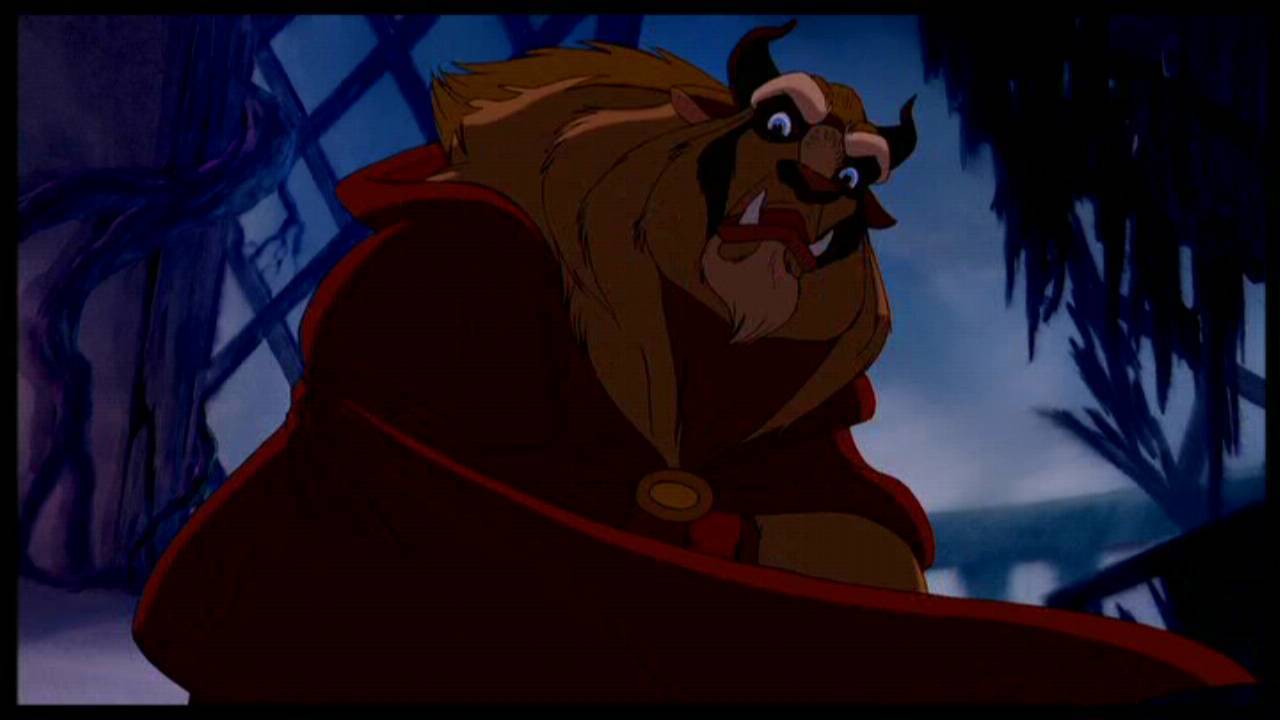
Disney's Beast-1991

Yet these examples, while they might represent some of the most modern takes on BATB, are ones that are generally read only by people who actively search out versions of BATB and other fairy tales, not by the general population. For the masses, the Beast is still a Disney buffalo-like creature, or a series of storybook illustrations. We don't find him fearsome anymore, in fact, there's this idea that it's Beauty's role to find him attractive-yet there are virtually no examples in which men are rewarded for loving a less-than-attractive woman ("Shrek" is a parody; other examples, like Gail Carson Levine's "Fairest," will probably never be read by boys anyway-other older fairy tales, such as "Green Snake" or variants of "Frog Princess", are virtually unknown). Many women are intrigued by the idea of loving the brooding, misunderstood genius, but we've lost that element of horror associated with marriage to a Beast.

Sunday, August 3, 2014

Villeneuve and Marriage Ideals

It's kind of amazing to me how internet resources for fairy tales have exploded in the past few years. When I first found out that there was a longer, more intricate version of "Beauty and the Beast" that predated Beaumont's classic, I could only find vague references to the plot online, and even then they usually contradicted each other, which I later found out was because different translations of Villeneuve's French text can lead to significant changes in how the story is interpreted (and some online sources are flat out wrong, no matter which translation you use-see here and here). A big part of the reason I founded this blog was to search for answers in that mysterious and elusive text, and to hope I would find other people who were also curious and/or had answers for me.

In the last 10 years or so, Surlalune has expanded the history section of her Beauty and the Beast page to include more on this monumentally important version of the tale, and now accurate English translations are much more easily accessible through her Beauty and the Beast Tales From Around the World. Quill and Qwerty recently gave her own summary of the intricate backstories for the main characters-a very helpful resource if you want to know what happens without committing to the full story, which, depending on the edition, can be over 100 pages. I had done my own summaries for Beauty and the Beast's complicated backstories a few years ago, but I'm getting to the point where I'll read old posts from my own archives as if it's new information (isn't it amazing how much the human brain can forget over time?).

Still, there is so much to explore within the text that still remains unknown to the majority of people. When dealing with Beauty and the Beast, we've assigned it many themes, such as loving despite appearances, exploring our animal natures, etc., without consulting what is arguably the "original" text (Villeneuve based her 1740 tale off of earlier Animal Bridegroom tales, but it was definitely the biggest single influence on Beaumont's later shorter version and all consequent versions).

As I reviewed the text, including the backstories that many summaries omit altogether as being boring and unimportant, a repeated theme kept jumping out at me: that of marriage outside of one's social class. The cultural context sheds light on this, but even today, the more general message of loving without discrimination has much application for modern audiences.

Terri Windling provides excellent context: "The story she came up with was uniquely her own, however, and addressed issues of concern to women of her day. Chief among these was a critique of a marriage system in which women had few legal rights — no right to chose their own husband, no right to refuse the marriage bed, no right to control their own property, and no right of divorce. Often the brides were fourteen or fifteen years old, given to men who were decades older. Unsatisfactory wives risked being locked up in mental institutions or distant convents. Women fairy tale writers of the 17th & 18th centuries were often sharply critical of such practices, promoting the ideas of love, fidelity, and civilité between the sexes. Their tales reflected the realities they lived with, and their dreams of a better way of life. Their Animal Bridegroom stories, in particularly, embodied the real–life fears of women who could be promised to total strangers in marriage, and who did not know if they'd find a beast or a lover in their marriage bed."

Yet the story itself seems, to me, to be as much about critiquing the idea of only marrying within the same social class as female independence (Beauty is incredibly independent, bravely defying the will of her father to go to the Beast, later turning down the Beast's repeated requests for sex, indicating that it is she who has the power to determine the nature of their relations).

The most obvious example is Beauty and the Beast themselves. Initially, although the Beast has magical powers and untold riches at his disposal, his shocking appearance contrasted with Beauty's attractive qualities give her the upper hand (in Villeneuve he has an elephant-like trunk, is enormous, and has scales that rattle as he moves-details that weren't included in any other versions and that no illustrator has seemed to want to tackle). Yet at the breaking of the spell, we find that the Beast is, of course, really a handsome Prince.

The tables are turned and we now find that the Prince, being royalty, is actually considered high above the social status of a merchant's daughter. In fact, the Prince's mother is very emphatic that she does not approve of Beauty to marry her son, simply because she isn't royal. Beauty proves again and again her inner worth, but the Queen cannot relent-"I am more than grateful to her for all she has done. But all the same...I cannot refrain from pointing out to you how unnatural would be the mixture of the blood which runs in my son's veins-the noblest in the world-with that from which this young girl has sprung."
Beauty graciously accepts this rebuff of the Queen, but turns down all counter offers (marriage to any other  noble). The good Fairy (read the backstory for a refresher on all the extra characters) emphasizes to the Queen that Beauty's worth comes from her character rather than her rank: "Think you that princesses, who are such only by the caprice of fortune, are any more worthy of the high rank in which their destiny has placed them than this young person? For my part, I think it wrong to hold her responsible for her origin, for which her virtuous conduct is an ample compensation."

The Queen even admits "Beauty is incomparable, her merit is infinite; nothing can surpass it." Yet, even after the Prince confesses he would rather go back to his Beastly form than be separate from Beauty, the Queen is uncomfortable with such a union. She is only happy when she discovers that, all along, Beauty has actually been the daughter of a King and a fairy, without being aware of it.

To add complexity and, I suspect, humor, to the whole debate of marrying only within one's social class, Villeneuve adds another layer to the social ladder: that of fairies, who consider themselves "as far above kings as kings are above their subjects," and their laws forbid them to engage in marriage with creatures below themselves. To add to the idea that worth is not found in social standing, most of the characters are found at one point or another to be secretly in a different class.

The Beast himself was cursed because he would not enter into marriage with an evil Fairy; by her rank, she would be above him, but because of her character, he does not desire her. When we delve into Beauty's backstory, we learn that her father was a King who fell in love with a shepherdess. Despite her poor situation, he recognizes beauty and inner worth. The shepherdess/Queen is lauded for  her "noble character and her purity of mind."

Yet once again there is an upset in the social status, for the King had no idea this whole time that his beloved wife was actually a Fairy who had gone beneath her station to marry a mere human, again because she recognized his character was worthy and she fell in love with him. When the fairy council found this out she was imprisoned, and the King had assumed her dead, until the good Fairy brought about a happy family reunion.

In that time, most fairy tale authors' response to arranged marriages was to have their characters marry for love (mostly at first sight) and attractiveness. The whole "love at first sight" is one of the most criticized features of fairy tales, and yet we can't pass the writers off as completely shallow-you should be physically attracted to your spouse on some level. It's so hard, when being oppressed under one extreme, not to default to the other (forced love verses ideal, free love).

Which is why Villeneuve's solution is so remarkable; she is able to look beyond her time to the more wise choice, to marry not for social status or for physical attraction alone, but to marry someone you can respect and trust-the best long-term solution. Yet if we completely ignore the whole second half of her story we miss an obvious message she was trying to make, for when we look at the full story, it is clearly a comment on classism among other things-we tend to get hung up on the sexual aspect and ignore the rest as unimportant. In fact I think I've only read about interpreting BATB as a socio-historic tale from Jerry Griswold, but he only looks at Beaumont's version, and concludes that she is endorsing a "backwards-looking endorsement of the nobility," which I hardly see as valid when you consider her full source.

*Illustrations by Eleanor Vere Boyle