Showing posts with label Rapunzel. Show all posts

Friday, July 14, 2017

Around the Web

Really enjoyed this post on Visualizing Wonder by Heidi Grether, What Are You So Afraid Of? A Rapunzel Analysis. Grether shares that Rapunzel is underrepresented in television compared to other household name Princesses, yet explains how the fairy tale can be very powerful and symbolic even to modern audiences. I've never thought about how the tower can represent fear before.
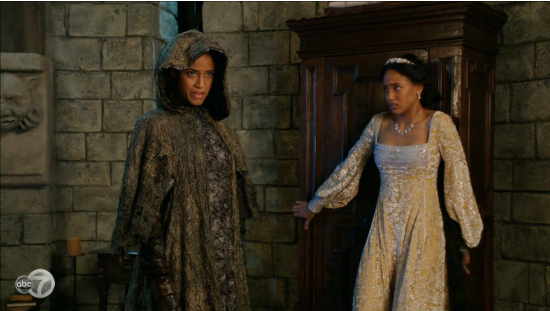
Rapunzel from OUAT

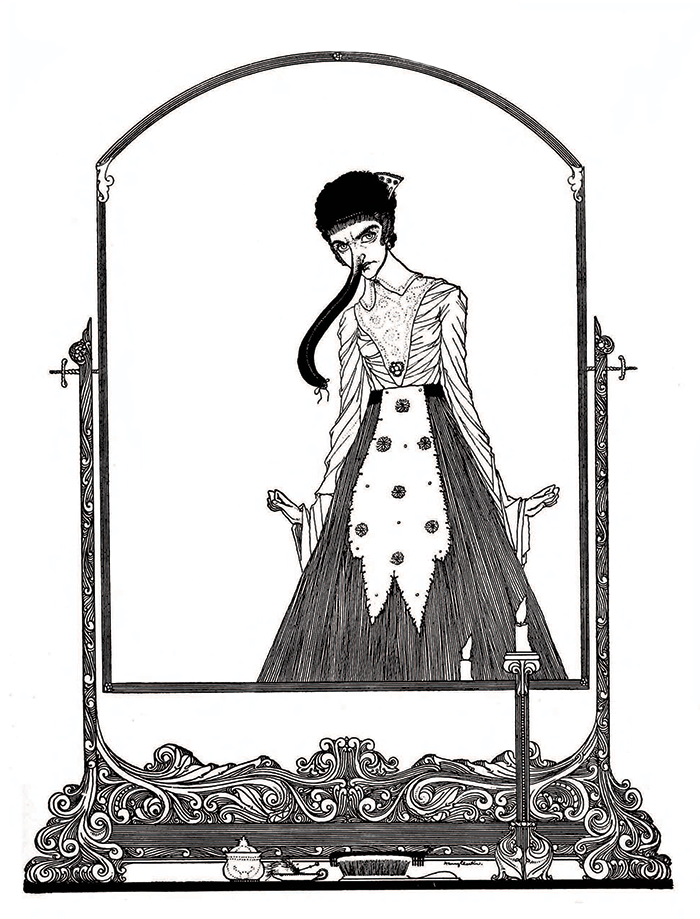
Gorgeous Harry Clarke illustrations for Perrault tales over at Pook Press. Hadn't seen some of these!
"Truth to tell, this new ornament did not set off her beauty"-The Ridiculous Wishes

A friend posted this on Facebook, thought the English fairy tale title parts were interesting:

At Raven's Shire, Nukiuk shares more about the fairies/Zwerg of German traditions that may have been influences on the Dwarves in Snow White.
Carl Offterdinger

And, anyone else looking forward to hearing more about this Swan Lake movie?

Friday, December 2, 2016

Mindy Kalilng's Holiday GIF Cards- Fairytales

A couple of years ago, celebrity Mindy Kaling released these Holiday GIF cards that look at some of our favorite fairy tales with a bit of sarcastic humor.

There are a couple more here but the above were my favorites! Happy beginning of the holiday season!


Friday, November 4, 2016

Unusual Births in Fairy Tales

It's fairly common in fairy tales for women to give birth to unusual babies. Sometimes their child is only the size of a thumb, as in Thumbling tales and variants; it might be a Snow child, or sometimes a mother might even give birth to a child that is a food, like the Pumpkin Girl, or the women born of mangoes or cucumbers in Papua New Guinea. Sometimes the mother gives birth to a healthy, human child-only to have it stolen as she is accused of giving birth to a wolf/bear hybrid, such as in Armless Maiden, or some other sort of animal. In the world of fairy tales, such accusations were believable enough to the other characters.

I used to think of tales like this as being a commentary on how we treat people who are different, and an encouragement for the underdog, which is certainly still true in many cases. But I've been reflecting on tales like these, especially where a child is born under some kind of unusual circumstances, and not just enchanted or cursed later in life (some Beauty and the Beast tales fit under each category-for example, Prince Lindworm was a lindworm from birth, unlike the cursed Beast of the French tradition).

Since being pregnant myself, I have a new level of respect for the mothers in these tales, and a sympathy for the anxiety that prospective mothers face. Even in our modern age where we can hear the baby's heartbeat and see ultrasounds, it can be pretty easy to feel anxious about your baby in between doctor's visits. For all we know now, there's still so much that's unknown-even for those who choose to find out the gender, it's still a mystery for months; as future parents, we wonder which traits our child will inherit from each of us, and what their personalities will be like-which can be exciting as well as frightening. On top of that, there's always the risk of health problems.

So I can only imagine how my current fears and anxieties would be amplified in an age where medical knowledge was limited and often wrong-many of these older superstitions, such as how to tell which gender your baby is by a variety of ways, still exist today. I can only assume that one of the purposes of such tales was a way for prospective mothers to express their fears.

I've also noticed that food and babies seem to be unusually connected in folklore. Even if a mother is more likely to give birth to a thumb-sized child than a piece of food, often these births are a miraculous result after a mother ate something (although, in Snow Child tales, it's possibly a hint that the mother was unfaithful but claims it was a supernatural birth). Pregnancy is a very odd time-for a while it's not obvious you're pregnant, it just looks like you maybe ate too much. I'm not sure how much was known in other cultures about pregnancy, they might have assumed the baby grew in a separate organ from the stomach, but it feels and looks like your baby is growing in your stomach. Not to mention the havoc your baby can wreak on your digestive system, first making it hard to keep things down, and then giving you a ravenous appetite-lately I've been feeling a lot like an ogress or a witch from fairy tales who will eat anything in sight! Then there's also the fact that we still measure a growing baby's size by, usually, corresponding fruits and vegetables (my baby has gone from being the size of a blueberry to a bell pepper to a spaghetti squash, and many other fruits and vegetables in between!).

And of course, pregnancy cravings can be the catalyst for the action in fairy tales, most notably Rapunzel. Whereas now, we're told to indulge our cravings with moderation, in other cultures, it was believed that not meeting a pregnant mother's cravings would result in bad luck. Of course, it's doubtful that that bad luck would have been worse than having to give away said child in order to meet those cravings...

Kristiana Willsy has a great article on The Toast, Hunger is the Beginning of Every Folktale. Fairy tales usually center around the greatest of human desires-whether it's literal hunger, or the desire for love, sex, or children. And often those desires become combined to the point where they are one and the same-"If the story begins with the lack of a child, then hunger becomes central. Food often replaces sex in folktales, and witches with some rule-bound delicacy are the fertility specialists of choice, second only to daring the fairies
to give you a baby hedgehog, a snow-child, or an infant the size of your thumb." (emphasis mine)

Sarah Allison also has a great post on unusual births in fairy tales. These stories often start with a woman desiring a child, and she is given something to eat that will impregnate her...only usually, she is given some kind of warning and disobeys it.  So these children are initially some sort of punishment, although it's ironic that they often turn out to be the hero in the end, like Tatterhood. So while on the surface these tales may seem like more misogynist white noise, warning women against curiosity and disobedience, it seems that the real message of these tales is not to underestimate those who are different-sometimes those very differences end up being an advantage-or even that the so-called "mistakes" we make might not really have been mistakes at all in the grand scheme of things.

In "Juniper Tree," the mother wishes for a child while peeling an apple by the Juniper Tree. From there, the gestation period of her child is linked to the growth of nature. It's her gorging on berries from the Juniper Tree that would appear to lead to her death (even though she supposedly "dies of joy", but it seems unnecessary to mention eating the berries and falling sick and predicting her own death if it's all a coincidence, and this bears similarities to the other food warnings in pregnancy tales). Later, it's the children's request for an apple that leads to the murder of this son, reminiscent of the wish that brought him about in the first place (as well as the famous poisoned apple in Snow White).

There are also tales in which an older woman desires to eat children-from the witch in Hansel and Gretel, Baba Yaga, the ogress mother in law in Perrault's Sleepinng Beauty, to the evil stepmothers in Snow White and Juniper Tree. To eat a child is the reverse of giving birth to them-Snow White's mother may have hoped to reabsorb her beauty through eating her organs, or it could be representative of trying to hinder a child's growth rather than letting them turn into adults. The fear of being eaten is always present in fairy tales, sometimes representing a literal fear of wild animals, but sometimes more symbolic. Fortunately, even if the worst fear is realized and a character is eaten, in fairy tales this is not necessarily the end-like Little Red Riding Hood, the hero may emerge triumphant and wiser for the next round against the wolf.

Illustrations-"tom Thumb," Jemima Blackburn; "The Snow Child" by Eowyn Ivy; Rapunzel images from Pinterest (anyone know the artist??), "Juniper Tree" by laurasmythart

EDIT: For more examples of strange ways of conceiving and/or giving birth, check out the linked post on Multicolored Diary!

Sunday, May 1, 2016

Punchkin: An Indian Rapunzel Tale

This story from India is found in Surlalune's Rapunzel Tales From Around the World Collection, although it reads like an epic mashup of Cinderella, Snow White, and Rapunzel, with some fun twists!

**************************************************************************

Once there was a Raja with seven daughters,but the youngest, Balna, was more clever than the rest. Their mother had died, so the sisters cooked the dinner.

Every evening, a widow and her daughter would come begging for some of their food. Balna warned her sisters not to help the widow, but her sisters insisted on being generous. Only, when no one was looking, the widow would ruin the meal by putting mud in the bowls.

The Raja noticed the food was ruined, but knew his daughters wouldn't spoil it on purpose, so he hid to watch what happened. When he saw the widow, he called her to him, and she claimed that she had only done it to get an audience with him, and her words pleased him, so he married her.

The new Ranee (Queen) hated the Princesses, and wanted to get rid of them. She gave them only a little bread to eat, and none of the nice things they were used to. The sisters used to go to their mother's tomb and weep. As they did that, a pomelo (citrus fruit) tree grew up and gave them food, so they didn't even want any of the bad food their stepmother offered them.

This made her suspicious, so she sent her daughter to see how her stepdaughters could be so healthy, and her daughter discovered the pomelo tree. Balma noticed her, and told her sisters they should send her away, but the sisters saw no harm. So the Ranee's daughter told her about the tree. The Ranee feigned sickness, and told the Raja that only the tree that grew on his wife's grave could cure her, so he had to cut it down.

The sisters wept at this, but by the grave they saw a white cream that hardened into cakes, and they ate this instead. Once again, the Ranee sent her daughter to discover how the seven sisters could be happy and healthy, and despite Balma's warnings, the sisters didn't send her away, and she discovered the truth.

The Ranee pretended to be sick again, and this time demanded that the daughters be killed, because only their blood on her forehead and palms would make her better. But the Raja could not bring himself to kill his daughters, so he brought them out to the jungle and left them there. When they woke up alone, they started crying, but seven Princes found them, who each married a Princess.

They all went to live in the Princes' land, and were very happy. The only one to have a child was Balma, who had a son, and all the royal couples loved the son and raised him together.

They were all happy for a time, but one day, Balma's husband went out hunting, and never came back. Each of the brothers went out looking for him, and also never returned. The Princesses were very grieved.

One night a stranger entered the castle, claiming to be a holy man; he was really an evil sorcerer named Punchkin. He saw Balma and thought her the most beautiful, and offered her to come home with him as his wife. She refused, saying that after raising her son she would go in search of her husband. He was angry at this, and dragged her away, and locked her in a tall tower.

Balma's sisters discovered she was missing, and the committed to raising their nephew. When he turned 14, they told him the truth about his missing parents and uncle, and he was determined to go out and find them. Despite his aunts' protests, he journeyed until he came to a land with a tall tower.

He was befriended by a kind woman who told him that the country belonged to a great enchanter who turned anyone who displeased him into a tree or a stone, and had trapped a Princess in the tower who refused to marry him. The boy realized this must be his family. He disguised himself as the woman's daughter and the sorcerer had him deliver things to his mother in the tower. The son had a ring that had been given to him by his mother at birth; when he showed this to her, she realized who he was.

Balna's son told his mother to pretend to have accepted the sorcerer's proposal, but first to demand to know the secret of his power. She did this, and learned that in a far away jungle there was a parrot, and if the parrot died, so would the sorcerer; only, the parrot was guarded by thousands of genii who would kill anyone who approached.

So Balna's son left again, for the remote jungle. On his way, he saw a serpent about to attack an eagle's nest. He slew the serpent, and the eagles were so grateful they were willing to fly him above the genii while they slept and steal the parrot.

The boy used the parrot to get the sorcerer to undo all of his spells, before dismembering the parrot and wringing its neck, killing the sorcerer. His parents and uncles were free from their enchantment, and they returned to their families and lived happily
********************************************************

Some of my favorite things about this tale:

-Positive sister relationships. Even though Balma is cleverer than her sisters, there is no ill will between them, even after her sisters' foolish choices made a lot of trouble for them! In turn, her sisters weren't jealous or spiteful that Balma was the only one to have a child, but lovingly raised him together in her disappearance.
-Kindness-but not gullibility. At first I was a little bothered that Balma was rewarded for not being willing to share a little food and fire with a widow and her daughter, as if it's clever to never risk anything to give to those who have little. Yet, it's true that there are times to be cautious and not overly nice-we teach children about stranger danger, and people need to be aware of cyber crime scams that prey on people's good intentions to get their money. This is where knowing folklore as a whole can be beneficial-overall, kindness is rewarded, but that doesn't mean every situation is the same! (Plus, we do see Balma's son being kind and going out of his way to save the eaglets, and he is clearly rewarded for that, so even in the same tale we see a balance)
-Balma is saved not by her Prince, but by her son. I don't have anything against lovers rescuing each other, per se, other than the fact that it's become a bit of a cliche in fairy tales. Having the son do the rescuing is a refreshing change, especially since this tale shows:
-A clever and resourceful heroine. True, she is temporarily rendered helpless when trapped in a tower by a sorcerer, but she was the only one to spot the danger from her stepmother and stepsister earlier, and was able to lead the sorcerer into thinking she would marry him, and give up his secret. Again, I love the balance in this tale-I don't like the argument that showing females as victims for part of the story is unfeminist, because there are times where we might all be rendered helpless, and we should never blame the victim. I like tales where the characters work together.

Also, the Tower images in this post (taken by Rebecca Stice, found here) are from Helen's Tower. If anyone is able to vacation in Northern Ireland, you can live out a Rapunzel fantasy by renting this tower out on airbnb!


Monday, April 18, 2016

Heinrich Lefler

In the process of putting together a recent Guest Post in which Lissa Sloan explored religious/immortal characters in fairy tales, I discovered a new-to-me fairy tale illustrator with some gorgeous images, Heinrich Lefler (1863-1919). These images seem to have such a wide variety of styles that I was inclined to doubt they were all done by the same artist (such as the two illustrations of the final scene of "Six Swans"-very different, but both attributed to Lefler). Unfortunately I had a hard time tracking down more authoritative sources than Pinterest, so if anyone knows better, please let me know in the comments! He did often work with his brother in law, Joseph Urban, so maybe that explains some of the differences. In any case, enjoy some eye candy!

wild+swans+illustration - Google-søk:
The Six Swans By Heinrich Lefler and Joseph Urban:
Six Swans

Heinrich Lefler/Joseph Urban, Illustration for Snow White in Bilderbogen für Schule und Haus (1905):
'Schneewittchen / Snow White’ by the Brothers Grimm, illustrated by Heinrich Lefler. Part of a fairy tale calender published 1905 by Berger & Wirth, Leipzig.:
Snow White

hans christian andersen illustrations - Google-søk:
Andersen's "Princess and the Swineherd"


Godfather Death

little mermaid, heinrich lefler:
Little Mermaid

fuckyeahvintageillustration:  'Rapunzel’ by the Brothers Grimm, illustrated by Heinrich Lefler. Part of a fairy tale calender published 1905 by Berger & Wirth, Leipzig. Source:

Heinrich Lefler, "Dornroeschen" or "Sleeping Beauty":
fuckyeahvintageillustration: 'Dornröschen / Sleeping Beauty’ by...:
Sleeping Beauty

The Goose Girl -- Heinrich Lefler -- a really good story about a princess who avoids sexual harassment.:
Goose Girl

Hänsel and Gretl by Heinrich Lefler ~ 1905:
Hansel and Gretel

Original watercolor by Heinrich Lefler for Die Nachtigall [The Emperor’s Nightingale] -- offered by Battledore Ltd.:
The Nightingale

'Aschenbrödel / Cinderella’ by the Brothers Grimm, illustrated by Heinrich Lefler. Part of a fairy tale calender published 1905 by Berger & Wirth, Leipzig.:
Cinderella

Wednesday, April 6, 2016

Fairy Tale Fashion at the Fashion Institute of Technology

Fairy Tale Fashion at MFIT / Kirsty Mitchell photograph
The Storyteller
I think I had seen snippets of this collection around the internet closer to when it opened, but so often a fashion collection that claims to have a fairy tale inspiration really just means "vaguely vintage inspired" and/or "flowy layered fabrics that we have come to associate with fairies" or possibly a token red cape with other Disney-inspired color schemes. So I was excited to read more about the direct influence of fairy tale illustrators and specific fairy tales in this exhibit at the Fashion Institute of Technology.

Fairy Tale Fashion at MFIT Charles James
Fairy Tale Fashion at MFIT 18th century capeFairy Tale Fashion at MFIT Alexander McQueen 2007Fairy Tale Fashion MFIT J.Mendel
Rapunzel, Swan Maiden, Snow Queen, Red Riding Hood

From the website:
"Fairy Tale Fashion is a unique and imaginative exhibition that examines fairy tales through the lens of high fashion. In versions of numerous fairy tales by authors such as Charles Perrault, the Brothers Grimm, and Hans Christian Andersen, it is evident that dress is often used to symbolize a character’s transformation, vanity, power, or privilege. The importance of Cinderella’s glass slippers is widely known, for example, yet these shoes represent only a fraction of the many references to clothing in fairy tales.

"Organized by associate curator Colleen Hill, Fairy Tale Fashion features more than 80 objects placed within dramatic, fantasy-like settings designed by architect Kim Ackert. Since fairy tales are not often set in a specific time period, Fairy Tale Fashion includes garments and accessories dating from the 18th century to the present. There is a particular emphasis on extraordinary 21st-century fashions by designers such as Thom Browne, Dolce and Gabbana, Tom Ford, Giles, Mary Katrantzou, Marchesa, Alexander McQueen, Rick Owens, Prada, Rodarte, and Walter Van Beirendonck, among others.

"The exhibition’s introductory space features artwork that has played a role in shaping perceptions of a “fairy tale” aesthetic. These include illustrations by renowned early 20th-century artists such as Edmund Dulac, Arthur Rackham, and A.H. Watson. Connections between fashion and storytelling are further emphasized by a small selection of clothing and accessories, including a clutch bag by Charlotte Olympia that resembles a leather-bound storybook."

Fairy Tale Fashion MFIT Thierry Mugler
The Little Mermaid

For those of you in New York, the exhibit is only open until April 16. However, good news for all of us-Yale University Press is releasing a book of the same title!

Book description (emphasis mine):


"Dress plays a crucial role in fairy tales, signaling the status, wealth, or vanity of particular characters, and symbolizing their transformation. Fairy tales often provide  little information beyond what is necessary to a plot, but clothing and accessories are frequently vividly described, enhancing the sense of wonder integral to the genre. Cinderella’s glass slipper is perhaps the most famous example, but it is one of many enchanted or emblematic pieces of dress that populate these tales.                                                                                                                                   
"This is the first book to examine the history, significance, and imagery of classic fairy tales through the lens of high fashion. A comprehensive introduction to the topic of fairy tales and dress is followed by a series of short essays on thirteen stories: “Cinderella,” “Little Red Riding Hood,” “The Fairies,” “Sleeping Beauty,” “Beauty and the Beast,” “Snow White,” “Rapunzel,” “Furrypelts,” “The Little Mermaid,” “The Snow Queen,” “The Swan Maidens,” Alice's Adventures in Wonderland, and The Wonderful Wizard of Oz. Generously illustrated, these stories are creatively and imaginatively linked to examples of clothing by Comme des Garc¸ons, Dolce and Gabbana, Charles James, and Alexander McQueen, among many others.
This sounds right up my alley, and is going on my wishlist!
(Psst-it's cheaper on Amazon)

UPDATE: For more fairy tale fashion in recent media, check out Lisa Jensen's post on the fairy tale looks just featured on Project Runway!

Wednesday, March 9, 2016

Artist Feature: David Hockney

originally published in 1969


Rapunzel


The Boy Who went Forth to Learn What Fear Is


Rumpelstiltskin


Fundevogel (Foundling Bird)

From brainpickings.org:
"What makes Hockney’s visual interpretation especially enchanting is that while traditional fairy tale images tend to rely on beauty and color to create magic and contrast the beautiful and the ugly to distinguish between good and evil, even the princesses in his black-and-white illustrations are unassuming, ugly even; where ornate, detailed imagery would ordinarily fill the traditional visual vignette, Hockney’s ample use of negative space invites the imagination to roam freely. Perhaps above all, his haunting, scary, architectural illustrations serve as a testament to J.R.R. Tolkien’s assertion that, even if they might appeal to the young, fairy tales are not written “for children.”"

Thursday, February 4, 2016

Gordon Laite Fairy Tale Illustrations

Some eye candy for your Thursday, courtesy of illustrator Gordon Laite (1925-1978)


Rapunzel


Beauty and the Beast


Wild Swans


Snow White and Rose Red