Showing posts with label Goose Girl. Show all posts

Tuesday, February 14, 2017

The Sleeping Prince

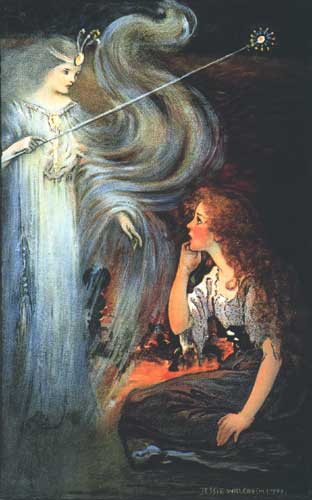
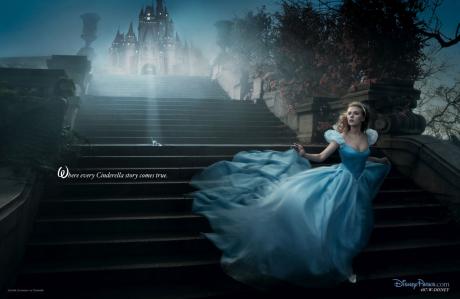
In my post on the different ways of Awakening the Sleeping Beauty, reader Nectar Vam shared this fantastic gender swapped version of the tale, The Sleeping Prince. It combines elements of Sleeping Beauty, Snow White, East of the Sun and West of the Moon, and even reminded me a little of Beauty and the Beast with the enchanted castle at the end. A bird tells a Princess of a sleeping Prince, who is white and gold and red, and goes on a dangerous journey even though she knew her parents wouldn't approve. She has to go to the lands of the West Wind, East Wind, and North Wind, where mortals should not go, and follow instructions to get past two lions that guard the gates of the castle, and awaits the time when the Prince's spell will be over.

It very much has the feel of a traditional folk tale to me, and although the sleeping prince trope may be much less common, if you look hard enough you can generally find gender swapped versions of any classic fairy tale-especially since this one bears resemblance to the journey of the heroine in "East of the Sun, West of the Moon." But the only sites I could find the tale at had no source cited-Wikipedia has a tale of the same title but it's clearly different (although also fascinating-in this one the heroine must stay awake watching the sleeping Prince for 3 months, 3 weeks, 3 days, 3 hours, and 3 half hours. She is persuaded to sleep towards the end and then follows a Goose Girl-type episode of mistaken identity). This site says it's Spanish (thanks, Amy Elize!) but has no further information on collection, editor, date, etc. So I can't promise it's authentic folklore but an interesting tale worth reading and sharing! Any further information on it would be welcome! UPDATE: Sarah Allison has more information on the source in the comments. Thanks, Sarah!

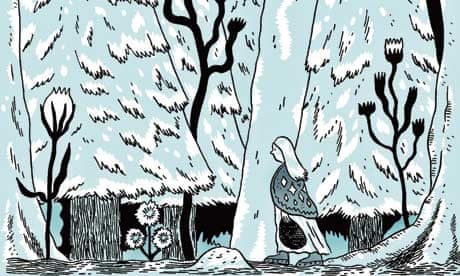
Also-in the past I've done features on roses in fairy tales on Valentine's Day. Interestingly, the key to getting past the lions in this tale is to pick two white roses from outside the North Wind's door, and throw them down before the lions when she gets close enough-something that would require lots bravery, since the lions act threatening until she gets close enough to throw down the roses! And the episode also reveals the great amount of power sometimes associated with roses in fairy tales.

Image sources-1 and 2

Monday, April 18, 2016

Heinrich Lefler

In the process of putting together a recent Guest Post in which Lissa Sloan explored religious/immortal characters in fairy tales, I discovered a new-to-me fairy tale illustrator with some gorgeous images, Heinrich Lefler (1863-1919). These images seem to have such a wide variety of styles that I was inclined to doubt they were all done by the same artist (such as the two illustrations of the final scene of "Six Swans"-very different, but both attributed to Lefler). Unfortunately I had a hard time tracking down more authoritative sources than Pinterest, so if anyone knows better, please let me know in the comments! He did often work with his brother in law, Joseph Urban, so maybe that explains some of the differences. In any case, enjoy some eye candy!

wild+swans+illustration - Google-søk:
The Six Swans By Heinrich Lefler and Joseph Urban:
Six Swans

Heinrich Lefler/Joseph Urban, Illustration for Snow White in Bilderbogen für Schule und Haus (1905):
'Schneewittchen / Snow White’ by the Brothers Grimm, illustrated by Heinrich Lefler. Part of a fairy tale calender published 1905 by Berger & Wirth, Leipzig.:
Snow White

hans christian andersen illustrations - Google-søk:
Andersen's "Princess and the Swineherd"


Godfather Death

little mermaid, heinrich lefler:
Little Mermaid

fuckyeahvintageillustration:  'Rapunzel’ by the Brothers Grimm, illustrated by Heinrich Lefler. Part of a fairy tale calender published 1905 by Berger & Wirth, Leipzig. Source:

Heinrich Lefler, "Dornroeschen" or "Sleeping Beauty":
fuckyeahvintageillustration: 'Dornröschen / Sleeping Beauty’ by...:
Sleeping Beauty

The Goose Girl -- Heinrich Lefler -- a really good story about a princess who avoids sexual harassment.:
Goose Girl

Hänsel and Gretl by Heinrich Lefler ~ 1905:
Hansel and Gretel

Original watercolor by Heinrich Lefler for Die Nachtigall [The Emperor’s Nightingale] -- offered by Battledore Ltd.:
The Nightingale

'Aschenbrödel / Cinderella’ by the Brothers Grimm, illustrated by Heinrich Lefler. Part of a fairy tale calender published 1905 by Berger & Wirth, Leipzig.:
Cinderella

Wednesday, September 12, 2012

Artist feature: Jessie Wilcox Smith

I've featured the fairy tale artwork of a few artists before, which I chose because they are among my favorite fairy tale illustrators: Edmund Dulac, Kay Nielsen, and Harry Clarke. This feature is a little unusual in that I have selected Jessie Wilcox Smith, who is one of my least favorite fairy tale authors.

Not to be excessively negative or judgemental, and I'll be the first to admit I couldn't illustrate a fairy tale well to save my life. Her illustrations are certainly very well done, but I dislike how they are aimed for such a young audience, in a way that dumbs down the stories, in my opinion. Most fairy tale heroes and heroines are children, but Smith's are barely out of infancy:

Hansel and Gretel
 
But what really bothers me is how she turns any animals, which would have had associations of danger and fear to the earlier tellers of fairy tales, and turns them (literally) into stuffed animals, such as in Goldilocks and the Three Bears, and Beauty and the Beast, below (yes, the stuffed monkey is the Beast)


 As I've said before, there's nothing wrong with creating versions of fairy tales that are aimed for a specific audience, even young children. What gets fairy tale lovers extra sensitive is the prevailing notion that fairy tales are insipid, insignificant stories with idealistic plots and meant only for young children. In all fairness, Smith was illustrating these stories at a time when the prevalent idea was that fairy tales were primarily suited for children's literature (early 20th century). And I'm not sure, from a brief internet search, which is all I have time for presently, how much control she had over the content of the versions of fairy tales she illustrated (again, those of you who do, feel free to let me know in the comments!) And I do like some of her pictures, like these for Cinderella and Goose Girl:

But, those of you who have seen The Shining, look at this illustration of Snow White and Rose Red and tell me this isn't what pops into your head: "Come play with us, Danny...for ever, and ever..."

Sunday, July 4, 2010

The Goose Girl

The Grimms' "The Goose Girl" enjoys mid-level fairy tale fame. She isn't a household name like Cinderella or Rapunzel, but fairy tale fans love the story. Shannon Hale's novel version helped spread its popularity. Perhaps one reason it isn't as well known is the overall similarities to Cinderella, although I think I might like the story of the Goose Girl better.

The story begins as a young, beautiful princess is sent off to be married to a prince of a far away country. She is given a speaking horse named Falada by a fairy, andher mother gave her many gifts, including a maid, and a handkerchief with three drops of blood on it (or in some versions, a lock of hair). Her mother warns her not to lose the handkerchief, because it will be of help to her.
While on the journey, the princess gets thirsty and asks the maid to fetch her some water. The maid refuses and the princess says nothing. She asks the maid again, who once again refuses and tells the princess to get her own water. The princess does, and as she does she loses her mother's handkerchief. The maid now takes full advantage of the situation. She makes the princess switch clothes with her, and took her beautiful horse. Once at the palace, the maid was accepted as princess, and the princess was sent to work tending geese.
Stephanie Holmes

The maid knew that Falada could betray her, so she gave orders to have her horse beheaded. The princess, hearing this, gave a piece of gold to the knacker if he would nail Falada's head to the gateway into town. The princess walked under this gateway each day. As she did, she would say, "Alas, Falada, hanging there!"

Falada's head would answer, "Alas, young Queen, how ill you fare!
If this your tender mother knew,
Her heart would surely break in two."
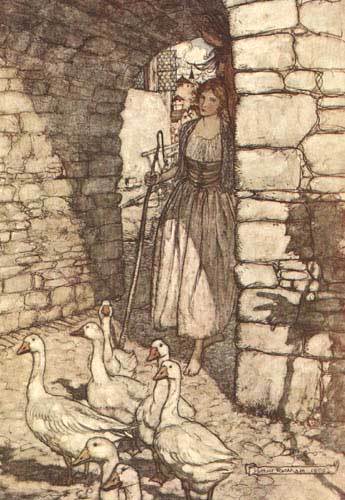
Then she would go out into the meadow with the boy who tended the geese, Curdken. She would sit down and let out her beautiful golden hair. Curdken, when he saw it, wanted to pull it, so the princess said a little spell for the wind to blow Curdken's hat away until she had finished braiding her hair.


This same thing happened the next day as well. Curdken complained to the king of the goose girl's conversations with the horse head, and her golden hair. The king hid himself the next day to see what really happened, and saw everything as Curdken described it.

Above illustrations by Arthur Rackham

The King later questioned the goose girl, asking what all this meant. She told him that she had promised not to reveal the truth to anyone, but he advised her to tell her troubles to the iron stove, which would not technically break her promise, while he went away and listened. He revealed to his son, the prince, that this was the true bride, and the prince rejoiced.

A feast was prepared in honor of the princess, whom the false bride did not notice. The king asked what punishment should be given to such a person who did certain events which he described, summarizing her own crimes. The false princess declared that such a person deserved nothing better than to be stripped naked, put in a barrel studded with pointed nails, and driven through town by two white horses until she is dead. She then receives her own punishment, and afterwards the true princess was married.

Wednesday, April 7, 2010

The Princesses of the Blue Mountain and the Rule of Threes

Things tend to happen in threes in fairy tales, and the Norwegian tale "The Three Princesses of the Blue Mountain" is a perfect illustration.


A King and a Queen longed for children. A beggar woman told them they would have THREE daughters, but must not be out under the open air until they were all FIFTEEN years old. Prohibition=violation-they were let outside just before the youngest one's fifteenth birthday and were carried away by a snowdrift.


The King sets up a reward-half the kingdom and a princess of choice to anyone who could free the Princesses. Many tried and failed. Finally a Captain and a Lieutenant set on their way, followed by a Soldier who had dreamt the way to find the Princesses. His mother told him not to go yet-only if he dreamt the same dream THREE times would he know it was true. However, he did, and set off to find the Princesses.


He met up with the Captain and Lieutenant, making their company THREE. The Soldier had gotten meat from the King before his journey and used it THREE times-twice to distract hungry animals, and once to feed themselves.


While staying at a house, each hero was tricked by an old man who beat them with his crutches, except the Soldier, making it the THIRD time, who tricked the old man into telling him the rest of the way to the Blue Mountain. There were trials of fire and water-the Captain couldn't make it past the water, the Lieutenant couldn't make it past the fire, but the Soldier, the THIRD, made it past both and into pitch darkness-THREE trials. Once out of there, he found the first Princess, spinning copper yarn.


They concoct a plan to save her from the THREE headed monster. He takes a drink from a flask, weilds the Troll's sword, and cuts them off. On to the second Princess, spinning silver, and the same trick to cut off the SIX headed monster, but only after taking two sets of THREE draughts of drink. The THIRD Princess spins gold. THREE sets of THREE drinks enabled him to cut off the NINE headed monster, though each time it got more difficult.


Above illustrations by Kay Nielsen


The Soldier leads the Princesses back to the well he had come down, but the trecherous Captain and Lieutenant cut off the rope when they think they are hauling up the soldier. Left alone, the soldier searches and finds a whistle, which summons a flock of birds and a large eagle, who will transport him out once she has eaten TWELVE oxen.


Meanwhile the Princesses are dismayed at the thought of marrying the Captain and Lieutenant and say they will only marry when they can have a set of gold checkers just like the one in the mountains. The Soldier calls on the eagle to get it for him, and he and the Princesses reveal the truth. He marries the youngest-the THIRD-Princess.


So not only do these stories contain threes and multiples, but there's a sense of building up to the third as the climax. Many other well-known stories have this pattern too.

-Cinderella attends the ball THREE nights in a row (ignore the cheesy saying and just look at the pretty picture.)

-The two stepsisters plus Cinderella make THREE sisters


Illustration by Henry J. Ford, from Andrew Lang's Blue Fairy Book


-The maiden in Rumpelstiltskin has THREE nights on which she must spin gold.

-The Grimm's version even repeats that the bobbin goes "whirr, whirr, whirr! THREE times around"

-On the THIRD night, the baby is bargained-the climax

-The maiden has THREE nights to guess Rumpelstiltskin's true name


Illustration by Katherine Cameron


-There are TWELVE dancing Princesses, a multiple of three

-Each night they pass through THREE forests that get grander and grander-silver, gold, and diamonds

-They danced till THREE in the morning

-This happened THREE nights in a row-on the THIRD night the soldier takes a cup with him as well as the twigs
Willy Planck


The Goose Girl

-The Princess' mother gives her a handkercheif with THREE drops of blood on it

-The Princess goes out to tend the geese THREE times before she is revealed

Long ago, people thought that as they had children, each time the children improved-like each was the "newest model," so to speak-and that helps to explain all the emphasis on the youngest siblings in fairy tales. The patterns of threes may have made them, easier to remember, although it makes reading them tiresome. Some versions spell out all the details three times and some just say "And the same thing happened again." It's very similar to the phrase we still use, "Third time's the charm." Yet in modern retellings of tales, we want a faster pace so we cut out the repetitions. Anyone reading the Grimm Snow White for the first time is schocked at her stupidity, accepting gifts from the Queen three times in a row, when they are obviously meant to be deadly. But this isn't a commentary on Snow White so much as following the traditional story-telling pattern.


From Surlalune's annotations to Goose Girl: "The reasons and theories behind three's popularity are numerous and diverse. The number has been considered powerful across history in different cultures and religions, but not all of them. Christians have the Trinity, the Chinese have the Great Triad (man, heaven, earth), and the Buddhists have the Triple Jewel (Buddha, Dharma, Sanga). The Greeks had the Three Fates. Pythagoras considered three to be the perfect number because it represented everything: the beginning, middle, and end. Some cultures have different powerful numbers, often favoring seven, four and twelve."


Also:"The number and/or pattern of three often appears in fairy tales to provide rhythm and suspense. The pattern adds drama and suspense while making the story easy to remember and follow. The third event often signals a change and/or ending for the listener/reader. A third time also disallows coincidence such as two repetitive events would suggest."