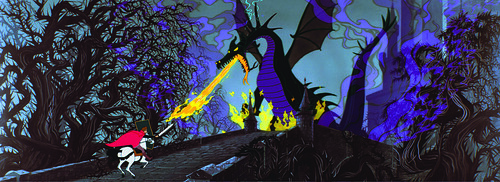
Thursday, March 24, 2011

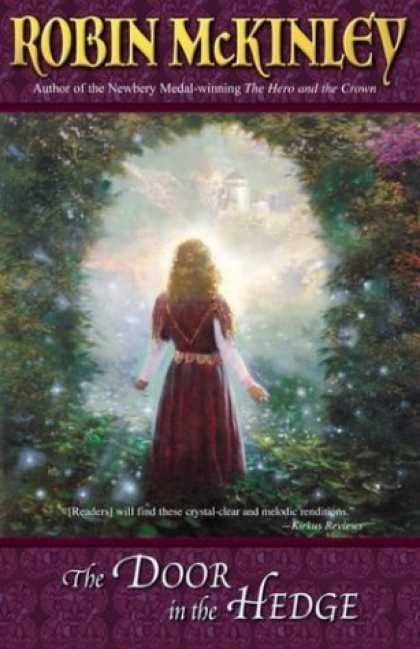
Robin McKinley's The Door in the Hedge

In my opinion, Robin McKinley's earliest works are her best, and The Door in the Hedge, from 1981 (shortly after her first published work and my absolute favorite, Beauty,) is no exception. This book is a collection of short stories, including:


The Stolen Princess-An original story (as far as I know) that sort of has a changeling element to it (although the narration distinctly claims it is NOT to be confused with changelings, those who are interested in changeling stories would probably also be interested in this).


The Princess and the Frog-A retelling of "The Frog Prince." After rereading it I realized how much my short story was influenced by this version...

The Hunting of the Hind-another original story, but it fits in well with traditional princess fairy tales and is very enjoyable.

The Twelve Dancing Princess-As can be guessed, a retelling of the fairy tale by the same name. One of the most natural questions that arises when reading the Grimm version (at least for me) is, why did the underground kindgom need to be destroyed? Was it actually evil, other than the fact that replacing twelve pairs of shoes daily can get very costly? McKinley adds her own touch to the tale by explaining why the underground kingdom is evil, and the toll that the curse takes on the princesses, which I find very satisfying.

This book was intended for a young adult audience and the stories are appropriate for children. While reading I was mindful of things such as-the fairies portrayed in the first story are essentially good and unlike historical fairies at all; and the stereotype of the innate goodness of royalty is definitely enforced. But considering the audience I don't think anything is inappropriate. Yes, real life is not like these stories, but there's nothing wrong with a little escapism now and then. McKinley's writing is truly enjoyable and this is perfect for a bit of light reading.

Thursday, March 17, 2011

In honor of St. Patrick's Day

I always use this holiday as an opportunity to teach my music students about Irish music and dance. Given that fairy lore abounds in Ireland, it's not surprising that the worlds of faerie and music overlap. Here are two different versions of King of the Fairies-the first is the basic fiddle tune, the second a metal version by Waylander.
There is also a dance called the Fairy Reel, but each time I found a version I wanted to share, embedding was disabled. So here's a link, or you could search for it on Youtube: http://www.youtube.com/watch?v=37X5bZE1eXE

Tuesday, March 15, 2011

Sleeping Beauty through the eyes of Bruno Bettelheim


One more to round out my little mini-series...

In "The Uses of Enchantment: the Meaning and Importance of Fairy Tales," Bruno Bettelheim explains his psychoanalytical understanding of fairy tales. I remember disagreeing with a lot that he said the first time I read through this book, but looking back at the Sleeping Beauty chapter, I was surprised by how encouraging I found some parts to be.

Bettelheim sees the sleep of both Sleeping Beauty and Snow White as the physical lethargy that literally occurs at puberty, and also the "long, quiet concentration on oneself that is also needed" which symbolically happens at puberty. Both activity and inactivity are necessary at times of major life change, and the tales assure listeners that their listless stages will not last forever. Modern interpretations of fairy tales treat the idea of passivity with contempt (especially female passivity), but I totally agree that there are times for either extreme in everyone's life, as well as taking into account different personalities prone to either one; all action or all passivity is bad, but it's not bad to lean naturally towards one or the other.

Bettelheim also claims that the passivity is not limited to girls, though the obvious examples of Snow White and Sleeping Beauty would appear to indicate so; "even when a girl is depicted as turning inward in her struggle to become herself, and a boy as aggressively dealing with the external world, these two together symbolize the two ways in which one has to gain selfhood...the male and female heroes are again projections onto two different figures of two separated aspects of one and the same process which everybody has to undergo in growing up...children know that, whatever the sex of the hero, the story pertains to their own problems." I really like the idea of this, but don't know how true this actually is...(he does reference Cupid and Psyche, though, and how in that the female falls in love when viewing the male in repose, switching the stereotype). Is it possible that our very gender-focused interpretations of fairy tales hinder readers from applying both genders to themselves?
Then Bettelheim discusses the major versions of Sleeping Beauty-Basile, Perrault, and the Brothers Grimm, with very interesting discussion and commentary on each (you can see basic facts about each one at my most popular post to date, Sleeping Beauty-A Very Brief History). In Basile's tale, the father king is replaced with a lover king, which Bettelheim sees as being the natural way that a girl replaces attraction to her father with attraction to a lover. Other people might see that as being the historical fact that females were subservient to their fathers, then handed off to husbands, to which they were subservient as well. Bettelheim goes into more detail about the oedipal influences he sees in the tale, which I won't list here.

He goes on to Perrault. The Prince in Perrault's tale is more separated from the father King, but is not faultless. He knowingly leaves his wife and children in the protection of his ogress mother. Bettelheim explains this: "he [Perrault] did not take his fairy stories seriously and was most intent on the cute of moralistic verse ending he appended to each."

Also in Perrault, the mother figure becomes the fairies, who are separated into good and evil aspects. Bettelheim sees the fact that the evil fairy is not punished as a weakness in the plot.
"The central theme of all versions of 'The Sleeping Beauty' is that, despite all attempts on the part of parents to prevent their child's sexual awakening, it will take place nonetheless." Again, it's a nice thing to take away from the tale, but who actually comes up with this on their own? I wouldn't call it "the central theme of all versions" of the tale. Bettelheim lists several reasons that the pricking of the finger (shedding of blood, the age of 15) is really menstruation. He also lists several things about the scene that symbolize sex (circular staircase, small door, lock and key, door springs open, small room, "what kind of thing is this that jumps about so funnily?") but still claims that the main associations aroused are menstration itself. In fact, he indicates the real theme is waiting-the fact that the parents have to wait so long for a child, and the wall of thorns that arises as protection until the time is right-suitors who come to early perish in the thorns. "This is a warning to child and parents that sexual arousal before midn and body are ready for it is very destructive." ...so what about all those symbols of sex that happened before the enchanted sleep?

Bettelheim makes another interesting point about the menstration theory-it's only the king who tries to prevent this curse from happening, while the queen seems untroubled in each version about the fairy's curse. I had never noticed this before-I guess I assumed the king's actions represented the concern of both parents. Bettelheim sees the queen as "knowing better than trying to prevent it." Interesting thought...

But no worries about younger children-though they won't understand the full meaning of the tale as in the onset of puberty, they will still understand it as "awakening to his selfhood."
Bettelheim also sees the sleep of the adolescent as narcissim-shutting oneself off from the world, teenagers dream of everlasting youth and perfection. The kiss that awakens the princess is connecting to other people-"only relating positively to the other 'awakens' us from the danger of sleeping away our life." Again...I agree with the general concept, but don't necessarily see it as the obvious meaning of the tale.

The tramatic events of the heroine's life have happy consequences-therefore "the story implants the idea that such events must be taken very seriously, but that one need not be afraid of them. The 'curse' is a blessing in disguise."

Bettelheim makes another interesting comment before he closes the chapter-in the earliest known versions of the tale, Perceforest and Basile, the awakening happens not from a kiss, but from a baby sucking the flax out of her finger. Females, he claims, don't acheive complete self-sulfillment until they have given birth and nurture their baby. A lot of women would be offended by this. Personally, I have no desire for my own children at this point in my life and I feel incredibly self-fulfilled, but I'm not offended; undeniably many women do feel the desire to have children, and that would be an experience unlike any other. It's just interesting that Bettelheim draws such grand conclusions from such drastically different variations of the tale. I don't think he would claim that this is representative of a cultural shift from valuing childbearing to valuing interconnectedness...

Images: 1. Honor C. Appleton 2. William A. Breakspeare 3. and 4. Harry Clarke

Sunday, March 13, 2011

Sleeping Beauty Through the Eyes of Christian LaCroix


As a sort of contrast to my last post, "Sleeping Beauty through the Eyes of a Child," here are some beautiful images from this book, by designer Christian LaCroix.

Friday, March 11, 2011

Disney's Sleeping Beauty through the Eyes of a Child


The other day I was babysitting a young girl whose favorite Disney Princess is Sleeping Beauty. Often when we discuss the pros and cons of Disney or other versions of fairy tales, it's mostly adults speculating how a child perceives the story, so it was interesting to hear Christy's interactions.

Christy is already fascinated with the idea of marriage, and knows traditional stories well. She likes to pretend she's scared by the witch, and distressed at the thought of the curse of death, but is comforted by-"Who's going to save her? The prince will save her!" It's really not a bad thing for a prince to save someone who's in trouble, but I get the indignation against the idea that females are always either helpless beauties relying on the men, or evil villains. So I tried to play up the fact that really the rescue starts with Merryweather, reversing the spell from death to sleep, but Christy didn't really care about that. Indeed, Merryweather's contribution to the rescue is more subtle than a fight with a huge dragon and more likely to go over children's heads.

It bothered Christy that the fairies tell Briar Rose not to speak to strangers-"that's not nice!" and that they tried to take her away from Phillip. I tried to explain the fact that some strangers can be dangerous, and that they didn't know that the man she met in the woods happened to be Prince Phillip, but the facts of the story are set in her mind and I think it's hard for her to understand that the characters don't know everything that she knows, and that things could have turned out differently than they did in this particular story.


Does this version of Sleeping Beauty fit into a lot of stereotypes that can have negative influences on children if they're overexposed to such stereotypes? Yes. But even in a more politically correct story, the story makers can't control how each child perceives and understands, and some kids will misinterpret and misunderstand some of the storyline anyway. I would definitely show my kids the classic Disney movies, but engage in conversation about them and try to answer any questions honestly. It's still a fun movie, and in my opinion, hands down the best Disney movie in terms of visuals.

Sunday, March 6, 2011

Disneyland resource

Man-just when I think I'm a Disneyland geek, I find there are lots of people out there WAY more into it than I am. It's kind of amazing what a loyal fanbase a theme park can have...and this coming from someone who is considering spending some of her precious sightseeing time in Paris later this spring going to Disneyland Paris, in place of some of the other major attractions that can only be found in Paris.

Daveland has a blog and a regular site full of photos and information about Disneyland, past and present. Just a look down his blogroll and you can see plenty of other blogs dedicated to Disney history, Disney parks, or other surprisingly specific topics-like one blog entirely devoted to The Original Disneyland Hotel. And it has 43 followers!


Little books like this can be found in antique stores, and unfortunately the Disney ones are usually really expensive. Fortunately I found this one in a corner and knew I had to have it:


I had hoped that the lands and rides of Disneyland would be more incorporated into the story than they were-most of the story didn't even take place in Disneyland (though some may recognize the above picture as the entrance to Storybookland). Still, it's a fun little way to remember Disneyland without buying overpriced souvenirs in the park!

Thursday, March 3, 2011

The Adventures of Prince Achmed


Any Disney book will tell you that "Snow White" was the first full length animated film, but Lotte Reiniger's "The Adventures of Prince Achmed" is "considered by many" to be the first full-length animated film. "Snow White" would undoubtably be the first full-length hand-drawn animated film, but I from what I've read, Disney is not meticulous about making this distinction. Reiniger's story is told through enchantingly intricate paper cutouts and premiered in Germany in 1926-beating "Snow White" by 11 years.

This story is very sexually charged, but as everything is told through silhouettes, it's more subtle. Prince Achmed is supposed to be the hero, but I hardly think he's more noble than any of the horny villains. The Arabian Nights is probably the worst for portraying females as nothing more than sex objects...ironic, because they're all supposedly told by Scheherezade, a female.

But the film is spellbinding to watch and the music wonderful, if the historical importance weren't reason enough to watch it. And how interesting that fairy tales are so closely linked with the beginnings of animation?

The story combines the story of Prince Achmed and the Fairy with Aladdin, but the liberties taken still fit the style and characteristics of the Arabian Nights, especially using the story-within-a-story (although, Prince Achmed did NOT fool around with all of the Fairy's servants before he met her. It's funny that we're often under the impression that all older movies were laughably wholesome).

Lotte Reiniger has done versions of several fairy tales, including Cinderella, Hansel and Gretel, Thumbelina, and Jack and the Beanstalk. Portions, if not full versions, of all of these can be found on youtube. "The Adventures of Prince Achmed" is currently on Netflix instant play. Here's the beginning of Prince Achmed:

La Cenerentola


Connecticut Opera

"La Cenerentola" is an opera by Rossini telling the story of Cinderella. I'm including the whole synopsis from wikipedia. I like the fact that the idea of disguises becomes a main theme as many of them hide their identity at some point. Are disguises always false? When Cinderella is at the ball, is she really hiding her servant self or displaying her beautiful inner self?

You may also note the absense of magic. This is because " Rossini opted for having a non-magical resolution to the story (unlike the original source), due to obvious limitations in the "special effects" available."
Opera New Jersey

"In this variation of the traditional Cinderella story, the wicked stepmother is replaced by a stepfather, Don Magnifico. The Fairy Godmother is replaced by Alidoro, a philosopher and the Prince's tutor. Cinderella is identified not by her glass slipper but by her bracelet.

Time: Late 18th century – early 19th century
Place: Italy

Act 1 Angelina ("Cenerentola") is forced to work as the maid in the run-down house of her stepfather Don Magnifico. While his two daughters, Clorinda and Tisbe, try on their gowns and jewelry, Cenerentola sings a ballad about a king who found his wife among common folk. A beggar appears. Clorinda and Tisbe want to send him away, but Cenerentola offers him bread and coffee. Courtiers arrive to announce that Prince Ramiro is looking for the most beautiful girl in the land to be his bride and will soon pay them a visit. Prince Ramiro arrives, disguised as his own valet in order to observe the women without them knowing. He is immediately struck with admiration for Cenerentola and she for him. Cenerentola leaves when her stepsisters call her. Don Magnifico enters and Ramiro tells him the Prince will arrive shortly. The "prince" is actually Dandini, Ramiro's valet in disguise. The stepsisters arrive and fawn over Dandini, who invites them to a ball at the royal country palace. Don Magnifico tells Cenerentola that she cannot accompany them to the ball. Before leaving, Ramiro notes how badly Cenerentola is treated. His tutor, Alidoro, who had been at the house earlier disguised as the beggar, arrives still wearing his rags and asks for Don Magnifico's third daughter. Magnifico denies she is still alive, but when Alidoro is left alone with Cenerentola, he tells her that she will accompany him to the ball. He throws off his beggar's clothes and identifies himself as a member of Prince Ramiro's court, telling her that heaven will reward her pure heart.

The stepsisters and Don Magnifico arrive at Prince Ramiro's palace with Dandini, still posing as the prince. Dandini offers Magnifico a tour of the wine cellar, hoping to get him drunk. He then disentangles himself from the family and tells Ramiro how stupid the two sisters are. Ramiro is confused since Alidoro had spoken well of one of Magnifico's daughters. Clorinda and Tisbe enter, and Dandini offers Ramiro as an escort for one of them. Believing him to be a mere valet, they reject him. Alidoro announces the arrival of an unknown veiled lady (Cenerentola). All sense something familiar about her and feel they are in a dream but on the verge of being awakened with a shock.

Act 2Don Magnifico, Clorinda, and Tisbe are in a room of Ramiro's palace. Magnifico frets over the unknown woman who threatens the chance for one of his daughters to marry Prince Ramiro. The three leave and Ramiro enters, smitten with the unknown woman who resembles the girl he had met that morning. He conceals himself as Dandini arrives with Cenerentola and tries to court her. She turns Dandini down politely, telling him that she is in love with his valet. Ramiro steps forth and declares his love for her. She then leaves giving him one of a pair of matching bracelets and saying that if he really cares for her, he will find her. Encouraged by Alidoro, Ramiro calls his men together to begin searching for her. Meanwhile, Dandini confesses to Don Magnifico that he is really Prince Ramiro's valet. Magnifico becomes highly indignant, and Dandini orders him out of the palace.

At Magnifico's house, Cenerentola, once again dressed in rags, is tending the fire and singing her ballad. Magnifico and his daughters return from the ball in a vile mood, and order Cenerentola to prepare their supper. A thunderstorm rages. Dandini suddenly appears at the door to say that Prince Ramiro's carriage has overturned outside and brings him into the house. Cenerentola fetches a chair for the prince and realizes he is Ramiro. He recognizes her bracelet and the couple are reunited. Don Magnifico, Clorinda and Tisbe are furious. Angered by their meanness to Cenerentola, Ramiro threatens to punish them, but Cenerentola asks him to be merciful. As Cenerentola leaves with her prince, Alidoro thanks heaven for the happy outcome.

In the throne room of Ramiro's palace, Magnifico tries to curry favour with his stepdaughter, the new princess, but she only wants to be acknowledged as his daughter. Cenerentola asks the prince to forgive Magnifico and the two stepsisters. Her father and stepsisters embrace her as she declares that her days of toiling by the fire are over."

Tuesday, March 1, 2011

Through the Mouse Hole

So, my big soapbox is what I perceive as the main message of "Beauty and the Beast:" don't judge by appearances. And as I've discussed before, gender plays a huge part in how we are judged-I think that the stories our culture chooses to tell reveal that we might be comfortable with a man who looks horribly disfigured but that an ugly woman is so appalling we don't even want to entertain the idea in a story.

Historically, there are several animal bride tales to accompany animal bridegroom tales, which have all but been forgotten. I wonder if the two shared equal amounts of fame, but there's no way to measure how many times each tale or tale variant has been told.

But, here is a Czech/Russian example of an Animal Bride tale, "Through the Mouse Hole" (full text here).
First of all, I love that vague beginning: "Before times long past, there reigned a King somewhere and he had three sons." These sons wished to go out into the world, and their father approved of this, knowing their desire was to find wives, and requested that each bring back to him a present from their loved ones after a year's time. Each son agreed and decided to shoot an arrow into the air and travel in the direction the arrow fell. The eldest son went East, the second West-but the third son, Yarmil, shot his arrow into a mouse hole. His brothers teased, but Yarmil was daunted by nothing. He rode his horse straight towards the mouse hole, and was suprised that it opened up as he approached and he found himself in the middle of an underground country facing a white marble castle. A woman in white approached him with a snow-white steed in place of his own mount. Once on the white steed, the creature flew through the air to the castle.

Yarmil entered the castle and passed from room to room. He saw jewels and wonders, but no one was there. He travelled thorugh a eleven chambers and found a crystal tub trimmed with gold, into which clear water was pouring. He went from there into the twelfth chamber and found a pan of diamonds. On the pan were written the words, "Carry me near your heart and bathe me each day, so you will set free one who is bound." In the pan Yarmil lifted lid after lid until he finally uncovered an ugly toad. Yarmil's first thought was to turn away and leave the ugly toad, but he lifted the toad and put it in his bosom. "At first the touch of it chilled him thorugh and through, but the next moment he felt himself strangely happy."
Yarmil was faithful to his toad. He bathed it every day in the crystal tub. He dined on the most exquisite food, waited on by invisible servants. He played musical instruments, and used writing materials and books. He enjoyed all these pleasures but cared firstly for the toad. At first he was troubled that there was no one else in the castle, but became accustomed to his life.
Finally, the end of the year approached. Yarmil was distressed, as he knew not what gift to bring his father from a toad. But he saw a sheet of paper left for him-"Dear Yarmil-be patient as I am patient. A gift for thy father thou wilt find in the pan."
Yarmil carefully put the toad back in the pan and took out a splendid casket. Without looking in it, he travelled back on the flying horse and to his father's castle. The brothers presented their gifts.
The eldest had brought a small mirror through which the King could see his whole person. The second son had brought a mirror even smaller. Yarmil did not know what gift was in the casket-but the King pulled out a mirror no bigger than a thumbnail, through which he could see his whole person, as well as the whole great hall.
The King was very impressed with Yarmil's gift. Yarmil was glad he had been so faithful to his toad, but his brothers were jealous. The King told the brothers to return in another year with portraits of their princesses.
Yarmil was nervous about giving a portrait of a toad to his father, but returned to his toad, where he found everything as he left it before. He bathed the toad twice each day, but it only seemed to grow uglier. At the end of the year he found another note and gift for his father, which he took back with him.
The eldest son had a portrait of a beautiful lady, but his father claimed there were more beautiful in the world. The second son's portrait brought the same response. But when the King saw Yarmil's portrait, he was speechless. Then at last he said, "I had not believed in all the world such a lady was to be found." Yarmil looked at the portrait and saw unbelievable loveliness, and was once again glad he had been caring patiently for his toad.
His father sent of his sons with the command to return after one more year with their princesses, to celebrate a grand wedding. Yarmil bathed his toad three times each day, but the toad grew steadily uglier. On the very last day of the year he reached to his bosom to look once more at his toad-but the toad was gone. Yarmil searched the castle but found nothing-until he remembered the dish in the twelfth chamber. He ran there, and found a lady even more beautiful than the portrait. The princess told him that a wicked wizard turned herself and her people into toads because she refused to marry him, and Yarmil's faithful patience had freed her from the spell. The two were married and returned to the Princess' kingdom, where the subjects all rejoiced and thanked Yarmil for their freedom. "and so they all lived henceforth, happily beyond measure."

Clearly there are many parallels between this and Beauty and the Beast-the magical castle with every earthly pleasure and invisible servants, the transformation at the end. The jilted evil sorcerer is the equivalent of Villeneuve's jilted evil fairy that transformed the Beast.
Yet Yarmil's need to work patiently to free his bride is more like Cupid and Psyche and other Animal Bridegroom tales, whereas more recent Beauties simply live a life of luxury and learn to love the Beast. Yet Psyche and the heroine from "East of the Sun, West of the Moon" and other such tales have to go through more painful trials to win back their husbands, and the fault is implied to be theirs in some way. And though we meet the Princess as a toad, the King at least values her only because she is more beautiful than any other woman on earth. I'd hate to have him for a father in law.

Friday, February 25, 2011

Nancy Willard and Barry Moser's BATB

It's not my intention to discuss every children's version of "Beauty and the Beast" on this blog, simply because there are simply too many-but every once in a while one will jump out at me.
Nancy Willard has paired text with Barry Moser's almost eerie and somber wood engraved pictures in this book. It is geared towards a slightly older audience than a typical picture book but isn't quite a chapter book either. Willard sets the story in turn of the century New York. The historical setting makes the whole story more plausible-though it still contains magical elements, it's more grounded in reality. She follows the original fairy tale plot closely but adds enough details of her own to make it unique, and the characters more human than the typical fairy tale cliches (when Beauty's sisters insult her, though she is still gracious, she secretly keeps a gold pen of Mona's she had once borrowed and forgotten to return). The writing is delightfully descriptive, and sometimes just a little bit creepy-(the shadows on the walls of the Beast's attic don't reflect the objects there, but shapes of men and women).
An excerpt, as Beauty is travelling to the Beast's house: "The air grew warm. New leaves misted the maples and shag-bark hickories. In this part of the forest the snow was gone, and now the bees hummed, and the creamy plumes of the chestnuts gave off a soapy smell. They passed through a clearing, rich with wild strawberries so juicy that the horse's hooves seemed to be dripping blood.
Ahead of her, cypresses swayed like dark flames. The white horse quickened its pace through the forest. Beauty felt her own heart quicken. The fragrant chill of spruces surrounded her, then the woods opened into another clearing. At the end of the road loomed a tall, dark house that both terrified and enchanted her. The horse trotted up to the front steps and stopped as if to say, 'This is as far as I go. You must find your own way from here.'...Life had never seemed sweeter now than at this moment when she was about to lose it, but what use was regret now?"