Wednesday, August 13, 2014

Su Blackwell's Fairy Tale Book Sculptures

Snow White

Incredible book sculptures by Su Blackwell. She has also done set for a stage version of Snow Queen, which Once Upon a Blog's Gypsy shared earlier this year. Fans of her work may want to buy the book Fairy Tale Princess, as seen on Surlalune when it was published in 2012, which is illustrated by her works. She has also done many other magical/fantastical stories, from Narnia to Wizard of Oz to Alice in Wonderland (even Wuthering Heights! Big fan of the Bronte sisters). 
Cinderella

Rapunzel

Snow Queen

The Girl in the Woods

Twelve Dancing Princesses

Princess and the Pea

Wild Swans

Monday, August 11, 2014

Fat is Not a Fairy Tale

Fat is Not a Fairy Tale
Jane Yolen, 2000
Gustav Dore


I am thinking of a fairy tale,
Cinder Elephant,
Sleeping Tubby,
Snow Weight,
where the princess is not
anorexic, wasp-waisted,
flinging herself down the stairs.

I am thinking of a fairy tale,
Hansel and Great,
Repoundsel,
Bounty and the Beast,
where the beauty
has a pillowed breast,
and fingers plump as sausage.

I am thinking of a fairy tale
that is not yet written,
for a teller not yet born,
for a listener not yet conceived,
for a world not yet won,
where everything round is good:
the sun, wheels, cookies, and the princess.
"Cinderella," Edward Burne-Jones

Like pretty much every female, I've had my share of body image issues. I'm not the ideal size of a model or A-list actress, although I'm overall healthy, but it's hard not to cave to societal pressure which says that beauty is found in such a narrow standard.


Yet the thing that strikes me about this poem is that fairy tales themselves don't promote the hourglass figure, but recent visual interpretations of fairy tales do. For that matter, pretty much any visual media-films, billboards, the fashion industry-promotes that same figure; fairy tales are hardly alone in this. That's the beauty of tale that can be told or read-when a little girl hears that the princess was the most beautiful in the land, she can picture whatever she wants in her head (which is, most often, herself). Fairy tales very rarely highlight specifics of appearance, other than a preference for blonde hair over all. 
Willy Planck

For example, the princess in The Frog Prince is described as "so beautiful that the sun himself, who has seen everything, was bemused every time he shone over her because of her beauty." Cinderella is hardly described at all other than the effect that her clothes have on her. Sleeping Beauty was given the gift of beauty and looked lovely in her sleep, but in none of these instances was any feature described in detail at all. They could have been tall or short, petite or large, any hair color, it's all up to the imagination (Snow White is an exception, but if anything proves that beauty is found in non-blondes as well). (All of these examples are taken from Grimms).

And while I'm all for promoting finding beauty in all shapes and forms, we have to be careful not to go to the opposite extreme and criticize the naturally skinny. The poem would seem to indicate that anyone with a tiny waist is anorexic, which is certainly not true either. And while we shouldn't judge people for their weight, we should be concerned about people's health, and healthy bodies come in many varieties-health is not just about a number on a scale, but an indication of the body's ability to fight off infections and keep you alive longer.
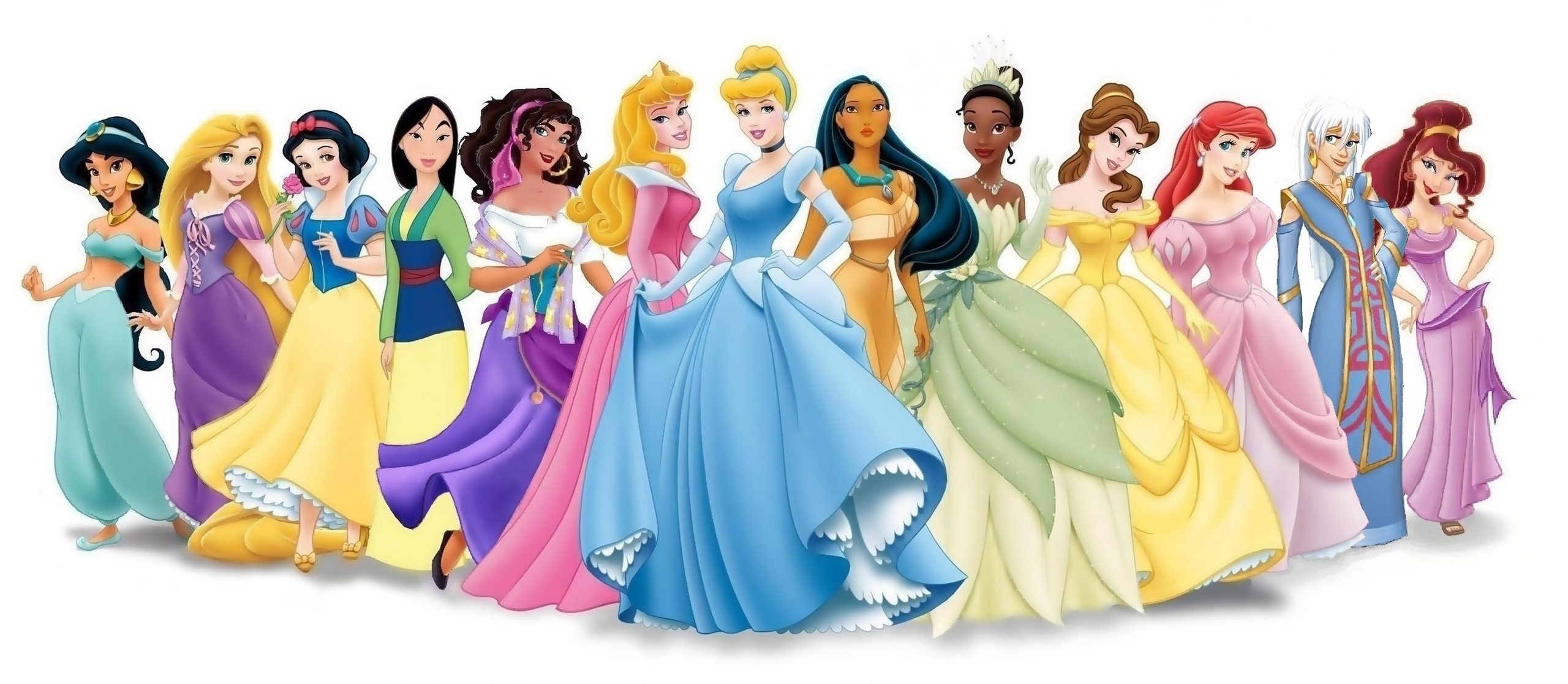
Sure, Disney princesses have unrealistic and ideal bodies. But how is that different than most celebrities on the red carpet? The women below do not represent an average group of people either

Yet, many internet reviewers love this poem and seem to agree with the idea that fairy tales themselves, not the media overall, embody unfair beauty standards. 

But I do like Yolen's positive spin at the end, about anticipating a future that does celebrate more body types. How does this poem strike you?

Friday, August 8, 2014

LOTR, Fairy Tales, Humanity, and Hope

Tony and I got to go to Ravinia last night to see Lord of the Rings: Return of the King with the Chicago Symphony Orchestra playing the soundtrack live. It's a great experience-we had gone last year to "Two Towers" and knew we wanted to return for the final movie of the trilogy.

In addition to hearing the music live and up close, which really made me notice the musical motifs more than I normally would have, the great thing about seeing this epic movie in such surroundings is to feel the bond with the other people in the audience. Much like if you go to see a midnight showing of a movie, people would break into clapping at significant parts of the plot-and being such an enthusiastic audience, and a movie where so many brave choices were made in the face of danger and so many victories were finally won, there was a lot of spontaneous clapping.

It was just cool to be a part of that crowd. All the other people there last night came from totally different backgrounds-we had different religions and political beliefs, and different worldview philosophies. Yet we were united with complete strangers over some of the most fundamental human things-applauding fictional characters for their courage, and being joyful together when a battle was won and when the characters received the honor they deserved.

I've also been thinking lately about the whole debate around whether or not it's dangerous for so many stories to end happily-does it really give us false hopes or fail to set us up for real life? But here's the thing about fiction vs. reality: Any good story will have dark aspects of it, just like life. We've discussed this with fairy tales time and time again. Lord of the Rings is very dark. No one is claiming that LOTR gives people the impression that life is all sunshine and rainbows and perfect, despite its happy, "storybook" ending. (Yet strangely, people have come to the conclusion that fairy tales-the most famous of which involve abuse, attempted murder, and violence among other things, somehow do promote a sunshine and rainbows worldview).

Yet the main difference is, fictional stories end. The creator makes a conclusion which, whether or not he or she intends it, communicates a certain philosophy to the reader-is life pointlessly depressing? Is there reason to hope? But life itself doesn't end. Even when we eventually die, we have left a legacy. All the people we've interacted with, the causes we fought for-we made a difference in the world, however small (and what I love about LOTR and fairy tales is how often the most insignificant characters-the youngest child in a peasant family, the little hobbits who are warned that they are not fit for battle, end up being key in victory). To borrow from Walt Whitman: "The powerful play goes on, and you may contribute a verse."

Walter Crane

Where you end a story makes a statement, but does it show the whole picture? What if Snow White ended with her still trapped unconscious sleep? What if Cinderella ended with the false bride, her stepsister riding off with the prince? What if a World War II movie ended when Hitler was still gaining power? On the other hand-what if Andersen's Little Mermaid, the most famous depressing fairy tale ending, didn't end with her becoming a spirit of the air and a warning against children behaving badly, but went on to describe the good deeds she witnessed in the world and her eventual gaining of a soul and living a new life? Often even a depressing end is really just the conclusion of a chapter-the great Story goes on. Even the most tragic events have some form of redeeming value to them-if nothing else, then to serve to educate future generations. Maybe happy endings to stories don't have to give us an unrealistic idea of what life will be like, but can help us to view our struggles as part of a larger picture.

In current thinking, we are increasingly being told not to accept a certain morality just because it's been handed down to us, but to discover our own. This independence can be thrilling, but it often comes with stress, ambiguity, and disagreement. This very phenomenon is why, in part, we are exploring fairy tales in so many different ways-questioning the strict good and evil and looking into the character and motivations of the villains (like Maleficent). This is all wonderful, it's so good to delve into fairy tales and look at them in new ways, and to apply our critical thinking to the stories.

But sometimes, especially in light of all the tough decisions we face when trying to decide what is right for ourselves and our country, we crave that good old-fashioned hero riding in on a white horse. Sometimes fantasy-whether an epic tale like LOTR or a well-known fairy tale-unites people together in a way that very few things do. When controversial issues become so divisive, in traditional fairy tales we find common enemies and common values that reunite us. And sometimes, especially in light of all the war and disease and horrible things going on across the globe today, we need to be reminded that there is hope. Not assurance that it will all turn out exactly as we want, but assurance that it's worth fighting for justice anyway. We can't possibly know what's going to happen or how our chapter will end, but our darkest hour is not the end of the story-the powerful play goes on, and you may contribute a verse...

Tuesday, August 5, 2014

LRRH Art

Yet another example of the variety of ways artists have chosen to explore the versatile tale of Little Red Riding Hood. This first one is "Fears Uncloaking" by Megan Eckman of StudioMME, although the series is no longer available on her etsy site. The artist's description:  " Our minds are powerful things, creating dreams, ambitions, and fears. What if the wolf was all in her head? What would Little Red Riding Hood have to be afraid of then?"

So this is an exploration of conquering our fears, although if you didn't know the title or description it would look like another message on embracing the animal within/subverting expectations of the wolf being the villain. 

Below are creations from Clay Opera (also no longer available). Arist Marta Turowska chose to depict two moments of the fairy tale that most artists avoid-that of Little Red eternally trapped in the belly of the wolf, and the wolf cross-dressing as Grandmother (Catherine Orenstein has a fascinating discussion of the cross dressing wolf in her book Little Red Riding Hood Uncloaked; I had never really thought too much about that image before).


Sunday, August 3, 2014

Villeneuve and Marriage Ideals

It's kind of amazing to me how internet resources for fairy tales have exploded in the past few years. When I first found out that there was a longer, more intricate version of "Beauty and the Beast" that predated Beaumont's classic, I could only find vague references to the plot online, and even then they usually contradicted each other, which I later found out was because different translations of Villeneuve's French text can lead to significant changes in how the story is interpreted (and some online sources are flat out wrong, no matter which translation you use-see here and here). A big part of the reason I founded this blog was to search for answers in that mysterious and elusive text, and to hope I would find other people who were also curious and/or had answers for me.

In the last 10 years or so, Surlalune has expanded the history section of her Beauty and the Beast page to include more on this monumentally important version of the tale, and now accurate English translations are much more easily accessible through her Beauty and the Beast Tales From Around the World. Quill and Qwerty recently gave her own summary of the intricate backstories for the main characters-a very helpful resource if you want to know what happens without committing to the full story, which, depending on the edition, can be over 100 pages. I had done my own summaries for Beauty and the Beast's complicated backstories a few years ago, but I'm getting to the point where I'll read old posts from my own archives as if it's new information (isn't it amazing how much the human brain can forget over time?).

Still, there is so much to explore within the text that still remains unknown to the majority of people. When dealing with Beauty and the Beast, we've assigned it many themes, such as loving despite appearances, exploring our animal natures, etc., without consulting what is arguably the "original" text (Villeneuve based her 1740 tale off of earlier Animal Bridegroom tales, but it was definitely the biggest single influence on Beaumont's later shorter version and all consequent versions).

As I reviewed the text, including the backstories that many summaries omit altogether as being boring and unimportant, a repeated theme kept jumping out at me: that of marriage outside of one's social class. The cultural context sheds light on this, but even today, the more general message of loving without discrimination has much application for modern audiences.

Terri Windling provides excellent context: "The story she came up with was uniquely her own, however, and addressed issues of concern to women of her day. Chief among these was a critique of a marriage system in which women had few legal rights — no right to chose their own husband, no right to refuse the marriage bed, no right to control their own property, and no right of divorce. Often the brides were fourteen or fifteen years old, given to men who were decades older. Unsatisfactory wives risked being locked up in mental institutions or distant convents. Women fairy tale writers of the 17th & 18th centuries were often sharply critical of such practices, promoting the ideas of love, fidelity, and civilité between the sexes. Their tales reflected the realities they lived with, and their dreams of a better way of life. Their Animal Bridegroom stories, in particularly, embodied the real–life fears of women who could be promised to total strangers in marriage, and who did not know if they'd find a beast or a lover in their marriage bed."

Yet the story itself seems, to me, to be as much about critiquing the idea of only marrying within the same social class as female independence (Beauty is incredibly independent, bravely defying the will of her father to go to the Beast, later turning down the Beast's repeated requests for sex, indicating that it is she who has the power to determine the nature of their relations).

The most obvious example is Beauty and the Beast themselves. Initially, although the Beast has magical powers and untold riches at his disposal, his shocking appearance contrasted with Beauty's attractive qualities give her the upper hand (in Villeneuve he has an elephant-like trunk, is enormous, and has scales that rattle as he moves-details that weren't included in any other versions and that no illustrator has seemed to want to tackle). Yet at the breaking of the spell, we find that the Beast is, of course, really a handsome Prince.

The tables are turned and we now find that the Prince, being royalty, is actually considered high above the social status of a merchant's daughter. In fact, the Prince's mother is very emphatic that she does not approve of Beauty to marry her son, simply because she isn't royal. Beauty proves again and again her inner worth, but the Queen cannot relent-"I am more than grateful to her for all she has done. But all the same...I cannot refrain from pointing out to you how unnatural would be the mixture of the blood which runs in my son's veins-the noblest in the world-with that from which this young girl has sprung."

Beauty graciously accepts this rebuff of the Queen, but turns down all counter offers (marriage to any other  noble). The good Fairy (read the backstory for a refresher on all the extra characters) emphasizes to the Queen that Beauty's worth comes from her character rather than her rank: "Think you that princesses, who are such only by the caprice of fortune, are any more worthy of the high rank in which their destiny has placed them than this young person? For my part, I think it wrong to hold her responsible for her origin, for which her virtuous conduct is an ample compensation."

The Queen even admits "Beauty is incomparable, her merit is infinite; nothing can surpass it." Yet, even after the Prince confesses he would rather go back to his Beastly form than be separate from Beauty, the Queen is uncomfortable with such a union. She is only happy when she discovers that, all along, Beauty has actually been the daughter of a King and a fairy, without being aware of it.

To add complexity and, I suspect, humor, to the whole debate of marrying only within one's social class, Villeneuve adds another layer to the social ladder: that of fairies, who consider themselves "as far above kings as kings are above their subjects," and their laws forbid them to engage in marriage with creatures below themselves. To add to the idea that worth is not found in social standing, most of the characters are found at one point or another to be secretly in a different class.

The Beast himself was cursed because he would not enter into marriage with an evil Fairy; by her rank, she would be above him, but because of her character, he does not desire her. When we delve into Beauty's backstory, we learn that her father was a King who fell in love with a shepherdess. Despite her poor situation, he recognizes beauty and inner worth. The shepherdess/Queen is lauded for  her "noble character and her purity of mind."

Yet once again there is an upset in the social status, for the King had no idea this whole time that his beloved wife was actually a Fairy who had gone beneath her station to marry a mere human, again because she recognized his character was worthy and she fell in love with him. When the fairy council found this out she was imprisoned, and the King had assumed her dead, until the good Fairy brought about a happy family reunion.

In that time, most fairy tale authors' response to arranged marriages was to have their characters marry for love (mostly at first sight) and attractiveness. The whole "love at first sight" is one of the most criticized features of fairy tales, and yet we can't pass the writers off as completely shallow-you should be physically attracted to your spouse on some level. It's so hard, when being oppressed under one extreme, not to default to the other (forced love verses ideal, free love).

Which is why Villeneuve's solution is so remarkable; she is able to look beyond her time to the more wise choice, to marry not for social status or for physical attraction alone, but to marry someone you can respect and trust-the best long-term solution. Yet if we completely ignore the whole second half of her story we miss an obvious message she was trying to make, for when we look at the full story, it is clearly a comment on classism among other things-we tend to get hung up on the sexual aspect and ignore the rest as unimportant. In fact I think I've only read about interpreting BATB as a socio-historic tale from Jerry Griswold, but he only looks at Beaumont's version, and concludes that she is endorsing a "backwards-looking endorsement of the nobility," which I hardly see as valid when you consider her full source.

*Illustrations by Eleanor Vere Boyle

Thursday, July 31, 2014

Fairy Tale Photography of Viona Ielegems


"I love fairy tales because they are so realistic: we all face wolves and want to go to the ball. Their realism is on another level, a symbolic level. But they are fundamentally about what we fear and desire. That is why they have lasted so long and are continually rewritten. They are about the deepest, most fundamental part of ourselves." -Theodora Goss


Photography by Viona Ielegems and poetry by Theodora Goss were featured in the latest issue of Faerie Magazine. I included mainly recognizable fairy tale photographs in here, but Viona's site has many more fairy and fantasy inspired shoots, often dark and creepy.