Thursday, August 29, 2013

The Issue of the Moral in Bluebeard: Part III

Over the years I've tried to make sense of the disturbing moral Perrault wrote at the end of his version of "Bluebeard" which does not at all condemn the husband for his serial killing, but the wife for her curiosity. In Part I, back in 2010, I was comforted by Marina Warner's calling the whole thing "tongue in cheek"-maybe it was so obviously wrong that it was humorous. But in Part II, written in February, we find from Casie Hermansson's book Bluebeard: A Reader's Guide to the English Tradition that, regardless of Perrault's intentions, later versions of Bluebeard, and consequently the later readers, took the moral very seriously, and for a long time the story was seen as a cautionary tale against the "horrible" sin of women's curiosity.

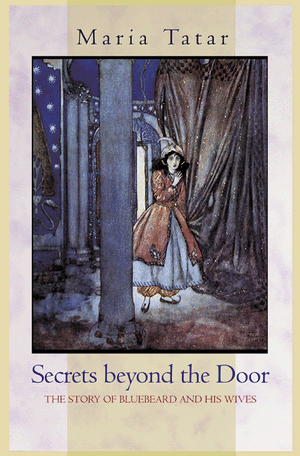
Maria Tatar shares her valuable insights in her book Secrets beyond the Door: The Story of Bluebeard and His Wives. First of all, "Bluebeard" is not the only fairy tale to have been granted a moral that seems a bit irrelevant to the text. His moral for "Donkeyskin" ends with: "Finally, we must take into account that clear water and brown bread are sufficient nourishment for all young women provided that they have good habits, and that there is not a damsel under the skies who does not imagine herself beautiful."* (Note: this is from the Tatar text. In my Jack Zipes translation of Perrault's "Donkeyskin" the moral is completely different).

By not mentioning the issue of incest, or the daughter's courageous journey, Tatar sees Perrault as dismantling "the notion that the story has any message at all by engaging in self-parody through the proliferation of irrelevant messages." So is Perrault's whole message that it is foolish to try and look for a moral in fairy tales? Ironically, modern fairy tale scholars would agree with him as well, though for years adults sought desperately to try to find morals to make the tales suitable for children.

These morals sometimes become ridiculous when they contradict what actually happens in the story. For all the blame editors and publishers heaped on Bluebeard's wife throughout the years, she always ends up the winner in the end, and Bluebeard's death is justified. If there were no curiosity and no murders, there would be no story.
Harry Clarke

Also, Perrault has a second moral. Tatar says that the reader would expect it to be the counterpart to the condemnation of the wife, and condemn the husband. But the moral does exactly the opposite-it claims that "no longer are husbands so terrible, or insist on having the impossible...He tries to do as he's obliged. And whatever color his beard may be, it's difficult to know who the master be."

So in one moral, Perrault endorses limiting women's power, and the other claims that women are so powerful they have mastery over their husbands. Tatar says these two morals are mutually exclusive, "so symptomatic of how fairy tales send mixed messages that Perrault, perhaps unwittingly, crafted what appear to be two very different readings of his own story." But if you buy into the premise that powerful women are dangerous and dangerous men simply don't exist, it seems logical that Perrault could be warning against women gaining power-I don't see the two morals being mutually exclusive, but being on the surface incredibly and shockingly sexist.

Tatar points out that the color blue had come to represent royalty in France, so the fairy tale could be read as a tale of class tyranny. Interestingly, during his lifetime Perrault switched from opposing King Louis XIV to supporting him.

Perrault was a feminist, for his time. He was active in the literary salons of the popular female fairy tale writers of his time, Mlle. L'Heritier (his neice) and Mme. d'Aulnoy, among others. His works, according to Jack Zipes (in Beauties, Beasts, and Enchantments), "stress the necessity of an enlightened attitude of fairness toward women, but fairness on male terms." Zipes also reminds us that Perrault's tales were intended for adults, who would "understand his humor and the subtle manner in which he transformed folklore superstition to convey his position about the 'modern' development of French civility." So it would be more likely that he didn't mean for his morals to be taken at face value.

So I guess this is an example of the baby steps towards feminism, although it seems pretty unlikely to the modern reader.


Friday, August 23, 2013

Gianni Rodari's Little Green Riding Hood

" "Once upon a time there was a little girl called Little Yellow Riding Hood."
"No! Red Riding Hood!"
"Oh yes, of course, Red Riding Hood. Well, one day her mother called and said: 'Little Green Riding Hood-"
"Red!"
"Sorry! Red. 'Now, my child, go to aunt Mary and take her these potatoes.'"
"No! It doesn't go like that! 'Go to Grandma and take her these cakes.'"

So begins the (very) short story Little Green Riding Hood by Gianni Rodari (1974). A fun little tale told by a grandfather, who we can assume is tired of telling the same story over and over again and messing with his granddaughter. Available in Jack Zipes' the Trials and Tribulations of Little Red Riding Hood

Illustration by Gari Melchers

Monday, August 19, 2013

Villeneuve's Epilogue to Beauty and the Beast, part I

I am extremely excited to share this post with you! If you recall, back in March my fiancĂ© and I did a little researching in the Library of Congress to read the French text of Madame de Villeneuve's Beauty and the Beast. There was something else I had discovered but was waiting for someone who is more fluent in French to be able to translate it for me. In the back of the book was an Epilogue section, which included what appeared to be letters between Beauty and the Beast, after the events of the story had already taken place. I don't recall ever reading about these existing, but no other author was credited, so I'm  assuming they were written by Madame de Villeneuve herself. As always, if anyone happens to know otherwise, let me know in the comments!

So first of all, I want to thank Richard Jacobs, the father of a friend of mine, who lived in the Ivory Coast for part of his life and accepted the task of translating the letters. Note that he is not a French scholar or historian, he did it out of the goodness of his heart. He mentioned it was more difficult than anticipated because the language was very difficult than the vocabulary he had used when speaking French-it is, after all, a 300 year old somewhat abstract love note. So without further ado, the first letter, "A Letter from Beauty to the Beast."

My original plan was to share the text in its entirety here, but it occurred to me that that would probably be breaking copyright, so I'll be sharing portions that I found the most interesting.

After a random and kind of confusing introduction about Beauty wanting to retire to a land with fish ponds, she turns to contemplating the nature of the Beast himself. First she remembers what it was like when he came to her as a Beast:

 "You would come with the night, when the hour was never yet at the remaking of the day, but rather at the regret of its light.  The beasts, as dreams and fog, belong first of all to obscurity, to the experience of that which undresses and undresses itself again.  Well in advance of my seeing you, the memory of these recitals that came from elsewhere of the story of the marriage of the blood of the monster with the most beautiful of the beauties brought me to fear.  I thought of you as being born of murder and a curse when actually you had only conquered your horrendous face as a reflection of your beauty in the mirror of your mother.  For a long time, you remained for me one by whom mourning came.  One who gave also to the sun a taste of wormwood." (all emphasis mine)

You'll notice Villeneuve doesn't shy away from hinting at what Beauty and the Beast do in secret, and those commenting on her version usually note that it is more sexual.

Beauty goes on, and it appears that by the time of the writing of these letters, their story has already become legendary, and she refers to it as a fable-

"You had no other name than that of Beast.  It is the same for me who always carries only that of Beauty.  Is it only, as certain ones pretend it to be, that there are no genealogies?  No one precedes us in the legends, except it be in the days so ancient that I am not able to remember.  Children found in other memories, we would have unheaped some sense under the fullness and the untying of our names.  Or do you belong to the denseness of night en of secrets as I belong, me, of the morning and of white linen that I spread out in the yard?  The names of men are more uncertain than those of things.  To call yourself Beast, was to clothe yourself of everything that beasts are after the Fall and thus it was easy for you to make yourself the heinous, the most monstrous, the terror of death; and to call me Beauty, I brought all the women to like me, the fondness of their womb and their patient endurance, but also their beauty that, at times, to disguise the guile.  Despite you and despite me, the fable wanted to make us models.  It wanted that, when we would have ceased to live, because a person cannot live for ever, some one would remember you, my Beast, and another would remember me, your Beauty.  Thus, the lovers, who will come after us, will forget that I was a young girl who loved the roses and who mistakenly judged the forest with the musty odor of bear; they will forget also that you were the unknown one, handsome as one paints Love, who appeared to me in a dream along the canal and, at the same time, this sad prince, a victim of the indecent passion of an old hag.  We will thus remain Beauty and Beast, in accordance with what we ourselves wished, the fable that lasts forever."

A couple parts of this letter seem almost creepily prophetic, and makes me wonder if it was really the invention of Villeneuve herself. Beauty talks of future generations forgetting their stories, and while the fairy tale itself is alive and well in common knowledge, the details of Villeneuve's version are, indeed, almost forgotten. Very few people know of the Unknown Beauty speaks of-which is when the Beast would appear as his true, Princely self, to Beauty in her dreams.  (Some people might recall this from the children's book version by Marianna and Mercer Mayer, which includes this plot element). Also, the modern reader might remember the old hag of the Disney version, but in fact Beauty is referencing the evil fairy who cursed the Beast (read more about the Beast's backstory in my archives).

"When you were the beast, you ask questions and you never respond.  You were sown tied up into silence, and ordered a people statues and of maliciousness, who are only the semblance of men.  From parrots also, (come) many colored echoes of our words.  Were you not, at this strange season, similar to this lord who causes the body of this young wife to be taken under stony the on-looking of uncountable monsters?  Someone caused me to know that he went to the point of giving to his dreadful watchmen traces of seduction that his sadness loaned to the prisoner.  But, you, you have only to fear that my reflections in the deserted mirrors of your living rooms: left in the evening shadows that sleep brings on and that wakening obliterates, I was girded through absence and offered my arm only with a bracelet."

I think that the above bold section is referencing what many BATB scholars think was the "message" of the fairy tale from this period: to expose the cruelty of arranged marriages, especially when the husbands in question were older, perhaps uglier, and not necessarily trustworthy, yet being promised very young wives by their fathers. I'll admit I find many parts of this letter very confusing.

"Because, before becoming weak, you were, to be sure, incredible.  Or, to speak otherwise, your face could only be considered insignificant so long as it carried the promise of being other things.  I imagined you, at times, as a stranger to yourself, et to be so unreasonable and illusive, I wanted to unclothe you.  Since I knew that you, by love, had removed your savage clothing, to change yourself into a man I rendered dead." 

Again, references to sex, even when he was still a Beast.

"But nonetheless, I knew that you knew, from the terrible knowledge of the plants, you who were, perhaps, a rose before being a monster.  You never ignored that you were neither a beast lost among men, nor a man lost among beasts.  Not being one or the other, you were one and the other and you belonged to the list of revolved eras where humans had the necessity to live among all that lived under the sun, victims of the original desire of the gods.  From other fables, more knowledgeable than ours, they would say, perhaps, that man is not far from the beast or that one and the other are taking turns and in our eyes are surfacing through the waves of the immense sea where we were fish.  They will say this surprising thing that the destiny of  man and the destiny of the beast was tied together because the hunter and the prey change places often and that I also was myself a beast before being a woman.  Our obscure mouth, it seems, bristle up teeth to devour your happiness and it is possible that one day someone will write the history of the woman changed into a fox.  I assure you today that it has entered my mind to wish you to be animal more than person, though the inaccurate is more unprecedented than the accidental."

This is the other passage that strikes me as being suspiciously modern. What does she mean by saying she was a beast before becoming a woman? And the last two sentences accurately portray the current trend in BATB retellings, which is to celebrate the animal in the Beast, even sometimes turning Beauty herself into a Beast.

" You taught me how to un-mix what seemed to be that which disguised all things.  I knew that the image deceives, and our senses and our hearts.  You taught me also to never consult my eyes. "    

"You left me as soon as I refused to share my bed, I who never understood that you were the path to myself.  Surprised by your docility, I believed you to be a stranger to conquering.  Consequently, you left me to the world of images.  Being absent from your human body, you presented yourself to the will of pictures and dreams so that I reap scattered images.  Prisoner of your palace and its lazy courtyard of an inorganic sleep, I ruled, unknown to me, your life, because I retained the pieces scattered in one place or another on the mirror that only my love could piece together in a meaningful way.  Never did I lose awareness that you were, in reality, my prisoner.  Was it to have ascertained it that I finished by finding some pleasure being in your presence?  And this pain, that takes hold of me when I see you as dead in the den that lightened my monkeys.  Did I dream that or is it again a trick of the fable that wanted, according to its principles, that I abandon you before taking you as husband?  I ignore this thought.  The confusion of the dream is sweeter than that of reality.  My tears on your inanimate body teach me that love is a toy that the child never possesses before he loses it."

So many interesting things to consider and ponder, I won't talk about these sections here, just highlight what I found most interesting.

The letter ends:


"Thus, your ring no longer has use to me.  It suffices me to find you in the inner being of myself.
 
I will sleep with you again tonight.  Something tells me that the hours will be more extravagant than all those that we have known.  Do we not need to, in effect, go down together the steps of time? 
 
That the night be good to us, Beast!"
 
Isn't this fascinating?!?

Part II, Beast's reply to Beauty, coming soon!

Illustrations by Eleanor Vere Boyle


Monday, August 12, 2013

Fairy Tale Entertainment: Chicago

I've thought about doing a post like this before, but decided against it, since I think most of you don't live in the Chicago area and this wouldn't be of special interest to you.

However, after hearing ads for two fairy tale-inspired events in one set of commercials while listening to the radio this morning, I thought it might be interesting just to see how much of our art is influenced by fairy tales, in just one season of one city's entertainment. This is not even an extensively researched list, a few of these I had heard of and I went through the CSO schedule and listed those titles which included fairy tale subjects (this doesn't include programs where only one piece may be fairy tale inspired).


Description: "This ancient and beloved Chinese fable chronicles the tale of a gentle serpent spirit who transforms herself into a beautiful young woman to find love in the human world. Funny, moving, and stunningly staged, The White Snake is a ravishing theatrical spectacle that will enchant and delight."
(So this appears to be unrelated to the Grimm's tale of the same name)

  • Chicago Symphony Orchestra:
Once Upon a Symphony: Stone Soup October-November
Mother Goose and More November
Program includes:
Tchaikovsky Waltz from Sleeping Beauty
  • Mussorgsky Tuileries from Pictures from an Exhibition
  • McBurney Nursery Rhymes
  • Ravel Selections from Mother Goose Suite
  • Prokofiev Midnight from Cinderella
  • Humperdinck Selections from Hansel and Gretel
  • Pictures From an Exhibition in December (Includes Baba Yaga's Hut)
    Once Upon a Symphony: Three Little Pigs in March-April
    Adventures with Aladdin in May-This is really just Rimsky-Korsakov's Scheherezade, I find it interesting they used the more familiar fairy tale character to advertise the concert

    • Ballet Preljocaj Blanche Neige (Snow White), at the Harris Theater May 2-4

    *InkGypsy at Once Upon a Blog covered this ballet back in 2012
    I'm sure there's much more happening this year-especially in theater, which I don't follow as much as I do classical music/ballet. If I find more I'll try to remember to update this list, or feel free to send links my way in the comments!

    Monday, August 5, 2013

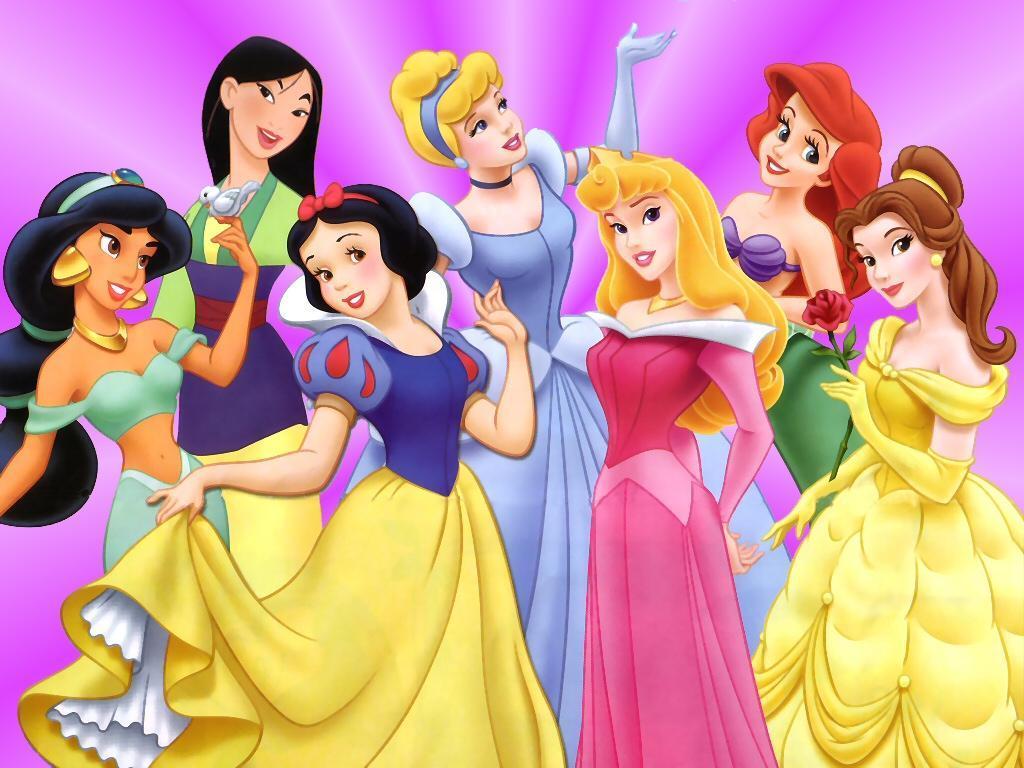
    Princess culture

    There was an article in the Chicago Tribune this weekend, "Tooth Fairy doesn't need a website or magic letters" by Heidi Stevens, which apparantly you need a subscription to see, but if you're willing to pay/already have a subscription, you can click through the link. But after discussing a new website that tries to use the Tooth Fairy to sell products to little girls, the author references the book Cinderella Ate My Daughter by Peggy Orenstein, which I have not read but have seen referenced on other fairy tale blogs.

    Stevens quotes an instance from an event with Orenstein, in which a woman tells of a kindergaten-aged girl goes to school dressed up like a Princess for career day. The woman tells the room she is addressing that she told that little girl to change, and that "Princess isn't a career," and the room burst into applause. The author of the article wonders if the reaction would have been the same if a little boy had been dressed up as Buzz Lightyear, and guesses we wouldn't have cared. (My response is-for Heaven's sake, this is kindergarten, let the little girl dress up).

    Stevens wonders if, in the cultural backlash against Princess Culture, we don't give our boys too much credit, assuming they're immune to the product placement and messages aimed towards them, and if we give too little credit to daughters, assuming they fall prey to every marketing scheme and negative female stereotype. To quote from the article: "When my daughter plays with Barbie, I worry she's going to grow up hating her thighs. When my son plays with Ken, I figure he'll toss his aside with nary a glance toward his pecs. When my daughter watches London Tipton play stupid for laughs on "Suite Life on Deck," I worry she'll equate ditsy with loveable. When my son watches Special Agent Oso bumble a job, I figure he'll learn from Oso's errors. Am I giving my daughter enough credit? Am I giving my son enough though?"

    I would be interested to read the book, but as someone who was raised on all the classic Princess movies and was Belle for almost every Halloween, I think I turned out fine. In fifth grade I first read Robin McKinley's Beauty, which along with my love of Disney's Beauty and the Beast spawned my interest in the history of fairy tales. I'm not even sure if I would have been drawn to the book initially if it weren't for my interest in the Disney version. I think I would have-but you never know. Certainly the Disney movie played a huge part in my reason for research, and it's possible that this blog would not exist without the Disney Princess culture.

    Obviously it's not the same for everyone, but personally, my initial love of Princesses turned me on to an aspect of literature, history, and anthropology that has become an important hobby to me. To say I've learned a lot would be an understatement. I know there are negative aspects to the commercialization, but I don't think I could ever get too upset with Princess culture. I'm more concerned about things like beauty pageant culture...which I'm sure is connected but still distinct. That's a whole other conversation I won't go into at the moment.
    I'd be interested in hearing from anyone who's read the Orenstein book-what does it say, and what did you think? Also, anyone who has specific examples of young girls and how they interact with princesses/princess culture. I've shared some of my babysitting/teaching adventures on the blog before, but of course there are many more stories to be shared-

    Wednesday, July 31, 2013

    A Grecian Snow White and Violence

    Walter Crane
     
    Once there was a king's daughter named Maroula who was so beautiful that the mother of Erotas (the goddess of love) decided to kill her. In the disguise of an old woman, she offered the princess a golden apple, but at the first bite the princess fell to the ground unconscious.

    Maroula's brothers returned home and noticed the apple. They removed it from her mouth, and she came back to life.

    But the old woman came back, this time giving Maroula a ring. Maroula's brothers did not notice the ring, and thinking there was nothing they could do, they put her in a golden coffin.
    Ludwig Grimm

    One day a king's son discovered Maroula in the coffin, and happened to take the enchanted ring off her finger, restoring her life. The prince and Maroula were married, but the Prince's mother was jealous. Maroula had given birth to twins, and her mother in law crept into the room and cut off the children's heads. She blamed Maroula, so the prince believed that Maroula was to blame. He ordered her hands be cut off and sewn into a sack together with the bodies of her children, and the sack hung around her neck, and his wife chased away from his palace.

    Maroula met a kind monk who attached her hands and the children's heads back to their bodies, restoring them to life. Years later the Prince was reunited with his family and discovered the truth. The Prince's mother was put in a barrel of pitch, and toss her into the sea to be burned. The mother of Erotas decided Maroula had suffered enough and allowed her to live unchallenged.

    This variant of Snow White struck me as being especially violent, even considering the violent family of tales it belongs to. The characters seem to delight in punishing each other in cruel ways, made more eerie by the matter of fact tone of the narrator. The punishments aren't even always logical-"tossed into the sea to be burned" doesn't even make sense.

    Although we're used to the villain getting her punishment, we don't tend to hear versions today where the main characters must suffer unjustly. We take out the part of Grimm's Rapunzel where Rapunzel must tend to her children (also twins, incidentally) in the desert and her prince wander around blind from the thorns outside of the tower before they are finally reunited. We rarely hear that every step the Little Mermaid took produced pain like stepping on knives. And although many people are loving the idea of "dark fairy tales" these days, and we're getting more used to some level of danger and violence associated with the tales that many still think of as children's stories exclusively, even our minds are shocked by the idea that Snow White's hands were chopped off and she was forced to carry them around in a sack with the bodies of her dead children.

    But the violence in this Greek tale has an important difference: it does not take place in a realistic world where actions are final. In this world, people can come back to life and severed limbs can be restored. Almost like Looney Tunes cartoons, where no matter what manner of pianos and anvils crush characters, they always return without a scratch. The viewer learns that nothing they see is lasting or final. I wonder how many stories from various times in history contained miraculous healings like this and how they impacted the listening experience?

    Yet fairy tales don't (usually, at least) make the violence appear funny, such as in cartoons. The reader/listener still feels upset at the injustice and a sense of restoration at the ending. Yet the characters still have to suffer-although how much of that the listener takes the details to heart may depend on their expectations of story formula more than anything else.

    I'm not even weighing in (in this post, at least) on the whole "what is appropriate for children" topic-just observing that not all story violence is the same, or experienced the same way.

    *Story source-"Maroula and the Mother of Erotas", from Surlalune's Sleeping Beauties: Sleeping Beauty and Snow White Tales From Around the World

    Thursday, July 25, 2013

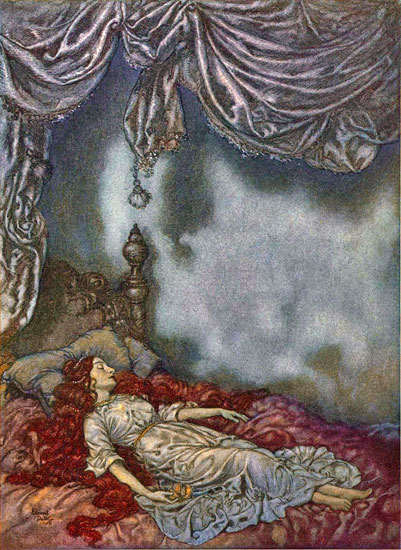
    Perceforest: an early Sleeping Beauty

    In my previous readings on the history of Sleeping Beauty, I had come across references to the story Le Roman de Perceforest from around 1500. Granted, it hadn't been extensive research, but most of the sources said something about how it contained a girl getting raped while unconscious but was otherwise not that connected to the story we know today.

    Books and online sources said as much, if they even mentioned Perceforest as being part of Sleeping Beauty's history at all. I even said the same in my own posts (I keep feeling like I should really go back and edit my archives, since I would now say a lot of things differently and/or have found more accurate information, and I hate misleading people who find old posts of mine through google searches. But I sometimes feel like I hardly have the time to keep up with other fairy tale blogs and occasionally pump out a post of my own, much less take on something like that).

    Anyway, it was Surlalune's Sleeping Beauties: Sleeping Beauty and Snow White Tales From Around the World that clued me in to the fact that there's more to Perceforest than just unconscious rape.

    The story goes: At Zellandine's birth, three goddesses were invited, Lucina, Themis, and Venus. Themis was upset that the knife she was given to eat with was not as fine as the ones provided for the other goddesses, so after Lucina promised health and a good reputation to the baby, Themis curses the child so that the first time she touches a piece of flax, it would stab her finger and put her into a sleep from which she would not waken. It is Venus who determines she will use her powers to save Zellanidine's life (after Cupid and Psyche, it's weird to me that Venus should ever be on the side of the beautiful young woman).

    Edmund Dulac

    Later, "it is told how Zephyr, in the form of a bird, offers Troylus [Zellandine's lover] transport to the tower in which the beautiful Zellandine is in an enchanted sleep...the knight accepts, and by this vehicle that once carried Psyche to the palace of love he arrives without use of a ladder in the beautiful Zellandine's chamber. He sees at one side a richly adorned bed, grand enough for a queen, the canopy and the curtains were whiter than snow. He hesitates to approach for a long time, like the true friend who is valiant in his thoughts but cowardly in his deeds. [Heidi Anne Heiner notes that this translation leaves out the face that Zellandine is sleeping in the nude] He then tries to awaken the young girl, but is finally conquered by the maiden's charms for she slept like a beautiful goddess, as tender and red as a rose with her white flesh like a lily. He speaks a long discourse begging forgiveness for his grand liberties, and sorrowfully, he decided to follow the tenets of Venus...[which I guess means sex...]
    Kay Nielsen

    "...Nine months later, Zellandine, who is still asleep, brings into the world a very fine son." The son sucks the flax out in an attempt to nurse, and Zellandine wakes up.

    Though this story was written down in the late 1400s, it was probably composed early in the 14th century. This story, which bears much resemblance to Basile's Sun, Moon, and Talia, is not the only example of medieval sleeping beauties either-you can read more about the predecessors in Heiner's/Surlalune's book. She notes that it's difficult to find English translations of these earlier tales. It's funny, I take it for granted that you can find anything on the internet now, but there is plenty of work yet for scholars to do...

    Sunday, July 21, 2013

    Fairy Tales in the Russian Ballet

    Interwoven through the history of Russian Ballet are ballets based on fairy tales and folklore. Early on, Russian folk tales provided the source for plots because it provided a sense of national pride for the audience. Ballets were based on fairy tales that are little known today, such as The Little Hump-Backed Horse, a well-known fairy tale (at the time) by Yershov, premiered in 1864, or The Goldfish, inspired by Pushkin's fairy tale. The former was a success and the latter not, although both tales were altered very much from their original sources (sound familiar?). In ballets, plot is only a part of the formula that makes it successful or not-much is also dependant on the music, the choreography, and the quality of dancers themselves. However, understanding the plot and its source was nonetheless important. The 1867 ballet The Fern's success was credited not to  Sokolov's talents in choreography, which were not outstanding, but the fact that he had a "better understanding of Russian folklore."

    Scene from The Goldfish, 1905

    In 1877 we come to the ballets which are well-known and loved still by Tchaikovsky, starting with Swan Lake. The element of a swan maiden is a popular theme in many Russian fairy tales, and the creators of the ballet adapted the specific plot to suit their purposes. It is Tchaikovsky's music that is recognized as the most successful element in this production. His "portrayal of the inner spiritual state of the heroes through music was an important discovery destined to turn over a new leaf in the history of ballet music and upset customary ballet cliches."

    Later, in 1888, Tchaikovsky was invited to write music for another ballet based on a fairy tale-this time using Perrault's Sleeping Beauty as the source. Ironically, the choreographer, Marius Petipa, didn't like using magical elements and fairy tales in his ballets, as he thought they weren't serious enough. However, he was ordered by the Directorate of the Imperial Theaters to use Sleeping Beauty and he transformed it to become something he wanted to work on.
    Maria Petipa as The Lilac Fairy in Sleeping Beauty

    Again, critics hail Tchaikovsky's music as transforming the history of ballet. Academician Boris Asafiev claimed that Sleeping Beauty was "a new form of musical-choreographic action." Asafiev claims that through the progression of the music, you can even trace the princess' maturing and growing up. As a musician I wish Roslavleva went into more detail on this one...

    In 1892 production started on The Nutcracker*, with a detailed program provided by Petipa, but due to illness, the project was taken over by Lev Ivanov. Tchaikovsky's music suggested "much broader vistas and a greater range of human feelings." Ivanov used the music as his primary inspiration, portraying, in Asafiev's words, "the ripening soul of a little girl, at first playing with dolls, and then arriving at the dawn of love through dreams of a brave and manly hero-in other words the process of the 'education of sentiments'".

    Scene from The Nutcracker, Mariinsky Theatre, 1892

    It seems that the combination of fairy tales and music created a new direction for ballets. No longer just pretty entertainment, ballet could be a deeper exploration of humanity. Fairy tale scholars would later see the tales as exploring the human subconscious, revealing universal stages of human development. Afasiev's descriptions of the music indicate that this process was already beginning in Russian ballet.

    Also unrelated to fairy tales, but I find it fascinating to see how far ballet technique has come in the past couple hundred years. Even in the late nineteenth century, double pirouettes en pointe were considered a great rarity, whereas they're now considered standard for any ballet student. That partly has to do with the development of specialized pointe shoes, but ballet is so different now than it was then.

    *No, the Nutcracker is not technically a fairy tale, but I really really like it
    **All information taken from Natalia Roslavleva's book, Era of the Russian Ballet: 1770-1965

    Friday, July 12, 2013

    Fibber

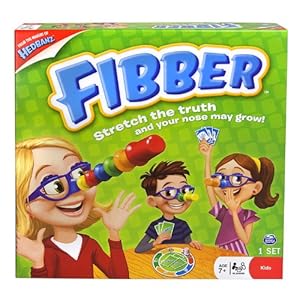
    My friend just told me about Fibber, a game she played while babysitting. It's for young kids, but inspired by Pinocchio.

    From amazon:
    "How to Play
    Fibber is all about what you say and not what you play! Play cards in their order and say what you're playing. Don't have the right card? Time to put on your best poker face and try to fool everyone by playing a different card. But watch out! If you don't get away with it, you’ll have to place a nosepiece on your glasses that will continue to grow each time you’re caught! If wrongfully accused, the player who said you were fibbing has to put on a nosepiece of his or her own. It’s fun for the whole table as you watch your noses grow! Person with the SHORTEST nose wins!"

    Reminds me of B.S., the card game I used to play, only with the addition of noses that grow for each lie rather than just being out. But apparently this is a hit with kids!


    Wednesday, July 10, 2013

    George Melies' Cinderella


    Silent film version of "Cinderella" from 1912. To put that in context, that's exactly 100 years after the Grimms published their first edition of "Children and Household Tales", and almost exactly a century ago from now. The special effects seem so obvious to us now but were groundbreaking at the time.

    From Wikipedia: "Méliès, a prolific innovator in the use of special effects, accidentally discovered the substitution stop trick in 1896, and was one of the first filmmakers to use multiple exposures, time-lapse photography, dissolves, and hand-painted color in his work. Because of his ability to seemingly manipulate and transform reality through cinematography, Méliès is sometimes referred to as the first "Cinemagician"."

    Clearly he used the stop trick often in this film-Perrault's Cinderella gave him lots of opportunities to astound his audiences.

    I personally think the clock sequence, starting around 16:00, is the most interesting part