Monday, May 5, 2014

So Guess Who Finally Saw Frozen

Margaret Tarrant

"Little Kay was blue, yes, almost black, with the cold. But he did not feel it, because the Snow Queen had kissed away his icy tremblings, and his heart itself had almost turned to ice.

He was shifting some sharp, flat, pieces of ice to and fro, trying to fit them into every possible pattern, for he wanted to make something with them...Kay was cleverly arranging his pieces in the game of ice cold reason. To him the patterns were highly remarkable and of the utmost importance, for the chip of glass in his eye made him see them that way. He arranged his pieces to spell out many words; but he could never find the way to make the one word he was so eager to form. The word was 'Eternity' ".

The birthday fairies struck early this year and gave me my own Frozen dvd so I have joined the ranks of people who did, in fact, like it :) I think I had enough rave reviews from most people, with some cooler reactions from readers here/other bloggers that they balanced each other out and I really had no idea what to expect. But I have heard plenty about it from students, listening to Disney songs on Pandora, and literally on multiple occasions I have walked outside and overheard little children singing "Let it Go." It's really crazy, how big this movie is...it's gotten to the point where, as a teacher, I really was feeling like I should see it to be able to connect with my students about it, if no other reason. I don't remember any other Disney movie that was this big. And I retract what I had previously said about "Let it Go"-way more powerful in the movie with the animation and as part of the storyline.

And in a way I feel like the movie is so unlike "Snow Queen" it really doesn't deserve mention here. However, I liked how they challenged some of the most hotly debated Disney fairy tale stereotypes-namely the passive princesses, and love at first sight (But once again, like in Enchanted, after the whole "love at first sight isn't real," the other love interest is one they also knew for about a day. At least they didn't get engaged after 24 hours, they have learned that lesson.)
Kristen Bell and Idina Menzel standing by their doll counterparts

And as far as the idea that Disney versions of tales weed out the dark aspects of stories-(SPOILER ALERT for the five of you left on the planet who have yet to see it but plan to:) the scene where Anna is turned to ice to save her sister was really, deeply moving. You kind of know that, being Disney, she won't stay dead, but I'm pretty sure it would have been traumatizing if I'd seen it as a child. Maybe because it also reminded me of another cartoon where someone's head was frozen that horrified me:

(You can watch the first few seconds if you feel so inclined, I don't know what's up with the weird singing afterwards)

From the quotes at the beginning and end of this post, you can see little parallels, or perhaps nods, to Andersen's story, but it's clearly not a retelling. The different elements-shard in the eye/icy heart, snow queen and ice castle etc., don't relate to the right characters or have the same motivations or consequences. But the solution at the end-that love is what undoes the damage-(and what a much more accurate picture of love than kissing someone you barely know) did seem to bring it full circle, a little, back to "Snow Queen".
Edmund Dulac

"Then she [Gerda] saw Kay. She recognized him at once, and ran to throw her arms around him. She held him close and cried, "Kay, dearest little Kay! I've found you at last!"

But he sat still, and stiff, and cold. Gerda shed hot tears, and when they fell upon him they went straight to his heart. They melted the lump of ice and burned away the splinter of glass in it...Kay burst into tears. He cried so freely that the little piece of glass in his eye was washed right out. "Gerda!" He knew her, and cried out in his happiness, "My sweet little Gerda, where have you been so long? And where have I been?" He looked around him and said, "How cold it is here! How enormous and empty! He held fast to Gerda, who laughed until happy tears rolled down her cheeks. Their bliss was so heavenly that even the bits of glass danced about them and shared in their happiness."
Arthur Rackham

Saturday, May 3, 2014

The Female Voice in Folklore and Fairy Tale

I thought this would be a good follow up from my recent post on feminism. So often when we look back at history and see it as a world of women being silenced and kept subservient, it can get really depressing. But women can be intelligent and creative even in spite of circumstances...

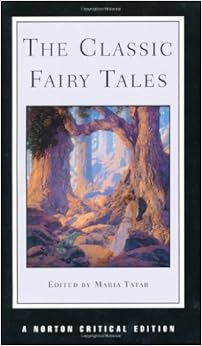
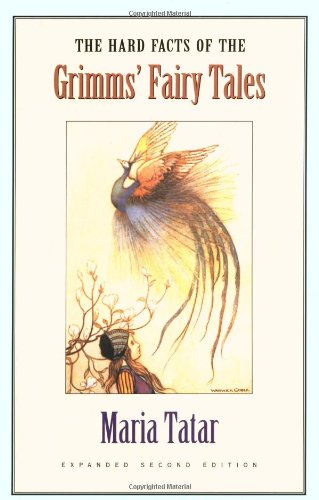
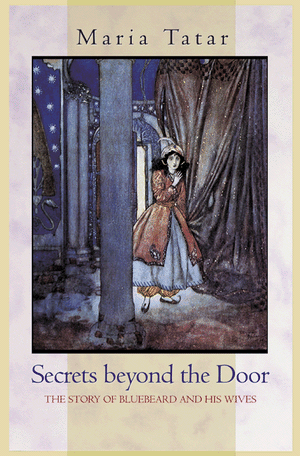
Karen E. Rowe has an essay entitled "To Spin a Yarn: The Female Voice in Folklore and Fairy Tale" that can be found in The Classic Fairy Tales, edited by Maria Tatar (who was just featured in Faerie Magazine). She begins by telling the story of Philomela from Ovid's Metamorphosis.
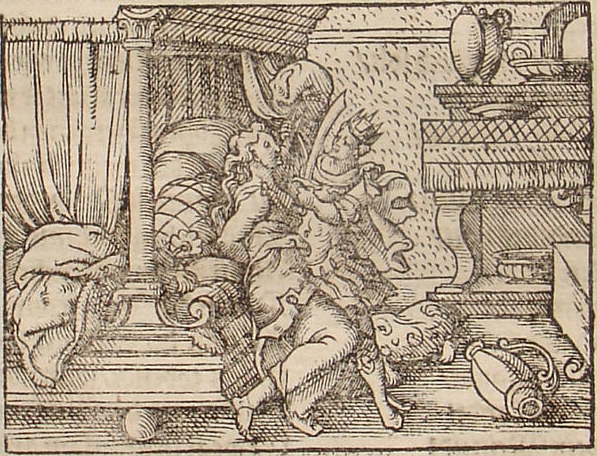
Virgil Solis, 1562

Philomela was raped. When she threatened to expose her attacker, Tereus, he cut out her tongue and kept her imprisoned in the woods. Silenced and confined to the home (sounds like the plight of many women throughout history), she did not give up, but wove an intricate tapestry that told the story of what had happened to her. Through the seemingly harmless, domestic art of weaving, she exposed the truth-her art became her voice. She gave her tapestry to an old woman, who delivered it to the queen, who understood and punished Tereus. Philomela was transformed into a bird, who sings eternally her tale of woe.

Rowe uses this story as a way to demonstrate that women throughout history have used their abilities-specifically for our purposes, storytelling-to be their voices. The story was passed from Philomela to the old woman to the queen-a chain of women who have an intimate connection and common knowledge that is unknown to Tereus. 
Reader's Digest

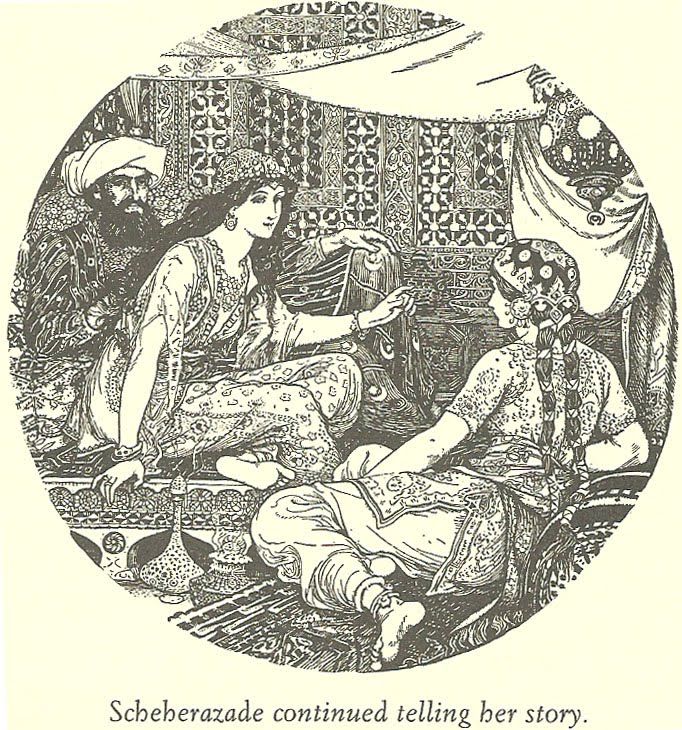
Throughout history, storytelling has been seen as a feminine task. Telling stories is not just the ability to recite back a plot, but also to shape each story in a way that applies to the listener and their situation. Rowe reminds us of Scheherezade*, whose storytelling was literally salvation for herself and untold future women in the kingdom of Shahryar. And although most of the world's most famous fairy tale collections were gathered by men-Straparola, Basile, Perrault, the brothers Grimm, Hans Christian Andersen-all of these men claimed to have gotten their tales from women. Although the authors shaped the tales according to their preference, they most likely heard some of the stories in their childhood from their nurses, mothers, etc. Citing young girls or comforting, grandmotherly old women as the tellers of their stories "validated the authenticity of the folk stories."
Jacopo Pontormo

Storytelling would often accompany some of the more mindless tasks that women gathered to do in the evenings, like spinning. With that, and the image of the three (female) fates who spun birth, life, and death of the human race, controlling the threads, we have the phrase "spinning a tale." Sometimes this would have been mere entertainment, but it may also have been, in many cases, a way to "transmit the secret truths of culture itself," to "a sisterhood...who will understand the hidden language."

I wish that, from here, Rowe had gone on to cite specific examples of tales and plot elements that showed this secret communication, but she doesn't. I have some ideas-the horrific plight of Bluebeard's wife may have been a way that women warned each other of the dangers that exist within marriage, just as Animal Bridegroom tales in which daughters are thoughtlessly given to horrible monsters in marriage would have been a way to show the horrors of arranged marriages that betrothed very young girls to older and/or otherwise undesirable men. People wonder about all the cruelty and violence in fairy tales, and it was often just a way of reflecting life. Any other ideas?

*Also-apparently Scheherezade may have a historical predecessor, Princess Homai, daughter of Artaxerxes I. There are also parallels between Scheherezade and the biblical Esther that I hadn't considered before. According to this encyclopedia, many of the stories of the Nights had a historical basis. Interesting to ponder...

Thursday, May 1, 2014

You Know You're a Fairy Tale Blogger When...


-You feel like you can justify any fairy tale-related purchase, if you can get a post out of it
-Typing the word "fairly" automatically becomes "fairy" because your fingers type it so much
-You feel a little personally offended if someone says they don't like fairy tales/insinuate fairy tales are childish and trite
-You feel a little paranoid to be running on an outdoor trail wearing a red hoodie, as if this is inviting an attack
Image from here

-Multiple shelves of your bookshelf are taken up with fairy tale books, and yet-
-Your amazon wishlist is made up of virtually all fairy tale books
-You have the instinct to include images in your emails, to keep people's attention
-Your wonderful and supportive husband, who had no interest in fairy tales previous to meeting you, can now throw around phrases like "Animal Bridegroom tales" and discuss fairy tale plots like a pro


*****************
After having a fairy tale blog for years, it really starts to bleed into the rest of your life. Gypsy from Once Upon a Blog and I have been enjoying sharing some of these unique results of our bloggerhood and thought some of you might also have some funny and interesting things to share as well! So I tag Gypsy to add to the list next :)

Tuesday, April 29, 2014

Little Red Riding Hood and Feminism

I was never specifically interested in gender issues or women's rights before looking into fairy tales. In my life I never felt hindered from any opportunities by the fact that I was a woman, and I was exposed to plenty of strong female heroines in various books and movies. From my experience, it didn't make sense to me for some people to be so concerned with the plight of American women when compared to other, more needy groups of people.

But of course, my experience does not reflect everyone's. Sexism is still very much alive in the world and even in America, despite how far we've come, and I've mentioned before how my studying fairy tales has opened my eyes to some of these realities. You can't study fairy tales and their variations without being exposed to some of the gender issues therein. Since reading Catherine Orenstein's excellent Little Red Riding Hood Uncloaked, in which she talks a lot about women's issues and the various feminist versions of the tale, this has been on my mind.
Gustave Dore (with blush added by Bruno Bettelheim)

Most audiences are familiar with the versions by Charles Perrault and/or the brothers Grimm. The heroine is thought of as an innocent child, who was warned by her mother not to dawdle on her way to her grandmother's (in the Grimms', but most people remember this element as key to the story), but through her disobedience allowed a wolf to eat her and her grandmother, and they were saved by a heroic huntsman. In this well-known, thought to be authentic version of the story, Red is ignorant and disobedient, and she and her grandmother are overall helpless. The wolf overpowers them and the hunter rescues them.
Margaret Tarrant

Most people are unaware that the Grimms' tale has a second episode in which Red and her Grandmother come across another wolf, but this time, together (without the aid of a huntsman) come up with a clever plan to outwit him. That part of the story was omitted from many translations.

Even fewer are aware of "The Story of Grandmother," a French oral tale. This story has no prohibition against talking to strangers or wandering off the path, therefore not a story emphasizing obedience. It shockingly involves cannibalism, a strip tease, defecation, and a heroine who outwits the wolf on her own without the aid of a huntsman or anyone else. (Often when people are proving how shocking and adult-like older fairy tales are, you'll hear them reference this tale as well as Basile's version of Sleeping Beauty in which she is raped). Many modern people are surprised at how seemingly feminist this story is-Red is independent and clever, and we get the idea she's older than just a child.
Harry Clarke

If this were just one stray version, we wouldn't have much cause to draw too many conclusions from it. But Orenstein tells us that multiple variants of this same story have been found all over France, as well as Italy and even some related tales in Asia. Though they have minor differences from "The Story of Grandmother" as collected by Paul Delarue, they tend to have those darker elements in common. And as for the frankness about bodily functions, Orenstein reminds us, in a culture where families shared small, one-room houses, the sense of privacy and appropriateness would be entirely different than ours. "Family members often shared beds-and the chamber pots beneath them." Sex and bodily functions were common knowledge, from their farm animals to their own family members. And yet the majority of these tales, despite their variations, boast a protagonist who escapes on her own.

It's unfortunate, but in a way understandable that the female characters would have less control when written in versions by white men in societies where women were seen as property of either their fathers or husbands (Perrault/the Grimms). Female characters in fairy tales were increasingly given passive roles, and any actions they took amounted to little more than keeping house and fulfilling the traditional duties of motherhood, sometimes sleeping in an extreme state of helplessness. And as a whole, feminists were very concerned with what these images, imprinted into little girls' minds from a young age, did to their perception of identity. Andrea Dworkin was concerned that we as girls "aspired to become that object of every necrophiliac's lust-the innocent, victimized Sleeping Beauty, beauteous lump of ultimate, sleeping good." Women over and over in fairy tales are victimized, rendered helpless and in need of saving by a male.

Yet now it's almost hard to find a recent version of LRRH  that doesn't give her control. Like this recent commercial for Chanel No. 5:
Or these ads from 1953 and '62:

In each of these ads, the trend started by Tex Avery (that I shared in my last post) has continued, to show that LRRH can be sexy and take care of herself at the same time. As one of the few fairy tale heroines who does not end up married, she's a model for the single woman who can remain independent from the control of men-she now has the control over the tame wolf in the Chanel commercial, or the many men in the lipstick ad.

And yet, as Orenstein points out, in these instances and many others, "has the message really changed? ...her implicit lesson is...that sexual appeal-or lack thereof-is the source of female power and value."

I think these modern versions of Little Red Riding Hood perfectly illustrate the contradictions and pressures women feel today in this unique era of history. We are all aware of the feminist message-few would dare to assert that a woman "belongs in the kitchen" or any of that. Women today can have a respected career, we can vote, we can create. And yet the pressures of the past are still very real as well. From back in the time when women were valued mainly for their ability to be married off and then raise a family, we still judge women extremely harshly for her looks. Women have so much pressure, directly from people we know and indirectly from media, to look a certain way. We almost feel the need to be everything.

I think this clash of values is very apparent in the popular t.v. show "How I Met Your Mother." I just referenced it because of its extremely controversial series ending-illustrating that, although fairy tales are often bitterly accused of giving us cheap happy endings, it is hardly the only genre from which the population at large seeks that ideal "and everyone lived happily ever after." But aside from that-the show was impressive in its portrayal of women. The character Lilly embraced her sexuality and showed us that the modern woman can enjoy a very fulfilling marriage, raising children and eventually experiencing her dream career. Robin's character challenged the stereotypical female-she is tough and unemotional, and did not want kids, choosing to pursue her job as a news reporter. Ted and Marshall showed that even men can have a vulnerable, emotional, romantic side to them.

And yet, Barney's character is possibly one of the most misogynist, womanizing characters to have ever graced the television screen-yet most of his feats of sleeping around are laughed off like a joke. His character literally makes lying to and seducing women into a game, and he makes it clear he would never sleep with a "fatty" and has a scale on which he rates the hotness of women. We see some growth in his character throughout the show but the implied message is clear to female viewers: if you're not sexually attractive, no man is going to want to have anything to do with you. The show was strangely pro-feminist and anti-feminist at the same time. This is the culture we live in, and this tends to be, on the whole, the culture that fairy tale adaptations reflect.
Kneil Melicano (thanks InkGypsy!)

So now we have a new picture of Little Red Riding Hood. She is perfectly capable of defending herself and can fight off unwanted suitors, yet still, the advertisements imply, has scores of suitors. The message of the feminists and the old world clash in such a way that women have to have career plans, even those that really just want to be mothers (and yes, I know several women who have said that). They feel guilty for pursuing love over career, or spending time and money on things such as makeup and clothes, even though we are told with practically every billboard and every time we turn on the t.v. that our value, at least from men, comes from our bodies being perfectly fit and model-like, and our faces and hair flawless, and our fashion choices impeccable. It's simply overwhelming. We have all these fictional heroines who are seemingly able to do it all-they date around while looking beautiful and successfully navigating careers, often defeating the bad guy with martial arts while wearing stilettos and tightly fitting clothes, but who can do all that? And what should we be expecting from ourselves? If the modern LRRH can totally take care of herself, taking out the wolf without blinking, what message does that give victims of rape or domestic abuse-that it's their fault?  Being independent isn't that simple, nor is it easy.  No wonder many women find it simply easier to just please one crowd-they embrace themselves as a dumb hot blonde, or claiming they don't care about love or appearances, throw themselves into their career. 

So how do we create fairy tale characters, or any role models, that are inspiring but not discouragingly unrealistic? Somehow, the image of the passive, sleeping princess, waiting to be rescued, has not only endured but as been loved by little girls for generations. The idea that women should be beautiful by Hollywood standards and attractive to males is not going away anytime soon. The beautiful thing about our current culture is that we have so many options, but it seems like there's pressure no matter which path you choose. Focus on career and you're unfeminine, raise a family and you're unfeminist. 
Agent Juarez

There is a trend in LRRH tales in which challenge gender norms by reversing or blending the traditional roles in the fairy tale. In Roald Dahl's poem, predator and prey become reversed as LRRH takes out a gun, shoots the wolf, and replaces her red cloak with his fur skin. In her actions and even her new appearance, the little girl has become the wolf's traditional role.
Quentin Blake

Many Reds these days end up becoming the wolf in the end. Roles are swapped and blended together in many modern takes on the tale, forcing us to question our preconceived notions of gender and realize they don't fit neatly into "obedient submissive females" and "strong predator or rescuer male". This provocative sculpture by Kiki Smith illustrates this perfectly:
"Daughter", Kiki Smith

Yet, what are we left with? Extremists will try to throw all gender distinctions out the window, calling it all a result of social conditioning. I've never understood that theory, because there are clearly biological and hormonal differences between male and female that affect us. However, as Orenstein reminds us, there are more exceptions, even biologically, to traditional genders than most people realize. No one fits perfectly into a box of preconceived stereotypes, and to every rule there are exceptions, but that doesn't mean there was no rule to begin with. Learning about gender differences is helpful in the same way personality tests are. They can help us to understand ourselves and our behavior, and the people we interact with, as long as we realize it is only a tool and not an absolute

But even these thought-provoking versions of LRRH remain unknown to the mainstream. Many examples of role swapping are thought of as light and comedic, such as Roald Dahl's poem, or the story Giselle tells in the movie "Enchanted" in which Red chased the wolf around with a gun. They are funny because they are so opposite from what we expect-and yet the fact that they are laughable almost cements the traditional roles in our minds more firmly, because they make it seem ridiculous to assume anything else.
naomiful

We are still left in a world that puts different expectations on us based on our gender. Women have an abundance of paths available to them but we are still overwhelmingly pegged as sex objects. Our world loves to play around with fairy tales but still reveres the versions that were passed down to us from extremely patriarchal societies as the authentic and authoritative versions. If only we could see their portrayal of women as echoes from history and not absolute...

EDIT: I didn't see until after I posted this that Ink Gypsy at Once Upon a Blog just posted some information about Kiki Smith, the creator of the sculpture above, in a post on visual representations of LRRH. Learn more by clicking through!

Sunday, April 27, 2014

Little Red Riding Hood Uncloaked

I was excited to find Catherine Orenstein's Little Red Riding Hood Uncloaked: Sex, Morality, and the Evolution of a Fairy Tale at my new library. I waited to read it, saving the best for last-I had heard about the book before, probably on Surlalune, and it looked very promising.

And I was not disappointed in the least. In fact, I would even categorize this in my top recommended fairy tale books. Obviously Orenstein explores in depth the history of Little Red Riding Hood, but along the way provides historical backgrounds for some of the tale's most prominent authors-from Perrault to the brothers Grimm; from medieval Europe to the first and second waves of feminism in America. Her histories provide enough interesting details to support her points while painting an overall picture of the culture impressive when considering the length of the book. Her points shed light not only on Little Red but the other fairy tales that came from those writers, and Orenstein references many other fairy tales as she compares and contrasts Little Red with other heroines.  I've read about several of the eras of history she covers before, but she managed to provide me with new and very pertinent information about well known fairy tale authors, as well as exposing me to versions of Little Red I wasn't aware of or knew little about before.

For example, Tex Avery's cartoons featuring Little Red, such as Red Hot Riding Hood:


From 1943, it provides a fascinating contrast to Disney's fairy tale cartoons the world was becoming familiar with. The wolf is horny, nothing new for us but would have been very surprising to its original audience. Red Hot is not the innocent, sweet victim audiences had come to expect from Victorian versions-she is sexually attractive, yet very capable of taking care of herself. Neither is Grandma a helpless victim, but herself a sexual predator of sorts-the wolf is no match for neither of them. These female characters are empowered and self-sufficient, shocking for the times. Of course, I wouldn't qualify them as family friendly, although children at the time would have been exposed to it.

This is only the tip of the iceberg when it comes to ways that authors have played around with the characters of LRRH to subvert expectations (and not just in the last century-many of the older versions are quite different than the fairy tale many of us grew up with).

Orenstein's writing impressed me. Usually when it comes to non-fiction, as long as you have interesting things to say and are relatively logical in how you organize and communicate your thoughts, you're good to go. But some sections of the book were beautifully written-look at the end of her introduction: "Little Red Riding Hood does not, of course, represent every woman or even an average woman, if such a woman could ever be said to exist. Nor does her tale encapsulate the thinking of a society...it is not the whole truth. But it provides a way in. The endeavor of this book is to draw Little Red Riding Hood forth from her literary crypt, to unwrap the protective vellum that mummifies her in the rare book section of the library, and simultaneously to unravel the preconceptions that surround her in our minds...to explore some of her multitude of reincarnations, not in search of universal truths, but on the contrary, as evidence of how human truths change."

In fact, her whole introduction would really be excellent reference for all of us, especially when people ask why we study fairy tales and what they have to do with life in 2014.

I also appreciated her humor at certain points-when describing how essential a part of life spinning was to any woman all over the world in earlier eras and, hence, its appearance in fairy tales, she says, "a princess can't fling a dead cat without hitting a spinning wheel or a loom."

Orenstein bravely tackles topics that are more controversial. What do porn, cross dressing, and date rape have to do with fairy tales? Turns out fairy tales are intermingled with all of these things, and taking a look at how they influence each other does shed light on how powerful the fairy tale is and what messages people take away from them.

I will absolutely be referencing this book in the future and highly recommend it. Practically everything I read I wanted to share with you all. It was hard to put this one down! Seriously, everyone put it on your amazon wishlist, right now

*Illustrations by Charles Robinson

Wednesday, April 23, 2014

The White Snake


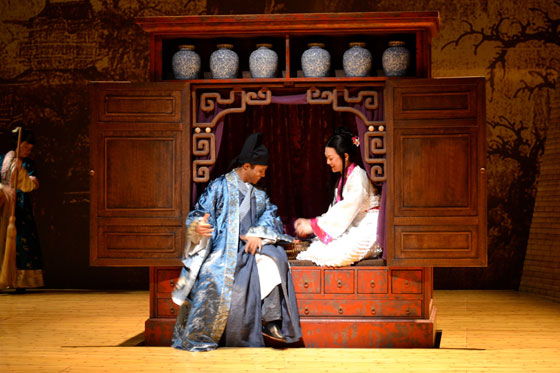
I mentioned this back in my post about Chicago Fairy Tale Entertainment back in August: a play of the Chinese fairy tale Legend of the White Snake. I wasn't familiar with this tale, only the Grimm Tale White Snake. And to be honest the Wikipedia summary, linked above, was hard for me to follow since the names were all unfamiliar to me and hard to keep the characters straight.

Being presented at the Goodman Theater this year, Mary Zimmerman's The White Snake might be a better introduction to Asian folklore for people like me. The description from the website:

"The White Snake chronicles the tale of a gentle serpent spirit who lives for centuries coiled on a mountaintop. One day, she transforms herself into a beautiful young woman and, with her feisty companion Green Snake, travels down to the world of humans. There, she unexpectedly finds love, happiness and family, and vows to remain a human forever. But when a vengeful monk discovers her true identity, he becomes determined to destroy the life that she’s built—and break apart her marriage to her one true love. Funny, moving and stunningly staged, The White Snake is a ravishing theatrical spectacle that will enchant and delight"

It's gotten good reviews from the Huffington PostNew York Times and NPR. This performance includes puppets, singing, and choreography. Costumes and props are lavishly done, larger than life, and impressive to behold.

This tidbit from the Huffington Post was interesting, especially to those of us who are interested in the evolution of fairy tales in general, and how and why they are edited. This play ends happily, with love conquering all, but:
"That account bears little resemblance to the original tale, in which the snake devours her human prey, but Zimmerman's free adaptation is consistent with the story's evolution in China. As described in scholarly yet readable program notes, the plot and especially the serpent have been re-imagined through the centuries in plays, operas and literary works, changing along lines that seemed appropriate to the authors and their eras."

Generally, we know people like happy endings, despite how realistic/unrealistic that may be (HIMYM Series finale, anyone?). At least they did their research and have thought through the decision to give the story a happy ending. Adaptations of Swan Lake also have to decide which ending they're going to give audiences.

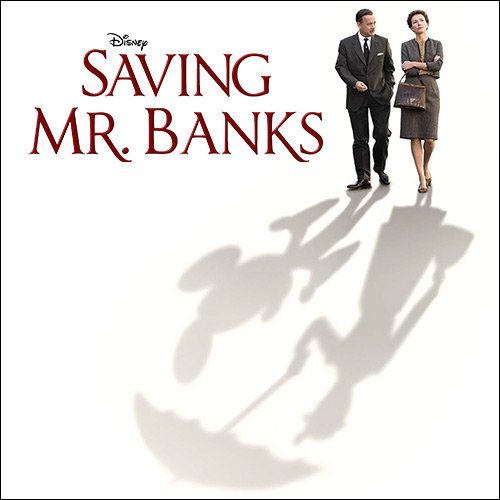
On that same vein of happy vs. realistic endings-I just saw Saving Mr. Banks. I won't do a whole post on it since it's not a fairy tale, but I did think it interesting that they addressed the issues people have with Disney and his fairy tale versions through Mrs. Travers' character, who didn't want her stories to be all sparkly and fluff, and didn't want children to have the idea that everything would magically work out for them. Yet in the end Disney gives this big emotional monologue about how his childhood was hard and his father harsh, yet through stories we can redeem the past. I thought this was interesting because usually we talk in terms of what stories do to us in terms of preparing us for the future, but in this case the story was a way of almost therapeutically healing and letting go of the past.

Tuesday, April 22, 2014

The Dark Side of Peter Pan

To preface: No, Peter Pan is not officially a fairy tale. But the story has become popular enough and many people do consider it to be a fairy tale, especially with the addition of its characters to the show Once Upon a Time. And generally, most people who have an affinity for fairy tales also tend to really like such classic fantasy stories such as Peter Pan and Alice in Wonderland. Also, this book has multiple references to fairy tales in it.

Neverland: J.M. Barrie, The Du Mauriers, and the Dark Side of Peter Pan by Piers Dudgeon is a fascinating read. The cover of the book promises as much. I was at first skeptical -"There might be scarier books, but it's unlikely that any will be as luridly creepy as Neverland," claims Michael Dirda of The Washington Post. On the front he promises "a history of psychological domination and submission, unnatural family relations, predatory abuse and suicide." Author Nina Auerbach "was literally captivated by this story." I was worried that the book might be full of sensationalized, wild accusations and unable to live up to such high praise.

But in my humble opinion, the book didn't disappoint. It covers in depth the history behind the writing of Peter Pan. Many of you may be familiar with Finding Neverland, which introduced the public at large to the friendship of J.M. Barrie, the play's author, with its real-live inspirations-the Llewelyn Davies boys and their mother Sylvia. Barrie got to know the family quite well and the games he played with the boys were woven into his literature. The movie portrays it as a sweet relationship, with a quasi-love story between Barrie and Sylvia.
J.M. Barrie, author of Peter Pan

But of course the true story runs much deeper-and in many ways much differently-than the Hollywood version. Piers Dudgeon takes us all the way back to George Du Maurier, who was not only the grandfather of the Llewelyn Davies boys, but an author and artist whose works and adventures in mysticism and hypnotism deeply affected the younger Barrie. Some of the first chapters were a little hard to get into initially, just because those characters weren't ones I was as interested in learning about at first. But give it a chance and you will be just as absorbed with learning about the bohemian lifestyle of artists in Paris in the nineteenth century and the disturbing practices of hypnotizing their models. 

I appreciated Dudgeon's writing. He begins with the history that has been handed down to us on the subject-the often romanticized version-but, in detective style, starts by uncovering holes in certain theories and going deeper and deeper into the mystery of what really happened between Barrie and the Llewelyn Davies family. He backs up all of his claims with solid evidence-letters and diaries from the family and their friends. He is careful not to claim speculations are truth, but by the time you have combed through the evidence with him you will probably also agree that his theories are very likely.
George, John, and Peter Llewelyn Davies in 1901

Given that people will jump to conclusions, especially with such dark hints, I should clarify that it is not likely at all that Barrie was sexually abusing the boys. However, there was a weird sort of psychological abuse going on that definitely had parallels to sexual abuse. It's hard to summarize without painting a wrong sort of picture and I'd really encourage anyone interested to read the book yourself, but a lot of it had to do with hypnotism, which surprised me. I had never taken hypnotism very seriously, considering it a self-fulfilling prophecy sort of thing, but it was all the rage among artists in the late 1800s and at the turn of the century. Much like drugs, it can give the people experiencing it a certain high and become very addictive, with negative long term affects that weren't discovered until, for some people, it was too late.


For a while I've had this half baked theory about Peter Pan that in my youth I gathered from the Disney version and didn't really take seriously. In one of the earliest posts on this blog I mentioned that there is no record of anything bad Captain Hook did-he is just seeking revenge against the cocky boy who cut off his hand and gave a crocodile a bloodlust for him, and that it is possibly Peter who is the villain. Turns out I was more right than I realized. One of the early titles of Peter Pan was actually "The Boy Who Hated Mothers" (Barrie had an extremely complex relationship with his domineering mother). Later, Barrie himself describes Peter as a "demon Boy" and was disappointed at the statue of his title character erected in Kensington Gardens, because it "didn't show the Devil in Peter." And really, when you think about it, the play is about a boy who steals children from their nurseries, luring them away from their parents, much like the Pied Piper (as in fact his second name, Pan, is a reference to the god who plays the flute). As Peter himself says, "I forget people after I kill them" (I believe this was from Peter and Wendy, not Peter Pan)

And, in a way, that is exactly what he did to the Llewelyn Davies boys. Both parents, Arthur and Sylvia, died tragically early. Barrie literally changed Sylvia's will so that instead of the boys' nanny and her sister raising them, he took them as his own. The boys themselves later in life either died early in tragic (sometimes suspicious) accidents, or committed suicide. Again, they are all complex situations too detailed to describe here, but it would not be untrue to say that Barrie indirectly had a hand in many of those deaths (including Sylvia's).

To bring the whole business back to traditional fairy tales, Peter Llewelyn Davies-thought to be the main namesake for Peter Pan (when in fact, both of those Peters were named for a fictional character penned by George Du Maurier, Peter Ibbetson) later in life published a collection of fairy tale-inspired short stories written by his contemporaries. I introduced the book and reviewed the collection here and here back in 2012 when the book was rereleased.

It's not the happy or idyllic picture that many of us associate, or want to associate, with one of our favorite childhood stories. But it's definitely one of those instances where the truth is stranger than fiction. Now I want to reread the play and see if I pick up on different things based on what I now know.

Sunday, April 20, 2014

Iphone Easter Egg

Those of you with iPhones-ask Siri "Mirror, mirror, on the wall, who is the fairest of them all?" and see what she says :)
Arthur Rackam

P.S.-Happy Easter! 


Thursday, April 17, 2014

Maria Tatar in Faerie Magazine

I bought a subscription to Faerie Magazine years ago and I'm not sure how long I'm going to keep getting them for, but there is a new issue out. When I flip through, I'm always a little confused at how random some of the articles are. With such a specific reader base-those who are interested in faeries and lore-why have such generalized topics such as spring umbrellas, berry pie, 10 ways to laugh more, and ways to spend a rainy day? There is also some fairy fiction scattered throughout. I remember one past issue had an article on cotton, which I never understood.
Not to bash the magazine or anything. Beautiful pictures, and some people would enjoy being inspired by faerie-like things, but I personally would prefer something a little more academic overall.

But every issue has one article which I find really interesting. This time it was an interview with Maria Tatar, well-known fairy tale scholar and author. I like everything I've read by her and have great respect for her opinions. In addition, I found the questions they asked to be very relevant-topics that have gotten a lot of discussion on this blog and others, and are very pertinent for our culture. Tatar talks about her favorite tales, the issue of the violence in tales, advice for parents reading fairy tales to their children, the appeal of mermaids, and the overall popularity the tales have in today's culture/Hollywood. Her answers were succinct and yet managed to address each topic well.


Here's an excerpt:
"Faerie Magazine: How do you account for the recent surge of fairy tale-related movies and television shows and books? Why are we reconnecting with fairy tales now?
Maria Tatar: Culture is marked by crisis, and every age is seen as a time of turmoil...In times of crisis, we need the consolations of imagination more than ever-in particular the tried and true. Everything feels unstable these days...It's comforting to go back to stories from the culture of childhood or from the childhood of culture. These are the stories told by our ancestors, and they are also the tales we grew up with. And they are compact and action-packed. They give us small doses of large effects. We have never stopped refashioning fairy tales, but it's more obvious today than it was fifty years ago...We now understand that Disney appropriated the tales for a time, but they have always circulated in popular culture-now we own up to it."


Wednesday, April 16, 2014

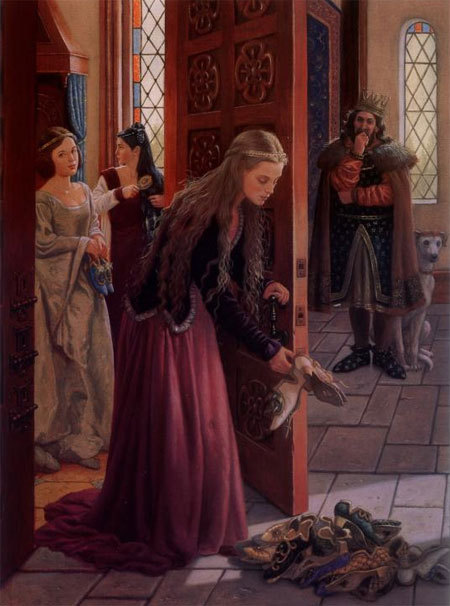
Princess of the Midnight Ball

Although "Twelve Dancing Princesses" is one of my all time favorite fairy tales, I rarely/never see critics writing on it the way they love to delve into other fairy tales and their significance. Surlalune's Twelve Dancing Princesses Tales from Around the World is pretty much the only exception I'm aware of, which includes a brief history/overview of the tales in addition to supplying several variants. Although in a way it's good, because it's one of the few fairy tales I can still read and make entirely my own, not having voices of various other interpretations in my head telling me what each symbol and plot point supposedly means.

Fortunately there are several fictional versions for fans of the story, and there's really so much you can do with the mysterious underground kingdom. Just looking through the descriptions of the plots (Modern Interpretations via Surlalune) each author handles the tale quite differently. As I discovered from Surlalune's book in Underground Kingdom: Parts I and II, even variants of the tale don't agree on what kind of Kingdom it is. It can be evil/neutral/good, and the women in question can go there willingly or as victims.

I decided to check out the novel by Jessica Day George, Princess of the Midnight Ball. It's a fairly traditional retelling of the story but I like how it fleshed out the characters and the plot. It was found in the teen section of my library although it could just as easily have been in the children's section. The writing was easy to follow, and the clues to the mystery a bit obvious, but at the same time it was kind of refreshing to read such an innocent version. The current trend in fairy tales is to explore their darker, adult roots, which I enjoy as well, but sometimes I notice that in order to combat the frilly and saccharine stereotype that fairy tales have, I/the fairy tale community in general tend to get defensive and point out the horrific parts: "fairy tales have VIOLENCE and SEX!" Which is certainly true, but is that why we like them or what makes them good stories?

Anyway, considering the younger audience the writing was pretty good (I would reserve "excellent" for books like Narnia or the early Harry Potters when it comes to children's books). One of my favorite descriptions was of King Under Stone, the ruler of the Underground Kingdom, who was pale and tall and gaunt and had "eyes like chips of obsidian." Doesn't that paint such a vivid picture in your mind?
Ruth Sanderson

And if you're wary of it being too close to the traditional story, George expands the mystery of why the sisters go to the Kingdom every night, and the ending isn't quite as simple as in the Grimm fairy tale, so that part does get a little more exciting. If I were to critique the gender roles-which didn't particularly bother me when reading it-I would wish the girls were a little more proactive, because in this story it's Galen, the soldier, who does all the discovery of the mystery and the ultimate solution to the problem. It's kind of ironic actually-in this old post from 2010 I reflected on the fact that the soldier in "12 Dancing Princesses" doesn't actually do much except for follow the old woman's instructions. It's the females who are having the adventures, and you can surmise that it took something proactive for them to discover the Kingdom in the first place, although that's left up to your imagination. The romance was also too love-at-first-sight for me, especially for a novel in which there is plenty of time to develop a love through multiple conversations.
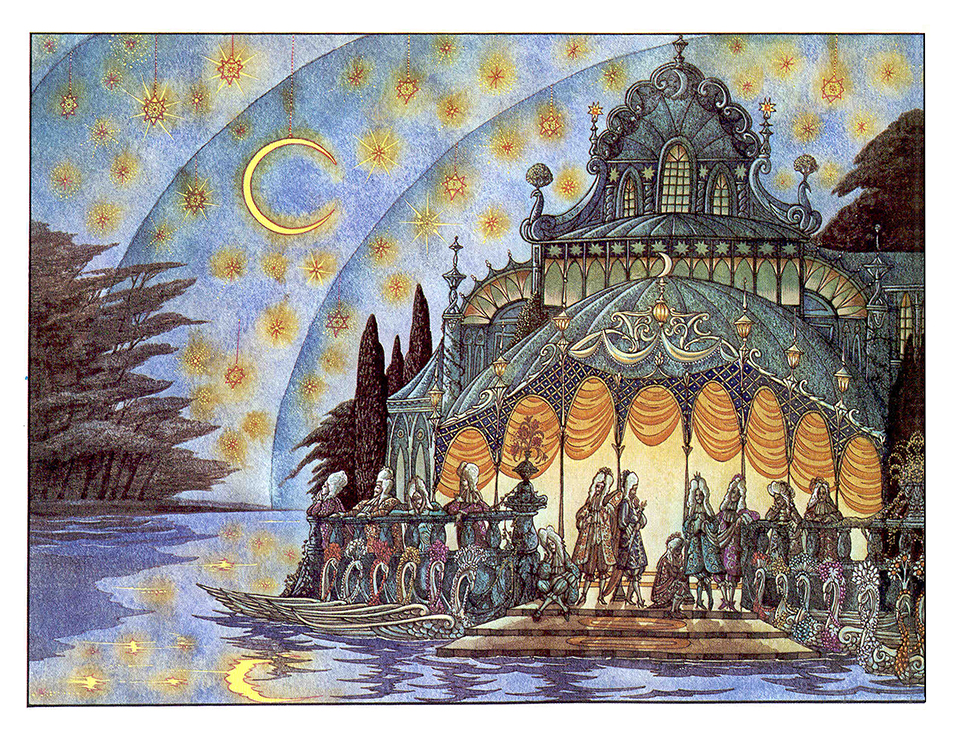
Errol le Cain

 Overall I would definitely recommend it to adults who either are looking for a light and easy read, and/or are wanting to explore some different interpretations of this fairy tale. And I would absolutely recommend it to a younger reader, it could be a great introduction to the world of fairy tales. Traditional novel retellings are great because the stark and odd details of a fairy tale can seem more realistic and personal.

Anyone else who's read it have anything to add? And what other novel versions of "Twelve Dancing Princesses" would you recommend?