Showing posts with label Quotes. Show all posts

Monday, February 1, 2016

Roses in Fairy Tales

Last year, leading up to Valentine's Day, I did a post on roses in fairy tales because it seemed rather fitting, but the subject could be explored so much more, that post was really only a scratching of the surface. So this year I'm following up on some more ways to look at roses.

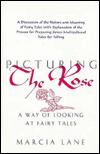
You can even use the image to look at the complexity of tales themselves, such as Marcia Lane does in her book Picturing the Rose: A Way of Looking at Fairy Tales.

From the introduction:

"If I say to you, 'Think of a rose,' your mind conjures up a picture of a flower-but your picture is unique. You imagine a new, tight bud, or a full-blown flower. Everyone sees a different rose. Take it by the stem and rotate it slowly and, second by second, it transforms right before your eyes. Each time you look at it, it's different, but the rose is still there. In much the same way, fairy tales tend to change as we live with them, examine them, and tell them. Return to the rose. Close your eyes and the perfume will resurrect the image of the flower. Always the same, always changing. These stories will blossom as you examine them; you can look and look, and they will never lose their ability to delight and enchant. Such is their power!"

Image

Over the next couple weeks there will be some more posts on roses in fairy tales; hopefully even if Valentine's Day isn't really your thing, you can enjoy looking at all the decorations and ads popping up through a fairy tale lens!

Wednesday, July 15, 2015

Quote of the Day


*Also, a little housekeeping note: Prince Tony and I will be going on some adventures to far away kingdoms over the next month or so. My goal is to have scheduled posts while I'm away, but posting may get a little slower at times/I might not respond to comments for a few days.

Friday, September 5, 2014

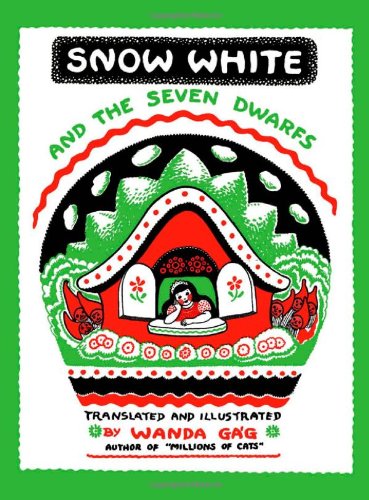
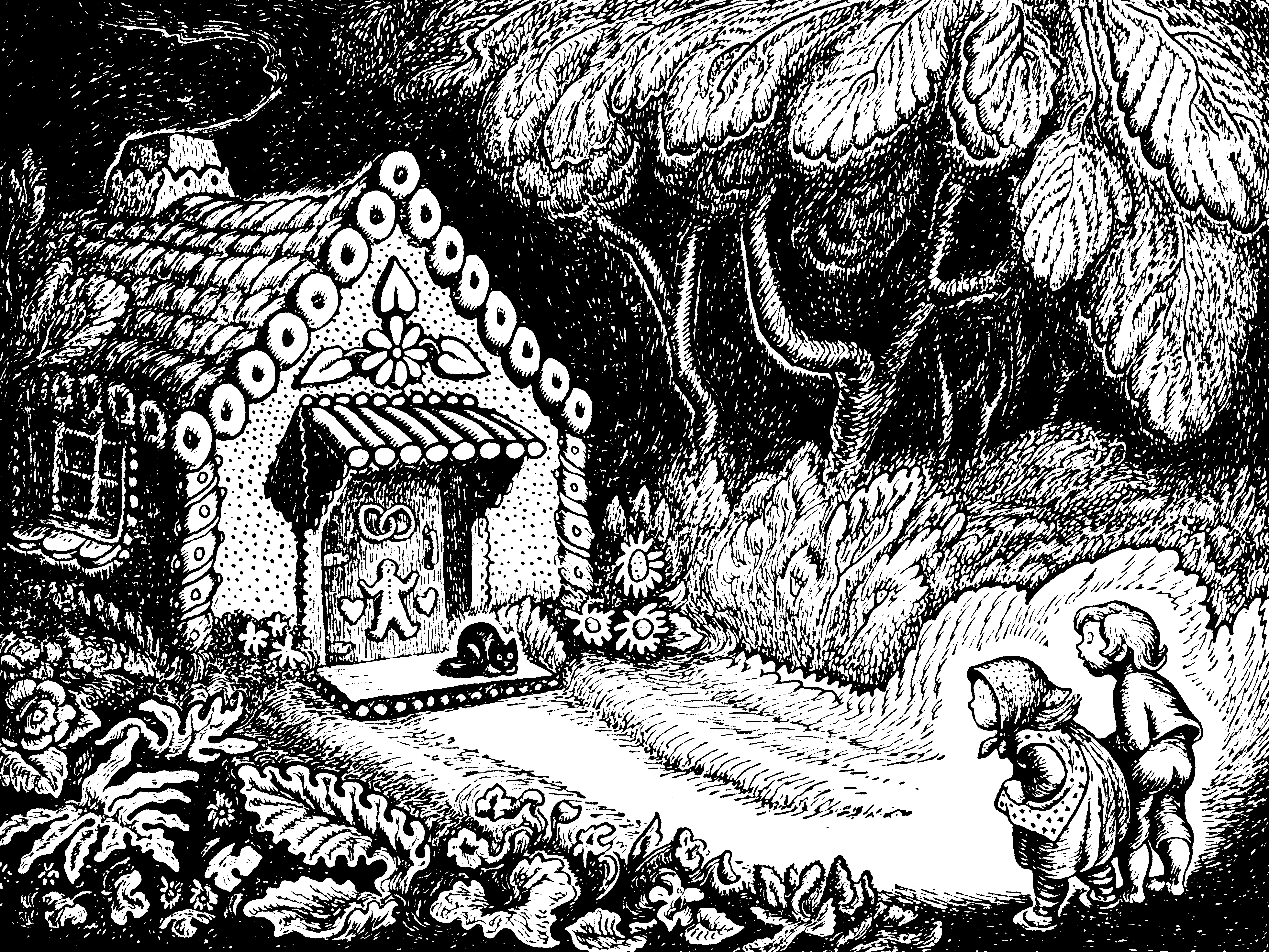
Wanda Gag on Grimm's Fairy Tales

"Often, usually at twilight, some grown-up would say 'Sit down, Wanda-chen, and I'll read you a Marchen.' Then, as I settled down in my rocker, ready to abandon myself with the utmost credulity to whatever I might hear, everything was changed, exalted. A tingling, anything-might-happen feeling flowed over me, and I had the sensation of being about to bite into a juicy big pear."
-Wanda Gag, American illustrator


Illustrations by Wanda Gag

Thursday, August 21, 2014

Jackie Robinson on Fairy Tales

"Next time I go to a movie and see a picture of a little ordinary girl become a great star, I'll believe it. And whenever I hear my wife read fairy tales to my little boy, I'll listen. I know now that dreams do come true."
-Jackie Robinson, a few days after he was signed on by the Brooklyn Dodgers, 1947

Jackie Robinson's life was far from perfect, before or after he became the first black man to play for professional baseball. I can only take so much of his biography* at one time because it's hard to read about all of the humiliations he faced due to Jim Crow laws and the racism that was prevalent all over America at the time.

However, as in any good fairy tale, the darkness only makes the light at the end more satisfying. Only when you get a little glimpse of what life was like for many African Americans for hundreds of years do you realize how pivotal it was when Robinson was finally recognized for his athletic abilities. Only then do you realize how heroic he was for never losing his temper in the face of hostility, or how noble was Branch Rickey, the Dodgers manager who risked his career and reputation to sign on the black player and personally mentor him through what he knew would be a long road facing much opposition. Jackie Robinson represented hope for his fellow African Americans who saw a glimpse into a future where there might be equality, which is still in progress...

*I'm reading the biography by Arnold Rampersad. I would recommend it if you're looking for something very thorough-it's pretty long

Saturday, September 21, 2013

Fairy Tales: So hot right now

"The current Hollywood vogue for fairytales has been partly inspired by the bicentenary of Grimms Fairy Tales...but Bill [Gray, University of Chichester] suggests the economic downturn may be a factor too. He says, 'These so-called fairy tales are often about surviving a (murderously) dysfunctional family in a harsh situation. Don't forget the Grimms created their book while Germany was an occupied country under French rule. Life was harsh; people did starve to death. The sort of scenario we see in Hansel and Gretel is not too far-fetched.

"'So-called fairy tales both take you out of the harsh demands of real life, but are also about finding solutions, finding hope, in hard times. And the cinema is itself a magical shelter from a bleak world-and yet can also be more than just escapism.'"

-from Faerie Magazine, Issue 24 (Either I'm blind or they didn't cite an author for that article) (Be sure to check out Heidi Anne Heiner's, AKA Surlalune's, piece on "Cinderella Through the Years")

I caught bits and pieces of the new Hansel and Gretel movie while my in-laws were watching it a few weeks ago. I agree with Christie of Spinning Straw into Gold that, while it's not one of the most significant versions of a fairy tale, it's a fun movie to watch (but definitely rated R for a reason-I would NOT recommend for younger audiences). But I was surprised that afterwards my future mother-in-law said, "That was cool! I wonder how many other fairy tales they're going to turn on their heads like that?"

We who follow the world of fairy tales know that they're EVERYwhere in media, just check out Once Upon a Blog and see how many fairy tale movies are currently in the works, but those who don't pay attention may be just picking up on the trend. Her comment reminded me that what is cliche to some of us (such as the idea of creating a "twisted" fairy tale, where some traditional plot point or character's status as good or evil is challenged) is dependent on the type of entertainment we consume. Those who don't typically seek out modern versions of fairy tales are being exposed to them, and wanting more!

Wednesday, June 5, 2013

Ursula K. Le Guin on the importance of reading fantasy

 
Ursula K. Le Guin, from "Staying Awake: Notes on the Alleged Demise of Reading": 

fairy tale, legend, fantasy, science fiction, and the rest of the lunatic fringe. I believe that maturity is not an outgrowing, but a growing up; that an adult is not a dead child, but a child who survived. I believe that all the best faculties of a mature human being exist in the child, and that if these faculties are encouraged in youth they will act well and wisely in the adult, but if they are repressed and denied in the child they will stunt and cripple the adult personality. . [1]

Sadly it seems that we who love the realm of Faerie always find ourselves on the defensive when explaining our passion...it's good to be armed with quotes like this! 

Tuesday, November 13, 2012

"Fairy tales were not my escape from reality as a child; rather, they were my reality -- for mine was a world in which good and evil were not abstract concepts, and like fairy-tale heroines, no magic would save me unless I had the wit and heart and courage to use it widely."
~Terri Windling~
"Surviving Childhood"
The Armless Maiden
1995
 
Quote found on Surlalune's Fairy Tale Quotes page-check it out if you haven't already! Illustration of Beauty and the Beast by Angela Barrett

Monday, April 16, 2012

Why fairy tales make you smart


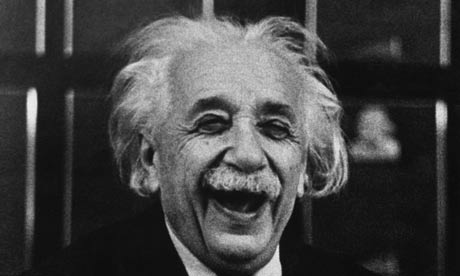
"If you want your children to be intelligent, read them fairy tales. If you want them to be more intelligent, read them more fairy tales."

The above quote, which I've referenced before, comes from none other than Albert Einstein. And though the title of this post was meant to be slightly humorous and not to literally apply to all situations, I think there's something in what he said. He elaborates below:

"When I examine myself and my methods of thought, I come to the conclusion that the gift of fantasy has meant more to me than any talent for abstract, positive thinking."

When children are young, they are what we call concrete thinkers. This means that they understand things based on concrete objects they can see, and not abstract concepts. As a special ed teacher, many of my students are stuck in the concrete thinking stage. They probably interpret phrases literally and will be confused at puns or words with double meaning. For example, using a phrase like "looks like the cat's out of the bag" is something adults may use and the meaning is obvious to us, but a concrete thinker may start looking around to see where this cat is and wondering why it was in a bag in the first place.

When young children learn math, they can learn basic arithmetic by using physical objects to represent an equation. Two apples plus one apple equals three apples; children can add and subtract by counting with their fingers, and that's why our math system is in base 10. But when it comes to algebra, and the concept of a variable is introduced, that's abstract-a letter which doesn't really represent a letter, but an unknown numeric value. In order to understand algebra, one has to be able to entertain an undefined idea that can't be represented by an object or picture.

Really this is what fairy tales do, although the same argument could be made for fantasy or fiction in general. Except in rare cases, children are able to understand when they hear a story, especially one that begins in "once upon a time" and isn't intentionally presented as a true story, that it didn't actually happen. Therefore they're entertaining ideas in their heads that they know aren't physically real, or thinking abstractly, but in a basic, graspable form. Even more in fantasy and fairy tales, as children learn more about the world, they're able to take in many events in a fictional story and separate in their minds what is not true but could be true, such as Cinderella doing housework, with what is not true and couldn't possibly be true, such as a pumpkin turning into a coach. Very young or concrete thinkers may be confused by this, but an older child who is not yet an abstract thinker won't have to be specifically taught that pumpkins can't turn into coaches to know that that element of the story was magical. And yet it's fun for children-and most adults, I believe-to entertain the notion of living in a world where such a thing would be possible.
I think this is what Einstein meant. It appears to have worked for me-I devoured fantasy as a child and was always good at algebra. Although I can think of people who read lots of stories and fantasy and still didn't understand algebra, so again, it's not meant to be the newest method in math education or anything. But if Albert Einstein said it, it must be legit, right?

Saturday, January 21, 2012

C.S. Lewis on Fairy Tales


“When I was ten, I read fairy tales in secret and would have been ashamed if I had been found doing so. Now that I am fifty, I read them openly. When I became a man I put away childish things, including the fear of childishness and the desire to be very grown up.”
― C.S. Lewis

I remember feeling a sense of embarrassment reading fantasy in grade school...I also remember hoping people would notice that I frequented the adult section of the library, and not the children's or young adult. And now I feel no shame in checking out children's books. Did anyone else have a similar experience?

Also C.S. Lewis:
“Some day you will be old enough to start reading fairy tales again.”
And:
“I wrote fairy tales because the Fairy Tale seemed the ideal Form for the stuff I had to say.
Then of course the Man in me began to have his turn. I thought I saw how stories of this kind could steal past a certain inhibition which had paralyzed much of my own religion in childhood. Why did one find it so hard to feel as one was told one ought to feel about God or about the sufferings of Christ? I thought the chief reason was that one was told one ought to. As obligation to feel can freeze feelings." (from the essay Sometimes Fairy Stories May Say Best What’s To Be Said)

Tuesday, November 2, 2010

Dragons


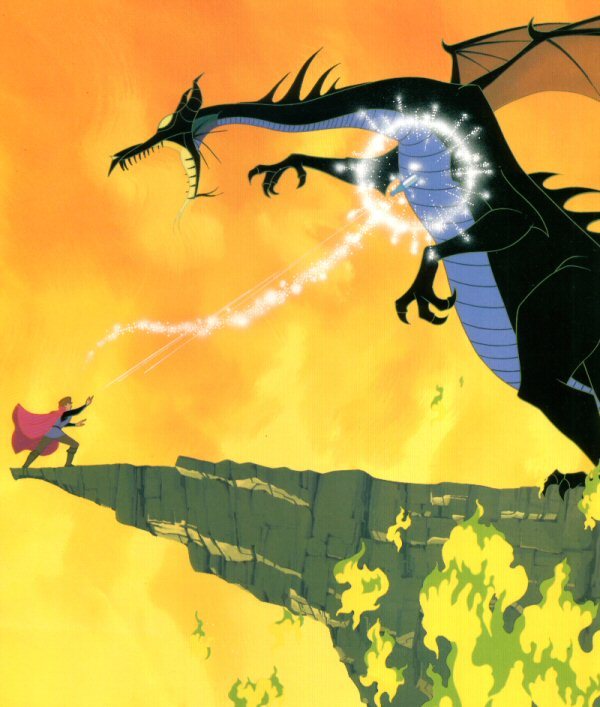
"Fairy tales don’t tell children that dragons exist. Children already know dragons exist. Fairy tales tell children that dragons can be killed."- G. K. Chesterton

Dragons are part of the stereotyped fairy tale story-hence the quote by Chesterton, and the fact that the image above is listed under "fairy tale figures" on this site. But can you think of any fairy tales that feature dragons? If you thought of Sleeping Beauty, that was only Disney's invention to have the Prince fight Maleficent as a dragon.
I can only think of a very few fairy tales that actually have dragons in them, and they're very obscure. However, this little Serbian tale may give us insight into an example of the dragon stereotype:

There was an emporer with three sons. One day the eldest was hunting and saw a hare spring out of a bush, and chased it. Only the hare was really a dragon, and it ate him (killer rabbit from Monty Python, anyone?). The same thing happened to his middle brother. The third son went hunting, but chose not to follow the hare. He went to hunt elsewhere and returned to find an old woman. He greeted her respectfully, and she told him that the hare was really a dragon who killed many people. The prince wished to free the old woman from the dragon, and instructed her to flatter the dragon into telling her where his strength was kept. Wherever he told her, she was to fondle and kiss that place as if out of love.

The old woman did as she was told. The dragon told her false locations twice, but believing her show of love for him, he told her the true location of his strength: in another emperor's court, in a lake, in a dragon, in a boar, was a pigeon, and that pigeon was the dragon's strength.

The prince set out for the kingdom, disguised as a shepherd, and offered his service to the emperor of the other land. The emperor sent him out where no other shepherd had returned. The prince brought with him a falcon, hounds, and a bagpipe. He called to the dragon, "Dragon, dragon! come out to single combat with me to-day that we may measure ourselves together, unless you're a woman." (In the book this tale is in, there's a footnote here that explains, "This is intended as an insult.")

The dragon responds to the taunt. They wrestled till afternoon, when the dragon requested to moisten his head in the lake. The prince claimed "if I had the emperor's daughter to kiss me on the forehead, I would toss you still higher." They separated, and the people of the kingdom were astounded to see the new shepherd return alive. The emperor sent two grooms to watch what he did, and the same thing happened the next day. The emperor sent his daughter to go with him on the third day, who went weeping, but her father had full faith in the shepherd.

The same thing happened the next day, only after the shepherd taunted the dragon with the kiss, the emperor's daughter ran up and kissed him. The prince threw the dragon p in the air, and when it fell it burst into pieces. The boar sprang out, and the prince shouted to the shepherd dogs to hold it. They tore it to pieces, and out came the pigeon. The prince loosed the falcon, who captured the pigeon. Once the prince asked the pigeon where his brothers were, he killed the pigeon. The prince then married the princess and released his brothers.

Monday, September 6, 2010


"Beware of the stories you read or tell; subtly, at night, beneath the waters of consciousness, they are altering your world."-Ben Okri

Image from here

Sunday, June 13, 2010

Too good not to share

"If you want your children to be brilliant, tell them fairy tales. If you want your children to be even more brilliant, tell them even more fairy tales." Albert Einstein