"It is many years before the Pied Piper comes back for the other children. Though his music has been silenced, still thousands are forced to follow him, young, old, large, small, everyone...even the ogres wearing ten-league boots and cracking whips, even their nine-headed dogs. We are the rats in exodus now and the Earth shrinks from the touch of our feet. Spring leaves a bitter taste. All day, rain and people fall; all night, nixies wail from the lakes. The blood-colored bear sniffs at our heels. I keep my eyes on the road, counting white pebbles, fearful of where this last gingerbread trail is leading us."
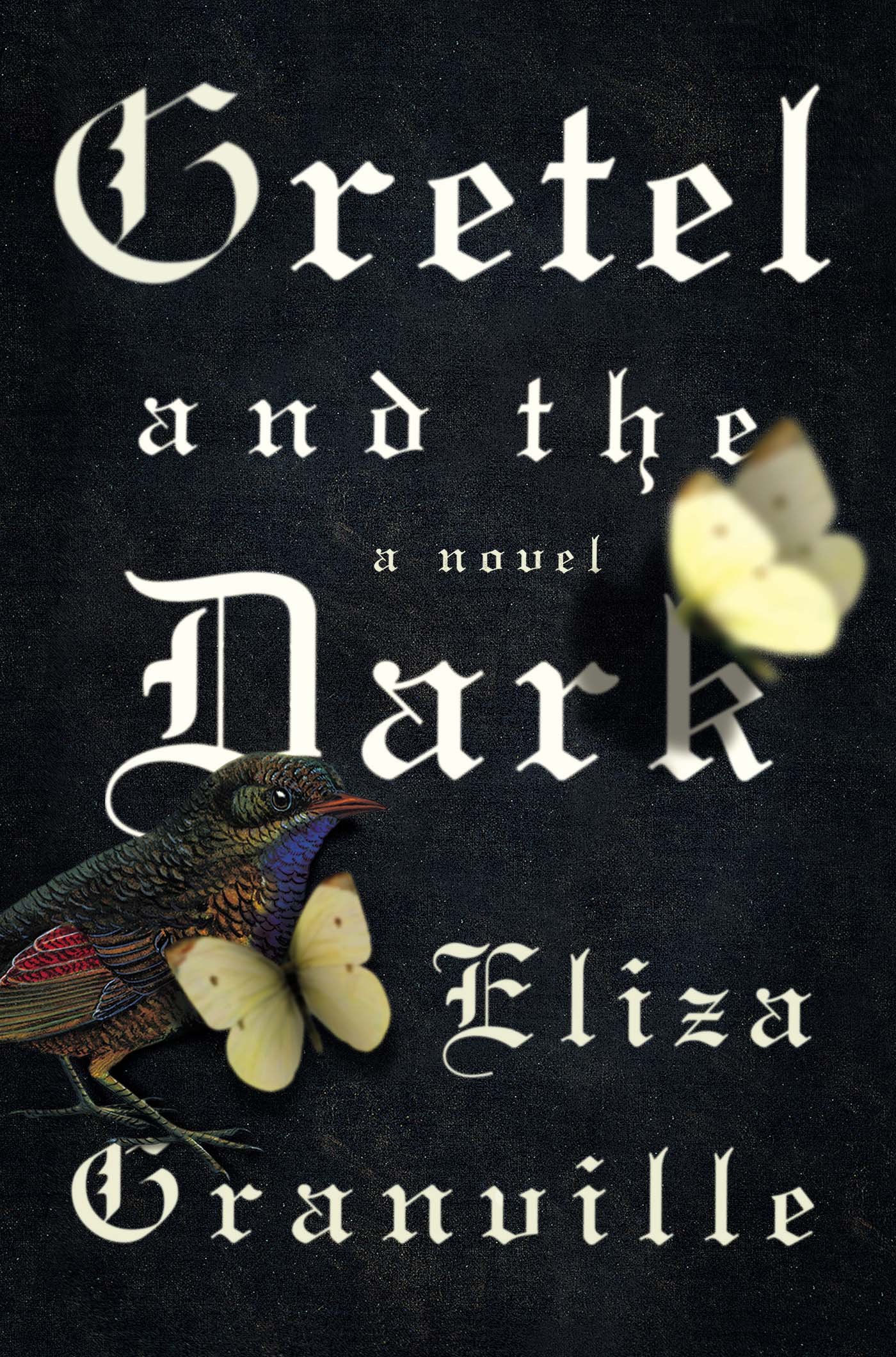
So begins Gretel and the Dark, a novel by Eliza Granville. I spotted it in my library's "New Books" section, and remembered reading about it on Surlalune.
The book description reads:
Gretel and the Dark explores good and evil, hope and despair, showing how the primal thrills and horrors of the stories we learn as children can illuminate the darkest moments in history, in two rich, intertwining narratives that come together to form one exhilarating, page-turning read. In 1899 Vienna, celebrated psychoanalyst Josef Breuer is about to encounter his strangest case yet: a mysterious, beautiful woman who claims to have no name, no feelings—to be, in fact, a machine. Intrigued, he tries to fathom the roots of her disturbance.
Years later, in Nazi-controlled Germany, Krysta plays alone while her papa works in the menacingly strange infirmary next door. Young, innocent, and fiercely stubborn, she retreats into a world of fairy tales, unable to see the danger closing in around her. When everything changes and the real world becomes as frightening as any of her stories, Krysta finds that her imagination holds powers beyond what she could ever have guessed.
Rich, compelling, and propulsively building to a dizzying final twist, Gretel and the Dark is a testament to the lifesaving power of the imagination and a mesmerizingly original story of redemption.
It's kind of hard to explain the book other than this, without giving too much away. But fairy tales are a very strong theme throughout the book, as well as many other themes that would make for great group discussions-this would be a great book to read with a mature literature class. We see how the characters use fairy tales to help them cope with the tragedy in their lives, and how the tales evolve and morph to suit the needs of the teller and listener. The story also causes you to think about how fairy tales are perceived by children; how adults use them to manipulate behavior, to reward or punish, or how they can be used to find hope, strength, and inspiration. Obviously "Hansel and Gretel" is a prominent tale featured; the "Pied Piper" and "Robber Bridegroom" are also referenced often (although "Pied Piper" is technically not a fairy tale, but a legend-read more on Adam's excellent post over on Fairy Tale Fandom).
I would highly recommend it. I was hooked; I couldn't put it down. Although, fair warning: this book is not your typical "light summer read": it is very dark and tragic. It can also get quite confusing at times (as the introduction above might indicate-you're often thrown into narration without being aware of what is actually happening). Throughout, there were times I wasn't sure if the storylines would come together to make a satisfactory ending, but I ended up being very pleased with the ending.
This book is for more mature readers-there is violence, death, and sexual content. Not explicit sexual scenes, but there's sexual abuse and very twisted ways of misusing power. But it all makes sense in the end; it was very well written. Read it if you get the chance! I hope to reread this book in the future because it's the kind that, knowing the end, will cause you to read things differently and catch on to lots of hints and foreshadowing I didn't catch the first time around.
Showing posts with label Pied Piper. Show all posts
Tuesday, July 28, 2015
Thursday, January 12, 2012
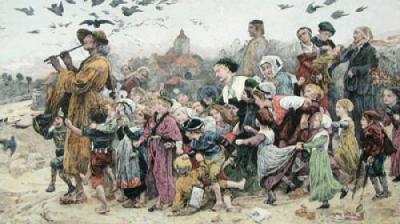
What happened to the children of Hamelin?
G.J. Pinwell
The story of the Pied Piper may actually have roots in historical fact. While the Pied Piper himself may be symbolic, a Death figure, town records in the town of Hamelin, Germany from the year 1384 say, "It is 100 years since our children left." Many have speculated on what it was that took the children away-a plague, the children being sold, a children's crusade, etc. The theories can be read about on wikipedia.
The brothers Grimm drew from eleven sources to create their tale, but I searched through my copy of complete Grimm fairy tales and couldn't find it. The Grimms published many works other than their Children and Household Tales, and again according to Wikipedia, this one was published in their "Deutsche Sagen"-which makes sense if this was believed not to be a fairy tale but based on actual events. Their version includes two children which were left behind because one was blind and one was lame.
Also, I realized that I had no idea what the word "pied" means, and it means "multi-colored," referring to the clothes he wore.
Elizabeth Greenaway
I also found this interesting: "Reportedly, there is a long-established law forbidding singing and music in one particular street of Hamelin, out of respect for the victims: the Bungelosenstrasse adjacent to the Pied Piper's House. During public parades which include music, including wedding processions, the band will stop playing upon reaching this street and resume upon reaching the other side."
No, the Pied Piper didn't live here, but there's an inscription on the side of the house about the event, which supposedly happened on June 26, 1284.
Monday, September 20, 2010
Random
I didn't expect to come across Beauty and the Beast over on the cheeseburger network of all places (the home of lolcats and fail blog, among other things) but this picture was on historic LOLs. I was debating whether or not to post it, since I don't think it's that funny, and it doesn't look to me like her knee is anywhere close to his groin...is that just me? Unless the leg we see is his right leg because his left was somehow amputated...This is Nightwish doing a cover of Megadeth's "Symphony of Destruction." If you don't like metal don't listen, I'm just posting it because the lyrics of the chorus refer to a fairy tale:
"Just like Pied Piper/Led rats through the streets/Just like marionettes/Sway to the symphony of destruction."
I can't remember ever reading the story of the Pied Piper, or coming across it in scholarship about fairy tales, but it's somehow something everyone is familiar with. The only version I can remember reading is Tanith Lee's thought-provoking tale in "Red as Blood: Tales from the Sisters Grimmer."
Labels:
Beauty and the Beast,
Humor,
music,
Nightwish,
Pied Piper
Subscribe to:
Posts (Atom)