Showing posts with label coffee. Show all posts

Friday, June 24, 2016

Once Upon a Grind by Cleo Coyle

Spotted this book in the mystery section of my library, Once Upon a Grind by Cleo Coyle. Book description:

"When coffeehouse manager turned amateur sleuth Clare Cosi serves "magic" beans for a Fairy Tale Fall event, she brews up a vision that leads to a sleeping beauty in Central Park; a big, bad wolf of Wall Street; and an East Side enclave with storybook secrets... 

 Fairy tale fever has descended on New York City. Broadway fans are flocking to Red Riding Hood: The Musical; museums are exhibiting art inspired by the Brothers Grimm; and Clare Cosi and her merry band of baristas give their coffee truck a "Jack and the Beanstalk" makeover for a Central Park festival. Clare's coffee hunter ex-husband contributes a bag of African beans with alleged magical properties. His octogenarian mother entertains customers with readings of the grinds, but Clare remains skeptical--until she receives a vision that helps her find a young model's body in the park's woods. 

 The police dismiss "sleeping beauty" as the victim of a drug overdose. Then Clare uncovers evidence that points to a list of suspects--from a New York Giant to quite a few wicked witches--and a cold case murder that reaches back to the Cold War. Now Clare is really in the woods with a dangerous predator on her heels and an investigation that leads from a secret Prince Charming Club right back to her own NYPD detective boyfriend. If she doesn't solve this mystery, those magic beans predict an unhappy ending." 

I'll be honest, it's not the best writing ever (although pretty typical for most current mystery novels), but for a book that features three of my favorite things-murder mysteries, coffee, and fairy tales, I was willing to give it a chance. The book begins with the main character serving coffee at a Fairy Tale Festival, and the fairy tale references don't end there. In fact I was pretty impressed at how the author was able to incorporate so many fairy tale characters and motifs into the story. It was a fun, easy read. And, as the cover promises, there are recipes in the back, although I can't say whether or not they're "wicked good" as claimed, since I didn't try any. But some are fairy tale themed! Snow White Chocolate Mocha, Cinderella's Pumpkin Cake, Poisoned Apple Cake, etc.
Also on the subject-this sign is on the coffee maker at my office. I love those fairy tale connections that help to show how enchanted real life is too-coffee is pretty magical, when you think about it!

Monday, March 23, 2015

Lane's English Translation of Arabian Nights


Around 1700, "Oriental Fever" began sweeping Western Europe. In France and England, anything from the East was vogue-from the decor to their drinks to fairy tales. In fact I really like this quote from Marina Warner*, partly because I love coffee: "The diaspora of the Arabian Nights does in fact resemble the triumphant progress of coffee, as it multiplies and metamorphoses from brass thimbles of thick dark syrup, in Damascus and Istanbul and Cairo, to today's US and UK hybrids (skinny latte, macchiato, et al.). So it is rather neat that Galland [first translator of the Arabian Nights] also published, in 1699, a treatise in praise of coffee, one of the first if not the first of its kind."


So while facets of culture were making their way West, they became changed and diluted. This was the complaint of Edward William Lane, who didn't approve of Antoine Galland's translation of the Nights-(it was Galland's French one that served as the basis for the first English translation). Lane was considered to be an expert on Egyptian culture, after he taught himself some about Egyptian culture and the Arabic language after a bout of typhoid, and then took a couple of trips to Egypt.

So this "expert" set out to correct Galland's mistake; that of not being familiar enough with the culture to make a good translation. Lane stated, "I am somewhat reluctant to make this remark, because several persons, and among them some of high and deserved reputation as Arabic scholars, have pronounced an opinion that his version is an improvement upon the original. That "The Thousand and One Nights" may be greatly improved I most readily admit; but as confidently do I assert, that Galland has excessively perverted the work. His acquaintance with Arab manners and customs was insufficient to preserve him always from errors of the grossest description, and by the style of his version he has given the whole to a false character."

Galland had indeed altered the stories to fit his audience, the same thing that the brothers Grimm would do years later in Germany-take out any questionable parts, and Galland even added whole stories that became the most famous, such as Aladdin and Ali Baba. Yet Lane considered his translation to be both an "improvement" and a "perversion".

So his solution was to make a new translation, filled with detailed footnotes that often had nothing to do with the stories themselves, but to go into depth about Egyptian culture-at least, his experiences there. But rather than sticking to the original text, Lane continued to "improve" the stories and then write judgmental footnotes about the original. He left out passages and whole sections, yet all in the name of being true to the culture, such as leaving out a sexual passage "which is of a nature to disgust every person of good taste." He eliminated any scenes with drinking or sex, and states that many passages of the tales "seem as if they were introduced for the gratification of the lowest class."

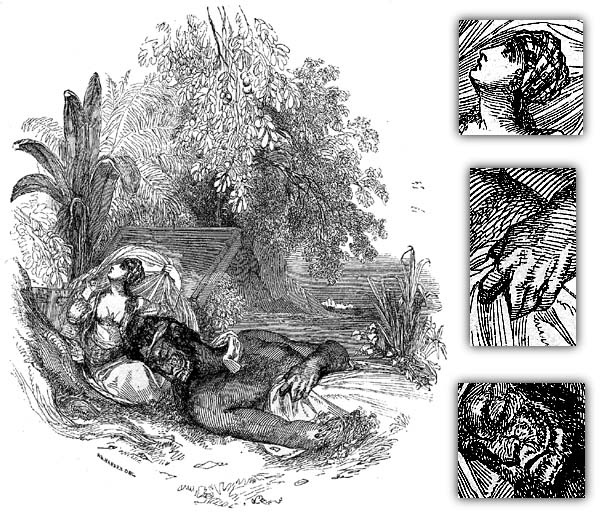
The fascination that many Europeans had with Eastern culture did not, at this time, seem to lead to a greater understanding of the Eastern peoples, with increased respect and appreciation for them. In fact, rather than emphasizing the similarities between the people groups and their favorite folklore, the collections tended to emphasize the differences-which served to widen the gap between East and West. Even the illustrations by William Harvey that accompanied Lane's text (and this post) are examples of this. Jennifer Schacker points out that in the illustrations, the attention is often not on the people in the story or the unfolding drama, but the exotic locations, dress, and architecture.
In this case, "ethnicentrism often shapes the underlying conception of the Real." The attitude at the time was that the Nights was a "potentially valuable source of information regarding Arab lifeways and attitudes," but many used the stories "to support preconceived notions of Arab character." By emphasizing the contrast between the perceived violent and sexual nature of the Arabian Nights, "The Orient was central to the discursive construction of the West as dominant, civilized, and rational" (the public was blissfully ignorant, apparently, to the fact that Western European tales were just as sexual and violent in their natural state).

*Marina Warner: Stranger Magic: Charmed States and the Arabian Nights
All other information taken from Jennifer Schacker's National Dreams: The Remaking of Fairy Tales in Nineteenth-Century England.


Sunday, February 23, 2014

Fairy Tales Sell

Lately I've been noticing this huge paradox in our culture when it comes to attitudes towards fairy tales. As I've previously discussed, referring to something as a "fairy tale" can often be a very negative thing, insinuating that it is naive, childish, or anything that implies life will be perfect. The ironic thing is that 95% of fairy tale content usually involves shocking amounts of abuse, violence, and sexuality, and that includes even the most sanitized versions by Grimm or yes, even Disney.

But at the same time, fairy tales are incredibly popular and used all the time in advertising. For example, the Geico commercials I just posted refer to fairy tales (disclaimer: no, Pinocchio is not technically a fairy tale, but closely related/often mistaken as such). Partly because fairy tales are common ground-general knowledge that pretty much everyone is familiar with; and I'm sure the fact that they're not copyrighted has something to do with it. But it's more than that too. Remember this fairy tale commercial playlist? For decades companies have used fairy tale motifs to sell their products, and companies don't want to be associated with childish and immature stories-they want people to connect with positive images related to their products.

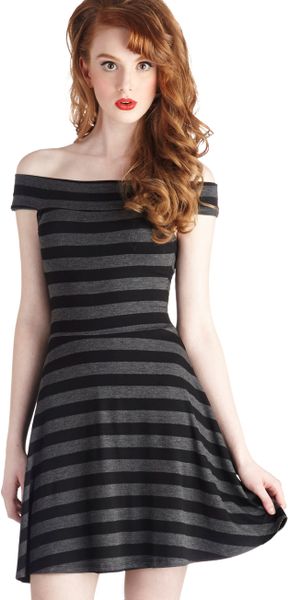
It's not just commercials, either. One of my guilty pleasures is to online shop at sites like Modcloth, where I regularly see clothes and accessories given a fairy tale-inspired name, even if the piece really has nothing to do with a particular fairy tale.

Happily Ever After party dress
Flair-y Tale boot
The clock strikes midnight gloves
Trail as Old as Time Top
Play fair-y dress

You get the idea.

Another thing I find interesting has to do with the new movie "Frozen". No, I haven't seen it yet, but from what I've heard the plot has virtually nothing to do with its original inspiration, Andersen's "Snow Queen". Sure, a snowy setting and glass shards-from what I gather only vague references. Yet they still credit Andersen's story as their source, when they could easily have marketed it as an original idea. So why even bother to say it's a fairy tale, especially a more obscure one? Did they think more people would be interested in another Disney fairy tale interpretation than a new hit feature with an original script?

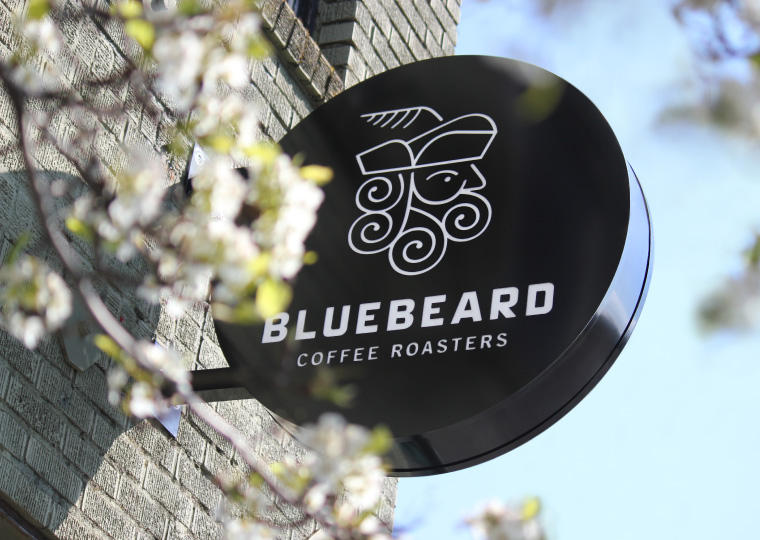
When you keep your eye out for them, you find fairy tale references everywhere. I even just found out about this coffee shop in Tacoma, Washington called Bluebeard coffee. I can't find any reference to the story or why they would have named it after a fairy tale character, especially one of such ill repute...it's possible this is one of the instances where Bluebeard was confused with either Redbeard or Blackbeard the pirates, but I would hope a little more research went into the name of their store than that.

If I kept looking I could find dozens more products that reference fairy tales for no apparent reason, and then of course there's the whole line of products that ARE directly linked to fairy tales. It's no secret that fairy tales have been the source of many recent movies and t.v. shows as well. Clearly people are drawn to them and companies count on that to make their products more appealing. So my question is, how does that fit in with the very negative light many people also view fairy tales in, revealed by their vocabulary if not a conscious opinion? Do you think that with so many fairy tales being brought into focus in mainstream media and not just a side genre, that people will start to have more respect in general for fairy tales?