Showing posts with label Jack and the Beanstalk. Show all posts

Wednesday, September 14, 2016

Jack "The Giant Killer" Pfiester

I found this bit of baseball history that I found amusing and thought you might enjoy it too-especially since it might tie in with current events! After over 100 years since they last won the World Series, the Chicago Cubs have dominated major league baseball this year and may have a chance at becoming champions once again. Much superstition and folklore has surrounded the team since then, such as the legend of the Billy Goat Curse.
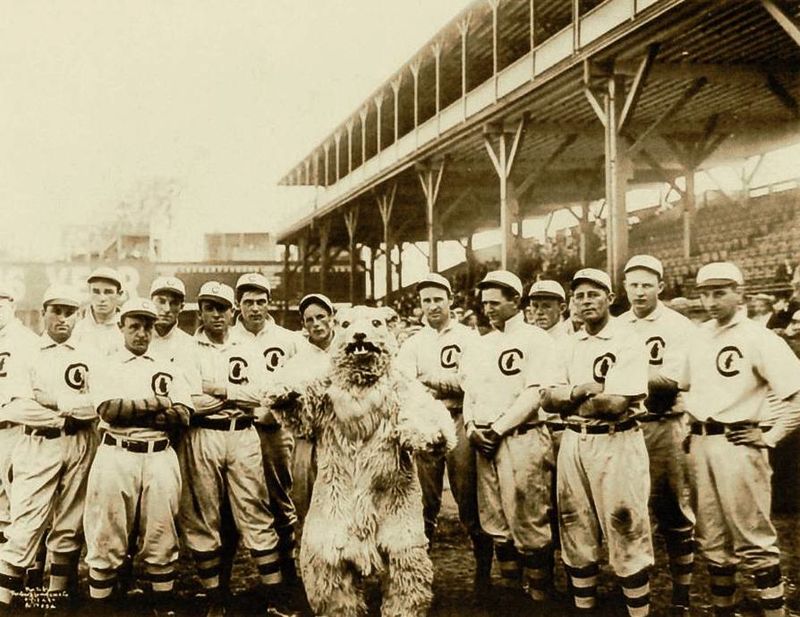
1908 Chicago Cubs

In 1908 the Cubs defeated the American League Tigers to become World Champions for the last time (so far), but before they could do that, they had to eliminate the New York Giants, their National League rivals (this was before the Giants had moved to San Fransisco). In what could have been their final game if the Giants won, the starting pitcher was Jack "The Giant Killer" Pfiester. It appeared that luck was not with Jack (it never is, at first) when the Giants scored a winning run, but a bit of magic (or...a technicality) saved the day, when the second baseman claimed that Giants baserunner Fred Merkle never actually touched second base and therefore he was out. The game was declared a tie, which allowed the Cubs to go on and win the next game and ultimately the World Series.

So, maybe the magic/luck of 1908 will come back to the Cubs, 108 years later (to be honest, as a die-hard Chicago White Sox fan, I'm secretly hoping they don't but trying to be supportive for the sake of my students who are fans!).
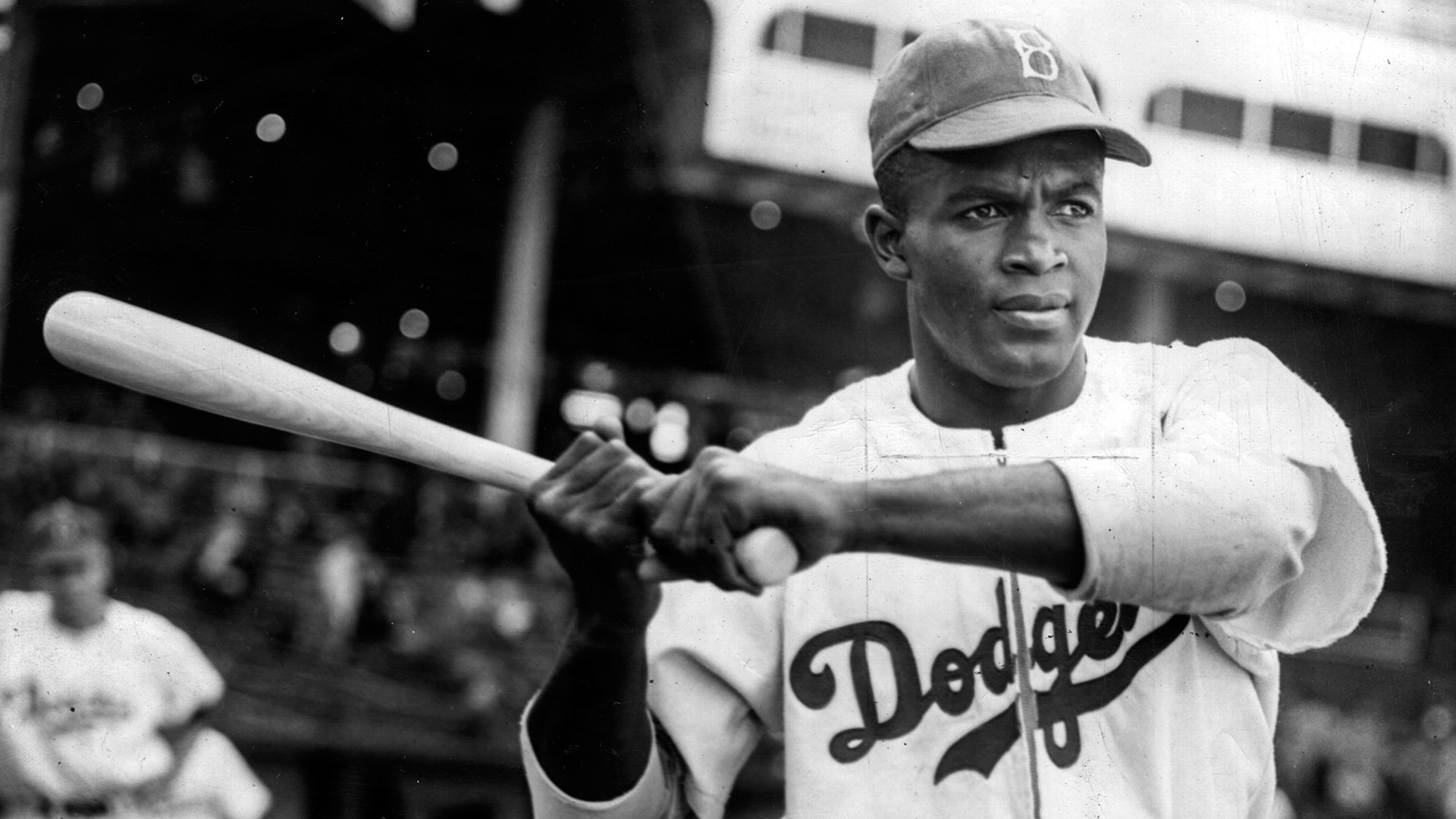
Jackie Robinson

For more fairy tale/baseball connections, this Fractured Fairy Tale also tells the story of Jack and the Beanstalk in a baseball setting, as a humorous parody. Also, a while ago I shared a quote from one of my heroes, Jackie Robinson, on how he knows fairy tales come true-he faced a LOT of hatred and bigotry for years after becoming the first black man to play professional baseball, but was able to be the bigger man time and time again and see the world slowly grow a little more kind towards African Americans because of what he endured. (And...I just realized his name is also Jack. Interesting coincidence, because he certainly faced his share of truly awful giants!)


Friday, June 24, 2016

Once Upon a Grind by Cleo Coyle

Spotted this book in the mystery section of my library, Once Upon a Grind by Cleo Coyle. Book description:

"When coffeehouse manager turned amateur sleuth Clare Cosi serves "magic" beans for a Fairy Tale Fall event, she brews up a vision that leads to a sleeping beauty in Central Park; a big, bad wolf of Wall Street; and an East Side enclave with storybook secrets... 

 Fairy tale fever has descended on New York City. Broadway fans are flocking to Red Riding Hood: The Musical; museums are exhibiting art inspired by the Brothers Grimm; and Clare Cosi and her merry band of baristas give their coffee truck a "Jack and the Beanstalk" makeover for a Central Park festival. Clare's coffee hunter ex-husband contributes a bag of African beans with alleged magical properties. His octogenarian mother entertains customers with readings of the grinds, but Clare remains skeptical--until she receives a vision that helps her find a young model's body in the park's woods. 

 The police dismiss "sleeping beauty" as the victim of a drug overdose. Then Clare uncovers evidence that points to a list of suspects--from a New York Giant to quite a few wicked witches--and a cold case murder that reaches back to the Cold War. Now Clare is really in the woods with a dangerous predator on her heels and an investigation that leads from a secret Prince Charming Club right back to her own NYPD detective boyfriend. If she doesn't solve this mystery, those magic beans predict an unhappy ending." 

I'll be honest, it's not the best writing ever (although pretty typical for most current mystery novels), but for a book that features three of my favorite things-murder mysteries, coffee, and fairy tales, I was willing to give it a chance. The book begins with the main character serving coffee at a Fairy Tale Festival, and the fairy tale references don't end there. In fact I was pretty impressed at how the author was able to incorporate so many fairy tale characters and motifs into the story. It was a fun, easy read. And, as the cover promises, there are recipes in the back, although I can't say whether or not they're "wicked good" as claimed, since I didn't try any. But some are fairy tale themed! Snow White Chocolate Mocha, Cinderella's Pumpkin Cake, Poisoned Apple Cake, etc.
Also on the subject-this sign is on the coffee maker at my office. I love those fairy tale connections that help to show how enchanted real life is too-coffee is pretty magical, when you think about it!

Sunday, April 3, 2016

Michael Cunningham's A Wild Swan


I saw a copy of A Wild Swan And Other Tales by Michael Cunningham at my library and picked it up. Book summary:

A poisoned apple and a monkey's paw with the power to change fate; a girl whose extraordinarily long hair causes catastrophe; a man with one human arm and one swan's wing; and a house deep in the forest, constructed of gumdrops and gingerbread, vanilla frosting and boiled sugar. In A Wild Swan and Other Tales, the people and the talismans of lands far, far away―the mythic figures of our childhoods and the source of so much of our wonder―are transformed by Michael Cunningham into stories of sublime revelation. 
Here are the moments that our fairy tales forgot or deliberately concealed: the years after a spell is broken, the rapturous instant of a miracle unexpectedly realized, or the fate of a prince only half cured of a curse. The Beast stands ahead of you in line at the convenience store, buying smokes and a Slim Jim, his devouring smile aimed at the cashier. A malformed little man with a knack for minor acts of wizardry goes to disastrous lengths to procure a child. A loutish and lazy Jack prefers living in his mother's basement to getting a job, until the day he trades a cow for a handful of magic beans.
Reimagined by one of the most gifted storytellers of his generation, and exquisitely illustrated by Yuko Shimizu, rarely have our bedtime stories been this dark, this perverse, or this true.


To be honest, I wasn't too hopeful after reading the book's blurb. Yet another author trying to shock the audience by making fairy tales dark and perverse-by now the concept is the new cliche, yet publishers (or whoever writes book jacket blurbs) try to pass it off as new.

Yet, I really found myself enjoying the stories. Cunningham doesn't just try to twist fairy tales by throwing in extra adult themes, he seems to really understand not only many fairy tale themes, but human nature. While many of the tales are indeed dark (there is sexual content), there's a bittersweetness about them, and almost a refreshing air of truth to them. Cunningham makes minor changes to the fairy tale plots, but really explores certain traditional components. How did the witch from Hansel and Gretel end up in the forest in a candy house to begin with? What was life like for the twelfth brother who was left with one arm and one wing?
The stories are set in a modern world, but a world in which being touched by magic is nothing out of the ordinary. While bringing into question certain aspects of fairy tales (why does the giant's wife allow Jack to steal from them-three times?), he also manages to ground fairy tale plots and characters in actual life, and makes them seem very realistic. The motivations behind crazy fairy tale plots are actually motivations behind people we encounter in life. In all, the writing is very well done, and thought provoking. Even the stories that weren't my favorite would still provide interesting discussions. The stories themselves aren't super long, so it's a great book for busy people to tackle.

Also, isn't Yuko Shimizu's art provokative yet beautiful? (There are more images I would have liked to add, but they aren't necessarily safe for work...) If you look at the cover art at the top, not only are the words formed out of braided hair, but if you look at the background, there's an image of a swan there.


Friday, January 29, 2016

What Fairy Tales REALLY Say About Curiosity


Rosebud Nielsen Image
This post is kind of an extension of some of the discussion that went on in the comments from my post on an alternate beginning for Rapunzel a couple weeks ago. It's largely been accepted in fairy tale scholarship that traditional fairy tales tend to condemn female curiosity, some of them outright (like Perrault's moral for "Bluebeard") and some of them more subtly. Culturally, it was typical for curiosity in women to be seen as a horrible thing for a while there, so it's sad but not too surprising that that idea would have been applied to fairy tales.

Yet, when you ignore the moral tacked on at the end or inserted by an editor trying to make their tales more marketable for children's instruction, what do the tales themselves actually say about curiosity?


Sleeping Beauty-the Princess is exploring the castle one day and finds a spindle, and touches it, having never seen one before. She falls into deathlike sleep, as was predicted by the fairy (and really caused by her father's attempts to prevent the spell from happening). But after her sleep is over, she ends up with a royal husband and is none the worse for her long nap (also an extra episode with an evil mother in law in some versions, but that also gets resolved and the villain punished)

Snow White and the Seven Dwarfs Nielsen Image
Snow White-enters a strange house in the woods when she is running from her murderous mother/stepmother (this one is more desperation than curiosity, but she could have just sat outside and waited for the dwarves to come home, like a proper little girl should have). Yet she is never condemned-she strikes a deal with the dwarfs, who end up later helping the Prince find her (in a totally creepy way but that's a different topic)

Twelve Dancing Princesses-We are never told (in most versions) how the sisters discovered that there was an entrance to an underground kingdom in their bedroom, but it stands to reason they somehow discovered it, and made the choice to venture down. This tale is one of the most ambiguous, sometimes the Princesses are assumed to be under a spell, but in the Grimms their actions are never really explained-but they are also not specifically condemned (and interestingly, the princes in the underground kingdom are punished, but not the Princesses who traveled there to dance-the soldier, who was curious and adventurous enough to discover the truth, is the rewarded hero)

-And, in the "Twelve Dancing Princesses" category, we have to remember Kate Crackernuts, a version in which it's a female who does the exporing into the hidden Kingdom, saving her sister and a prince in the process! Thanks Sue Bursztynski :)

Bluebeard's Wife-opens the door to the forbidden chamber. Because of this she is threatened with death by her husband, but he is killed, and his killing seen as just. His widow ends up with his estate, and her freedom.
Bluebeard by Kay Nielsen


Jack and the Beanstalk-climbs up the beanstalk and discovers the world of giants. This gets him into a dangerous situation from which he ultimately escapes and triumphs, ending up with the money he lacked at the beginning

East of the Sun, West of the Moon/Cupid and Psyche-the heroine disobeys an order not to look upon her husband, seeing how hot he secretly is. She has to go on a long, hard journey to win him back, but they do ultimately end up together and happy

So, what do the tales themselves actually say about curiosity? (This is only a partial list of some big ones-feel free to add more in the comments! And there are always exeptions to rules but I'm going to go ahead and state:)
East of the Sun Image 5 by Nielsen
First of all, curiosity does often bring challenges and obstacles. (Even to males, like Jack!) And that, honestly, can be true. There's the old saying, "ignorance is bliss"-it's not always easy discovering new knowledge that might challenge your worldview, or the truth about a person you thought you could trust. Curiosity leads to discovering something you didn't know before, and that often sends you on a different life path than you were previously on. It's the same in detective stories-digging through clues and getting closer to the truth can put you in dangerous situations with the criminals, but is necessary for obtaining justice.

But if fairy tales truly wanted to condemn the curious, the characters who went where they weren't supposed to and opened locked doors would ultimately end up dying and/or unhappy-many fairy tales really do end tragically! The Grimms weren't afraid to punish disobedient children in their stories, or to make their villains suffer horribly. Yet the endings reveal that those who pursue knowledge really are the heroes and heroines, not the villains. Sometimes that forbidden discovery really enables the happy ending to happen. We, the readers, always want to know what lies on the other side of the door just as much as the characters-by listening we are complicit in the discovering alongside the protagonists! It would be too ironic if stories themselves (which impart ideas and knowledge) were to truly condemn discovery of other ideas and knowledge!

Of course, there are boundaries to curiosity. The Victorian idea of not indulging curiosity isn't entirely bad, because you should also respect other people's privacy, etc. The level to which the characters actually crossed that boundary could be debated for each tale and variant (such as Goldilocks). But for most of these stories, the plots of fairy tales ultimately speak louder than the official morals, and the characters who display curiosity are clearly the sympathetic protagonists.

Illustrations-Kay Nielsen

Thursday, October 22, 2015

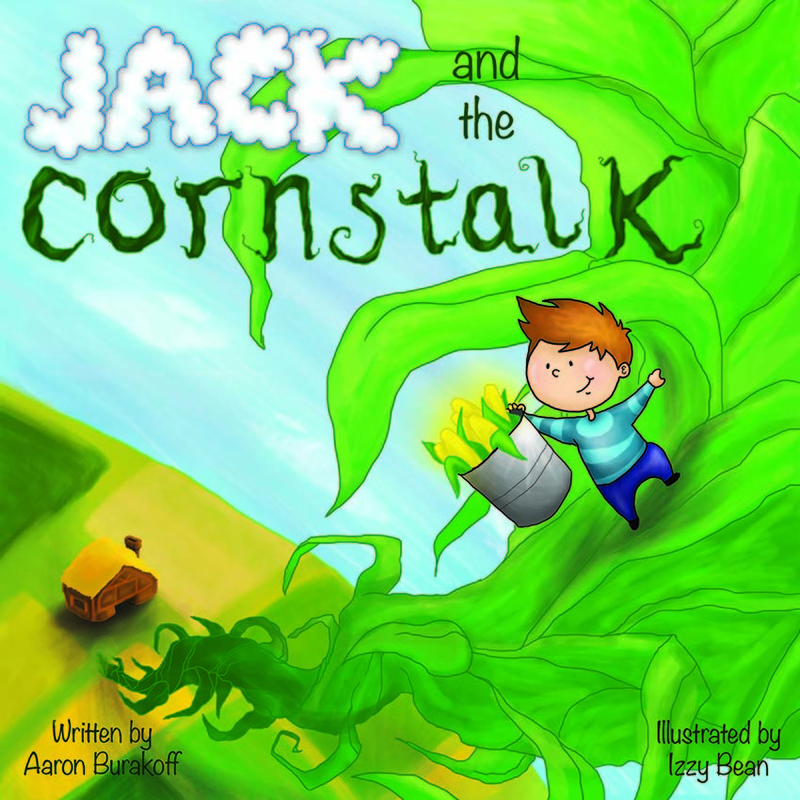
Jack and the Corn Stalk

Tony and I visited a corn maze this fall, and in the gift shop I spied this book, Jack and the Corn Stalk, by Aaron Burakoff and illustrated by Izzy Bean. I flipped through the book-it's for very young readers so it was short. It's definitely a cleaned up, aimed-towards-younger-audiences version of "Jack and the Beanstalk," but it's part of the Fairy Tale Trail series that seems to have a theme of teaching children to connect with nature and care for plants and animals, which is a solid message. For example, you can also read Beauty and the Bees as well as other fairy tale adaptations with an environmental twist.

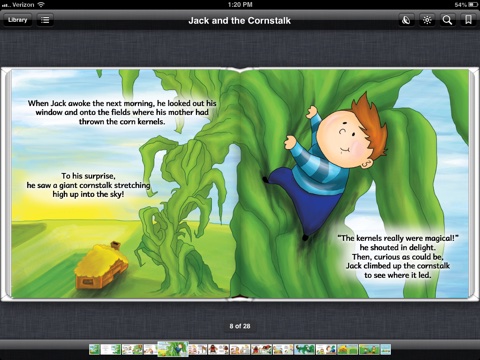
In the book Jack climbs up a magic cornstalk and meets helpful giants who teach him about corn, and in the end there is a corn maze (which Jack uses as a way to communicate with the giants, which is actually a pretty clever idea).


There are other corny twists (yup, pun intended) on "Jack and the Beanstalk" out there, such as a modern adaptation starring a girl, Waynetta and the Cornstalk, which is recommended as a good educational story to compare and contrast to the traditional fairy tale.
There are some other folk tales out there related to Jack's magic beanstalk, but in America they've naturally been altered to feature corn, a very prominent plant here in the Midwest. Here's a brief tall tale from Kansas featuring a boy who climbs a corn stalk to look out at the corn field and got stuck on a growing plant. Not quite as fleshed out as "Jack and the Beanstalk" but I'm sure it was influenced by the story and adapted to a corn growing culture.


Wednesday, July 8, 2015

Ink-splotch

Just discovered the tumblr Ink-splotch, which has some very thoughtful insights into the characters in novels and fairy tales. It took some digging (because the tumblr format is very very confusing for me...) but it appears the site is run by E. Jade Lomax, who wrote the novel Beanstalk, a retelling of "Jack and the Beanstalk", which has gotten very good reviews on Goodreads...but is not available on Amazon?? Can a book exist which is not available on Amazon?

But anyway...via the tumblr, there are treasures such as this poem excerpt inspired by "Rapunzel":

"Child, your hair is not a ladder.
It never should have been. 
Your voice belongs to a girl
and not a songbird.
Your home does not live
in your mother’s ribcage
no matter what she says.
You are home—
your feet on the ground,
your hair like a bird’s nest.
You can pick it up
and take it with you
when you go."

Illustration-A.H. Watson

 Or this post on a different way of reading "Little Mermaid"-although the name Ariel implies the Disney version, the author is clearly familiar with Andersen's story too. I love this:

"Let’s talk about an Ariel who walks away—limping, mouthing inaudible sailors’ curses, a sea-brine knife in her belt.
Ariel traded her voice for a chance to walk on land. That was the deal: every time she steps, it will feel like being stabbed by knives. She must win the hand of her one true love, or she will die at his wedding day, turn to sea foam, forgotten. The helpful steward tells her to dance for the prince, even though her feet scream each time she steps. Love is pain, the sea witch promised. Devotion calls for blood.
But how about this? When the prince marries another, nothing happens. When Ariel stands over the prince and his fiance the night before their wedding, her sisters’ hard-won knife in hand, she doesn’t decide his happiness is more important than her life. She decides that his happiness is irrelevant. Her curse does not turn on the whims of this boy’s heart. 
She does not throw away the knife and throw herself into the sea. She does not bury it in the prince and break her curse—it would not have broken. She leaves them sleeping in what will be their marriage bed and limps into a quiet night, her knife clean in her belt, her heart caught in her throat. Her feet scream, but they ache, too, for the places she has yet to see. 
Ariel will not be sea foam or a queen. There is life beyond love. There is love in just living. Her true love will not be married on the morn—the prince will be married then, in glorious splendor, but he had never been why she was here.

Ariel traded her voice for legs to stand on, a chance at another life. When she poked her head above the waves, it wasn’t the handsome biped that she fell for. It was the way the hills rolled, golden in the sun. It was the clouds chasing each other across blue sky, like sea foam you could never reach.
I want an Ariel who is in love with a world, not a prince. I don’t want her to be a moral for little girls about what love is supposed to hurt like, about how it is supposed to kill you. Ariel will be one more wandering soul, forgotten. Her voice will live in everything she does. She uses her sisters’ knife to turn a reed into a pipe. She cannot speak, but she still has lungs. 
Love is pain, says the old man, when Ariel smiles too wide at sunrises. It’s pain, says the innkeeper, with pity, as Ariel hobbles to a seat, pipe in hand. At least you are beautiful, soothes the country healer who looks over her undamaged feet. The helpful steward had thought she was shy. Dance for the prince even though your feet feel stuck with a hundred knives.
Her feet feel like knives but she goes out dancing in the grass at midnight anyway. She’s never seen stars before. Moonlight reaches down through the depths, but starlight fractures on the surface. Ariel dances for herself.
She goes down to caves and rocky shores. Sometimes she meets with her sisters there. Mouths filled with water cannot speak above the sea, so she drops into the waves and they sing to her, old songs, and she steals breaths of air between the stanzas. She can drown now. She holds her breath. She opens her eyes to the salt and brine. 
Ariel uses canes and takes rides on wagons filled with hay, chickens, tomatoes—never fish. She earns coins and paper scraps of money with a conch shell her youngest sister swam up from the depths for her, with her reed pipe, with a lyre from her eldest sister which sounds eerie and high out of the water. The shadow plays she makes on the walls of taverns waver and wriggle like on the sea caves of her childhood, but not because of water’s lap and current. It is the firelight that flickers over her hands. 
Somewhere in the ocean, a sea witch thinks she has won. When Ariel walks, she hobbles. Her voice was the sunken treasure of the king’s loveliest daughter, and so when they tell Ariel’s story they say she has been robbed. They say she has been stolen. 
She has many instruments because she has many voices—all of them, hers; made by her hands, or gifted from her sisters’ dripping ones. Ariel will sing until the day she dies with every instrument but her vocal cords. 
She cannot win it back, the high sweet voice of a merchild who had never blistered her shoulders red with sun, who had never made a barroom rise to its feet to sing along to her strumming fingers. She cannot ever again sing like a girl who has not held a dagger over two sleeping lovers and then decided to spare them. She decided not to wither. She decided to walk on knives for the rest of her life. She cannot win it back, but even if she could, she knows she would not sound the same. 
They call her story a tragedy and she rests her aching feet beside the warming hearth. With every new ridge climbed, new river forded, new night sky met, her feet ache a little less. They call her a tragedy, but the blacksmith’s donkey is warm and contrary on cold mornings. The blacksmith’s shoulder is warm under her cheek.
Her feet will always hurt. She has cut out so many parts of her self, traded them up, won twisted promises back and then twisted them herself. She lives with so many curses under her skin, but she lives. They call her story a moral, and maybe it is.
When she breathes, her lungs fill. When she walks, the earth holds her up. There is sun and there is light and she can catch it in her hands. This is love. "

Little Mermaid illustrations by A. W. Bayes

Wednesday, June 3, 2015

Into the Woods Afternoon Tea

Any of you live near London? Through this week, you can go to an "Into the Woods"-themed afternoon tea. (Anyone want to fly me out?...)

More information:
"sketch has teamed up with Disney's musical masterpiece Into the Woods, to create a limited edition run of its Afternoon Tea... 
Available from Monday 18th May - Sunday 7th June.

The inspired menu has re-created some of the classic afternoon tea elements and given them a fantasy, fairytale makeover - with items fit for any basket to take to grandma's house.
Included in the re-vamped tea is Little Red Riding Hood's Choux, Jack's Beanstalk Tart and a Prince Charming Green 'Sand-Witch', all complemented by the Baker and His Wife's selection of sketch pastries."

View the Menu Here
How fun is that?

Friday, September 26, 2014

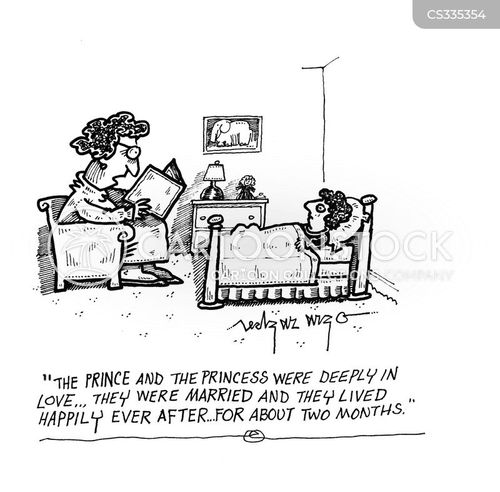
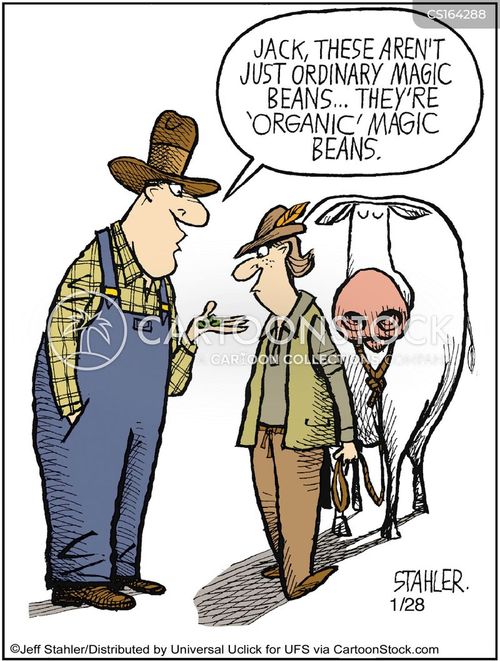
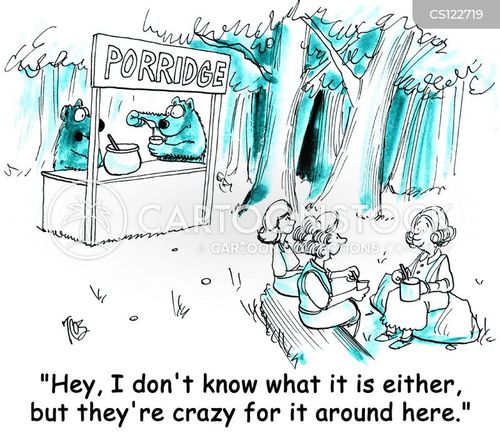
Fairy Tale Cartoons


Via cartoonstock.com, which has 1,282 cartoons with the tag "fairy tale" if you're looking for something light-hearted.

Also, if you like fairy-tale themed cartoons, I've posted some from Far Side and Calvin and Hobbes in years past

Monday, September 1, 2014

Fairy Tales in World War II

During a war, when another country is perceived as your enemy, often their culture becomes the enemy too. In World War II this was the case, and it even affected the fairy tales people consumed.

On both sides of the war, fairy tales from the opposing countries were viewed with suspicion. Hitler banned Perrault's French "Tales of My Mother Goose" in Germany during his regime in favor of the Grimms' German tales; while the violence and anti-Semitism of the Grimm tales were viewed as dangerous by Allied countries. (This is all more ironic when you realize how much influence the French fairy tales had on the Grimms' collection).

Fairy tales were also used as propoganda. Peggy Riley writes "With the rise of the Nazi party, both this romanticism and this pessimism would be crushed and the “innocent” folktale become an ideological weapon.  As one party official declared, “The German folktale shall become a most valuable means for us in the racial and political education of the young.” 

German fairy tales around the time of World War II shifted to a different focus: Cinderella's Prince rejected the stepmother for racial impurity, Red Riding Hood was covered in swastikas and her savior was a Nazi officer. Puss in Boots was a Hitler-like figure who was heiled by throngs, and of course any of the already anti-Semetic tales were exploited for their racist messages.

Dawn Heerspink says "fairy tales held a central place in wartime society as a means of socializing children through the use of familiar tales with a new context, as an area of hybridization of childhood and adulthood to confront wartime reality, and as both a way to deal with trauma and a critical discourse on war."

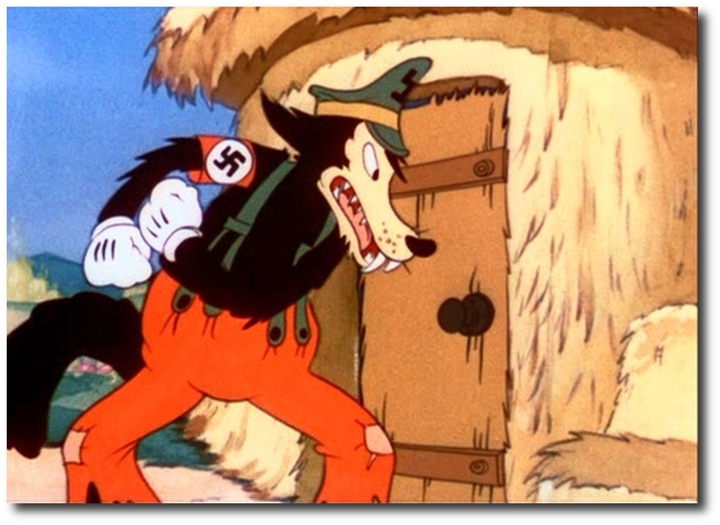
This collection of Allied Fairy Tales from World War I (1916) indicates a way of unifying the Allied Forces through celebrating the fairy tales of the group of nations. In his introduction to the book, Edmund Gosse says it is "folklore of the fighting friends of humanity." The English identified with their hero Jack, while the enemy the giant. Even Disney joined in, representing the Big Bad Wolf with a swastika, and using Donald Duck to show that "taxes defeat the Axis."

Even with all the flippant comments you hear about the childishness or insignificance of fairy tales, it's kind of chilling to realize how much power they have wielded in the past. They have been used as tools to promote war and death and have a way of reaching the public through subconscious levels. If anything, the perception of fairy tales as unimportant is what makes them a secret weapon-people tend to associate them with the idyllic past and link us to our ancestors. Fairy tales can be used to communicate messages secretly, just as in the time of Perrault, the other French writers used them for satire, and the seemingly simple stories escaped censorship. 

Never underestimate the power of fairy tales...

Sources:
-Leslie Fiedler's Introduction to "Beyond the Looking Glass: Extraordinary Works of Fairy Tale and Fantasy", Edited by Jonathan Cott
-Nazi Fairy Tales, Peggy Riley
-Nazi Fairy Tales Paint Hitler as Red Riding Hood's Savior, Allan Hall
-"Reading the Grimms' Children's Stories and Household Tales," from Maria Tatar's Annotated Brothers Grimm
-Found it in the Archives: War and Fairy Tales, Jessica Short
-No Man's Land: Fairy Tales, Gender, Socialization, Satire, and Trauma during the First and Second World Wars, Dawn Heerspink

Wednesday, July 2, 2014

Fairy Tale Baby Shower Ideas

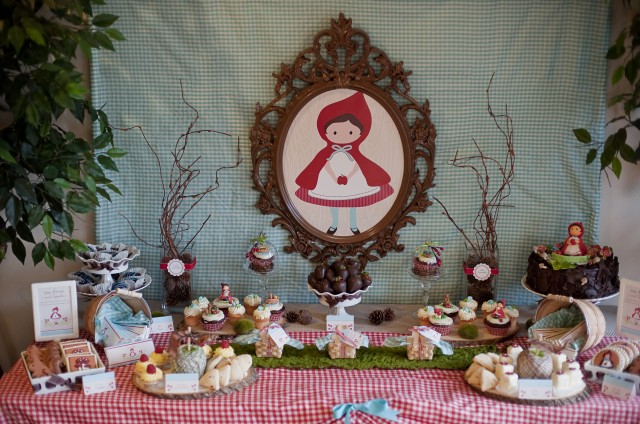
My family is absolutely thrilled that my sister is expecting her first baby! I've been in planning mode for the shower happening later this month. She has requested a book theme, but some of our searching for ideas led us to some absolutely gorgeous fairy tale baby showers. For anyone else who might be interested, it can be hard to dig through the plethora of internet suggestions like "make everything pink" and cartoony crown and castle favors, but there are some really clever, classic fairy tale ideas out there! Enjoy!


Little Red Riding Hood Theme at andersruff.com. The invitations read, "“What a little nose she’ll have.  What little ears she’ll have.  What little eyes she’ll have.  But what big hearts she’ll fill.”


This shower featured on A Little Cuppa Tea is insanely gorgeous, and extra sweet because the writer wanted to honor her sister's acting past by highlighting different fairy tale characters she had played. I can relate because both my sister and I were very into musical theater, and we were both in fairy tale plays (such as Into the Woods, as I recently mentioned)

Second to the desire for marriage, the desire to have children is the driving force in so many fairy tales, so it's such an appropriate theme for a baby shower (not because fairy tales are infantile...) I appreciate that many of the above showers either were for baby boys, or could be for either gender.