Showing posts with label Red Shoes. Show all posts

Tuesday, January 17, 2017

Fairy Tale Fashion: The Snow Queen

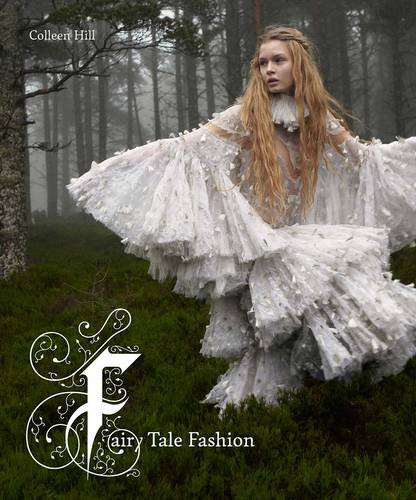
One more post from Colleen Hill's Fairy Tale Fashion!
In her essay on Andersen's "The Snow Queen," Hill informs us that the fairy tale was initially conceived as a short, ballad-style poem about a young woman and her lover, a poor boy who was abducted by the Snow Queen. The Snow Queen was then more of a sexual predator. The story evolved into the tale we know today, of two children separated when the boy, Kay, gets a piece of an evil mirror lodged in his eye that turns him into a cruel boy who mocks the things he used to love and follows the Snow Queen to her ice palace.

The tale uses opposing imagery-the natural, warm beauty of the rose verses the stark symmetry of mirrors and ice/snowflakes. The mirror in this tale is unusual in that, while mirrors usually tell the truth (such as the mirror in "Snow White" that is bold enough to bluntly tell the Queen when there is someone more beautiful than she), this mirror is deceptive-it distorts reality, causing beautiful things to seem ugly. (In fact, I sometimes thought of this mirror when I was in my first trimester-when foods I usually loved became disgusting to me and activities I enjoyed lost interest for me because of the constant nausea-I felt like I could relate to Kay).

Mirrors usually represent vanity in stories. The theme of vanity is also developed in "Snow Queen" by the reference to Gerda's red shoes. When she goes to search for Kay, she intentionally puts on her new red shoes that Kay has never seen before, but when she goes to the river she is willing to sacrifice her prized possessions to gain information about his whereabouts (but the shoes are returned to her because the river does not know where he is). Interestingly, this tale was written just four months before Anderson wrote the infamous tale "Red Shoes" in which the desire for the colored footwear is completely and repeatedly seen as selfish.
From the "Snow Queen" section of the Fairy Tale Fashion exhibit at the Fashion Institute of Technology. Far left; white fur cape by J. Mendel, second to the left; not in the book, second to the right; Alexander McQueen Fall 2008 dress inspired by snowflakes, far right; Tom Ford Spring 2014 dress that imitates shards of a broken mirror

Hill interprets the red shoes as objects of pride, even for Gerda-saying that by wearing them she was initially hoping to impress Kay, but the difference between Gerda and Karen from "Red Shoes" was that Gerda was willing to give up her shoes. This may be, especially given Anderson's feelings about red sheos, but I didn't necessarily read it that way in "Snow Queen." It's natural for a child to be excited to show her friend a new toy or possession, without necessarily trying to impress or show off to your friend. If Gerda had taken a beautiful red rose and tucked it behind her ear with the intention of showing Kay, would that be interpreted as vanity? The rose would still be beautiful and displayed on Gerda, but fairy tale characters who request roses rather than clothes and jewelry are held up as the example of being non-materialistic, like Beauty in "Beauty and the Beast." Yet roses are a symbol of her friendship with Kay-when staying with the old woman, it was seeing an image of a rose that reminded Gerda of her quest to find Kay. Could the wearing of the red shoes even have been Gerda's attempt to remind Kay of their beloved roses, since a real rose wouldn't survive a long journey? The colorful roses of Kay and Gerda's childhood playdates are a stark contrast to the colorless white of the Snow Queen's palace.

Red Morocco leather shoes, from 1800-1810

Although, it was more of a natural assumption at the time to associate red shoes with luxury, since red dye was more difficult to produce, and therefore more expensive, so red was a color only the wealthier could afford. But it seems that illustrators to tend to intentionally bring out the contrast in warm colors associated with Gerda, her friendship with Kay, and her journey to find him, as opposed to the cold realm of the Snow Queen. See Arthur Rackham's illustration of Kay and Gerda in their garden, and Edmund Dulac's image of Gerda at the old woman's house:
Compared with the Snow Queen/her palace by the same illustrators:
Although, I may be too quick to defend the wearing of red, just based on our own modern culture, where bright colors are just as easily accessed as neutrals. If anything, we tend to associate good things with characters who wear bright colors, aligning them with bright, joyful personalities. What do you see as the significance of Gerda's red shoes?

Wednesday, November 23, 2016

Dancing, Desire, and Death: The Role of Footwear in Fairy Tales


In the last section of Colleen Hill's fabulous Fairy Tale Fashion, she included some essays by other writers. I was really excited to read Ellen Sampson's "Dancing, Desire, and Death: The Role of Footwear in Fairy Tales." Twelve Dancing Princesses is one of my all time favorite tales and it's one I wish would be discussed more often; plus, the role of dancing in fairy tales can be so ambiguous and often contradictory.

There is a section specifically on footwear, although that topic has been discussed before here, so if you're interested in further reading on shoes, you can read about the significance of shoes in Perrault's time, Red shoes in fairy tales and history,  or Kathrine Langrish's excellent essay Slippers of Glass, Slippers of Fur on Seven Miles of Steel Thistles.

The subject of dancing in fairy tales, though, is a pretty bleak one at the outset for feminists. Sampson reminds us that many fairy tales were aimed to promote obedience in women-the Victorian versions we're most familiar with reflected the values of the day. "In fairy tales, women's bodies are strictly regimented and disciplined. They are controlled physically (putting Sleeping Beauty or Snow White to sleep), spatially (locking Rapunzel in a tower), maritally (gifted to Rumpelstiltskin as a reward), or sexually. Their bodies may be transformed (into geese or trees), altered (made handless or footless, smaller or larger) or even consumed, but they are rarely inhabited or possessed by their owners for long." I'm not sure which version of Rumpelstiltskin she's been reading...the protagonist is never given to him in marriage, but the King, but there are plenty of other tales where a princess is also given away in marriage, even against her will, so the point stands.

Sampson also points out that women who stray from the culturally accepted humility and dare to long for beautiful shoes, or to dance the night away, are severely punished. Karen in "The Red Shoes" eventually gets her feet amputated, similar to the stepsisters in Cinderella whose feet are mutilated in an attempt to fit into the slipper. Then, of course, there's the stepmother in Snow White whose punishment is to be danced to death in red hot iron slippers, fresh from the fire. "The animation of the body that shoes induce is punished in the most violent and spectacular manner...The production of stillness and silence is the aim of fairy tale violence-it renders the (female) body docile." Even for Cinderella and the Twelve Dancing Princesses, who may not be directly punished, through marriage they are given to the authority of another man and their dancing is stopped. The essay ends with the uncomfortable description of Karen's confession followed by her amputation.

Yet can that really be the whole symbolism of dancing in folklore? That is just represents women who are rebellious and must be tamed? I had wondered about the different uses of dancing-sometimes it leads to death, but in Cinderella's case it is both her reward and it's the catalyst that leads to another reward, the Prince/escaping a life of servitude. Sampson explains this by saying it's all about the context-women may dance at the proper time, the proper steps, in a formal setting-but must not dance out of passion and desire, like the twelve Princesses who dance the night away in an underground kingdom. Many scholars see the twelve Princesses as symbolic of women who are mobile and capable of rebellion-they spend the night exploring, dancing in a forbidden context, and the fact that their shoes are completely worn through by morning indicates the passion and extent to which they are dancing. They weren't performing a few courtly dances, but having a wild night of excessive dancing. In many fairy tales that feature shoes, it's even ambiguous as to who's controlling shoes-the Red Shoes force Karen to dance, and maybe it's the dancing shoes that brought the twelve sisters to the underground Kingdom and forced them to dance as well.

Scholars also interpret the Princess' underground nightly romps as being sexual in nature. It makes sense, but when I was younger it never occurred to me that you would need any other excuse to sneak out at night than to have access to an enchanted Kingdom in your own bedroom to explore, and fancy balls to attend. And here it  is that we see the often confusing logic of fairy tales-characters (and vicariously through them, the readers) are rewarded with the same things they are punished for desiring. We see many tales in which the main character is rewarded for being unmaterialistic-by being given great material wealth (such as in "Beauty and the Beast"). In Cinderella, the stepsisters must have chunks of their feet cut off for daring to desire the wonderful slipper and the royal life it represents-yet Cinderella is rewarded with both. Karen longs for the red shoes when she sees a count's daughter wearing them. Karen is punished, in a way, not for wanting beautiful things, but for wanting things that don't belong to her station in life-the red shoes are appropriate for the count's daughter, not for Karen; just as the slippers are meant for Cinderella and not her stepsisters. In a way it seems unfair, especially to our modern minds where we view class distinctions as less important than most other cultures.

And, although Sampson briefly mentions "Juniper Tree" as an example of how acquiring new shoes can be satisfactory, I think it's very important to contrast to the other tales, especially "Red Shoes." In that tale, Marlene is rewarded with a pair of red shoes. It's clear that she desires and enjoys them, and they are not seen as inappropriate for her, though she is poor, because she has a good heart. It's also important to remember that "Red Shoes," the most extreme example of a preachy tale concerning shoes and dancing, is not true folklore in the sense that the story has circulated around many cultures for generations with a similar structure, but was a literary invention of one man, Hans Christian Andersen.

Even in the tales in which dancing must be quelled, there is still a level of irony. Even if the Underground Kingdom is destroyed, the reader delights in the women's adventures there each time the tale is read or heard. Even if Cinderella doesn't dance any more after marriage, the descriptions of her dress and her own nightly adventures are the most thrilling part of her story (and frankly, her forbidden journeys to the ball are not that unlike the Twelve Dancing Princesses, and the twelve are hardly ever punished either for their so-called "indiscretions"). The very stories themselves betray their morals, as listeners delight in what is officially termed bad by the "lesson" we supposedly learn afterwards.

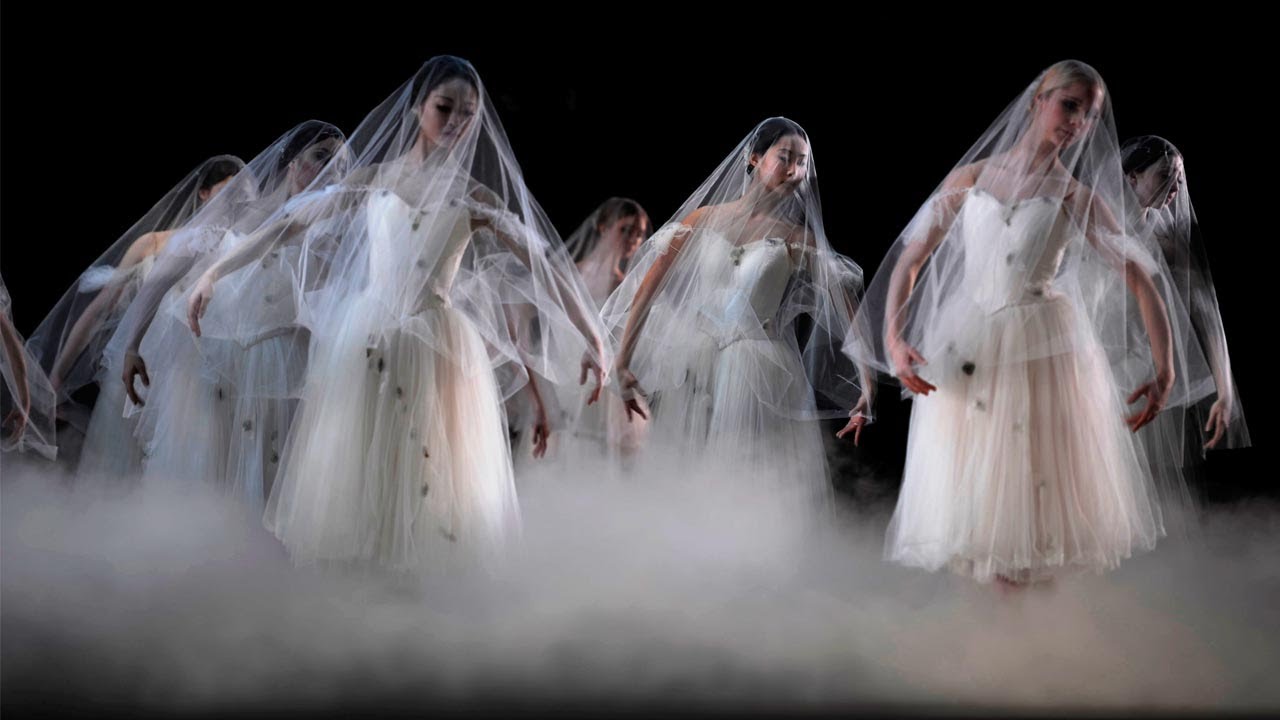
And, one story I wish Sampson had touched on is the ballet "Giselle." It's technically not a fairy tale, but neither is "Wizard of Oz" which she referred to many times. The haunting plot involves a group of Wilis, or supernatural women who force men to dance to their deaths. The idea of Wilis came from a passage by Heinrich Heine, but they are related to the Vila, a Slavic version of nymphs. In the context of the ballet, the women are said to be jilted lovers, and that is why they prey on men. So in a way, although they are the villains, the actions they perform reflect the original wrong, done to them by men-sort of like a gender-swapped version of King Shahryar in 1001 Nights, killing women because his first wife cheated on him. The very image of men being danced to death is a contrast to the popular tales referenced earlier, in which women's dancing is primarily described and their partners merely an afterthought.

How do you see the role of dancing in fairy tales?

Illustrations-"Twelve Dancing Princesses" by Kay Nielsen, "Red Shoes" by Anne Andersen, "Cinderella"-A.H. Watson, "Juniper Tree," by LBarrett, Wilis from "Giselle"-the SF Ballet

Tuesday, July 15, 2014

The Red Shoes Film

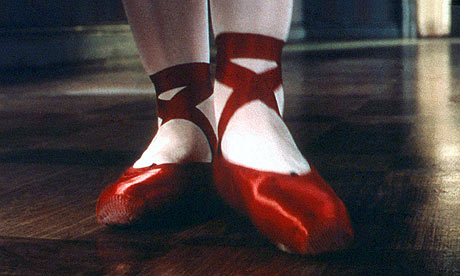
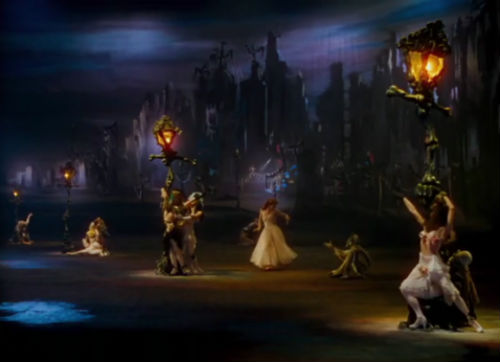
In my last post I discussed the Andersen fairy tale The Red Shoes, which has since been made into a ballet film. From 1948, it still has many fans and was a groundbreaking movie at the time.

From a fairy tale perspective, I think it's very interesting how the focus of the tale shifted from Andersen to Hollywood. Andersen's tale is clearly a morality story, cautioning young girls against disobedience, especially in the form of vanity; with the only cure being extreme piety.

When you transport the story into the ballet world, the emphasis on vanity almost becomes obsolete. The whole dance form is very unnatural and painful-to move in your legs in perfect turnout and dance on the tips of your toes is counter intuitive and requires years of disciplined training (and often bloody feet, which also hearkens back to several fairy tales). Yet this is also why ballet is so fascinating to watch, and why it goes perfectly with fantasy and fairy tale stories; the dancers really do appear otherworldly and fairy-like. In a world of painful shoes and impractical tutus, condemning a pair of shoes for being a certain color is hardly relevant.

The film centers around a dancer, Vicky, who is cast as the lead in a ballet based on the fairy tale "The Red Shoes." The summary from ImdbUnder the authoritarian rule of charismatic ballet impressario Boris Lermontov, his proteges realize the full promise of their talents, but at a price: utter devotion to their art and complete loyalty to Lermontov himself. Under his near-obsessive guidance, young ballerina Victoria Page is poised for superstardom, but earns Lermontov's scorn when she falls in love with Julian Craster, composer of "The Red Shoes," the ballet Lermontov is staging to showcase her talents. Vicky leaves the company and marries Craster, but still finds herself torn between Lermontov's demands and those of her heart.

Thus the conflict has gone from obedience/humility vs. vanity, to love vs. career. This dilemma is one that many modern people can relate to, and is also especially true of ballet, which is such a demanding career.

But the image of a pair of shoes that has a mind of its own, that is dangerous and can lead someone down a path that can destroy their life, is still present in both stories. Yet I think audiences of the movie tend to see the conflicts less of something that was Vicky's fault, and more of her being caught in a very difficult situation. We are intrigued by the creepy idea of shoes with a death wish, and so the fairy tale lives on, yet now in a story more appropriate for a culture that seeks a different form of morality.

Keeping the story and ballet relevent to more current audiences, the ballet was featured throughout season 2 of the Australian ballet t.v. show Dance Academy (available on Netflix Instant Play! In case you can't tell this is pretty much where I get all of my entertainment). As the main character preps the solo for an audition, we are told that what sets this excerpt apart from others is the need for the dancer to have emotional maturity-she needs to portray real grief as well as good technique. I'm not sure what real dancers think of this solo-is it really challenging? Do you really have to have more grief than most other solos? Many ballets have tragic storylines so I suspect this was something overemphasized for the sake of the show. However, it did bring the story to light for a new generation, as the fairy tale keeps being reimagined for an ever changing world.
Also, has anyone seen the 2005 Korean Red Shoes film? It has pretty good reviews but also seems REALLY dark.


Saturday, July 12, 2014

Red Shoes in Fairy Tales and History

"The Red Shoes" is a tale by Hans Christian Andersen, one that really reveals his tendency to condemn a young girl, in this case for her vanity, and make her suffer incredible punishments that seem to far outweigh the crime.

Karen, the protagonist, struggles with vanity long before she even comes into contact with the fateful shoes. "People said that she was pretty. But the mirror told her, 'you are more than pretty-you are beautiful.' " A throwback to Snow White's evil Queen, perhaps, another vain character known to listen to her mirror?
"Mirror Mirror on the Wall"-P J Lynch
Karen chooses red shoes for her confirmation, causing everyone to stare at her shoes the whole time. She continues to wear them, despite how "improper" they are to wear to church. She is no longer able to focus, but thinks of her shoes the whole time-"she forgot to say the Psalm, forgot to say the Lord's Prayer."


The first time Karen danced a few steps in the shoes, she found she couldn't stop, until the shoes were removed. She still thinks about the shoes even when she isn't wearing them, and finally wears them to a ball. This time she starts dancing and can't stop. After dancing for days, past meadows and fields, she is condemned by an angel: “Dance you shall,” said he, “dance in your red shoes till you are pale and cold, till your skin shrivels up and you are a skeleton! Dance you shall, from door to door, and where proud and wicked children live you shall knock, so that they may hear you and fear you! Dance you shall, dance—!”
Thomas Vilhelm Pedersen

She even passes a funeral for herself, and knows "she was forsaken by everyone and damned by the angel of God." Nothing can help her until she goes to the executioner and asks him to chop off her feet. Even the first time she tried to go to church again, the red shoes were still there, dancing on their own, and she had to repent of her sin.

After that she became the image of piety, "industrious and thoughtful," and when children "asked her about dress and grandeur and beauty she would shake her head." After living in humble piety for a while with her crutches, one day she is taken up to Heaven, "and no one was there who asked after the Red Shoes." (Italics part of the story, not my emphasis).
Anne Anderson

All that for a pair of shoes seems rather extreme, but wikipedia includes this pertinent background information: "Andersen explained the origins of the story in an incident he witnessed as a small child. By his report, his father was sent a piece of red silk by a rich lady customer, to make a pair of dancing slippers for her daughter. Using red leather along with the silk, he worked very carefully on the shoes, only to have the rich lady tell him they were trash. She said he had done nothing but spoil her silk. "In that case," he said, "I may as well spoil my leather too," and he cut up the shoes in front of her."

So Andersen may have had bitterness towards the rich more than towards women and girls especially. She originally wants red shoes because she sees a princess wearing them.
Katherine Cameron

This paper by Anastasia Yuanita sees the story as cautioning children more about obedience than vanity. Karen tricked her adopted mother into buying her red shoes, and wore them over and over again after being told not to. As far as we know, the princess in the beginning was never condemned for wearing her red shoes, so her sin could be idolizing the shoes more so than just wanting and wearing the shoes in and of themselves, good news for any of us who happen to own red shoes. Plus, extremely didactic tales enforcing children's obedience were pretty much the norm at the time.

However, when you look at this story in combination with Andersen's others, you really do start to notice a pattern. Inger of "The Girl Who Trod on a Loaf" is given even more dire punishment. This girl is bad, cruel, and proud-even despite her poverty. In her vanity and foolishness, she uses a loaf of bread given to her to place in the mud to keep her shoes from getting dirty. For this she becomes a statue in the underworld, forced to hear the voices of people up above telling her tale as a warning against wickedness, and she wishes she had never been born, and that people had punished her more for her waywardness.
Arthur Rackham-shoeless Gerda

In contrast, the good heroine of "Snow Queen," Gerda,shows her devotion by throwing her red shoes, her "treasure," into the river. (Interestingly, although you can find illustrations of Gerda with and without shoes, I haven't found any pictures of her wearing those red shoes, has anyone else?)

I couldn't help but wonder how much of Andersen's attitude towards red shoes were universal, and how much was his own, so I did a little digging.

From BBC News: "In the 1670s, Louis XIV issued an edict that only members of his court were allowed to wear red heels. In theory, all anyone in French society had to do to check whether someone was in favour with the king was to glance downwards. In practice, unauthorised, imitation heels were available."

Louis XIV's shoes in a portrait by Hyacinth Rigoud
  • Footwear facts
  • In Europe in the sixteenth and seventeenth centuries heels on shoes were always colored red. 
  • Six-inch-high heels were worn by the upper classes in seventeenth-century Europe. Two servants, one on either side, were needed to hold up the person wearing the high heels.
This lecture tells us that "woman in red" was basically a code name for "prostitute" in England and France in the nineteenth century. Prostitutes could also be identified simply from their dress-being overdressed according to cultural wardrobe norms. 

Yet, red shoes couldn't have been a universal symbol for wanton sexuality, especially (one would assume) if there were pairs available for little girls. Plus, in the Grimm's The Juniper Tree, when the brother is resurrected as a bird, he rewards his sister Marlene by bringing her a pair of red shoes from the shoemaker. Marlene is only represented as good and kind, and was thankful for the present.

In fact, I'm finding it difficult to research the importance of red shoes in nineteenth century Europe. It seems shoes of many different colors were fairly common, especially by the mid-1800s.
A pair of red shoes pictured among other colored shoes

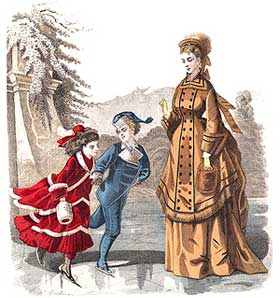
People also associate Red Riding Hood's red cap with daring and/or sexual overtones, but she clearly wasn't the only little girl wearing the bold color, as this mid-nineteenth century fashion plate reveals

Dorothy's shoes were only changed from silver to red to show off MGM's brand new color filming
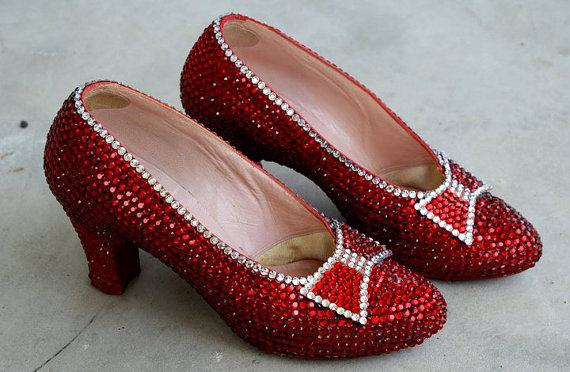
House of Harry Winston's Ruby Slippers-created from diamonds and rubies for the 50th anniversary of "The Wizard of Oz," these are supposedly the most expensive shoes in the world ($3 million)

And to bring it back to the Snow White reference at the beginning- if you missed it the first time, you should definitely check out Gypsy's post on the red-hot iron shoes Snow White's evil stepmother was forced to dance in. Here's the warning:
Warning:
This post is NOT for everyone.
It discusses historical torture methods.
Skip this if you have a sensitive stomach.

There are so many other fairy tales that deal with shoes in general, so I tried to keep this post limited to discussion of red shoes specifically (although you could also throw in the stepsisters from Cinderella-after putting their mutilated feet into Cinderella's slipper the trickling red blood is what tipped the Prince off to their deception). Any thoughts on the symbolism of red shoes in fairy tales, and/or historical facts about red shoes?

Sunday, August 14, 2011

Princess Shoes


Beauty from Beauty and the Beast
Mai Lamore


The following three are from If Style Could Kill, designers unknown:

The Little Mermaid


Odile (The Black Swan)


Cinderella (her shoes weren't always glass, but some sort of precious metal)


The Twelve Dancing Princesses


Urban Outfitters


Snow White

Modcloth

As worn on Rebecca of The Clothes Horse


Karen of The Red Shoes would need something classic but fabulous to wear day after day

Christian Louboutin


The Witch (any witch really, but I think Disney's Snow White's witch is most often associated with skulls)

Kermit Tesoro

Tuesday, April 5, 2011

The Red Shoes: Encouraging judging or discouraging materialism?


"The Red Shoes" by Hans Christian Andersen is a fairly standard tale in which a girl is punished for vainly wearing red shoes. After going from poverty to a more comfortable situation, Karen wears her new red shoes to inappropriate situations; one day, she goes dancing and the shoes won't stop dancing. Her feet must be cut off before she can regain control, and after that she becomes a penitant Christian, sworn to simplicity.


Karen before-shallow and vain


Karen afterwards-repentant and reformed (both illustrations by Katharine Cameron)

Andersen obviously felt quite strongly about red shoes. And while most would agree that vanity can go too far, the punishment far outweighs the crime. While red shoes themselves aren't quite as taboo anymore, the concept of judging people by what they choose to wear is still very prevalent (hello, popular TLC show "What not to Wear").


I feel I'm somewhat qualified to share my thoughts on this subject since I've sort of come full circle on it. When I was little I loved wearing dresses and was a total girly girl. As I went through middle and high school, I considered myself too feminist to pander to the shallow expectations of men that women should only dress in ways that please them. I was already a firm believer in the message of Beauty and the Beast, not to judge by appearances, and I was also very influenced by children's books-including fairy tale stories like Robin Mckinley-in which the heroine is outcast because she doesn't fit into her usually Victorian-like society, but is athletic and outgoing and doesn't care about dressing up. This heroine is always appreciated for her inner beauty by the most desirable male character in the book anyway.


While I was in this phase, I totally judged the pretty, popular girls. I realize now, in retrospect, I was jealous; but I assumed girls who wore trendy or dressy clothes were shallow and snobbish. In my protest about being judged, I passed judgement myself.


During college I experienced a turnaround. I still believe we shouldn't judge people by shallow standards like appearances, but I realized that I truly enjoy wearing feminine clothes like I did when I was little. For me, putting outfits together is a creative outlet. Since I've started dressing this way, I do occasionally fear people are looking down on me the way I used to look down on others.


So, I approach this fairy tale with mixed emotions (this also applies to Beauty and the Beast, in which Beauty contrasts her sisters, who care only about clothes and jewelry at the expense of her father; whereas Beauty cares nothing about material things and instead has love for her father and appreciates roses and other forms of nature-as if these passions couldn't coexist). A part of me is indignant, as well as being aware of the drastic changes in culture and expectations in fashion since Andersen's time. But a part of me realizes I spend too much money and shoes, clothes, and accessories, and that my appearance can become too important to me. And part of me is just defensive of fairy tales, which seem to get so much abuse.


How do you interpret this tale?