Showing posts with label television. Show all posts

Sunday, December 4, 2016

La Bella e La Bestia

I found out about this via Megan Kearney's Beauty and the Beast tumblr-an Italo-Spanish mini series Beauty and the Beast. Starring Alessandro Preziosi and Blanca Suarez, it retells the classic story in two episodes, which Kearney provides links to here.
IMDB summary:

The story starts with Bella Dubois, daughter of a merchant/Sea captain. She decides to be a maidservant at Leon's castle because her father couldn't afford the debt at the moment. When Leon first meets Bella he has passionate feelings for her because of her bravery and she seems to understand his anguished memories.Their love is developing beautifully but encounters opposition in the form of his jealous cousin. Prince Leon finally convinces Bella that she is not a bet. He cancels her father's debt, frees her and they marry.
^This poster definitely gives the Beast more of a Phantom of the Opera vibe. Has anyone seen this/have opinions??

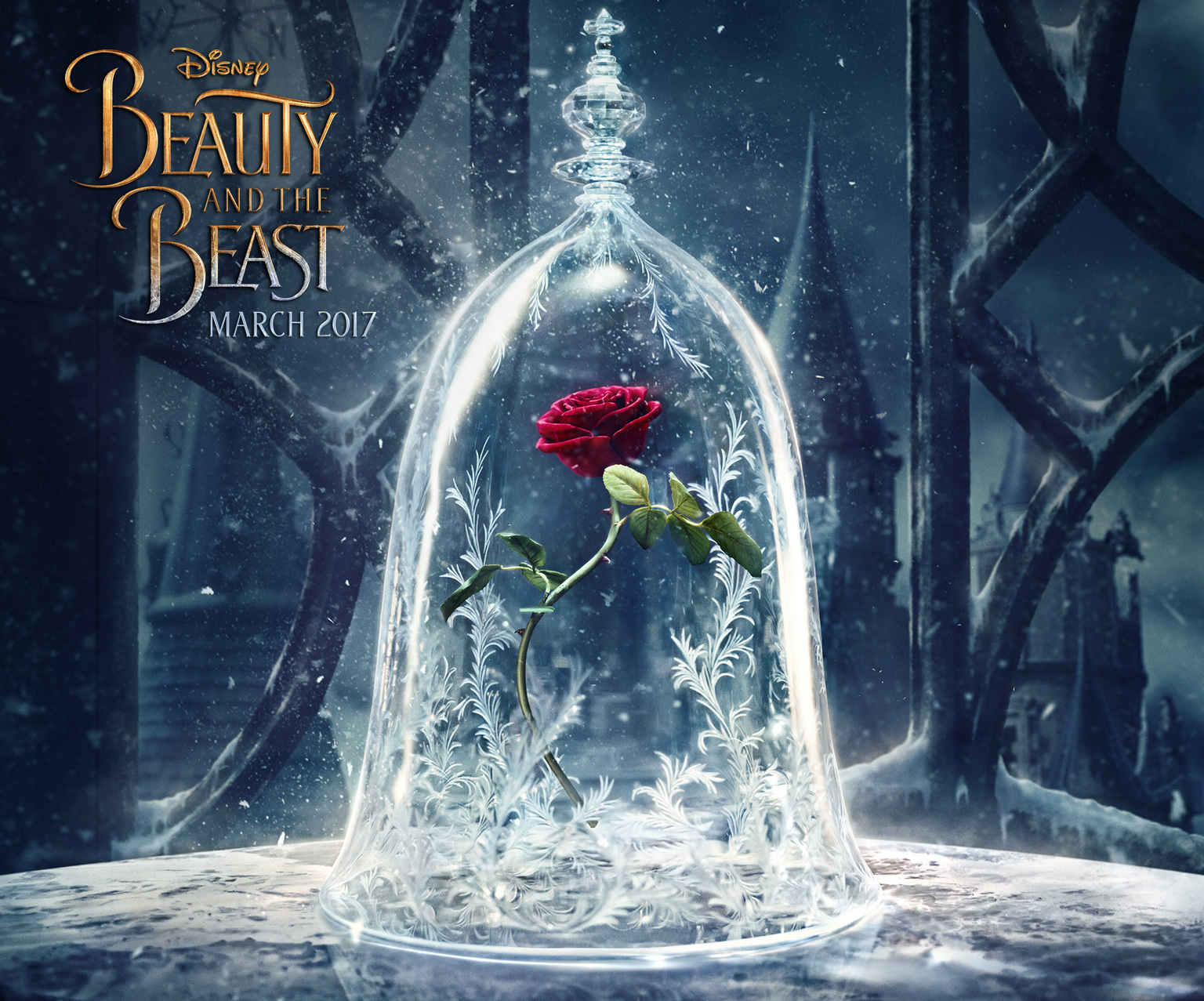
Speaking of BATB media...I haven't posted anything on the upcoming Disney version, mostly because my fellow bloggers have been covering it quite well, and you've probably seen the trailer floating around the internet by this point. I'm trying not to get my hopes up too much, but have to admit I'm excited about it. I especially love that they seem to be returning to the tale's roots more so than just reinventing the Disney cartoon-referencing the French literary version/even McKinley's "Beauty."

Also from Kearney recently-a helpful answer to anyone who says BATB is about Stockholm Syndrome, and a link to a good article on Fairy Tales and the Necessity of Fear

Friday, April 1, 2016

Visualizing Wonder: Fairy Tales and TV


I just added another link to the Tales of Faerie homepage I wanted to highlight in case you weren't already familiar with it! Visualizing Wonder: Fairy Tales and TV: A Database has some really interesting articles on the history of how fairy tales have been portrayed in the media. I've really enjoyed their series on looking at television commercials through the decades:

2010s
2000s
1990s
1980s
1970s
1960s
1950s

Other highlights:
-Weight-Watching Fairy Tales looks at body image issues and modern versions of fairy tales
-Lots of discussion on OUAT and Grimm
-Their sister site is The International Fairy Tale Filmography, an online database of films with fairy tale themes

They most recently posted this really well done ad for the Guardian, worth a watch:

Wednesday, April 1, 2015

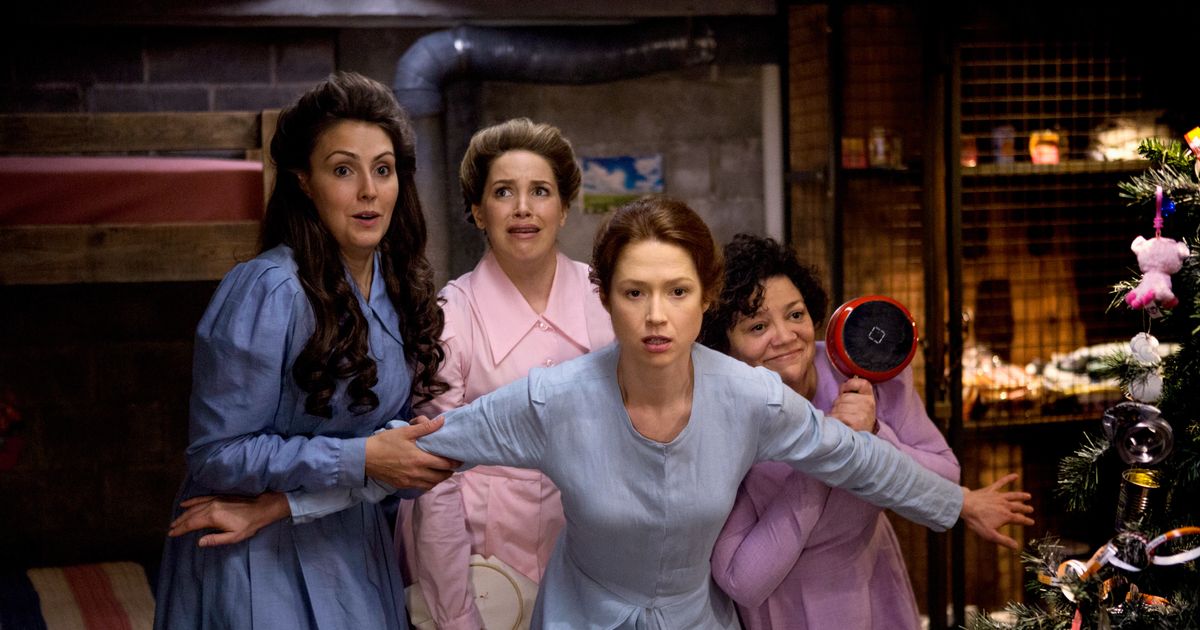
Unbreakable Kimmy Schmidt: A Modern Cinderella?


Okay, I still haven't seen the big Cinderella movie (but I've read multiple reviews). But one thing I HAVE seen recently is season 1 of Unbreakable Kimmy Schmidt on Netflix. Bearing the mark of one of its creators, Tina Fey, people are comparing it to a "better version of 30 Rock."

It's a comedy that loves to stretch the lines of appropriateness, but underneath all the ridiculousness and the characters' antics is a show that's getting a lot of positive buzz. Multiple times the characters make references to Kimmy being Cinderella. She works for a rich spoiled woman, and it's clearly referenced in episode 7, "Kimmy goes to a party!", in which Titus is the unconventional godmother who gives her a makeover, she is mistaken as being one of the guests at the party by an attractive rich male, and ends up leaving a shoe behind when he finds out she isn't what he thought.

Although I'm sure the creators didn't intend to reinvent the story of Cinderella, the clear allusions and the twists and turns make it a refreshingly modern twist on the fairy tale. More detailed discussion in the spoiler version below:

*************************************

In Kimmy's job as a "nanny" (does she...ever actually take care of Buckley?) for Mrs. Voorhees (Jane Krakowski), she is clearly taken advantage of and often treated rudely, and other characters observe the connection between her and Cinderella. And while she does stay at the job, it's not because she's helpless and won't look for another job. She realizes early on that, despite their flaws, Jacqueline, Xan, and Buckley actually need her help. Rather than seeing herself as a victim, she recognizes the power she has to help other people, and her relationship with Jacqueline ends up being mutually beneficial (although it will take Jacqueline a while to get out of her classist mindset and truly respect Kimmy). Jacqueline helps Kimmy figure out modern life while Kimmy is her emotional support.

Then the classic Cinderella episode (episode 7), where we find that Logan is Prince Charming. We're so happy he sees past Xan's immaturity and wants to date Kimmy instead. Only...after a few episodes, Logan's true colors are revealed. Kimmy dumps him for someone else. I like how the show bypassed the two initial "obvious" choices for a love interest, Charles and Logan, and subverts stereotypes to find someone who is better for Kimmy.


Another issue people have with Cinderella is the emphasis on physical beauty. While no doubt Ellie Kemper is pretty, the way she dresses reflects her innocence and the fact that she was last in the real world 15 years ago-bright colors and things that young teenagers would have been wearing around Y2K. She doesn't conform to the fashionable world  of the Vorheeses, but has her own unique way of expressing herself.

And especially with all the buzz about the new Disney movie, people are revisiting the subject of Cinderella being a victim, debating how passive she is and what kind of a role model she is. The show addresses the issue of Kimmy's being abducted and trapped in a bunker:

"It’s a relentlessly upbeat sitcom that also has a lot of smart stuff to say about the way we treat people we perceive to be victims, surviving, and reclaiming your identity. The trauma experienced by these women is never mocked. Instead, it informs the characters in believable and powerful ways. The pilot immediately, directly, and repeatedly challenges the notion that Kimmy is a victim. As the mole women leave their interview with Matt Lauer, a production assistant hands them gift bags and says, repeatedly “thank you, victims!” It’s a perfect example of how the pilot script uses jokes to uncover smart truths: People only see these women as monolithic “victims,” which reduces their identities and obscures the complexity of the trauma they endured. “Everyone in Indiana is just going to look at me like I’m a victim, and that’s not what I am,” Kimmy tells her fellow mole women directly...the writers already have found ways to make Kimmy look innocent but never dumbAnd don’t mistake her childlike wonderment for weakness. Kimmy is, after all, unbreakable. "

-Review by Kayla Kumari Upadhyaya (emphasis mine)

Anyone else seen the show? Did you find any other Cinderella or fairy tale connections?

Thursday, January 29, 2015

Buffy the Vampire Slayer and Little Red Riding Hood


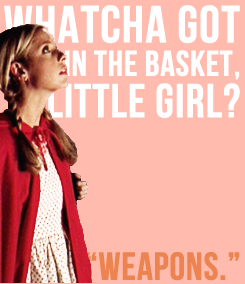
I keep coming across references to scholarly people discussing the show "Buffy the Vampire Slayer" in relation to fairy tales, especially as a modern retelling of "Little Red Riding Hood". Last year Heidi Anne Heiner of Surlalune shared the schedule for the American Folklore Society's Annual Meeting, and it included a session titled "What's in the Basket Little Girl?: Reading Buffy as Little Red Riding Hood." I remember reading that and thinking I could almost teach that session (not really, but Buffy is one of my go-to Netflix shows to have on while I do chores and by now I've seen every episode at least once). There are of course some obvious connections-the transformation of Little Red, a helpless girl being overtaken by monsters, to Buffy, a powerful young woman whom the monsters themselves fear. And of course there's the episode where Buffy dresses up as LRRH for Halloween.

But there's more to delve into. The book Buffy in the Classroom: Essays on Teaching With the Vampire Slayer, edited by Jodie A. Kreider and Meghan K. Winchell, includes a chapter called "Little Red Riding...Buffy?" The chapter outlines a unit that can be taught to college literature students, covers a thorough history of the famous tale, and encourages students to compare and contrast the themes found in LRRH and a specific episode of Buffy. Sample pages can be read online and it's clear from those that using television as a teaching tool doesn't mean your lesson plan is dumbed down! The chapter also includes discussion questions which  could be used outside of a classroom-perhaps a book club or other discussion group.

Buffy and connections to fairy tales are also discussed in the book Channeling Wonder: Fairy Tales on Television (Series in Fairy-Tale Studies). Apparently using Buffy in academic contexts is nothing new or unusual. According to Wikipedia,
Buffy is notable for attracting the interest of scholars of popular culture, as a subset of popular culture studies, and some academic settings include the show as a topic of literary study and analysis.[107][108] National Public Radio describes Buffy as having a "special following among academics, some of whom have staked a claim in what they call 'Buffy Studies.'"[109] Though not widely recognized as a distinct discipline, the term "Buffy studies" is commonly used amongst the peer-reviewed academic Buffy-related writings.[110]
I also really like the episode "Gingerbread," which has an interesting way of looking at "Hansel and Gretel"...

Tuesday, July 15, 2014

The Red Shoes Film

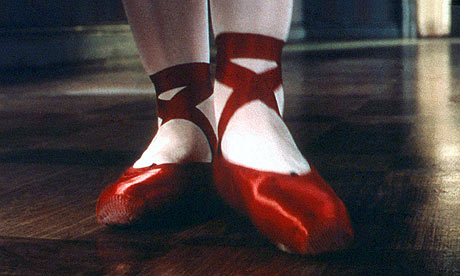
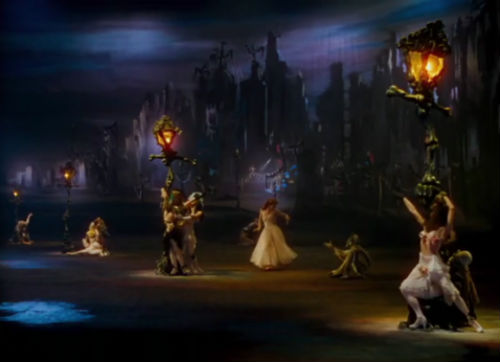
In my last post I discussed the Andersen fairy tale The Red Shoes, which has since been made into a ballet film. From 1948, it still has many fans and was a groundbreaking movie at the time.

From a fairy tale perspective, I think it's very interesting how the focus of the tale shifted from Andersen to Hollywood. Andersen's tale is clearly a morality story, cautioning young girls against disobedience, especially in the form of vanity; with the only cure being extreme piety.

When you transport the story into the ballet world, the emphasis on vanity almost becomes obsolete. The whole dance form is very unnatural and painful-to move in your legs in perfect turnout and dance on the tips of your toes is counter intuitive and requires years of disciplined training (and often bloody feet, which also hearkens back to several fairy tales). Yet this is also why ballet is so fascinating to watch, and why it goes perfectly with fantasy and fairy tale stories; the dancers really do appear otherworldly and fairy-like. In a world of painful shoes and impractical tutus, condemning a pair of shoes for being a certain color is hardly relevant.

The film centers around a dancer, Vicky, who is cast as the lead in a ballet based on the fairy tale "The Red Shoes." The summary from ImdbUnder the authoritarian rule of charismatic ballet impressario Boris Lermontov, his proteges realize the full promise of their talents, but at a price: utter devotion to their art and complete loyalty to Lermontov himself. Under his near-obsessive guidance, young ballerina Victoria Page is poised for superstardom, but earns Lermontov's scorn when she falls in love with Julian Craster, composer of "The Red Shoes," the ballet Lermontov is staging to showcase her talents. Vicky leaves the company and marries Craster, but still finds herself torn between Lermontov's demands and those of her heart.

Thus the conflict has gone from obedience/humility vs. vanity, to love vs. career. This dilemma is one that many modern people can relate to, and is also especially true of ballet, which is such a demanding career.

But the image of a pair of shoes that has a mind of its own, that is dangerous and can lead someone down a path that can destroy their life, is still present in both stories. Yet I think audiences of the movie tend to see the conflicts less of something that was Vicky's fault, and more of her being caught in a very difficult situation. We are intrigued by the creepy idea of shoes with a death wish, and so the fairy tale lives on, yet now in a story more appropriate for a culture that seeks a different form of morality.

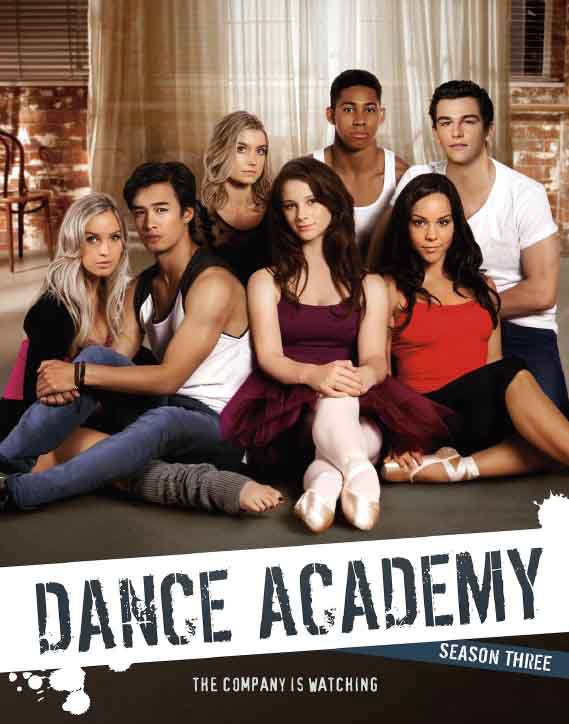
Keeping the story and ballet relevent to more current audiences, the ballet was featured throughout season 2 of the Australian ballet t.v. show Dance Academy (available on Netflix Instant Play! In case you can't tell this is pretty much where I get all of my entertainment). As the main character preps the solo for an audition, we are told that what sets this excerpt apart from others is the need for the dancer to have emotional maturity-she needs to portray real grief as well as good technique. I'm not sure what real dancers think of this solo-is it really challenging? Do you really have to have more grief than most other solos? Many ballets have tragic storylines so I suspect this was something overemphasized for the sake of the show. However, it did bring the story to light for a new generation, as the fairy tale keeps being reimagined for an ever changing world.
Also, has anyone seen the 2005 Korean Red Shoes film? It has pretty good reviews but also seems REALLY dark.

Tuesday, June 3, 2014

Fairy Tales in Castle: Part II

"Maybe all of this is a sign-a sign that ours is a great love story. 'Cause what's a great love story without obstacles to overcome? Every fairy tale has them-terrible trials that only the worthy can transcend. But you can't give up."

From the season finale of ABC's Castle, currently available on hulu. Kate Beckett is mourning that everything they've planned for their wedding seems to be going wrong, and Richard Castle assures her with the above words. I think this is possibly the only pop culture reference to fairy tales I've heard (not including fairy tale themed shows and movies) that doesn't speak of fairy tales as trite children's stories where everything is perfect, but actually acknowledges the fact that, before the happy ending, the characters go through some horrific and traumatic stuff. Perhaps all the recent darker versions of fairy tales that have come into the mainstream are finally helping people to think about fairy tales in a different light?

Later in the episode, Castle and Beckett find themselves tied up (don't worry, that wasn't too much of a spoiler if you were still planning on watching), and they have this conversation:

Beckett: Please tell me this is a fairy tale...
Castle: Looks like the Grimm kind.

Ha! Love the reference and of course the pun ;)

This is the second time this show has been featured here on Tales of Faerie-in 2012 they had a fairy tale themed episode, Once Upon a Crime. (EDIT: the third time-Surlalune had caught an episode that clearly  referenced Goldilocks a few years ago) Perhaps we have kindred spirits in the writing team who also have a respect for fairy tales?

Thursday, February 20, 2014

GEICO Fairy tale commercials


I just saw the latest of Geico's "Did you know" series of commercials, this one featuring Pinocchio. I had mentioned the Jack and the Beanstalk one earlier, which wasn't on youtube at the time, so here it is in case you missed it:


Monday, January 20, 2014

Family Guy's Grimm Job

If Family Guy is up your alley, you should check out the episode that just became available on regular hulu, Grimm Job. It's a fairy tale mashup that, while humorous, is also irreverent and inappropriate at times. Definitely not child appropriate.
 
They interpret Jack and the Beanstalk, Little Red Riding Hood, and Cinderella, with some other fairy tale characters thrown in for good measure. The characters sometimes speak with the irony of those who are aware that they're in a fairy tale and what's going to happen, which adds some funny lines. And while mainly just being goofy, they do sort of touch on some issues such as violence (at the end of LRRH) or how certain famous scenes are less than believable, if you were to take the story seriously (Stewie/Little Red refuses to act out the "my what big ___ you have, Grandmother" because, as he says, it's obvious the wolf is not a human woman and it's insulting.) That's one big question people have about fairy tales, is what attitude are we supposed to read them with? Suspension of disbelief/the innocence of a child? Or just accepting that it's unrealistic? Can we read into subtle things if there also appear to be glaring plot errors? Were people "back then" really that gullible?

So it's not groundbreaking in the realm of fairy tale interpretations, many of the jokes have been make before, but still pretty funny, in my opinion. For example, Cinderella ends: "And so, two people who danced together one time, entered together into an ill-advised, long term relationship. And they lived happily ever after for seven months..."

Thursday, October 10, 2013

Fairy Tale Commercials playlist


I just saw a new Gieco commercial featuring Jack and the Beanstalk. Couldn't find it on youtube yet, but I did find this playlist featuring 47 different fairy tale-themed commercials. Cinderella and Red Riding Hood are definitely the most commonly used. Some of them are recent and some are old, going back to the 80s and 90s, and a couple from the 1930s! Advertisements are some of the most globally viewed takes on fairy tales, so they give us an idea of what the general population has been exposed to in terms of fairy tale parodies, as well as what companies think will appeal to everyone. And, some of them are just plain entertaining! Enjoy-

Wednesday, September 19, 2012

More CW Beauty and the Beast unenthusiasm

So no one appears to be excited about the new Beauty and the Beast show, fairy tale lovers or those just looking for entertaining new shows. The Washington Post's review deems it "hideously blah". It's nothing we haven't heard before circling around the blogosphere, mainly wondering where the Beast is: "Rather than slather on a lot of makeup and prosthetics, Vincent’s disfiguration is symbolized by a manly scar on Ryan’s pretty, pretty cheek."

In my opinion they should have just given the show and characters new names and marketed it as a new idea. Don't try to sell something as a show that still has fans and a following if it's such a stretch to equate it to the inspiration.

Tuesday, June 26, 2012


Gypsy already has a more thorough post on the new Beauty and the Beast tv show over at Once Upon a Blog, but my main reaction after seeing the trailer is...where's the Beast? Despite the pretty minor scar, the lead actor is clearly still a very attractive man, which changes the whole dynamic of any supposed Beauty and the Beast-type story.

The whole hot female cop and mysterious protector reminds me more of Gargoyles than the 80s tv show, and it seems that Gargoyles also has more connections to Beauty and the Beast than this new show bearing its name.

I have earlier discussed (here and here) the phenomenon that artistic interpretations of the Beast began, a few hundred years ago, as completely animal and ultimately unattractive, but through the years has evolved into something first more safe and tame to someone more and more good-looking, and this most recent interpretation seems to push the envelope even further. This beast could hardly be less beastly. And if a large part of the pull of a story is the Otherness of the romantic male character (read what Griswold has to say on the subject), than the more we alter the Beast and make him desirable, the less the core of the story remains.

Thursday, March 1, 2012

Castle's Once Upon a Crime


Beckett: ...in the original story, the wolf doesn't kill Little Red Riding Hood. The huntsman cuts her out of the wolf's stomache, and then she kills the wolf.

Castle: Someone's a brothers Grimm fan.

Beckett: Oh yeah. They didn't sugar coat it. They understood that fairy tales are pretty much horror stories.

Castle: Exactly. Which is why we all need them to grapply with the unknown, which is why they tackle our primal fears, like being alone in the woods or dealing with monsters

Esposito: They're not horror stories-they're life lessons. If you do the right thing, you get to live happily ever after.

Beckett: But only in fairy tales.


I really liked the latest Castle episode, inspired by fairy tales! Of course, Castle is already one of my favorite shows. But finally, something I've been hoping to see-someone actually using clues from the fairy tale plots to solve murders (Castle deduces that they found Riding Hood and Snow White in the woods because that's where their bodies were found in the stories, but that they'd find Sleeping Beauty in her bed). Lots of interesting musings on the characters' views on fairy tales, such as above. Of course, they make the much often mistake of calling the Grimm versions the "original," but we'll forgive them for that, it was still an entertaining episode.

Monday, January 30, 2012

Once Upon a Time and Grimm: mid-season review


I initially posted my reactions to the two major fairy tale tv shows (Once Upon a Time and Grimm) after watching a few episodes. I have to admit that, though I clearly have a bias for things with a fairy tale influence, I really haven't been drawn to either show this year. I follow them more out of a sense of obligation because I have this blog than anything else, although once I start watching either show I don't dislike it.

People who don't like Grimm tend to say it's because they don't like crime dramas. In general, I do, which is why I was initially most excited about this show. But as crime dramas go, it's not really that exceptional. I would have really loved if the clues to solving the crimes were somehow to be found in the plots of the fairy tales themselves, but instead the criminals happen to morph into animals which can be found in fairy tales but otherwise have little to do with fairy tales at all. The thing I like about crime dramas is being given enough clues so that you can try to guess who the criminal is, and at the end when it's revealed, it all makes sense. In this show, the viewer isn't really that involved.

I like Once Upon a Time better now than the first few episodes-it seems less cheesy and the fairy tale plots figure in to the story more than in Grimm. One of my initial biggest reservations about the show was it seemed like the huge curse was to take away their extravagant riches and make them live normal lives, which seemed hardly heart wrenching. But as the episodes progress it's clear that what the witch took away isn't necessarily their perfect "happily ever after" endings, but the memories of their past lives and relationships. Memories and relationships are probably the most important things in life so that's a legitimate curse.

Still, it's not like I look forward to either of these shows airing each week, they're kind of a "what to watch when I'm bored" option. I think I just haven't really connected with any of the characters. In Grimm especially they're all pretty devoid of personality, except for Monroe. What do you think, readers?

Sunday, January 8, 2012

Face off: Fairy tales


The latest episode of Face Off, a reality competition for makeup artists, featured fairy tales in "Twisted Tales," which can be seen on hulu.

Sunday, November 13, 2011

Grimm

Definitely like Grimm better than Once Upon a Time. The trailer gives you a good feel for the first episode-but especially in light of my post on the cultural misuse/misunderstanding of the phrase "fairy tale," I find this line very ironic: "This isn't a fairy tale. The stories are all true." Umm...don't you therefore mean, "this is a fairy tale, but maybe you need to readjust your thinking about them"?


It seems that every episode will feature a different fairy tale-it's fun to guess what the next one is. Confession: I had never read the Grimm tale "The Queen Bee" (or even heard about it) until tonight when I watched episode three. But it was kind of fun-much like the main character, I got out my ancient family tome (or, the Barnes and Noble edition I have of the Complete Grimm Fairy Tales) to search through and research what I was witnessing. And I'm glad they didn't just stick to well-known fairy tales-I enjoy learning new tales. Although I'm doubting the source of inspiration, since this time the storyline has nothing to do with the fairy tale -but according to Yahoo answers, no one else has a better answer...
But it just occured to me-the inspiration for the second episode was Goldilocks, which was NOT a Grimm fairy tale. (Read more on Goldilocks here).
But, for anyone who's curious, the tale "The Queen Bee" is an animal helper tale-the kind where the hero shows compassion on various animals and later they help him accomplish a series of impossible tasks. In this case, an anthill helped him find one thousand pearls, some ducks retrieved a key from the bottom of a lake, and the queen bee of a hive he saved sniffed honey off the breath of the youngest princess, enabling him to marry her. Full text can be read here.

Thursday, November 3, 2011

My Take on ABC's Once Upon a Time


There's only two episodes of Once Upon a Time up so far but I'm not too into it. The premise itself could be really interesting: regular people who are secretly fairy tale characters. I've been intrigued with this concept of fairy tales being somehow true-as accounts of past true tales, or prophecies of things to come, are themes I play around with in my own stories. I'm glad to see that in this age where fairy tales are usually either parodied or twisted, there is this increasingly popular approach to fairy tales that holds, it seems, a little more respect for the old stories.


However, it disappointed me that the tv show's idea of a storybook character is to reference aspect of stories which are exclusively Disney-Jiminy Cricket, Maleficent, a guy in jail whistling "Whistle While You Work..." makes me wonder if they did any research beyond watching Disney classics.


The script is kind of cheesy. The good characters are sort of bland and the bad characters not that evil-the only character I find interesting is Rumplestiltskin. This supposedly dark, evil curse that even the other witch is afraid of is...to make Snow White become a teacher in a cute American town. That's...my life and I think it's pretty great. All that talk about taking away everyone's happiness and all they hold dear-what is that, exactly? The most shallow idea of "happily ever after" that implies that nothing ever goes wrong again? That's all they really lost. Okay, and their memory of their past life. But still, not a very evil plot-making them live normal lives-compared to the history of villainous deeds the classic tales feature.

The beginning seemed a little too much like Enchanted for me-I couldn't take it seriously. The whole sending them to a place where "there are no happily ever afters" which turns out to be our world, and then the constant obvious offering of poisoned apples to the protagonist...and I love Enchanted, but that's a parody for kids, and this was, I thought, supposed to be a more serious exploration of fairy tale characters for adults.

Update-I wrote the above before finishing the second episode. I like the element where the Wicked Queen has to kill the heart of the thing she loves the most-an interesting twist on her ordering the heart of Snow White and adds depth and backstory to her character. I do plan on watching more episodes, and maybe my opinion will shift.