Showing posts with label Misc.. Show all posts

Thursday, September 1, 2016

The Next Chapter

"Once upon a time there lived a king and queen who were grieved, more grieved than words can tell, because they had no children...at last, however, the queen found that her wishes were fulfilled."

So begins Perrault's "The Sleeping Beauty in the Wood," which is similar to many folktales out there that begin with the desire for children. (In fact, not too long ago there was a great blog post on The Bone Lantern on Fairy Tales & Fertility).
Margaret Tarrant's Sleeping Beauty
Margaret Tarrant

Well...Tony and I are very pleased to announce that the Kingdom of Tales of Faerie will be getting a little bit bigger this winter-we will be welcoming a new little Prince or Princess in late February! We're thrilled, and maybe a little bit terrified, and all of those accompanying emotions when a little person is going to be joining your family for the first time!

So, what will this mean for the blog? You may have already noticed I've been posting a bit less this summer-I've been dealing with fatigue and the awfulness that is morning sickness, so it's been harder to get around to everything I'd like to. Plus, now a good chunk of my reading is taken up by learning about pregnancy and birth and not as much fairy tale focused. (And I do try to prioritize some amount of reading just for fun.)

I do hope to keep Tales of Faerie as part of my life, even if posts come much less frequently in the future. There will probably be a shift in content too-more sharing of picture books and things like fairy tale themed nursery ideas, while other things may take a backseat-I tried reading "The Book of Lost Things" by John Connolly, and after about 2 pages I realized, I'm just too hormonal to read a really sad, dark book about a young boy. (But it does come highly recommended, by my English teacher brother in law, if any of you is up for a dark book that involves fairy tale characters!) I usually love a good creepy look at fairy tales, but right now I'm reading fairy tales for comfort.

But in case anyone is wondering-the due date is February 25; we do plan on finding out the gender, but won't be able to until October (and I'm not sure when I'll reveal it here). And, we are definitely NOT having twins ;)

Also I just have to share this: as most of you probably know, "Beauty and the Beast" is my all time favorite fairy tale, and I always loved Disney's Belle. After I told the news to some friends of mine, a young woman who I used to babysit drew this for me:
IT'S BELLE HOLDING A BABY


Saturday, March 19, 2016

Faerie Magazine Update

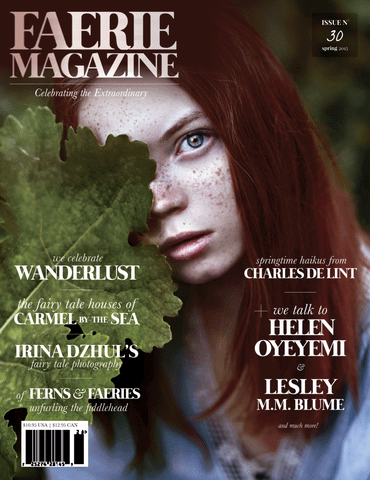
The Spring Issue of Faerie Magazine is out, and currently four previous issues are free to download digitally.
1 Year Subscription -- begin with SPRING 2016
Spring 2016 available through subscription or in bookstores soon

Faerie Magazine #29, Winter 2014, PDF
Faerie Magazine #30, Spring 2015, FREE PDF
Faerie Magazine #31, Summer 2015, PDF
Faerie Magazine #32, Autumn 2015, PDF
Winter 2014 and Spring-Autumn 2015 temporarily free to download

Friday, June 5, 2015

Faerie Magazine Spring Issue

Faerie Magazine's Spring Issue is now available as a free digital download! Past issues available for $2.50

Friday, February 13, 2015

Faerie Magazine-Downloads on Sale

If you are not currently subscribed to Faerie Magazine, you can check out the latest two issues for free on their downloads page! Other past issues are on sale for only $2.50.

The latest, the Winter 2014 issue, contains an article on Efteling, a "Snow White and Rose Red" themed photo shoot, an article on winter frost and fairies, and more. It's a little hard to read on my computer screen, the text is pretty small, but who am I to complain about free things! It's worth checking out if you're considering subscribing to the magazine because the issues can be hard to find at bookstores.

Monday, January 26, 2015

Fairy Tale Therapy

Hopefully you saw Surlalune's post on the Fairy Tale Therapy Seminar being held in Portugal in March! There's no way I could go but just the fact that fairy tale therapy even exists was a happy surprise! And now I have something else to add to my list of dream jobs...

I was curious as to exactly what it was-there are so many ways of interpreting fairy tales, psychologically, what approach would it even use? After some initial internet research, it seems that it boils down to: clients use fairy tales to relate to situations in their own lives; seeing the process that the main characters go through to find solutions to real life problems. In some ways this seems pretty basic, but it could also be really powerful. I remember sitting through literature classes where a certain personal connection to a character in a story deeply convicted or inspired me. It's great that modern psychology recognizes the potential, and current relevance, of fairy tales! As the Conference's Official Site says, "Together we can contribute to the development of using fairy-tales in many fields of life!"
Donkeyskin


For some more details, here are some excerpts I found interesting  (site links found below material):

"One of the main advantages of this method is the opportunity to understand or change aspects concerning the concept of time, thus gradually transforming the concept of time. Fairytale therapy actually allows the patient, who can be any age, to move him/herself along a time line, making numerous things possible.
Through these ‘mental steps’, a window to the past can be opened, allowing patients to focus on problems and solutions which are very different to current ones, thus creating an instrument for confronting the present and understanding differences between certain habits and modern lifestyles. This comparison is very important since, through awareness and comprehension of methods and timeframes related to past problems, patients learn how to develop patience and deferment, cognitive-emotional skills which are difficult to perfect in real social situations because of the speed of communication and transactions between people.
Thumbelina

Fairytale therapy also allows patients to mirror the present time through tales which are very close to someone's or a group’s current reality, and this shows people that some personal problems are also universal problems, relieving the sense of solitude which is felt when going through difficult problems. It also provides different prospectives on the problem, possible thoughts and various, more useful reactions to help find a solution.
The stories told help patients look into the future, with regards to certain behaviour, and learn or predict how things will end if they act in one way or another.

From a strictly therapeutic point of view, and for the support of behavioural and psychological problems, fairytale therapy is a powerful resource for:
• allowing people to talk in an impersonal or gradual way about personal problems, thus slowly letting defences drop;
• allowing people to better recognise and express repressed and unexpressed emotions they have felt;
• providing alternative thoughts, emotions and behaviour in uncomfortable or maladjusted situations.
In more general terms, fairytale therapy allows patients to use their imagination in a positive way, transforming distortions of reality into instruments which are able to generate new experiences, mental images and behaviour and create positive and more appropriate alternatives in relation to reality."


Cinderella

Heroines are never ultimately done in by the abuse. The more Cinderella,
Snow White, and Hansel and Gretel are victimized by powerful cruel others,
the more sympathy they elicit. By encouraging clients who have been abused
to identify with fairy tale heroines, the therapist may help them to attain
empathy and compassion for themselves. 

The symbolic figures and imagery in fairy tales such as the cruel stepmother,
loving fairy godmother, winter darkness, or lost-in-the-forest, mirrors
disturbing inner emotional states. As the protagonist overcomes trials in
differing situations, an individual in psychotherapy is shown the ways to deal
with his or her upsetting affects. For example, Hansel and Gretel leave a trail
of breadcrumbs to mark their way, and trick the witch into not eating them,
offering proof of sorts that strategic action serves to assure that one does not
get overwhelmed by emotional upsets. For many psychotherapy patients, it is
important to learn to comfort and soothe or to discover metaphorically their
own inner “godmother” or “helpful animals” to transform emotional pain into
growth. If a connection to these common symbols that can be perceived as
representing possibilities for self care, then psychological improvement can
follow. The discovery of an “inner prince” or “fairy godmother” that likewise,
can rescue one can empower an individual at the deepest levels. 
Little Mermaid

The cognitive studies of contemporary psychological researchers, such as
Albert Bandura at Stanford University, corroborate that when individuals
approach difficult circumstances as challenges that can be mastered, their
resilience is strengthened. Similarly, classic stories teach one not to shy away
from difficult personal challenges and that it is through meeting them headon
that one grows emotionally and spiritually. A spirit of triumph and
optimism runs through those stories that carry a positive frame of reference.
For clients beset by inner turmoil, the fairy tale heroine or hero model one
who struggles, yet eventually succeeds. As they meet each challenging task,
their resilience grows into a core strength, for which they eventually become
richly rewarded. 

The Snow Queen

It seems that overall, fairy tale therapy stresses the fact that though characters suffer, there is hope and a way to proactively make positive changes in your life. I love that here, at least, there is no distinction made between male and female heroes-they are almost all persecuted, and all find some sort of solution. Many would argue that fairy tales are dangerous for girls because it encourages them to be inactive, but I like the idea of seeing the prince who rescues you as potentially an "inner prince." Although it does make me curious about which versions of the famous tales they use in therapy...

*Illustrations all by Harry Clarke

Friday, January 9, 2015

Tales of Faerie Q&A

Hey guys! I'm thinking of doing some sort of "Behind the Scenes" feature next month for my 5 year blogoversary-crazy!!. So if any of you has any questions about me or my blogging process, consider this your opportunity to get to know the mind behind Tales of Faerie! You can ask questions in the comments, on this or future posts.

Friday, April 11, 2014

Using Fairy Tales for Conflict Resolution

The Relationship Triangle is a way to understand how people act within conflicts, and hopefully to avoid future conflicts. There are three potential roles people fit into: that of the persecutor, the victim, and the rescuer. People tend to assume at least one of these roles, often multiple ones in the same drama, shifting in and out. Example: Say someone is pressuring you to make a certain decision. They may think they are rescuing you from making a bad decision, yet you may perceive them as persecuting you and see yourself as a victim. Then a friend of yours may try to rescue you instead of you dealing with it yourself-etc. There is an article in Psychology Today that will describe it much more thoroughly and accurately for those of you interested.
So what does this have to do with fairy tales? One look at the three roles above and you can easily fit the most famous fairy tales into this kind of drama. Cindrella=victim, stepmother and stepsisters=persecutor, and prince=rescuer. In fact, in the youtube video below on using this idea to understand and solve drama in the workplace, the speaker refers to Little Red Riding Hood as a way to understand these roles.

One of the many reasons fairy tales have been around for so long and continue to resonate with us deeply is their ability to be a model for so many of our own issues. They can apply to whatever problems we're going through at different times in our lives, so we can turn to them time and time again for solace and hope that the problem will eventually be resolved.

Wednesday, April 2, 2014

Interview with Once Upon a Blog's Ink Gypsy

I am so excited to bring you this next post!!

You are all probably familiar with the fantastic Once Upon a Blog, but just in case, let this be your introduction. And really, you should add it to your bookmarks RIGHT NOW if it isn't there already, because if you are interested in learning about fairy tales, InkGypsy is the one of the best sources out there for what is happening currently in the realm of fairy tales-in Hollywood, art, and other media. As you begin to learn more about fairy tales you realize there's no right or wrong, or "authentic" or "original" versions-it really all boils down to how each culture interacts with and shapes the tales. So as fairy tale students, we shouldn't be ignorant of how our own culture is perceiving and interpreting these stories!

Gypsy was gracious enough to answer some questions I had for her to share with you-and to be honest, I was just curious myself. After following a blog for so long and admiring her writing and respecting her opinions on the subject, you really start to wonder who is behind the scenes!

1. What first sparked your interest in fairy tales?
I have loved fairy tales since I was really young. I had quite a few fairy tales on records (75 RPM!) which I loved but one in particular was my favorite. It was Snow White. I think this was partly because it was a record with a book attached (I only remember one other, which was Hansel & Gretel) and the book had a lot of pictures. It was a Disney record too so it came with narration, voices, songs and full color film stills.

What really sparked my imagination though was the "working drawings" scattered throughout. These had the black lines of the final drawings with blue 'working' lines underneath and I was fascinated that there was a creative process behind the story - someone created this, made it up, decided what it looked like and perhaps decided what parts to tell us about the story and what not to. I was maybe 4 (?) when this captured my attention and started thinking this way. I also remember being particularly drawn to fairy tales from that time on.

I continued to be a keen and advanced reader and at age 9 borrowed CS Lewis' "Till We Have Faces" and was floored that there was an alternate telling of the Cupid and Psyche story. That's the book that started me on the study path, looking at why stories are told the way they are, what the motifs are, how different stories told from different points of view can still be rooted in the same story etc, etc. I also realized, thanks to that book, that fairy tales in particular had layers that could be understood in different ways by children and adults alike (I noticed Disney, the person, employed the same idea of layered storytelling in his films as well). I was well and truly hooked on fairy tales at that point and have continued reading and studying fairy tales avidly in one form or another ever since.  The more I did, the more I realized how helpful they were to me in every day life as well, though not necessarily in terms of morals,which is how many people think of their 'usefulness'. Rather it told me about people, human behavior, the importance of wise choices, of hope and in not needing to understand absolutely everything to find a way through. I guess you could say it's a pretty long term obsession, er, interest. :)


2. What prompted you to start a fairy tale blog?
I do believe part of it was zeitgeist. I started mine, only to see that Heidi Ann Heiner, who's SurLaLune website and forums I had been following since the first few weeks they appeared, started her own blog that same month! My personal reasons, though, were just that I couldn't believe how often I saw fairy tales being used, retold and referenced in the news and in popular culture and yet the people who seemed most passionate about them didn't seem to realize this - or be able to connect as a result. I was home taking care of my new baby and, since I wasn't writing or consulting much for work any more, decided to channel my thoughts into blogging. Despite the general idea that fairy tales were outdated or "diluted beyond return by Disney", to me, fairy tales were everywhere, globally, and alive and well. The main problem was that there were fewer in circulation than ever due to the melding of pop culture and movies across nations and that the same ones were getting used/retold over and over. I hoped that by highlighting how often fairy tales were being used by 'regular' people that it would encourage other fairy tale folk to do more, create more, be more active in whatever their fields were, and maybe connect and join forces somewhat to help spread the wealth of this amazing resource society is sitting on top of, but is barely aware of.

I'm very much one of the people who see fairy tales as 'alive' and that they grow, morph, change, adapt through over time and across cultures yet still keep their roots. In tracking even a little of the activity in fairy tales today -both by 'pros' and laymen, it proved to me just how important - and how much a part of us being human - they are. That in turn reinforced the importance of encouraging work, creation and storytelling in this field and so I now see the blog as a way to help keep fairy tales alive and vital. 

My hope is that those working in and with fairy tales will adapt their study, research and creativity to the main forms of communication today so that fairy tales, and all they have to offer, can enrich society and make a difference.
Sleeping Beauty * Errol le Cain

What do I think fairy tales have to offer? 
3 things: 
1) they show us our history and our roots, and highlight our commonalities amongst all peoples
2) they provide touchstones of wisdom for our present - by this I don't actually mean morals (though they can be included). I mean fairy tales show us what people are like, the choices we really have in any situation (even if they are sucky choices, any sort of choice makes us less of a victim of others and circumstance) and path options for our personal -and collective- journeys.
3) fairy tales also show us the possibilities for our future - again individually and collectively,both positive and negative

Fairy tales describe human nature, both at it's best and and it's worst, mankind's hopes and dreams, tendencies and weaknesses but strengths as well. While the stories don't always show the best outcomes, including that of the 'protagonists', they tell us a lot about how people work and cope (or not). It's not about fairy tales having answers so much as learning about human nature and benefiting from the patterns and histories so we can be best prepared for our own "wolves" and "woods".
3. What is your process for finding blog material/what sources do you use?
I guess "everywhere" is going to be too vague an answer, despite that it's true. :)

After my long time obsession/interest, I now have a sort of "fairy tale radar" that causes me to pay attention to the possibility of fairy tales being used or referenced or patterns of the same. I am, unfortunately, not one of those people who can quote you the AT tale type numbers, motifs etc at work in any given situation. I wish I were. I feel like I miss so much! But I also try to be aware of fairy tales being referenced and in 'morph-form', or incomplete form, if you will. That's where some of the most delightful discoveries are. I will be the first to admit, though, that I need a better system for finding and tracking fairy tales. 

Practically speaking, if I have my ducks in a row I will check all the major Entertainment News Outlet headlines, the 'geek' headlines, social media buzz on Twitter, Facebook, Tumblr etc and choose the one for the day/time of writing that I feel will be most interesting to my readers (and me too - I have to be interested in it as well!). I also sign up to receive newsletters where I think I'm likely to see a fairy tale pop and I have approximately eighty key word searches I run through regularly to search out the more obscure postings. It takes a serious amount of time to do this though and, sadly, I rarely get time to do more than a quick and cursory search but I keep trying. 

Baba Yaga's Hut * Jan Pienkowski

When things are going smoothly I do my best to pre-schedule posts a few days in advance, and scatter some in the future as well, so that the days I can't get to research and blog (which are almost always the weekend and any days I am helping with my son's school, among other things) there will be new content and all I will need to do for that day is check for any 'breaking news' that a large cross section of the public is interested in (this is often movie, music or event news). I try to mix it up a bit so I'm not always posting on the same topics, or only Hollywood/movie news, or just art either (I do love that particular rabbit hole though!). Of course, real life happens and researching alone takes a huge chunk of time every day (I try to make sure I have legitimate sources and more than one) so things rarely go as planned! I miss posting on many things (so many things! Argh!) and my draft posts are almost as numerous as my actual posts as I do try to get them all in, but it all comes down to time. This could easily be a full time job for a team... 
Perhaps one day I will work in that fairy tale newsroom I've envisioned since the beginning... I can dream, right?

And now you know all my secrets. ;) 

Thanks, Gypsy! Your blog is an inspiration to many people, myself included!

Sunday, February 23, 2014

Fairy Tales Sell

Lately I've been noticing this huge paradox in our culture when it comes to attitudes towards fairy tales. As I've previously discussed, referring to something as a "fairy tale" can often be a very negative thing, insinuating that it is naive, childish, or anything that implies life will be perfect. The ironic thing is that 95% of fairy tale content usually involves shocking amounts of abuse, violence, and sexuality, and that includes even the most sanitized versions by Grimm or yes, even Disney.

But at the same time, fairy tales are incredibly popular and used all the time in advertising. For example, the Geico commercials I just posted refer to fairy tales (disclaimer: no, Pinocchio is not technically a fairy tale, but closely related/often mistaken as such). Partly because fairy tales are common ground-general knowledge that pretty much everyone is familiar with; and I'm sure the fact that they're not copyrighted has something to do with it. But it's more than that too. Remember this fairy tale commercial playlist? For decades companies have used fairy tale motifs to sell their products, and companies don't want to be associated with childish and immature stories-they want people to connect with positive images related to their products.

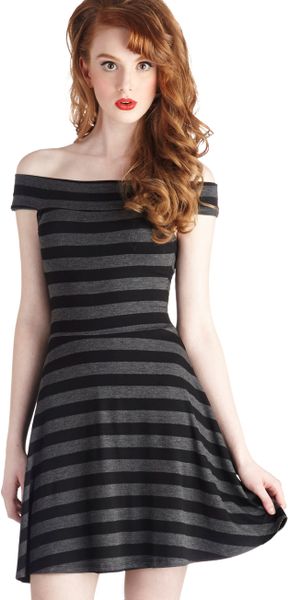
It's not just commercials, either. One of my guilty pleasures is to online shop at sites like Modcloth, where I regularly see clothes and accessories given a fairy tale-inspired name, even if the piece really has nothing to do with a particular fairy tale.

Happily Ever After party dress
Flair-y Tale boot
The clock strikes midnight gloves
Trail as Old as Time Top
Play fair-y dress

You get the idea.

Another thing I find interesting has to do with the new movie "Frozen". No, I haven't seen it yet, but from what I've heard the plot has virtually nothing to do with its original inspiration, Andersen's "Snow Queen". Sure, a snowy setting and glass shards-from what I gather only vague references. Yet they still credit Andersen's story as their source, when they could easily have marketed it as an original idea. So why even bother to say it's a fairy tale, especially a more obscure one? Did they think more people would be interested in another Disney fairy tale interpretation than a new hit feature with an original script?

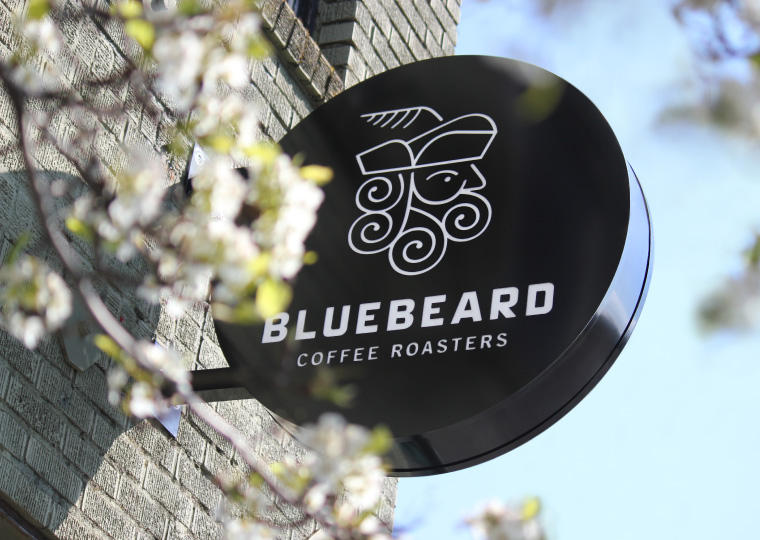
When you keep your eye out for them, you find fairy tale references everywhere. I even just found out about this coffee shop in Tacoma, Washington called Bluebeard coffee. I can't find any reference to the story or why they would have named it after a fairy tale character, especially one of such ill repute...it's possible this is one of the instances where Bluebeard was confused with either Redbeard or Blackbeard the pirates, but I would hope a little more research went into the name of their store than that.

If I kept looking I could find dozens more products that reference fairy tales for no apparent reason, and then of course there's the whole line of products that ARE directly linked to fairy tales. It's no secret that fairy tales have been the source of many recent movies and t.v. shows as well. Clearly people are drawn to them and companies count on that to make their products more appealing. So my question is, how does that fit in with the very negative light many people also view fairy tales in, revealed by their vocabulary if not a conscious opinion? Do you think that with so many fairy tales being brought into focus in mainstream media and not just a side genre, that people will start to have more respect in general for fairy tales?

Wednesday, February 19, 2014

Four years

As I watched my first dose of Winter Olympics, I started reminiscing about all that has changed in my life since the last Winter Olympics. I had just graduated from college that December, was still living with my parents, was only working part time and therefore had a lot more time on my hands, hadn't even met my husband yet...and I realized that that was also the month I started this blog! Today is the four-year anniversary of Tales of Faerie.

I had no idea what I was doing at the time, even now I look back at old posts and they seem immature. But one has to start somewhere, and I'm so glad I did! I have gotten incredible opportunities to connect with amazing people, to discuss topics I'm passionate about, and to learn from my wonderful readers.

So, thank you!! To all of you who share this interest in and love of fairy tales, I think it's amazing that we can create a community here on the internet. 

Wednesday, May 1, 2013

Happily Ever After Starts Here


You may or may not have noticed I disappeared for a little longer than usual...not only has it been a crazy busy month at work, but I GOT ENGAGED!!! The above sign is one that my Prince Tony used to decorate the gazebo where he had originally asked me to be his girlfriend :) A nod to my love of fairy tales...

So, in addition to juggling part time jobs and trying to spend time with friends and family and my Prince who lives in a (somewhat) distant kingdom, I will also be planning a wedding and possibly moving. Therefore posting will probably be slowing down here for a while. Partly I'm publishing this just so I don't feel guilty about posting less, but although I usually don't share too much of my personal life on here, this was too exciting not to share!


Tuesday, February 19, 2013

Blog-aversary!

It's hard to believe that I started this blog three years ago! Already I've had opportunities I never dreamed I'd have when I started, and I'm thankful I've been able to find a community of people I can explore fairy tales with. Thanks for reading!

Picture of cake from here

Thursday, February 14, 2013

Beyond happily ever after

Image from here
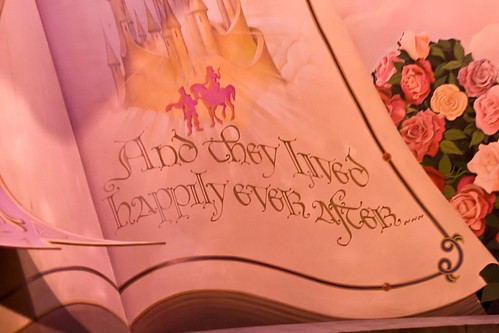
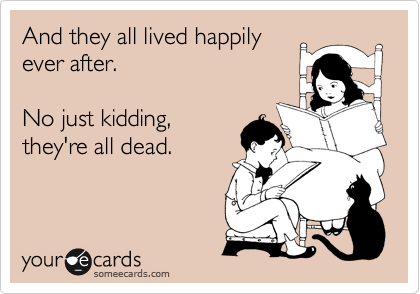
Although "and they all lived happily ever after" is the phrase thought to end the majority of, if not all, fairy tales, very few tales end with this exact phrase. Many imply through other similar words that the characters live happily, but other tales end rather abruptly once all the important plot elements have been related, and others end with some kind of indication that the storyteller was somehow a witness to the events of the story.

Here are some sample tale endings from around the world that I found interesting:
"I've gone as far as my fields extend,
So my tale is at the end"
-French

"Never since the world's creation
Was there such a celebration;
I was there, drank mead and yet
Barely got my whiskers wet"
-Russian (Pushkin)

"They all lived as happily as they could, until they died"
-Russian

"And if she hasn't died, she is still alive"
-German
Haha-image from here

"I was invited to the wedding, and I dressed up in my most beautiful clothes to go to it. I had a dress of spiderweb, a hat of butter, and shoes of glass. But as I went through the forest I tore my dress, and when I crossed the field the sun melted my hat, and when I passed over the ice my shoes crumbled. And there you have the story out of my bag."
-French
Charles Robinson

"Not stopping to think, they quickly married and began to live happily ever after together."
-Russian (Afanasyev)

"And I jumped on a Saddle, and came to tell you so..."
-Romanian

"I was invited too. I was at the wedding, but I was very hungry. I was so hungry, I chewed the cloth I used for dish-washing. They are still living if they haven't died."
-Romanian

"I was there but they gave me nothing."
-Portuguese

"Little shoes run to a brook. Who is jealous, tell something better"
-Cape Verde

"I also was there, and I begged so much pilaw from the cook, and I got so much in the palm of my hand that I limp to this day."
-Turkish

There are many tales that end with the characters living happily and/or getting married that I didn't include, because they do tend to get repetitive and are the most predictable, but I like this ending from the Punjabi tale Dorani, which is especially fitting for Valentine's Day:
"So the prince won his beautiful bride; and though they neither of them dealt any further with fairies and their magic, they learnt more daily of the magic of Love, which one may still learn, although fairy magic has fled away."

Tuesday, March 20, 2012

Fairy Tale Quizzes

Here's a fun site I just found: A whole list of fairy tale and fable quizzes, with different themes and levels, from Very Easy to Very Difficult (and one rated "impossible" which really is pretty hard), and on topics ranging from Aesop's Fables to Arabian Nights to Grimms to Disney to Russian byliny. I've only played a few so far-but if you enjoy fairy tales and trivia they're pretty fun!

Image from here

Sunday, February 26, 2012

Tell a Fairy Tale Day


With just a few hours left in the day I discovered that February 26 is Tell a Fairy Tale Day! Not an official holiday, but on multiple calendar and internet sites, so I consider it legitimate. Not like I need an excuse to tell fairy tales!


Image by John Bauer

Wednesday, September 28, 2011

The cultural idea of fairy tales

To the dismay of fairy tale lovers, the phrase "fairy tale" is mainly used in culture in a condescending, even accusatory way. Though, as we who love the genre are quick to point out, fairy tales include many gruesome and gory details such as murder, thievery, and incest, this doesn't stop others from seeing the fairy tale as a trite and insignificant world where nothing ever goes wrong and everything ends happily. Really, we shouldn't need violence and sex to make a story worth reading, but how has this view of fairy tales managed to be prevalent? Even I catch myself sometimes using the phrase as a negative thing, as if I've learned two different definitions: the actual tales I know and love, and the cultural definition of a story that doesn't come true.


I've paid attention to when the phrase is used most negatively, and it seems to come with the assumption that someone is basing hopes for their own life off of expectations that it will end just like a fairy tale and will ultimately be disappointed. It may be true that fairy tales help set up unrealistic expectations in a young person's mind, but really, how are they that different than most other entertainment sources? What family friendly film, chick flick, or action movie doesn't promote the same hopes and wish fulfillment that a fairy tale does? In some ways, the more "realistic" movies can be more dangerous because they are supposedly set in the real world, but the lifestyles and romance and beauty we see in many films and books are just as much a fantasy as a world with secret kingdoms and fairy godmothers.


Though you never hear the phrase, "don't get your hopes up, it's nothing but a chick flick" or "I'm too old to believe in Hollywood stories," you have probably heard variations on those using "fairy tale," which has sadly born the brunt of criticism.


Now there are of course more realistic movies and books, just like there are fairy tales that separate from the norm-and we always have to remember that traditional folk tales are a totally different genre and we should have different expectations of them. I think maybe it's the nature of the "happily ever after" that turns people off. We like stories with resolution where the main character gets the guy or girl and a solution to a main problem has been found, but in fairy tales the character not only ends up better than he/she was before, but usually married to a King or Queen and ruling the country with unbelievable wealth at their fingertips. But again, this is a method of exaggeration and extremities common in fairy tales, and the fact that the world of the tales is so stark and extreme really makes it hard to believe that the listener is expected to base their own life expectations around it.

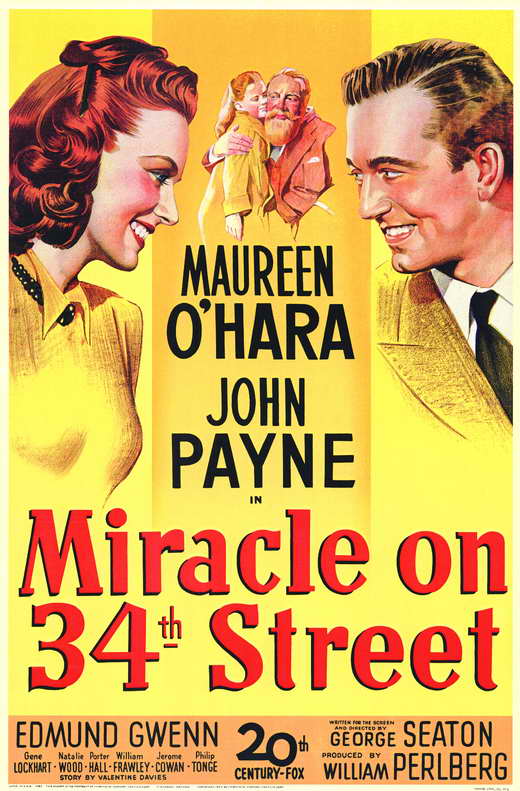
Some examples: In Miracle on 34th St (at least the old 1947 version), the mother refuses to tell her child fairy tales because she wants her to have a realistic view of life. It's later revealed that the mother herself expected her first husband to be Prince Charming and when he left she became bitter. Ironically, the movie ends with Santa Claus being real and she gets a better man anyway, so according to it, fairy tales really are true, in a way.
From the song "When there was me and you," from High School Musical:

"I thought you were my fairytale
My dream when I'm not sleeping
A wish upon a star that's coming true

...Now I know you're not a fairy tale
And dreams were meant for sleeping
And wishes on a star just don't come true"

Now I just find this humorous. Disney itself, in one of its cheesiest and most unrealistic hits, references back to the films that made itself famous as if the world wise high school girl's maturity is reached when she realizes fairy tales don't come true. But oh wait-in the end she DOES get back together with the cute guy and everything is perfect as they get the leads in the play, win the basketball championship, and she sings and dances in a cute red dress with all of her unified friends. Maybe I'm noticing a pattern...those who claim that unrealistic expectations are "just a fairy tale" are the ones who go on to create an unrealistic ending themselves, but somehow a little cynicism in the middle is supposed to heighten drama and and realism.

Now these were just the first two examples that popped into my head. I also hear the phrase thrown around in conversation a lot but nothing I can quote. Anybody have any examples from books, movies, conversations, etc., where the phrase "fairy tale" was used and perhaps abused?

Sunday, July 10, 2011

Quiz at Dictionary.com


Dictionary.com has a special Fairy Tale character feature, including a quiz you can take. It's pretty simple, especially for this audience, but there are some lesser known characters in there, like Anansi the Spider from a Caribbean tale (I only knew that one because it was featured in a Gargoyles episode...)


Image by Walter Crane

Thursday, March 31, 2011

Surlalune


I was going to do this post a bit later, but as Heidi Anne Heiner of Surlalune was kind enough to feature my latest post on Donkeyskin on her blog, I felt it was time to do a tribute. Sometimes I feel like my blog is basically a big commercial for Surlalune, but I know that, as a reader of blogs myself, often I'm too lazy to click through to other links, so I thought I'd do a proper feature.


First of all, there are two parts of Surlalune: the Main Site, and the blog. The main site is the online Bible of fairy tales. She currently has 49 of the most well known fairy tales available to read with helpful annotations provided by herself. Each fairy tale may also have pages for History, Illustrations, Similar Tales Across Cultures, Modern Interpretations, a Bibliography, Book Gallery, and Best of the Web with links to quality online sources. This site is definitely my go to for fairy tale information, since it has all aspects of most fairy tales concentrated in one location. Heidi also provides her readers with a discussion forum in order to connect with other fairy tale lovers and discuss pertinent topics.


The blog is on my favorites bar and updated (usually) at least daily. Heidi searches diligently through news sources to feature current fairy tale movies, books, articles, and other forms of media.


Elenore Abbott

In addition to keeping up her sites, Heidi has been coming out with collections of versions from around the world of certain tales, currently including the Twelve Dancing Princesses, the Frog Prince, Sleeping Beauties (Sleeping Beauty and Snow White tales), Rapunzel, and Anne Isabella Thackeray Ritchie (fairy tale writer).


Heidi is a qualified librarian and researcher whose years of fairy tale love make her an authoritative source on the subject. In the World of Kristin, I count people like Heidi as celebrities the way teenage girls idolize whoever's popular these days...is Robert Pattinson still in? So to say I was flattered to see my post featured on her site is a huge understatement (I couldn't stop shaking). Thanks, Heidi!

Saturday, February 19, 2011

Chapter 2


Terrauh

One year ago today, on impulse I sat down and created a fairy tale blog. My idea was to start with something I knew well-my favorite tale-and do a history of Beauty and the Beast. It didn't take me long to realize that to sum up the whole history of BATB was a more monumental task than I originally thought. I got frustrated and deleted the blog.

I went to my room but I just felt awful and like a quitter. So about an hour later I was back on the computer. I started with very small, simple posts, and felt much better about myself. I wasn't sure how long the blog would last but at least I had tried.

One year later, I'm still enjoying blogging about fairy tales, and shocked and flattered every time I receive post comments or have a new follower. And, to be honest, a little freaked out-I'm a very private person. The anonymity of the internet is the only reason I allowed my thoughts to be available to the public. So thank you for reading and being gracious in your comments-now let's toast to another year of learning about fairy tales together, shall we?

Monday, September 13, 2010

Princess dreams

It's pretty much a universal rule (though every rule has, of course, exceptions,) that little girls dream of being princesses. Certainly telling them fairy tales tends to enhance this desire.

Now, being a princess is really a political job description-it means you'll grow up to rule a country. But little girls rarely consider this part of princesshood. Although, being a female in a ruling family didn't necessarily mean you'd have any political power. Often princesses were raised as trading devices ("whoever can kill this giant will have half my kingdom and my youngest daughter in marriage," etc...) so really being a historical princess is not necessarily something to be desired.


But, there are other elements to it too. In a class system, no one moves out of their social status by hard work or luck. From this system comes the mindset that your class is deserved-elements of this belief we still have today, though not nearly as much. Therefore, being born a princess would be a symbol of your innate worth-that you alone are special and unique and born to privilege. That much appeals to everyone.


And, being a princess, you would have so much opportunity to do good for other people-to rule your people justly and secure peace and prosperity for your land.


But who am I kidding-99% of the desire to be a princess comes from the opportunity to wear pretty dresses and live in a castle and have all the pleasures of wealth at your disposal. And while I wouldn't, in actuality, want to live in one of these gorgeous castles (I'd hate to get immune to these surroundings...), doesn't everyone like to pretend, now and then?


Buckingham Palace, London-1-3
Summer and winter palaces at St. Petersburg, 4-7
Eltz Castle, Germany, 8
Neueschwanstein Castle, Bavaria, 9-11 (Inspiration for castles in Disney's Magic Kingdoms)