It's fairly common in fairy tales for women to give birth to unusual babies. Sometimes their child is only the size of a thumb, as in Thumbling tales and variants; it might be a Snow child, or sometimes a mother might even give birth to a child that is a food, like the Pumpkin Girl, or the women born of mangoes or cucumbers in Papua New Guinea. Sometimes the mother gives birth to a healthy, human child-only to have it stolen as she is accused of giving birth to a wolf/bear hybrid, such as in Armless Maiden, or some other sort of animal. In the world of fairy tales, such accusations were believable enough to the other characters.
I used to think of tales like this as being a commentary on how we treat people who are different, and an encouragement for the underdog, which is certainly still true in many cases. But I've been reflecting on tales like these, especially where a child is born under some kind of unusual circumstances, and not just enchanted or cursed later in life (some Beauty and the Beast tales fit under each category-for example, Prince Lindworm was a lindworm from birth, unlike the cursed Beast of the French tradition).
Since being pregnant myself, I have a new level of respect for the mothers in these tales, and a sympathy for the anxiety that prospective mothers face. Even in our modern age where we can hear the baby's heartbeat and see ultrasounds, it can be pretty easy to feel anxious about your baby in between doctor's visits. For all we know now, there's still so much that's unknown-even for those who choose to find out the gender, it's still a mystery for months; as future parents, we wonder which traits our child will inherit from each of us, and what their personalities will be like-which can be exciting as well as frightening. On top of that, there's always the risk of health problems.
So I can only imagine how my current fears and anxieties would be amplified in an age where medical knowledge was limited and often wrong-many of these older superstitions, such as how to tell which gender your baby is by a variety of ways, still exist today. I can only assume that one of the purposes of such tales was a way for prospective mothers to express their fears.
I've also noticed that food and babies seem to be unusually connected in folklore. Even if a mother is more likely to give birth to a thumb-sized child than a piece of food, often these births are a miraculous result after a mother ate something (although, in Snow Child tales, it's possibly a hint that the mother was unfaithful but claims it was a supernatural birth). Pregnancy is a very odd time-for a while it's not obvious you're pregnant, it just looks like you maybe ate too much. I'm not sure how much was known in other cultures about pregnancy, they might have assumed the baby grew in a separate organ from the stomach, but it feels and looks like your baby is growing in your stomach. Not to mention the havoc your baby can wreak on your digestive system, first making it hard to keep things down, and then giving you a ravenous appetite-lately I've been feeling a lot like an ogress or a witch from fairy tales who will eat anything in sight! Then there's also the fact that we still measure a growing baby's size by, usually, corresponding fruits and vegetables (my baby has gone from being the size of a blueberry to a bell pepper to a spaghetti squash, and many other fruits and vegetables in between!).
And of course, pregnancy cravings can be the catalyst for the action in fairy tales, most notably Rapunzel. Whereas now, we're told to indulge our cravings with moderation, in other cultures, it was believed that not meeting a pregnant mother's cravings would result in bad luck. Of course, it's doubtful that that bad luck would have been worse than having to give away said child in order to meet those cravings...
Kristiana Willsy has a great article on The Toast, Hunger is the Beginning of Every Folktale. Fairy tales usually center around the greatest of human desires-whether it's literal hunger, or the desire for love, sex, or children. And often those desires become combined to the point where they are one and the same-"If the story begins with the lack of a child, then hunger becomes central. Food often replaces sex in folktales, and witches with some rule-bound delicacy are the fertility specialists of choice, second only to daring the fairies
to give you a baby hedgehog, a snow-child, or an infant the size of your thumb." (emphasis mine)
Sarah Allison also has a great post on unusual births in fairy tales. These stories often start with a woman desiring a child, and she is given something to eat that will impregnate her...only usually, she is given some kind of warning and disobeys it. So these children are initially some sort of punishment, although it's ironic that they often turn out to be the hero in the end, like Tatterhood. So while on the surface these tales may seem like more misogynist white noise, warning women against curiosity and disobedience, it seems that the real message of these tales is not to underestimate those who are different-sometimes those very differences end up being an advantage-or even that the so-called "mistakes" we make might not really have been mistakes at all in the grand scheme of things.
In "Juniper Tree," the mother wishes for a child while peeling an apple by the Juniper Tree. From there, the gestation period of her child is linked to the growth of nature. It's her gorging on berries from the Juniper Tree that would appear to lead to her death (even though she supposedly "dies of joy", but it seems unnecessary to mention eating the berries and falling sick and predicting her own death if it's all a coincidence, and this bears similarities to the other food warnings in pregnancy tales). Later, it's the children's request for an apple that leads to the murder of this son, reminiscent of the wish that brought him about in the first place (as well as the famous poisoned apple in Snow White).
There are also tales in which an older woman desires to eat children-from the witch in Hansel and Gretel, Baba Yaga, the ogress mother in law in Perrault's Sleepinng Beauty, to the evil stepmothers in Snow White and Juniper Tree. To eat a child is the reverse of giving birth to them-Snow White's mother may have hoped to reabsorb her beauty through eating her organs, or it could be representative of trying to hinder a child's growth rather than letting them turn into adults. The fear of being eaten is always present in fairy tales, sometimes representing a literal fear of wild animals, but sometimes more symbolic. Fortunately, even if the worst fear is realized and a character is eaten, in fairy tales this is not necessarily the end-like Little Red Riding Hood, the hero may emerge triumphant and wiser for the next round against the wolf.
Illustrations-"tom Thumb," Jemima Blackburn; "The Snow Child" by Eowyn Ivy; Rapunzel images from Pinterest (anyone know the artist??), "Juniper Tree" by laurasmythart
EDIT: For more examples of strange ways of conceiving and/or giving birth, check out the linked post on Multicolored Diary!
Showing posts with label Animal Bridegroom tales. Show all posts
Friday, November 4, 2016
Thursday, March 17, 2016
The Three Daughters of King O'Hara: An Irish Animal Bridegroom Tale
Continuing in my tradition of sharing an Irish tale for St. Patrick's Day!
A King had three daughters. One day while he was away, the eldest put on a cloak of darkness and wished for the most beautiful man under the sun as a husband, and a beautiful man came and took her away.
The middle daughter saw this, and put on the cloak and wished for the best man in the world as her husband. The youngest put on the cloak and wished for a white dog, and they were each taken away.
When the king came home he was furious his youngest daughter had wished for a white dog and gone off with him.
The eldest daughter's husband asked her if she would like him to stay in his current form at night, or during the day. She asked for his human form in the daytime, and he was a seal at night. The same thing happened to the next sister.
The youngest wife asked for her husband to remain a white dog during the day, and at night he became a handsome man. After a time she bore a son, and her husband warned her, if anything happened to the child, she must not shed a tear. While her husband was gone, a great crow came and carried the week old baby away, and she did not shed a tear.
The same thing happened after she bore a second son. A little while later, she gave birth to a daughter. Despite the warning, when the crow carried her away, the wife shed one tear, and put it in her handkerchief. When her husband came home and realized she had shed a tear, he was very angry.
Some time later, the father invited his three daughters to stay with him. The white dog was in dread that he would not be allowed to stay in the palace, but his wife told him, "There is no danger to you, for wherever I am, you'll be, and wherever you go, I'll follow and take care of you."
Although the King did not want the dog in his castle, his youngest daughter did not listen to him, and insisted on staying with the white dog all evening. Later, when everyone was in their rooms, the Queen and the cook stole into her daughter's rooms, and was surprised to see her eldest daughters with seals, and her youngest with a handsome man. The Queen also found the white dog skin, and threw it in the fire.
The skin gave a crack that woke everyone in the castle, and everyone for miles around. The youngest daughter's husband was angry, and revealed that if he had spent three nights with his wife under her father's roof, he could have resumed his human form permanently; but if his skin was destroyed, he was forced to leave. But his wife followed him, even though he ran all night and the next day; she would not leave him.
On their journey, they encountered three houses. In the first lived a little boy who called her "mother", and the woman of the house gave her a pair of scissors that would cut rags and turn them into new gold clothes. In the second house the woman met another little boy who called her "mother," and was given a magical comb that would heal sores on people's heads and give them a head full of beautiful golden hair. In the third, she met a little girl with one eye. The mother had kept the handkerchief in which she had shed a tear, and the tear had turned into an eyeball; the mother took out the eye and fitted it into her daughter's head, and she could see out of it. At this home she was given a whistle which would bring birds to her aid.
Finally, the husband and wife came to a place where he had no power to stay on upper earth, but was forced to become the husband of the Queen of Tir na n-Og (the land of youth), and he disappeared. His wife followed down until she came to the lower land, where she befriended a poor washer woman, and helped her with her chores.
One of the local children came to the wife in rags, and she used the magic scissors to make her beautiful new clothes. News of this traveled to the Queen, who insisted on having the scissors for herself. The true wife traded the scissors for a night with the Queen's husband, where she tried to talk to him, but he slept all night.
Later, she used the comb to heal a little girl with sores all over her head, and when the Queen heard of the girl's beautiful golden hair, she traded the comb for a night with her husband, but the same thing happened.
The wife used the whistle to call the birds to her, and they told her how to kill the Queen: her husband must find her heart in an egg in a duck in a wether (a neutered male sheep-thanks, Sue Bursztynski!) in a holly tree in front of the castle, and destroy the egg, which contained her heart. The true wife wrote her husband a letter, telling him of their history and that the Queen was giving him sleeping potions, and how to kill the Queen. Once the Queen heard about the whistle, the true wife was able to strike the same bargain, but this time her husband was awake; he was able to obtain the egg and smash it, killing the evil Queen. He and his first wife are still living happily together in the Land of Youth.
*******************************
Found in Surlalune's Beauty and the Beast Tales From Around the World
This is such an interesting version of Animal Bridegroom tales! The journey of the wife and the trading trinkets for a night with her husband is similar to many other stories, but so many other features are unique.
I find the idea of the other sisters' husbands also being part time animal bridegrooms fascinating. It's as if the youngest daughter somehow realized that obtaining a husband through wishing on a dark cloak would have some kind of catch. She is also bold enough to defy her father's wishes that her white dog husband not stay in his house, and to follow her husband despite his protests that she return home.
I love how she keeps the eyeball and is able to heal her daughter (in a similar English tale, the daughter simply remains blind in one eye). The stipulation of not crying after her children are taking is very sad-but in tales like these, even though the curses are never explained, it seems that they were meant to be impossible to break (in another similar tale, the wife must remain silent while her husband, a bird, is being attacked and beaten). Yet none of the wives in these tales are condemned for showing motherly affection (or sticking up for their husbands).
I also love how, whereas the husband usually just disappears, this wife chases after him and won't let him out of her sight during the journey! This story is definitely more feminist, even compared to other Animal Bridegroom tales in which the wife is already on a journey and seeking her husband, playing the part of the traditional male rescuer to her helpless cursed husband.
In some versions, the magical objects she is given is only used for bartering purposes; I really like how in this tale she befriends the poor people, works with them, and uses the magic to help others, and indirectly gets an audience with her husband. Also, in other versions, the husband is eventually clued in to the voice in his bedroom by a friend or servant, but in this one, his wife takes the initiative to write him a letter! Makes so much more sense. This heroine is active and clever. It's still a pretty bizarre little tale (what ends up happening to her children, for example?) but a fun one.
A King had three daughters. One day while he was away, the eldest put on a cloak of darkness and wished for the most beautiful man under the sun as a husband, and a beautiful man came and took her away.
The middle daughter saw this, and put on the cloak and wished for the best man in the world as her husband. The youngest put on the cloak and wished for a white dog, and they were each taken away.
When the king came home he was furious his youngest daughter had wished for a white dog and gone off with him.
The eldest daughter's husband asked her if she would like him to stay in his current form at night, or during the day. She asked for his human form in the daytime, and he was a seal at night. The same thing happened to the next sister.
The youngest wife asked for her husband to remain a white dog during the day, and at night he became a handsome man. After a time she bore a son, and her husband warned her, if anything happened to the child, she must not shed a tear. While her husband was gone, a great crow came and carried the week old baby away, and she did not shed a tear.
The same thing happened after she bore a second son. A little while later, she gave birth to a daughter. Despite the warning, when the crow carried her away, the wife shed one tear, and put it in her handkerchief. When her husband came home and realized she had shed a tear, he was very angry.
Some time later, the father invited his three daughters to stay with him. The white dog was in dread that he would not be allowed to stay in the palace, but his wife told him, "There is no danger to you, for wherever I am, you'll be, and wherever you go, I'll follow and take care of you."
Although the King did not want the dog in his castle, his youngest daughter did not listen to him, and insisted on staying with the white dog all evening. Later, when everyone was in their rooms, the Queen and the cook stole into her daughter's rooms, and was surprised to see her eldest daughters with seals, and her youngest with a handsome man. The Queen also found the white dog skin, and threw it in the fire.
The skin gave a crack that woke everyone in the castle, and everyone for miles around. The youngest daughter's husband was angry, and revealed that if he had spent three nights with his wife under her father's roof, he could have resumed his human form permanently; but if his skin was destroyed, he was forced to leave. But his wife followed him, even though he ran all night and the next day; she would not leave him.
On their journey, they encountered three houses. In the first lived a little boy who called her "mother", and the woman of the house gave her a pair of scissors that would cut rags and turn them into new gold clothes. In the second house the woman met another little boy who called her "mother," and was given a magical comb that would heal sores on people's heads and give them a head full of beautiful golden hair. In the third, she met a little girl with one eye. The mother had kept the handkerchief in which she had shed a tear, and the tear had turned into an eyeball; the mother took out the eye and fitted it into her daughter's head, and she could see out of it. At this home she was given a whistle which would bring birds to her aid.
Finally, the husband and wife came to a place where he had no power to stay on upper earth, but was forced to become the husband of the Queen of Tir na n-Og (the land of youth), and he disappeared. His wife followed down until she came to the lower land, where she befriended a poor washer woman, and helped her with her chores.
One of the local children came to the wife in rags, and she used the magic scissors to make her beautiful new clothes. News of this traveled to the Queen, who insisted on having the scissors for herself. The true wife traded the scissors for a night with the Queen's husband, where she tried to talk to him, but he slept all night.
Later, she used the comb to heal a little girl with sores all over her head, and when the Queen heard of the girl's beautiful golden hair, she traded the comb for a night with her husband, but the same thing happened.
The wife used the whistle to call the birds to her, and they told her how to kill the Queen: her husband must find her heart in an egg in a duck in a wether (a neutered male sheep-thanks, Sue Bursztynski!) in a holly tree in front of the castle, and destroy the egg, which contained her heart. The true wife wrote her husband a letter, telling him of their history and that the Queen was giving him sleeping potions, and how to kill the Queen. Once the Queen heard about the whistle, the true wife was able to strike the same bargain, but this time her husband was awake; he was able to obtain the egg and smash it, killing the evil Queen. He and his first wife are still living happily together in the Land of Youth.
*******************************
Found in Surlalune's Beauty and the Beast Tales From Around the World
This is such an interesting version of Animal Bridegroom tales! The journey of the wife and the trading trinkets for a night with her husband is similar to many other stories, but so many other features are unique.
I find the idea of the other sisters' husbands also being part time animal bridegrooms fascinating. It's as if the youngest daughter somehow realized that obtaining a husband through wishing on a dark cloak would have some kind of catch. She is also bold enough to defy her father's wishes that her white dog husband not stay in his house, and to follow her husband despite his protests that she return home.
I love how she keeps the eyeball and is able to heal her daughter (in a similar English tale, the daughter simply remains blind in one eye). The stipulation of not crying after her children are taking is very sad-but in tales like these, even though the curses are never explained, it seems that they were meant to be impossible to break (in another similar tale, the wife must remain silent while her husband, a bird, is being attacked and beaten). Yet none of the wives in these tales are condemned for showing motherly affection (or sticking up for their husbands).
I also love how, whereas the husband usually just disappears, this wife chases after him and won't let him out of her sight during the journey! This story is definitely more feminist, even compared to other Animal Bridegroom tales in which the wife is already on a journey and seeking her husband, playing the part of the traditional male rescuer to her helpless cursed husband.
In some versions, the magical objects she is given is only used for bartering purposes; I really like how in this tale she befriends the poor people, works with them, and uses the magic to help others, and indirectly gets an audience with her husband. Also, in other versions, the husband is eventually clued in to the voice in his bedroom by a friend or servant, but in this one, his wife takes the initiative to write him a letter! Makes so much more sense. This heroine is active and clever. It's still a pretty bizarre little tale (what ends up happening to her children, for example?) but a fun one.
Thursday, February 25, 2016
Matthew Grabelsky's "Anomaly" Series
This series of paintings by Matthew Grabelsky imagines fantastic and fairy tale characters in the modern world. There are more paintings not included here because they are less directly related to fairy tales, but interesting and relevant if you're interested.
"In the vein of the TV show „Once Upon a Time“ or the graphic novel series „Fables“, Matthew Grabelsky‘s oil paintings show a wide variety of mythical and fairy tale creatures in the modern world. The painting style and locations are extremely realist, but the characters and situations are surreal, which is an absolutely interesting combination. They show a mix of humans, animals, and anthropomorphic characters and many of these paintings feature human/beast couples. Seeing these creatures alongside people is both comical and cool."
Some of the paintings aren't necessarily inspired by a specific fairy tale (that I'm aware of) but the animal/human couples remind me of Animal Bridegroom tales:
And this looks like it could be inspired by Little Red Riding Hood:
Monday, January 11, 2016
The Fairy Serpent: A Chinese Beauty and the Beast Tale
The man pleaded that he was only trying to get gifts for his daughters. The snake refused to let the man go unless he promised to give one of his daughters to him. The man pleaded to find any other way, but the snake would accept nothing else. At last, worried about his daughters deprived of his protection, made his promise and returned home.
He was so anxious he could not eat, and his daughters tried to discover the source of his sorrow. The eldest urged him to take food, and he said he would do so, if she went to marry a snake for his sake. She refused, and her father was still deeply troubled. The same thing happened with the second daughter, but the youngest declared she would wed the serpent if her father took care of himself. The father returned to health, and the family was happy again.
But later, the girls were sitting and embroidering, when a wasp flew into the room and demanded that his master's bride come with him. The girls poked the wasp with their needles until he flew away.
But the young bride told the snake that she appreciated the excellence of his provisions, and she would do her best with her domestic tasks. The snake doted on her and was so kind, she began to appreciate his presence.
One day she was in the forest fetching water, and when she returned she found the snake dying of thirst. She grabbed him and plunged him into the water, from which he rose transformed, as a handsome man. He had been enchanted, but by her "dutiful quest and gracious pity she set him free. Thereafter she often with her admirable husband visited her old home and carried gifts to those who were less happy than she."
****************************
I like this unusual version of "Beauty and the Beast". First of all, the narration goes to greater lengths than most to show that the father really cares for his daughters and tries to get out of giving any of them away. He has a sweet relationship with all of them, and in this one Beauty is not set apart by a different request-the flowers are for all of them.
And although her sacrifice is for her father, the episode with the wasps shows that she is doing it for the sake of the rest of her family as well (besides being humorous, and showing a rare instance of Beauty stalling for time after promising to wed a Beast.)
Also, the mention of charity at the end is pretty rare in fairy tales. Most fairy tales represent inward journeys, and the hero is content to simply enjoy his or her new wealth and royal spouse, but I like this positive message.
Also, in honor of David Bowie's recent passing, I thought I'd repost his "Beauty and the Beast," although it really has nothing to do with the fairy tale other than sharing the same name:
Sunday, November 8, 2015
A Frog for a Husband: A Korean Tale
Here's an interesting "Frog Prince" tale from Korea, this one does not tell the story from the perspective of the bride. We also get a back story for the frog, which you don't often see.
********************
A Frog for a Husband
Once there was an old farmer, Mr. Pak. He was poor but worked hard to fish and grow rice. He and his wife were childless and wondered what might happen to them in the future.
Gradually the farmer started to notice that there were less and less fish in his pond, and less water in the lake. Without fish or water, Pak and his wife would have no resources and could starve to death. The farmer went in search of the cause of his trouble and found a large bullfrog. In anger, Pak brought down curses upon the frog and his line of ancestors.
The frog did not seem to mind the curses, but instead asked to come home with the farmer. The Pak was hesitant, but the frog promised that the farmer would be glad someday. Pak thought his wife might be glad to have someone else to talk to.
He brought the strange guest home with him, and at first Mrs. Pak was horrified to board a frog. But she soon became glad of their guest, who told wonderful stories and was very pleasant company. "Indeed, she felt almost like adopting Froggie as her son."
The next morning, the couple woke to find the frog singing on their porch, and as he sang, the music was bringing them everything they could have wanted-valuables or jade, gold, and silver; clothes and hats, gowns and jewelry, furniture, and a polished metal mirror; food and delicacies and even a new house to put all these things in. The couple was never hungry and they enjoyed all their new blessings with their friend the frog, who continued to entertain them with stories, as Mrs. Pak told the frog about the village, especially the beauty and charm of the young Miss Peach.
Miss Peach was the most beautiful young woman, and her father was rich, but severe. When someone offended him, he would have his servants beat them until they were bloody and crippled. So it was to the farmer's horror that one day the frog declared he wanted the farmer to get him Miss Peach for a wife.
Pak tried to convince the frog not to send him on this mission, but the frog would not be satisfied until he had Miss Peach. So reluctantly, Pak went to the Poom mansion to ask for Miss Peach.
Mr. Pak told of all of the good qualities of Miss Peach's potential suitor, and Mr. Poom was impressed. He insisted on knowing the name of the suitor, to which Pak replied that he had forgotten the name, because he had "so long thought of the suitor's grace and accomplishments." Poom named every great Korean family name, and was suspicious that the suitor did not belong to any of these families. Eventally Pak had to admit that the suitor had no family name, for he was a frog.
Poom was furious and ordered his servants to bring out the whipping bench. The servants were just about to deal the first blow when the sky darkened, lightening and thunder flashed, and floods and hail the size of eggs began to pour. Poom ordered his men to hold off, and immediately the foul weather ceased and the sun shone.
Poom was impressed at this, and agreed to give the frog to his daughter, but did not tell her the strange news about her suitor. She was made ready for the wedding, and "according to custom, her eyes were sealed shut and covered with wax, for a Korean bride sees nothing of her husband until the end of the feast, when she meets him in the bridal chamber."
When the new bride finally laid eyes on her new husband, she was furious. The frog handed her a pair of scissors, and asked her to rip open the skin of his back from shoulder to thigh. "In bitter disappointment at being married to a frog, she seized the scissors and almost viciously began to cut from nape to waist." Yet underneath she saw silk, and out of the frog skin came a handsome prince, "the ideal of her dreams."
The next day the former frog told his foster parents his story. He had been the son of the King of the Stars and was cast out for some offense, forced to live on earth as a frog, until he accomplished three tasks: to drink up all the water in the lake, eat all the fish, and win the most beautiful woman in the world for a bride. Having done these things, he took his bride in a chariot back to his kingdom in the stars. "From this time forth a new double star was seen in the sky."
***************
Illustrations by Charles Robinson
Full text available in Surlalune's Frog Prince and Other Frog Tales From Around the World, summary by me.
I seem to like folklore variants of the Frog Prince much better than the Grimms' story. It always bothered me that the daughter was so whiny about the frog, yet rewarded. Yet on the other hand, who can blame her? No one wants a slimy pet eating off your plate or sleeping in your bed. But I didn't like that contrast between herself and the King, Mr. "Always Keep Your Promises" (easy for him to say, he didn't have to bring the frog into his bed).
I like that in this story, everyone is initially repulsed by the frog, yet they change their minds, and he gives them whatever they most desire. He promises the farmer to make up for what he lost, and gives him much more; he provided companionship and conversation to the farmer's wife and ultimately became like the son they never had; he impressed Poom with his power, and gave Miss Peach the ideal husband and a heavenly palace. It's not only a reminder not to judge by appearances, but that idea that sometimes the worst things in life are making way for better things to come.
********************
A Frog for a Husband
The frog did not seem to mind the curses, but instead asked to come home with the farmer. The Pak was hesitant, but the frog promised that the farmer would be glad someday. Pak thought his wife might be glad to have someone else to talk to.
He brought the strange guest home with him, and at first Mrs. Pak was horrified to board a frog. But she soon became glad of their guest, who told wonderful stories and was very pleasant company. "Indeed, she felt almost like adopting Froggie as her son."
The next morning, the couple woke to find the frog singing on their porch, and as he sang, the music was bringing them everything they could have wanted-valuables or jade, gold, and silver; clothes and hats, gowns and jewelry, furniture, and a polished metal mirror; food and delicacies and even a new house to put all these things in. The couple was never hungry and they enjoyed all their new blessings with their friend the frog, who continued to entertain them with stories, as Mrs. Pak told the frog about the village, especially the beauty and charm of the young Miss Peach.
Miss Peach was the most beautiful young woman, and her father was rich, but severe. When someone offended him, he would have his servants beat them until they were bloody and crippled. So it was to the farmer's horror that one day the frog declared he wanted the farmer to get him Miss Peach for a wife.
Pak tried to convince the frog not to send him on this mission, but the frog would not be satisfied until he had Miss Peach. So reluctantly, Pak went to the Poom mansion to ask for Miss Peach.
Mr. Pak told of all of the good qualities of Miss Peach's potential suitor, and Mr. Poom was impressed. He insisted on knowing the name of the suitor, to which Pak replied that he had forgotten the name, because he had "so long thought of the suitor's grace and accomplishments." Poom named every great Korean family name, and was suspicious that the suitor did not belong to any of these families. Eventally Pak had to admit that the suitor had no family name, for he was a frog.
Poom was furious and ordered his servants to bring out the whipping bench. The servants were just about to deal the first blow when the sky darkened, lightening and thunder flashed, and floods and hail the size of eggs began to pour. Poom ordered his men to hold off, and immediately the foul weather ceased and the sun shone.
Poom was impressed at this, and agreed to give the frog to his daughter, but did not tell her the strange news about her suitor. She was made ready for the wedding, and "according to custom, her eyes were sealed shut and covered with wax, for a Korean bride sees nothing of her husband until the end of the feast, when she meets him in the bridal chamber."
When the new bride finally laid eyes on her new husband, she was furious. The frog handed her a pair of scissors, and asked her to rip open the skin of his back from shoulder to thigh. "In bitter disappointment at being married to a frog, she seized the scissors and almost viciously began to cut from nape to waist." Yet underneath she saw silk, and out of the frog skin came a handsome prince, "the ideal of her dreams."
The next day the former frog told his foster parents his story. He had been the son of the King of the Stars and was cast out for some offense, forced to live on earth as a frog, until he accomplished three tasks: to drink up all the water in the lake, eat all the fish, and win the most beautiful woman in the world for a bride. Having done these things, he took his bride in a chariot back to his kingdom in the stars. "From this time forth a new double star was seen in the sky."
***************
Illustrations by Charles Robinson
Full text available in Surlalune's Frog Prince and Other Frog Tales From Around the World, summary by me.
I seem to like folklore variants of the Frog Prince much better than the Grimms' story. It always bothered me that the daughter was so whiny about the frog, yet rewarded. Yet on the other hand, who can blame her? No one wants a slimy pet eating off your plate or sleeping in your bed. But I didn't like that contrast between herself and the King, Mr. "Always Keep Your Promises" (easy for him to say, he didn't have to bring the frog into his bed).
I like that in this story, everyone is initially repulsed by the frog, yet they change their minds, and he gives them whatever they most desire. He promises the farmer to make up for what he lost, and gives him much more; he provided companionship and conversation to the farmer's wife and ultimately became like the son they never had; he impressed Poom with his power, and gave Miss Peach the ideal husband and a heavenly palace. It's not only a reminder not to judge by appearances, but that idea that sometimes the worst things in life are making way for better things to come.
Thursday, November 5, 2015
Beastliness and Body Hair
So just to preface, this topic might be uncomfortable for some people-it's sort of become a taboo subject that we don't really talk about even though it's part of all of our lives: body hair, specifically women and shaving.
It's not something I thought about much at all after I started to shave my legs years ago. But I just recently read this post on Delightfully Tacky in which Elizabeth describes her experience deciding not to shave for 10 weeks. It had never really occurred to me, but it really is kind of unfair that men are considered handsome with all of their natural hair whereas it's considered ugly, disgusting, and unprofessional on women. When women do try to go against the standards that say a woman must make her body smooth and more conventionally attractive, she often feels shame when out in public, and struggles to find herself beautiful, but then often feels guilt that she feels that way.
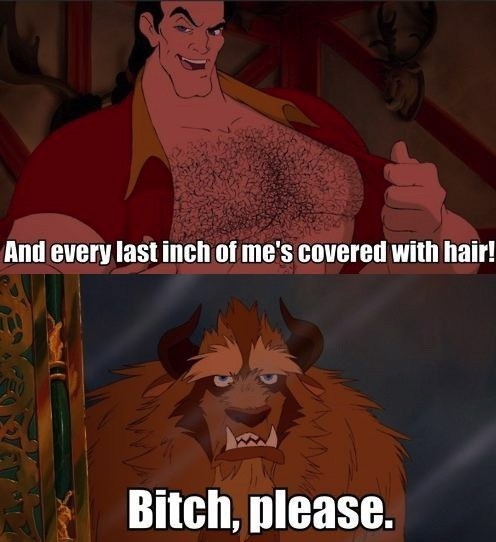
When I first started this blog, one topic I was very passionate about was the double standards of beauty and cultural expectations. Especially as seen through modern adaptations of fairy tales-male beasts are not only acceptable, but actually considered desirable. Whether they're a brooding vampire, a deformed genius living under the Paris Opera House, or a more animalistic creature actually covered with hair, women tend to have a soft spot for these misfits. It somehow seems more flattering to be singled out by someone supernatural. As Sue Bursztynski mentioned in the comments of my recent post on the Beast in Lion form, Ron Perlman has said he was never considered attractive to women until after he played the part of the Beast in the 80s TV show. My most viewed post of all time is my post on Beastly Females, but the majority of people who click on it aren't there to read about Animal Bride variants of tales-but because so many people are googling images of Gerard Butler in his Phantom makeup.
Yet when it comes to portrayals of women, in fairy tales or just in general, ugly women-or really even average women-are much harder to come by. There are a few examples, such as Gail Carson Levine's "Fairest," the D'Aulnoy fairy tale "Green Snake," and the movie "Penelope." Even when women are animals in folklore, they tend to be beautiful, graceful animals such as cats or swans-sometimes even slimy frogs or seals, but hardly ever hairy beasts like wolves or bears, which males often find themselves as (I'm not familiar with any females in folklore that turn into hairy beasts, but I'm sure there must be some exceptions out there? EDIT: There are actually many examples of hairy animal disguises for females, check out this list of Animal Brides. Thanks, Sue!). But most of those examples are unknown or forgotten today, especially by males, although the message of loving females who look unconventional is important for both genders. But in general, whether it's a very traditional story or a more feminist action heroine, the one thing main female characters have in common is that they're conventionally beautiful. Sexy females sell products, are looked at longer on billboards or magazine pages, and are generally desired by viewers of both genders.
And one thing that's become ingrained in all of us is that part of that beauty formula means to have perfectly smooth, hairless skin-or to remove ourselves from what our natural form is. I'm a huge proponent of appreciating natural beauty, in yourself and others. Not that I think it's wrong to get tattoos or dye your hair, but when the message becomes "you have to change in order to be beautiful," that should be a big warning bell. For most of human history, women never shaved, yet in the last 100 years, as women were able to shed layers of clothing, the standards for beauty and etiquette all decreed that the "objectionable hair" should be removed (see A Quick History of Women and Shaving).
Back when Enchanted Conversations came out with a Beauty and the Beast issue, there was a story I really liked that has stuck with me. The link doesn't work any more so I can't credit the author or title (let me know in the comments if you can!), but it was a story about the daughter of Beauty and the Beast. Her parents were separating and the Beast had reverted to his beastly form because the spell was no longer valid. The daughter was worried that maybe the spell would have been passed on to her.
Then one day, she started noticing hair growing. Day after day, all over her body, getting longer and thicker. She was pulling a Parent Trap at the time to get her parents to get back together, to save her father and herself from the spell. The Parent Trapping worked and her parents renewed their love, and her father became human, but-she, the daughter, was still hairy! Dismayed, she finally let her mother in on her secret. And her mother assured her that that was the natural body hair of puberty.
I thought it was a sweet way to look back at adolescence, and that terror when your body starts changing and doing things you don't necessarily want it to. But really the story also helps to illustrate very pointedly: on a woman, any body hair is considered Beastly. In a way, we all have that spell on us and we're all (or mostly) trying very hard to fight it! We spend money on razors and shaving creams and lots of time removing that hair that keeps stubbornly coming back. And it's so arbitrary when you think about it-long hair on women's heads is coveted, arm hair is acceptable, and yet on legs and armpits, hair causes people to recoil and feel strong emotions of disgust.
I'm not saying we should all stop shaving, necessarily (I certainly haven't), but it's been something I've been more conscious of lately. And while it does make me sad that women are so judged for their beauty, it's not like guys are completely off the hook. I've read that male eating disorders are on the rise-they have Hollywood standards to compare to as well. And while women may be drawn to the obvious Beasts in fiction, we tend to be pretty judgmental when it comes to average guys who are maybe just a little bit overweight or nerdy or whatever isn't your "type". When someone is obviously different we tend to be hyper aware of our reactions and all of our politically correct sensors go off, but all of us tend to judge by appearance on some level (often women are the guiltiest of severely judging ourselves). Cultural beauty standards can seem like they're impossible to change, but over time we can readjust our thinking, and we can do our part by doing our best to appreciate the many forms of beauty we see around us.
Anne Romby
It's not something I thought about much at all after I started to shave my legs years ago. But I just recently read this post on Delightfully Tacky in which Elizabeth describes her experience deciding not to shave for 10 weeks. It had never really occurred to me, but it really is kind of unfair that men are considered handsome with all of their natural hair whereas it's considered ugly, disgusting, and unprofessional on women. When women do try to go against the standards that say a woman must make her body smooth and more conventionally attractive, she often feels shame when out in public, and struggles to find herself beautiful, but then often feels guilt that she feels that way.
Ron Perlman as Beast and as self
When I first started this blog, one topic I was very passionate about was the double standards of beauty and cultural expectations. Especially as seen through modern adaptations of fairy tales-male beasts are not only acceptable, but actually considered desirable. Whether they're a brooding vampire, a deformed genius living under the Paris Opera House, or a more animalistic creature actually covered with hair, women tend to have a soft spot for these misfits. It somehow seems more flattering to be singled out by someone supernatural. As Sue Bursztynski mentioned in the comments of my recent post on the Beast in Lion form, Ron Perlman has said he was never considered attractive to women until after he played the part of the Beast in the 80s TV show. My most viewed post of all time is my post on Beastly Females, but the majority of people who click on it aren't there to read about Animal Bride variants of tales-but because so many people are googling images of Gerard Butler in his Phantom makeup.
Here you go, world
And one thing that's become ingrained in all of us is that part of that beauty formula means to have perfectly smooth, hairless skin-or to remove ourselves from what our natural form is. I'm a huge proponent of appreciating natural beauty, in yourself and others. Not that I think it's wrong to get tattoos or dye your hair, but when the message becomes "you have to change in order to be beautiful," that should be a big warning bell. For most of human history, women never shaved, yet in the last 100 years, as women were able to shed layers of clothing, the standards for beauty and etiquette all decreed that the "objectionable hair" should be removed (see A Quick History of Women and Shaving).
Katerina Plotnikova Photography
Back when Enchanted Conversations came out with a Beauty and the Beast issue, there was a story I really liked that has stuck with me. The link doesn't work any more so I can't credit the author or title (let me know in the comments if you can!), but it was a story about the daughter of Beauty and the Beast. Her parents were separating and the Beast had reverted to his beastly form because the spell was no longer valid. The daughter was worried that maybe the spell would have been passed on to her.
"Daughter" by Kiki Smith
Smith's combining aspects of LRRH with the wolf causes an emotional reaction
Then one day, she started noticing hair growing. Day after day, all over her body, getting longer and thicker. She was pulling a Parent Trap at the time to get her parents to get back together, to save her father and herself from the spell. The Parent Trapping worked and her parents renewed their love, and her father became human, but-she, the daughter, was still hairy! Dismayed, she finally let her mother in on her secret. And her mother assured her that that was the natural body hair of puberty.
I thought it was a sweet way to look back at adolescence, and that terror when your body starts changing and doing things you don't necessarily want it to. But really the story also helps to illustrate very pointedly: on a woman, any body hair is considered Beastly. In a way, we all have that spell on us and we're all (or mostly) trying very hard to fight it! We spend money on razors and shaving creams and lots of time removing that hair that keeps stubbornly coming back. And it's so arbitrary when you think about it-long hair on women's heads is coveted, arm hair is acceptable, and yet on legs and armpits, hair causes people to recoil and feel strong emotions of disgust.
Haha
Wednesday, October 7, 2015
The Pumpkin Child: A Persian Folktale
The Pumpkin Child is an old Persian folktale, and I really like it. It's sort of like a cross between Cinderella, Ugly Duckling, and a gender-bent Beauty and the Beast. There is humor, as the storyteller describes the pumpkin rolling and bumping around, but also we feel sympathy for the Pumpkin Girl, and a big theme of the story is how she copes with being different and made fun of (her mother tells her as she leaves for school, "Ignore anyone who makes fun of you!")
Like Cinderella, the Pumpkin Girl must be identified by an object that fits only her-a ring. Only in this tale, it's not a commentary on tiny size being ideal, but simply the fact that the Pumpkin Girl is unique. Some girls tried to starve themselves to get their fingers the right size, but others tried to fatten themselves up.
Murad, the rich merchant's son, has an advantage in that he saw a beautiful girl come out of the pumpkin and reenter, so he knows there's a secret this Pumpkin Girl has. Yet, he is not entirely selfish. His bride does not transform right after the wedding. In fact, he suffered some of the same mockery of the villagers once he declared his intentions to wed a pumpkin. After the wedding, he "took his pumpkin bride far away where he cared for her and never allowed anyone to laugh at her." I love this idea that, yes it's love that set her free, but not a one time love showed just by a proposal-he showed steadfast love over time and it was that love that set her free.
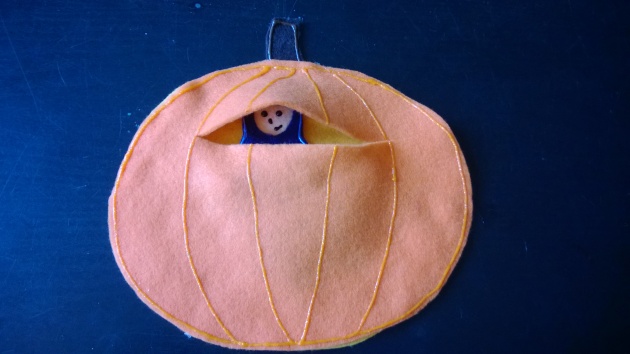
Image from here- to accompany the folktale "The Singing Pumpkin"
Read the whole tale here! This website also includes a family activity to go with the stories, this one is making pumpkin chips!
Monday, June 8, 2015
Princess and the Frog
Continuing on in my trend this week of reviewing Disney movies everyone has already seen...now we go even FURTHER back in time. Last weekend I saw one of the classic fairy tale cartoons that I somehow managed to never see around the time it came out, 2009, Princess and the Frog. At the time, as I remember, there wasn't that much buzz around it after it came out, and I assumed it wasn't that great.
Given my lower expectations, I was really impressed by the film! It wasn't the funniest Disney film ever but it had my group of friends and I laughing on several occasions. And even more impressive were the characters.
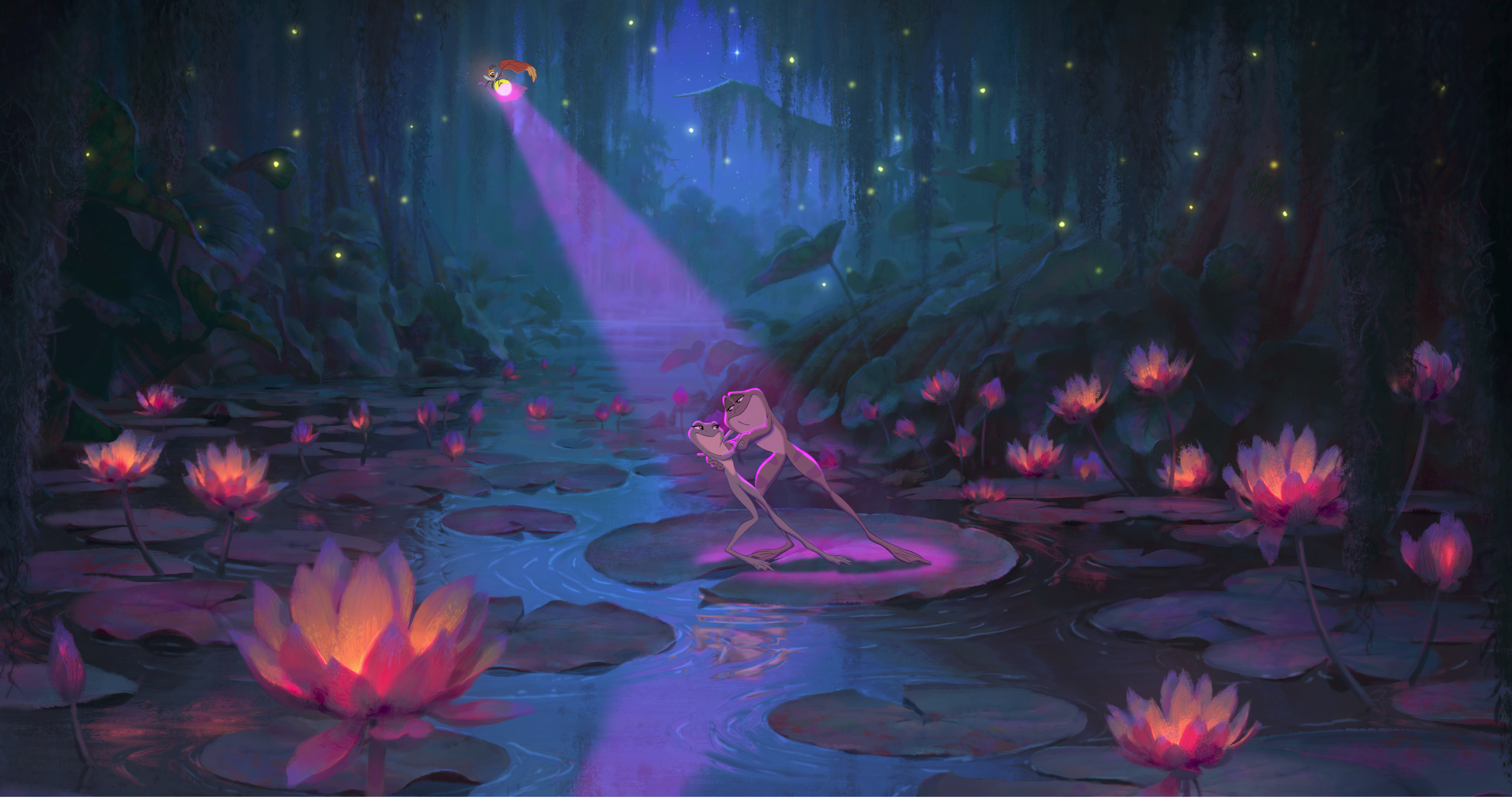
At first I was worried about Prince Naveen's character. I knew he would eventually end up with Tiana and I didn't see it. I thought it would be like Tangled-my main problem with Tangled was that I didn't believe Flynn Rider had really changed and that Rapunzel had any reason to trust him. So often in romances-and not just fairy tale romances-the audience isn't really supposed to think too much about the characters, and whether or not they could actually work together. We're just shown a guy and a girl and it's assumed we want them to be together. Yet, although Naveen's and Tiana's romance was short compared to reality, given the time constraints of a family friendly Disney musical, I thought they did a nice job. I believed the change in Naveen and found myself really rooting for them as a couple.I really liked the fact that all the main characters came to a point where they had to make a choice and ultimately sacrifice their biggest dream for the sake of the other characters-Naveen was going to give up Tiana to give her her restaurant, she gave up her restaurant and later her humanity to be with Naveen, even Louis had to stop playing in a jazz band to help save them, and Ray! Don't judge me but I may have teared up a little when there were two stars in the sky...
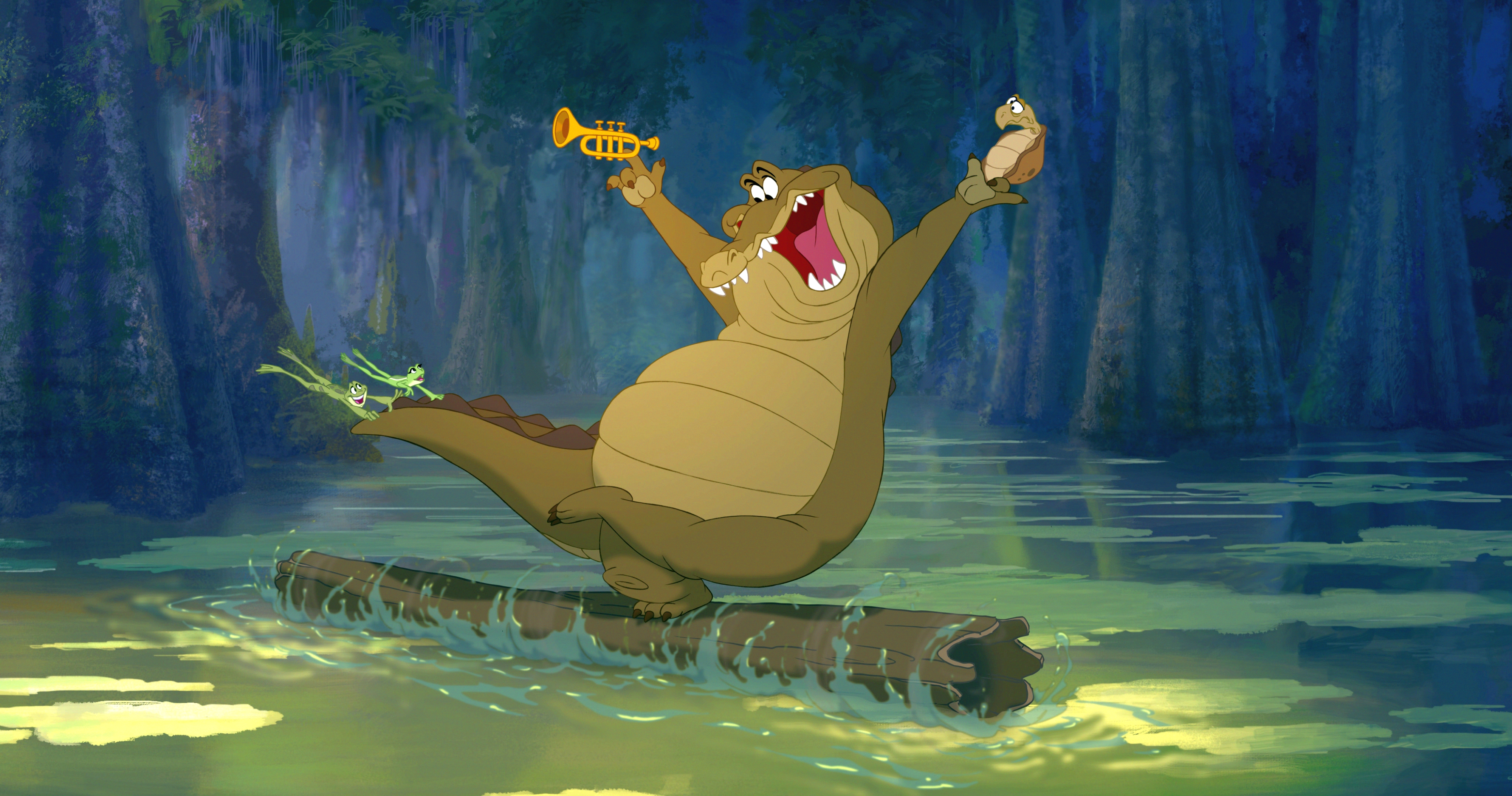
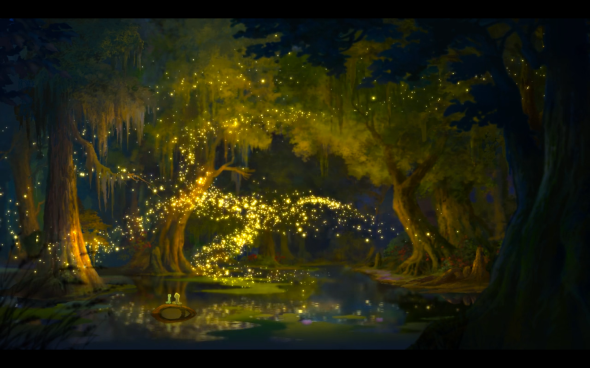
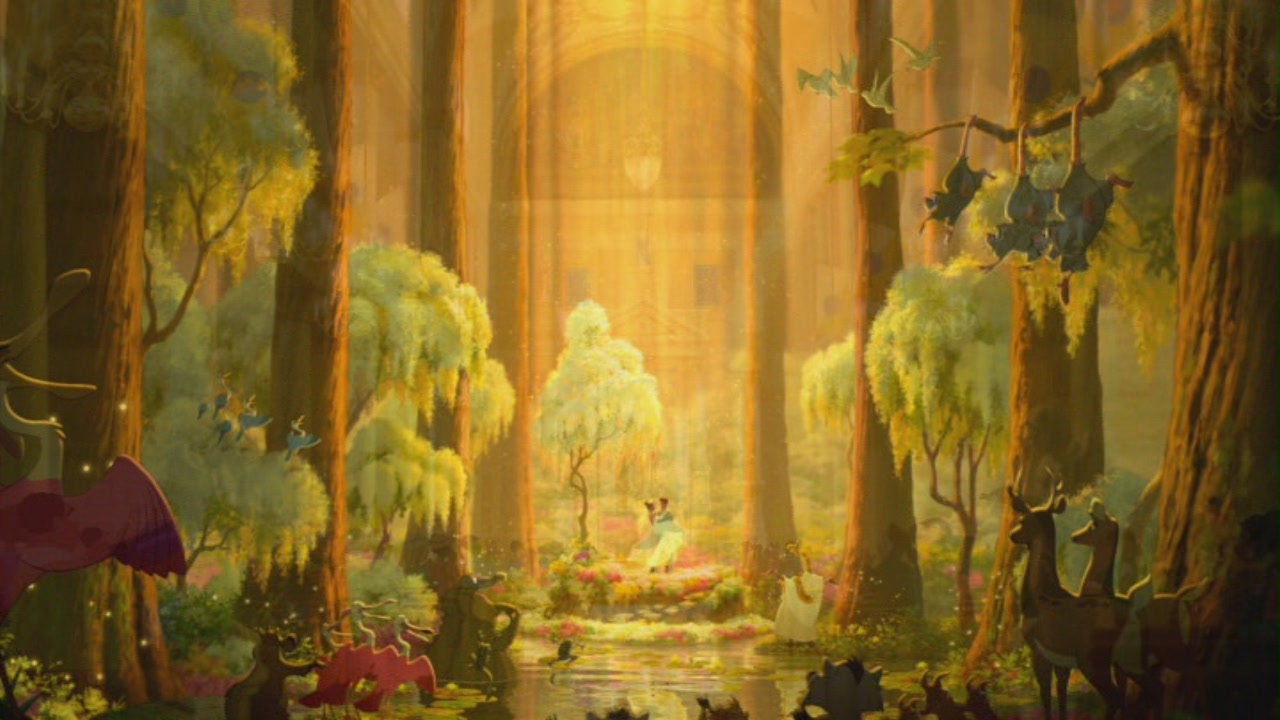
This scene was gorgeous...
In fact it was kind of like the reverse of my thoughts on Into the Woods. In that film, the question is, how far will each character go to get what they want? "Princess and the Frog" shows the characters all giving up what they want for others. And that's pretty rare for Disney films (and most movies...) the only other Disney fairy tale I can think of where the characters make tough choices like that, instead of just responding to the situation around them, is "Beauty and the Beast" (Belle gives up her freedom for her father, Beast sacrifices his chance of being with Belle and becoming human to let her go home).
And speaking of BATB-the fact that Tiana became a frog was advertised in all the trailers at the time, and no secret. But it did provide a nice twist on the Animal Bride/Bridegroom tale to have both of them transformed-there's no wondering, like in BATB, if the Beast would have even fallen for Belle if she weren't the most beautiful girl in the village. Both of the characters fall for each other while they're frogs so the physical aspect of the romance isn't an issue at all.
Concept Art
What did you guys think? According to Wikipedia, part of the reason the movie didn't do as well as the studio hoped is the fact that the word "Princess" was in the title of the movie, therefore it appealed mostly to little girls and not as wide of an audience (and hence the titles for more recent Princess movies being "Tangled," "Brave," and "Frozen"). And while critics liked it overall, the overwhelming response was to compare it to "Beauty and the Beast," "Lion King," and the other major animated films of the second Disney Golden Age in the 90s. That's part of the problem for any Disney movie, is people's expectations can be SO high they'll be disappointed with anything that won't be nominated for Best Picture ("Princess and the Frog" was nominated for Best Animated Picture, but lost to "Up.")
Sunday, April 22, 2012
Cory-Ellen Nadel's "Rose Red"

"This is a double wedding.
Rose Red marries the prince's brother.
They are hidden off to one side, behind a curtain. After all,
the focus must be on bear and bride,
no one should have to remember
the ill-fated count and his chunky new wife.
You see, not all the bewitched become noble bears.
There are those whose transformation
is merely revelation
of the beastly hearts they always bore within"
An excerpt of a poem by Cory-Ellen Nadel, full text available to read here. There's a whole list of fairy tale poetry, I picked this one to feature simply because Rose Red is a character more overlooked in most fairy tale treatments. A lot of modern writers are challenging the ideas of "happily ever after" and what it's assumed to mean; this poem also plays around with the idea of inner verses outer beastliness.
Illustrations by H.J. Ford
Thursday, March 8, 2012
Straparola's The Pig King

Although Straparola's tale "The Pig King" (full text available on Surlalune, summary found below) might not appear to have all that much in common with Beauty and the Beast, given Straparola's often uncredited influence over the history of fairy tales, it's very likely that this tale was well known by the French women who wrote the later, "standard" versions of Beauty and the Beast, and therefore a significant influence. It can be thought of as a sort of ancestor to Beauty and the Beast, and the differences between this version and other versions should be considered.
In the Pig King, a good Queen was resting one day when three fairies passed by and thought how they could protect her and put a spell upon her. The first granted her that no man should harm her, and that she should have a son with no equal in the world for beauty. The second said that no one could offend her, and her future son would have every virtue under the sun. The third decreed that the Queen would be the wisest among women, and that her son should be born with the skin and habits of a pig until he had three times taken a woman to wife.
The Queen did give birth to a son with the form of a pig. His parents were horrified and even considered killing him, but out of parental love they decided to raise him as their child. The prince learned to talk like a man, but would go out and wallow in the mud, and come back and nuzzle his parents, getting them all dirty-which they bore out of love for him.

One day the pig came and demanded that he take a wife, for he saw a woman that pleased him. His parents doubted that anyone would take the pig prince as a husband, but he was insistent, and the King and Queen approached the mother of the girl in question, offering her oldest daughter the chance to inherit the kingdom if she married their son. The daughter initially refused, but her mother urged her to consent, so she gave in. Eventually she was brought in to the pig in finery, and he was very pleased to see her so lovely, and jumped around, nuzzling and showing her signs of affection, getting mud all over his betrothed. She was disgusted by this display and shoved him away, which offended him. The bride determined she would kill her betrothed that night, but the pig prince overheard and killed her with his hoofs before she had the chance to kill him.
The queen was dismayed that her new daughter in law had been killed by her son, but he said he was only giving her what she would have given to him. Now he wanted the second daughter of the same woman. The queen wouldn't at first listen to him, but the pig "threatened to ruin everything in the place if he could not have her as a wife." The Queen approached the poor mother again, but the same thing happened to the second daughter as the first.
The pig now demanded the third, and most beautiful daughter, of the poor woman. The Queen was very sorry, for she believed the same fate would befall her as that of her sisters, but the youngest, Meldina, accepted the marriage proposal graciously and humbly. When the pig approached her, making her royal clothes all dirty, she did not push him off, but accepted his affections and even returned them. The Queen was overjoyed when, in the morning, she was not dead.

After a while, when the pig believed he had earned her trust, he revealed to her his secret: he took off his pig skin to reveal a handsome man underneath, and went to bed with his wife in his true form, which overjoyed Meldina. She kept his secret for a while, but eventually the burden was too great and she told his mother, who did not at first believe her. So the King and Queen went to the prince's chamber that night, found the pig skin on the floor, and destroyed it. They were delighted to have such a handsome man for their son, and Meldina's child had a handsome human form. The young king began his reign and lived long and happily with his wife and child.
****
So it should probably go without saying that many aspects of this tale are very disturbing. Could the prince really have all possible virtues like the fairy gifted him if he had to threaten people in order to get wives? How could he expect his wives to love him as he was if he obviously was turned on by their looks, the very thing they were supposed to forgive him for? Why would you ever ever ever give a pig your daughter to marry after he KILLED THEIR SISTERS? Why is the implied message that virtue in a woman is to be willing to be defiled by allowing animals to make them dirty and having sex with them?
But before you get too worked up, although we tend to try and find significant meaning in old fairy tales, in reality much of the purpose was just to entertain and not impart deep life messages. Sometimes something can be funny simply because it's unexpectedly shocking.
I actually think that the image of the parents lovingly raising their pig child is touching-it reminds me of parents taking care of a sick child, cleaning up their vomit and other messes, tenderly patient and caring. Love does require sacrifice, but parental love should be different than romantic love. Romantic love requires sacrifices from both parties, and in this story the pig prince sacrifices nothing while requiring an awful lot from his wives, which is really what most bothers me about this story.
But very interesting is the end of the tale, when Meldina reveals his secret. Unlike Psyche from Cupid and Psyche or the wife from Perrault's version of Bluebeard, this wife breaks her vow of silence yet is not punished for it-in fact, her revealing of the secret is what brings about the total happy ending. But again, I'd caution against trying to find too much significance from anything in this tale.
In the Pig King, a good Queen was resting one day when three fairies passed by and thought how they could protect her and put a spell upon her. The first granted her that no man should harm her, and that she should have a son with no equal in the world for beauty. The second said that no one could offend her, and her future son would have every virtue under the sun. The third decreed that the Queen would be the wisest among women, and that her son should be born with the skin and habits of a pig until he had three times taken a woman to wife.
The Queen did give birth to a son with the form of a pig. His parents were horrified and even considered killing him, but out of parental love they decided to raise him as their child. The prince learned to talk like a man, but would go out and wallow in the mud, and come back and nuzzle his parents, getting them all dirty-which they bore out of love for him.

One day the pig came and demanded that he take a wife, for he saw a woman that pleased him. His parents doubted that anyone would take the pig prince as a husband, but he was insistent, and the King and Queen approached the mother of the girl in question, offering her oldest daughter the chance to inherit the kingdom if she married their son. The daughter initially refused, but her mother urged her to consent, so she gave in. Eventually she was brought in to the pig in finery, and he was very pleased to see her so lovely, and jumped around, nuzzling and showing her signs of affection, getting mud all over his betrothed. She was disgusted by this display and shoved him away, which offended him. The bride determined she would kill her betrothed that night, but the pig prince overheard and killed her with his hoofs before she had the chance to kill him.
The queen was dismayed that her new daughter in law had been killed by her son, but he said he was only giving her what she would have given to him. Now he wanted the second daughter of the same woman. The queen wouldn't at first listen to him, but the pig "threatened to ruin everything in the place if he could not have her as a wife." The Queen approached the poor mother again, but the same thing happened to the second daughter as the first.
The pig now demanded the third, and most beautiful daughter, of the poor woman. The Queen was very sorry, for she believed the same fate would befall her as that of her sisters, but the youngest, Meldina, accepted the marriage proposal graciously and humbly. When the pig approached her, making her royal clothes all dirty, she did not push him off, but accepted his affections and even returned them. The Queen was overjoyed when, in the morning, she was not dead.

After a while, when the pig believed he had earned her trust, he revealed to her his secret: he took off his pig skin to reveal a handsome man underneath, and went to bed with his wife in his true form, which overjoyed Meldina. She kept his secret for a while, but eventually the burden was too great and she told his mother, who did not at first believe her. So the King and Queen went to the prince's chamber that night, found the pig skin on the floor, and destroyed it. They were delighted to have such a handsome man for their son, and Meldina's child had a handsome human form. The young king began his reign and lived long and happily with his wife and child.
****
So it should probably go without saying that many aspects of this tale are very disturbing. Could the prince really have all possible virtues like the fairy gifted him if he had to threaten people in order to get wives? How could he expect his wives to love him as he was if he obviously was turned on by their looks, the very thing they were supposed to forgive him for? Why would you ever ever ever give a pig your daughter to marry after he KILLED THEIR SISTERS? Why is the implied message that virtue in a woman is to be willing to be defiled by allowing animals to make them dirty and having sex with them?
But before you get too worked up, although we tend to try and find significant meaning in old fairy tales, in reality much of the purpose was just to entertain and not impart deep life messages. Sometimes something can be funny simply because it's unexpectedly shocking.
I actually think that the image of the parents lovingly raising their pig child is touching-it reminds me of parents taking care of a sick child, cleaning up their vomit and other messes, tenderly patient and caring. Love does require sacrifice, but parental love should be different than romantic love. Romantic love requires sacrifices from both parties, and in this story the pig prince sacrifices nothing while requiring an awful lot from his wives, which is really what most bothers me about this story.
But very interesting is the end of the tale, when Meldina reveals his secret. Unlike Psyche from Cupid and Psyche or the wife from Perrault's version of Bluebeard, this wife breaks her vow of silence yet is not punished for it-in fact, her revealing of the secret is what brings about the total happy ending. But again, I'd caution against trying to find too much significance from anything in this tale.
Images by Jules Garnier and E. R. Huges for Straparola's Facetious Nights
Monday, February 6, 2012
The Enchanted Frog
This German tale is an interesting (and at times disturbing...) combination of "Beauty and the Beast" with "The Frog Prince". From Carl and Theodor Colshorn (from Ashliman's Frog King page)
Once upon a time there was a merchant who had three daughters, but his wife was with God. Once he planned a journey across the ocean to a foreign land in order to bring back gold and other valuable things. He consoled his weeping children, saying, "I will bring back something beautiful for you. What do you want?"
The oldest asked for a silk dress, "and it must be made of three kinds of silk."
The second desired a feathered hat, "and it must have three kinds of feathers."
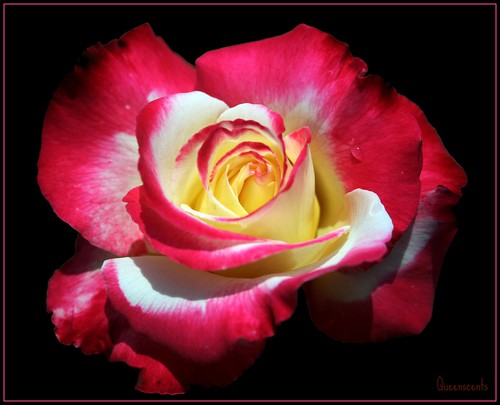
The youngest finally said, "Bring me a rose, dear father, and it must be fresh and have three colors."
The merchant promised to do this, kissed his daughters, and departed.

After arriving in the foreign land, he ordered the dress of three kinds of silk for his oldest daughter and the hat with three kinds of feathers for the second one. Both were soon finished, and of seldom splendor. Then he sent messengers throughout the entire country to seek a three-colored rose for his youngest and dearest daughter, but they all returned empty handed, even though the merchant had promised a high price, and even though there were more roses there than there are daisies here.
Sadly he set off for home and was downhearted the entire voyage. This side of the ocean he came to a large garden in which there was nothing but roses and roses. He went inside and looked, and behold, on a slender bush in the middle of the garden there was a three-colored rose. Filled with joy, he plucked it, and was about to leave, when he was magically frozen in place.
A voice behind him cried out, "What do you want in my garden?" He looked up. A large frog was sitting there on the bank of a clear pond staring at him with its goggle-eyes. It said, "You have broken my dear rose. This will cost you your life unless you give me your youngest daughter to wife."
The merchant was terrified. He begged and he pleaded, but all to no avail, and in the end he had to agree to marry his dearest daughter to the ugly frog. He could now move his feet, and he freely walked out of the garden. The frog called out after him, "In seven days I shall come for my wife!"
With great sorrow the merchant gave his youngest daughter the fresh rose and told her what had happened. When the terrible day arrived, she crept under her bed, for she did not at all want to go. At the hour of noon a stately carriage drove up. The frog sent his servants into the house, and they immediately went to the bedroom and dragged the screaming maiden from beneath her bed, then carried her to the carriage. The horses leaped forward, and a short time later they were in the blossoming rose garden. In the middle of the garden, immediately behind the clear pond, there stood a small house. They took the bride into the house and laid her on a soft bed. The frog, however, sprang into the water.

Darkness fell, and after the maiden had awakened from her unconsciousness, she heard the frog outside singing wonderfully sweet melodies. As midnight approached, he sang ever more sweetly, and came closer and closer to her. At midnight the bedroom door opened, and the frog jumped onto her bed. However, he had touched her with his sweet songs, and she took him into bed with her and warmly covered him up.
The next morning when she opened her eyes, behold, the ugly frog was now the handsomest prince in the world. He thanked her with all his heart, saying, "You have redeemed me and are now my wife!" And they lived long and happily together.
Once upon a time there was a merchant who had three daughters, but his wife was with God. Once he planned a journey across the ocean to a foreign land in order to bring back gold and other valuable things. He consoled his weeping children, saying, "I will bring back something beautiful for you. What do you want?"
The oldest asked for a silk dress, "and it must be made of three kinds of silk."
The second desired a feathered hat, "and it must have three kinds of feathers."
The youngest finally said, "Bring me a rose, dear father, and it must be fresh and have three colors."
The merchant promised to do this, kissed his daughters, and departed.
After arriving in the foreign land, he ordered the dress of three kinds of silk for his oldest daughter and the hat with three kinds of feathers for the second one. Both were soon finished, and of seldom splendor. Then he sent messengers throughout the entire country to seek a three-colored rose for his youngest and dearest daughter, but they all returned empty handed, even though the merchant had promised a high price, and even though there were more roses there than there are daisies here.
Sadly he set off for home and was downhearted the entire voyage. This side of the ocean he came to a large garden in which there was nothing but roses and roses. He went inside and looked, and behold, on a slender bush in the middle of the garden there was a three-colored rose. Filled with joy, he plucked it, and was about to leave, when he was magically frozen in place.
A voice behind him cried out, "What do you want in my garden?" He looked up. A large frog was sitting there on the bank of a clear pond staring at him with its goggle-eyes. It said, "You have broken my dear rose. This will cost you your life unless you give me your youngest daughter to wife."
The merchant was terrified. He begged and he pleaded, but all to no avail, and in the end he had to agree to marry his dearest daughter to the ugly frog. He could now move his feet, and he freely walked out of the garden. The frog called out after him, "In seven days I shall come for my wife!"
With great sorrow the merchant gave his youngest daughter the fresh rose and told her what had happened. When the terrible day arrived, she crept under her bed, for she did not at all want to go. At the hour of noon a stately carriage drove up. The frog sent his servants into the house, and they immediately went to the bedroom and dragged the screaming maiden from beneath her bed, then carried her to the carriage. The horses leaped forward, and a short time later they were in the blossoming rose garden. In the middle of the garden, immediately behind the clear pond, there stood a small house. They took the bride into the house and laid her on a soft bed. The frog, however, sprang into the water.

Darkness fell, and after the maiden had awakened from her unconsciousness, she heard the frog outside singing wonderfully sweet melodies. As midnight approached, he sang ever more sweetly, and came closer and closer to her. At midnight the bedroom door opened, and the frog jumped onto her bed. However, he had touched her with his sweet songs, and she took him into bed with her and warmly covered him up.
The next morning when she opened her eyes, behold, the ugly frog was now the handsomest prince in the world. He thanked her with all his heart, saying, "You have redeemed me and are now my wife!" And they lived long and happily together.
Image of rose from here, The Frog Prince by Charles Folkard
Tuesday, September 13, 2011
The problems with trying to find morals in fairy tales
In Maria Tatar's Off With Their Heads!: Fairy Tales and the Culture of Childhood, she has a very interesting section on Beauties and Beasts, analyzing different types of Animal Bridegroom tales. Often, modern interpretations of tales such as Cupid and Psyche and Beauty and the Beast criticize the tales for what seem to be misogynist messages: "Never once do these stories show a heroine making a move in the direction of autonomy-the tales ceaselessly turn on the question of retargeting the object of the woman's devotion [from her father to her lover]." Tatar points out that women are expected to love because of duty and not passions, yet men rarely have the same standards applied to them.
Yet I have a very strong connection to the story of Beauty and the Beast and love the fact that Beauty learns to love someone despite how he looks-not because she's a woman, but because she's human. Many critics of the woman's expectation to accept whatever she's given are also under the impression that all Beasts are evil as well as ugly, a trend popularized by Disney, but this was never the case before (with the Marianna and Mercer Mayer picture book being the only exeption as far as I'm aware). As a single tale I think it's a beautiful, powerful, and challenging story, and yet if you look at the pattern of the tales told through history, you do notice disturbing trends. Cupid and Psyche especially is very condeming of feminine curiosity-Psyche is severely punished for looking upon Cupid, but who can blame a woman for wanting to look at her husband? Tatar points out that Psyche's act reveals she wants enlightenment-knowledge of her husband that goes beyond carnal (he's been visiting her every night and performing his husbandly duties under the mask of darkness). You would think this would be encouraged, but it proves to set off the chain of events that make Psyche miserable for years as she has to earn back her husband-another source of grief for modern people who loathe the implication that a woman's life should revolve around the man.

I'm still wrestling with the concept of how much you can condemn one tale for fitting into a pattern. Literary collections of tales, like Apuleius' "The Golden Asse", from which Cupid and Psyche comes, or the Grimms, have a direct source you can point to who had their own agenda. But folklore itself-those fairy tales that are supposedly handed down from generation to generation by word of mouth-have no one responsible for their messages and meanings other than collective humanity. It's just kind of sad that your appreciation of a tale can be diminished by knowing that it can be offensive, simply because it suggests things when studied alongside other similar tales.
But Tatar concludes with some very interesting observations that are important to keep in mind when studying fairy tales-you can't take fairy tales too seriously because even within one tale they will contradict themselves. Tatar says, "The many variants of 'The Search for the Lost Husband' remind us of the strength of children's fairy tales as moral magnets, picking up bits and pieces, if never entire blocks, of a value system. But since fairy tales seem to resist wholesale assimilation of a moral outlook or ethical orientation, they tend to offer mixed signals about the way to get ahead. One tale may impart a critique of dishonesty at the same time that it shows a boy defeating his enemies by cheating them. While it is tempting to look for a certain consistency in a tale's moral code (particularly since so many fairy tales have been pressed into service to provide behavioral models), it is rarely possible to find a story that does not encode competing moral claims."
Tatar uses the Grimms' The Frog King as an example. The heroine had to be forced to allow the frog to share her plate and bed even though she had given him her word, violently throws him against a wall, and ends up marrying the handsome Prince he becomes. Tatar's words: she is "selfish, greedy, ungrateful, and cruel, and in the end she does as well for herself as all the modest, obedient, magnanimous, and compassionate Beauties of 'The Search for the Lost Husband.'"' She contrasts this with a similar tale from England where the girl does obey each of the frog's requests, as her stepmother forces her to. The frog even asks that she chop off his head, and after hesitating she still obeys but still ends up with the same result. Tatar says that the tale could be meant to be humorous, as if obeying the commands of a villain would lead to a happy ending. In many fairy tales, whether you obey or violate a command, you get the same results.

Katharine Cameron
And remember that the fairy tales versions we are familiar with, especially from the Victorian period, were specifically written to be moral guidelines for children, therefore inserting messages in where they weren't before and sometimes contradict the actual facts of the story. But these messages we grew up with become embedded in the meaning of the tales in our minds and it's hard to see them as meaning anything different-but fairy tales can be read multiple ways. Though Tatar concludes that though Cupid and Psyche does have an unfortunate message of rewarding female self-sacrifice while condemning attempts at enlightenment, "it also celebrates the revelatory power of curiosity, the way in which the desire for knowledge of the beloved can deepen passion to turn it into love."
Yet I have a very strong connection to the story of Beauty and the Beast and love the fact that Beauty learns to love someone despite how he looks-not because she's a woman, but because she's human. Many critics of the woman's expectation to accept whatever she's given are also under the impression that all Beasts are evil as well as ugly, a trend popularized by Disney, but this was never the case before (with the Marianna and Mercer Mayer picture book being the only exeption as far as I'm aware). As a single tale I think it's a beautiful, powerful, and challenging story, and yet if you look at the pattern of the tales told through history, you do notice disturbing trends. Cupid and Psyche especially is very condeming of feminine curiosity-Psyche is severely punished for looking upon Cupid, but who can blame a woman for wanting to look at her husband? Tatar points out that Psyche's act reveals she wants enlightenment-knowledge of her husband that goes beyond carnal (he's been visiting her every night and performing his husbandly duties under the mask of darkness). You would think this would be encouraged, but it proves to set off the chain of events that make Psyche miserable for years as she has to earn back her husband-another source of grief for modern people who loathe the implication that a woman's life should revolve around the man.
I'm still wrestling with the concept of how much you can condemn one tale for fitting into a pattern. Literary collections of tales, like Apuleius' "The Golden Asse", from which Cupid and Psyche comes, or the Grimms, have a direct source you can point to who had their own agenda. But folklore itself-those fairy tales that are supposedly handed down from generation to generation by word of mouth-have no one responsible for their messages and meanings other than collective humanity. It's just kind of sad that your appreciation of a tale can be diminished by knowing that it can be offensive, simply because it suggests things when studied alongside other similar tales.
But Tatar concludes with some very interesting observations that are important to keep in mind when studying fairy tales-you can't take fairy tales too seriously because even within one tale they will contradict themselves. Tatar says, "The many variants of 'The Search for the Lost Husband' remind us of the strength of children's fairy tales as moral magnets, picking up bits and pieces, if never entire blocks, of a value system. But since fairy tales seem to resist wholesale assimilation of a moral outlook or ethical orientation, they tend to offer mixed signals about the way to get ahead. One tale may impart a critique of dishonesty at the same time that it shows a boy defeating his enemies by cheating them. While it is tempting to look for a certain consistency in a tale's moral code (particularly since so many fairy tales have been pressed into service to provide behavioral models), it is rarely possible to find a story that does not encode competing moral claims."
Tatar uses the Grimms' The Frog King as an example. The heroine had to be forced to allow the frog to share her plate and bed even though she had given him her word, violently throws him against a wall, and ends up marrying the handsome Prince he becomes. Tatar's words: she is "selfish, greedy, ungrateful, and cruel, and in the end she does as well for herself as all the modest, obedient, magnanimous, and compassionate Beauties of 'The Search for the Lost Husband.'"' She contrasts this with a similar tale from England where the girl does obey each of the frog's requests, as her stepmother forces her to. The frog even asks that she chop off his head, and after hesitating she still obeys but still ends up with the same result. Tatar says that the tale could be meant to be humorous, as if obeying the commands of a villain would lead to a happy ending. In many fairy tales, whether you obey or violate a command, you get the same results.

Katharine Cameron
And remember that the fairy tales versions we are familiar with, especially from the Victorian period, were specifically written to be moral guidelines for children, therefore inserting messages in where they weren't before and sometimes contradict the actual facts of the story. But these messages we grew up with become embedded in the meaning of the tales in our minds and it's hard to see them as meaning anything different-but fairy tales can be read multiple ways. Though Tatar concludes that though Cupid and Psyche does have an unfortunate message of rewarding female self-sacrifice while condemning attempts at enlightenment, "it also celebrates the revelatory power of curiosity, the way in which the desire for knowledge of the beloved can deepen passion to turn it into love."
Thursday, August 11, 2011
Madame D'Aulnoy's Green Snake: Beauty, Ugliness, and Curiosity
Green Snake (or "Green Serpent") by Madame D'Aulnoy is a fascinating tale. It reminds me a lot of C.S. Lewis' "Till We Have Faces" (a lesser known but my favorite of all his books) because they are both retellings of the Cupid and Psyche myth, but starring a rarity: an ugly female. There are some versions of Animal Bridegroom tales which are little known today, but Green Serpent features a human female who is cursed with ugliness (note that this is not an authentic folktale, but a fairy tale from the French salon period-I can't think of any actual folktales that have an ugly human female as the protagonist).
This story has dual Beast characters-more like "Beast and the Beast" than "Beauty and the Beast," if you will, because the Prince is also in disguise as the title character. D'Aulnoy explores the themes of beauty vs. ugliness in her tale, just as Lewis did in "Till We Have Faces"-especially the cruel reaction of culture to a person's ugliness, especially a woman's. (This is kind of a soap box of mine-read more here.)
First of all, the heroine, Laidronette (it's been translated as Dorugly, which contrasts her sister Dorabelle) is cursed by an offended evil fairy, not unlike Sleeping Beauty. However, Laidronette's fairy claims that she was not invited to the party because "you only want beauties with fine figures and fine dresses like my sisters here. As for me, I'm too ugly and old. Yet despite it all, I have just as much power as they." Earlier this fairy is defined as malicious, but we already see the theme of someone being judged, possibly, by their appearance. So poor Laidronette is given "perfect ugliness," but the other fairies prophesy that she will one day be very happy. The Queen is still concerned that her daughter become beautiful again, which the fairies can't promise.
When the princess was twelve, she begged her parents to be allowed to be shut up in a castle so that she "will no longer torment them with her ugliness." This was difficult for the Royal couple, because "despite her hideous appearance, they could not help being fond of her," but they allowed her to leave. This language implies an assumption that people's worth is found mainly in their appearance. Later, Laidronette returns to see her sister marry, but was received coldly by the Court and her family. She was glad to return to her forest home "where the trees, flowers, and springs she wandered among did not reproach her for her ugliness."
One day while the Princess was out, she came across a green snake who spoke to her, saying, "Look at my horrible form. And yet at birth I was even handsomer than you." This terrified Laidronette, who ran away. Later she explored a boat which took her out to sea and threatened to capsize. In her hour of terror she mused, "Alas, have I ever enjoyed any of life's pleasures so much that I should now feel regret at dying? My ugliness disgusts even my family...wouldn't it be better for me to perish than to drag out such a miserable existence?"
Hopefully, this whole "ugly people have no point in being alive" message is making you angry. Yet at the same time, it's the other people in Laidronette's life that are making her life so miserable. I think it's safe to assume that any woman today who is considered extremely ugly would also find life to be very difficult because of how she is treated.
Laidronette is offered help from the green snake, but she is still so horrified she would rather die than owe her life to him. Here, sadly, the one person who should have learned not to judge by appearances seems to be just as shallow as anyone else. The boat wrecks on a rock, but Laidronette wakes up to find herself in an enchanted land where she is waited on hand and foot by a hundred strange little creatures called pagods.
Laidronette enjoys the luxuries provided for her, and is shocked to find herself treated honorably with "no longer talk of her ugliness." (In the picture above, she wears a veil, just like Orual in Till We Have Faces...) This is the part that begins to parallel Cupid and Psyche-very intentionally, too, for as her invisible lover begins to win her over, she realizes she's following in Psyche's footsteps. Laidronette can't believe anyone could love someone so ugly, and here we have a refreshing change in attitude, for the invidible prince says that she "has sufficient qualities to merit my affection," for the first time alluding to the fact that people can have positive qualities other than their appearance. Yet Laidronette hasn't quite learned her lesson-she still wants to know from the pagods if their prince is handsome, and can't return the love of someone she cannot see.
Eventually, though, she is won over and agrees to be the bride of the invisible voice. She is told that he has been cursed by the same evil fairy that cursed her, and that two years of his curse remain, and should she succomb to curiosity like Psyche, his sentence will begin all over again.
Yet, even having read the story of Psyche over and over again to avoid making her mistakes, Laidronette once again listens to her mother and sister and decides to look on her husband, only to find he is the Green Snake and she must complete impossible tasks (with the help of a beneficient fairy) before she can earn her happy ending. D'Aulnoy repeats over and over again that Laidronette deserved what she got for her curiosity, it's all her fault, etc., etc., even with a poetic moral at the end about the evils of the womanly sin of curiosity. Keep in mind that D'Aulnoy was a feminist in her day, who, according to Jack Zipes, "did not like the manner in which women were treated and compelled to follow patriarchal codes, and...did not even stop short of aabetting execution or murder of men she considered unworthy or tyrannical." So I don't know if D'Aulnoy was just trying to parallel Cupid and Psyche, or if she really thought curiosity a terrible sin limited to the female race, but Laidronette is continually reprimanded for her act of curiosity.
owever, she apparantly eventually learns her lesson. Sent on an errand by the evil fairy to fetch water from the bottomless spring using a pitcher with a hole in the bottom and with a millstone tied around her neck, Laidronette decides to drink the water to make her wise before washing her face in it to make her beautiful. The good fairy likes this. Later we are introduced to a character who fell in love with a cruel woman only because she was beautiful who suffered for it. So, despite the appearance of the beginning of the tale, women are found to have worth aside from their looks. Of course, Laidronette still becomes beautiful in the end, and the Serpent becomes a handsome prince. Then there's the moral, which informs us that "too oft is curiosity the cause of fatal woe...it is a weakness of womankind."
I don't get it, myself. Feminism has come a long way since the late 1600s.
Subscribe to:
Posts (Atom)