Showing posts with label music. Show all posts

Thursday, July 27, 2017

Jazzmeia Horn: East of the Sun (and West of the Moon)-Fairy Tale Titles


I was excited to see a fairy tale title-and a refreshingly not overused one at that-as the title of a new jazz song by Jazzmeia Horn. The lyrics don't really have much to do with the plot, other than being a love story-other words repeated throughout the song are "closer to the sun in the day and nearer to the moon at night." Still, it's a great song if you're a fan of classic jazz, and there's some level of fairy tale inspiration.

Although it is interesting to use the title but seemingly nothing else of the story...sort of like David Bowie's "Beauty and the Beast," although that title has more mass appeal than "East..." does. There's probably many more songs, and other forms of media, with this phenomenon that I'm not even aware of (share in the comments?). The vague idea of being "fairy tale inspired" is also popular in fashion but rarely has specific references. Why does the title itself appeal to people? You would think those who were drawn to a fairy tale name would also want other connections? Or do we just like the vague connection to folklore? (Or are the artists themselves aware of the fairy tale, or do they just use the name for the sound of it? "East of the Sun and West of the Moon" is a very poetic phrase, but Jazzmeia Horn seems a little more likely to research titles than other pop artists.)

Thursday, April 28, 2016

That Snow White She Did Right in Her Life

Rackham's Snowdrop
Arthur Rackham

"That Snow White she did right in her life, had seven men to do the chores, 'cause that's not what a lady's for"

My ears perked up when I heard these lyrics on the radio, in Daya's single "Sit Still, Look Pretty." In fact, this song is kind of a good example of the post-feminist culture we were discussing in my last post. The song itself is Daya refusing to fit into the female stereotypes of sitting still, looking pretty, and just waiting for a man to come make her life worth something. In this interview, she says,
Q: Is "Sit Still, Look Pretty" based on any sort of personal experience of being told to do just that: Sit still and look pretty?
A: Definitely. It's also just from growing up with gender stereotypes and thinking, you know, you're not supposed to play sports, and you're supposed to dress up and wear makeup all the time. It's not as bad as it has been in the past -- and I think that's great -- but those stereotypes are definitely still there. It's important to be aware of that.
*Does anyone else find it ironic that she's doing in this photo exactly what she claims she won't?
Honestly, a part of me heard the song and thought, "this message is so overplayed." I'm kind of surprised about her statement about girls being told not to play sports. All the popular girls in my school played sports, and I felt embarrassed to be so unathletic. But of course, we should never assume that our experience is the only reality, and just because we haven't suffered a certain way doesn't mean that other people don't. I'm glad she acknowledges that things have gotten better, but are still far from perfect.

Anyway, back to the fairy tale lyrics: I'm not sure where she got the idea that Snow White had the dwarfs do the chores for her, because that's the opposite of what happens in the fairy tale, where they agree to let her live with them, if she'll do the housework (maybe it's in one of the big Snow White films that came out a few years ago that I still haven't seen?). I tried to find an interview where she talks about that specific part of the song but haven't yet.
Trina Schart Hyman

But, I think there is something significant about the use of fairy tales in this song. In songs like this, it's typical to hear fairy tales blamed for our ideas that women should just sit still, look pretty, and wait for a man; or for the idea that romance will be perfect (see Natalia Kills' "Wonderland"). I think this might be one of the few times in pop music that fairy tales are used as an example of overcoming sexism (however incorrectly) (and there's still the issue of calling housework itself a bad thing that modern women are "too good" to do, and now relegating it to men). But, progress? Maybe those feminist versions of fairy tales are finally starting to actually alter the way the public sees fairy tales?


Monday, July 6, 2015

Katy Tiz- Whistle While You Work It


Does anybody else immediately think of Snow White when you hear Katy Tiz' song "Whistle While You Work It?" I was sure it had to be partly a direct reference to the classic song from the Disney movie, so I did a little digging to see if there might be more to the song and how it relates to fairy tales.

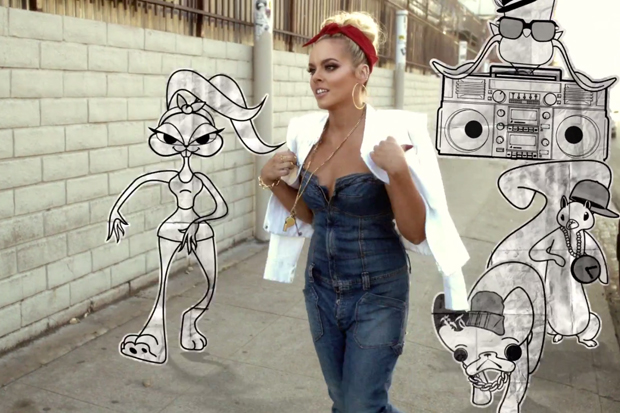
Basically, Snow White's "Whistle While You Work" really was the inspiration, but there's not much more to it than that phrase and cartoon animals coming to life in the official music video. In this article by Mike Wass for The Idolator Katy said "this video comes from my love of graffiti artwork and takes inspiration from some of the greatest fairy tales of all time...you may think this song is about going to the club and 'working it' but if you pay close attention to the lyrics, you'll see it's much deeper than that." (emphasis mine)

In this interview by Anna Moeslein on glamour.com:
So what was your inspiration for the video?
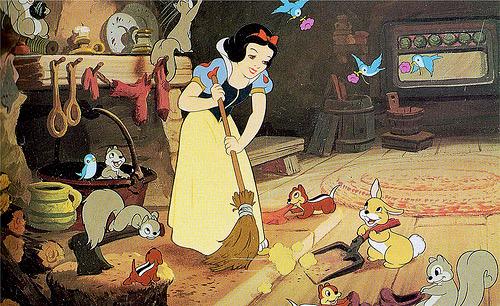
Katy: So the song is called “Whistle (While You Work It),” and that originally is from the Disney movie Snow White—and that scene where she’s with the animals and they’re like “No, we don’t want to clean up” and she’s like “Well, whistle while you work” and they all clean up together. Banksy is one of my favorite artists, so it’s kind of a mixture between like the graffiti he does with the original Disney theme. The video is me going about daily tasks with these four animals who are animated that cause havoc. It’s really cool because I’m not trying to be sexy—I’m not trying to be anything other than a bit of a dork like I actually am. 


I don't think Tiz grasps what normal people consider "dorky"...

The song is about powering through tough times, although I'm not sure I agree with the implication that you should just swallow your emotions, or that that's what fairy tales say ("you won't see me cry", "never let them see you down". But I can get behind lyrics like these:

"Tune out of your darker side/Regret, revenge will eat you up inside/Head up, work that dignity/Let it bounce, let it fly, and make them history"

Overall the song seems well liked and people think it has a positive, upbeat message. There's already a mashup of the pop song with animation from "Snow White":


Friday, March 13, 2015

Rachmaninoff's Little Red Riding Hood Etude, played by Valentina Lisitsa


"Rachmaninoff admitted to Respighi that #6 told the story of Little Red Riding Hood and the Wolf, which he had read to his daughter. The composer usually avoided program music, and, I think, with good reason. His imagination wasn't really stirred by the physical or by drama. For example, his operas, although extremely polished, I find very weak affairs dramatically. Here, if you didn't know the story, you wouldn't have guessed. Even knowing the story, you don't necessarily see it unfolding in the music. Growling runs in the bass represent the wolf, of course, and a flighty flight of notes in the soprano represent the fleeing heroine. That's about as specific as the music gets. However, as an abstract piece of music that plays off these two themes, it's a honey. Rachmaninoff is indeed a composer full of drama, but it's inner, not stage, drama."
-Classical Net Review, Steve Shwartz

This aggressive and daunting piece opens with threatening chromatic octave runs low on the keyboard, answered by quick, chattering treble figures that eventually transform themselves into a march. The music grows hectic and, having reached presto, sounds nearly out of control. The effect of the piece is seemingly mysterious yet fully unified.[2]Referred to as "Little Red Riding Hood and the Wolf",[3] the piece ends with the chromatic runs sounding as though the wolf swallowed Red Riding Hood whole.[4]
Wikipedia


I shared this Rachmaninoff etude a while back but was curious as to how the composer chose to portray the story in the music. What do you think of the idea that the piece's closing represents the more macabre ending? Before the end, the low growling bass drops out and the soprano continues by itself, growing calmer. Maybe the low growls at the end are not the wolf's devouring Little Red, but his groans as he struggles against the stones sewn into his stomach before he dies? Sometimes the best fairy tale interpretations are a little more ambiguous...

Illustrations: Melissa Jayne Rathbone

Friday, July 25, 2014

More on Witches; Or, Possible Drug Use in Fairy Tales

Although we can only speculate as to the intentions and beliefs of older cultures who told fairy tales, we do know that fear of witches and werewolves were widespread for many years in parts of Europe and America. I had mentioned earlier that the reason most of these supposed witches and werewolves confessed was because they were tortured until they did so; but I came across another theory.
Belladonna leaves

Some people think witches used the plant belladonna. Lethal in large doses, in smaller doses it causes hallucinations, and especially in combination with other plants such as opium makes a flying ointment that makes you feel like you're floating through the air. Witches would use the ointment before flying on their brooms-traditional witch folklore holds that they would fly at night to their festivals/pagan sacrifices/Witches' Dances.
Goya-1799
18th century

You can read more on wikipedia, or this interesting article. The links also shed light on why witchcraft was associated with women specifically-for example, the flying ointment was given to women in childbirth to dull the pain. There are some other reasons I won't go into because it gets a little sketchy for blog material, but feel free to follow the links...
Maxfield Parrish

Also reminds me of reading about toad licking in association with "Frog Prince". Another way to get psychadelic visions, some people think this phenomenon could have led to the image of kissing a frog and seeing a handsome prince where none was before; however, the kissing scene of Frog Prince is only a recent phenomenon. But it still may account for the presence of frogs in fairy tales as transformative animals. By the way, be sure to check out The Case of the Missing Kiss over on Quill and qwerty if you haven't already-a very interesting and well-researched look into Frog Prince tales and the addition of the kiss, as opposed to throwing the slimy animal against a wall.
William Robert Symonds


This was going through my head the whole time I wrote this post...

Monday, June 23, 2014

Zemlinsky's "The Mermaid"


 "The Mermaid" by Alexander von Zemlinsky, a 1905 romantic orchestral work inspired by Hans Christian Andersen's "The Little Mermaid."

Choosing to compose this fairy tale actually came out of a failed romance-Zemlinksy had fallen in love with Alma Schindler, but she rejected him and ended up marrying the famous composer, Gustav Mahler. Zemlinsky identified with the Mermaid, seeing Alma as the Prince who fell in love with someone else. Click on the video to go to youtube and listen to the rest, and read the "about" section which goes into more detail about the history, but here we have a great example of fairy tales being therapeutic, as Zemlinsky used this music to express his pain. 

Also note we have an example of a male identifying with the female protagonist (even in 1905, before feminism!). Although we tend to get very concerned about how gender is portrayed through fairy tales, this is proof that, at least sometimes, we can indeed identify with any protagonist, regardless of our gender. And that, I think, is what the goal of feminism should be, not counting the number of male or female protagonists in the media and analyzing every action according to stereotypes (which is helpful to a point but can become overdone).
Maxwell Armfield 

Some information on the music itself, from allmusic.com:
"Zemlinsky does not provide a clear programme for the three movements, but musical analogues can generally be inferred by the listener. The first movement's tempo is "Sehr mässig bewegt" (Very moderate in movement) and opens with a depiction of the depths of the sea bed alternating with the playfulness of the mermaid and other sea creatures. The initially playful theme is turned into a furious sea storm, depicting the shipwreck (briefly interrupted by a lyrical theme of concern) and eventual rescue of the Prince.
The second movement, "Sehr bewegt, rauschend" (Much movement, thunderous), opens with a marvelous effect: a roll on a suspended cymbal grows into a tremendous crescendo with the gradual accumulation of trilling winds and tremulous strings. The longing of the Mermaid for the Prince is depicted in lyrical and playful lines. The Prince receives some hunting call-type grandeur, but the main attention is paid to the Mermaid's feelings.
The third movement is "Sehr gedehnt, mit schmerzvollem Ausdruck" (Very flexible, with sorrowful expression). The visit to the Sea Witch seems to be depicted in the opening of this movement as one hears oddly chromatic passages in the high winds, which alternate with the love theme given to a solo violin in the first movement. This is followed by the Prince's wedding, surrounded by great bursts of passionate, unresolved emotion (the overwhelming feelings of the Mermaid as she watches this spectacle, rather than music for the wedding itself). This is some of the composer's finest and most original writing from his early period. The beginning music describing the depths of the sea is heard again, and gentle music describes the Mermaid's transformation into an eternal spirit of the air."

Monday, June 9, 2014

Debussy's Sirens


The third of Debussy's Nocturnes, "Sirens." When I heard this my first thought was sirens, but I'm also aware that my brain is now kind of wired to connect anything and everything to fairy tales and fairy creatures. I was happy to find that in this instance I was right!

This otherworldly and beautiful piece would be the perfect music to accompany reading fairy tales  (not just siren tales!).

Monday, May 26, 2014

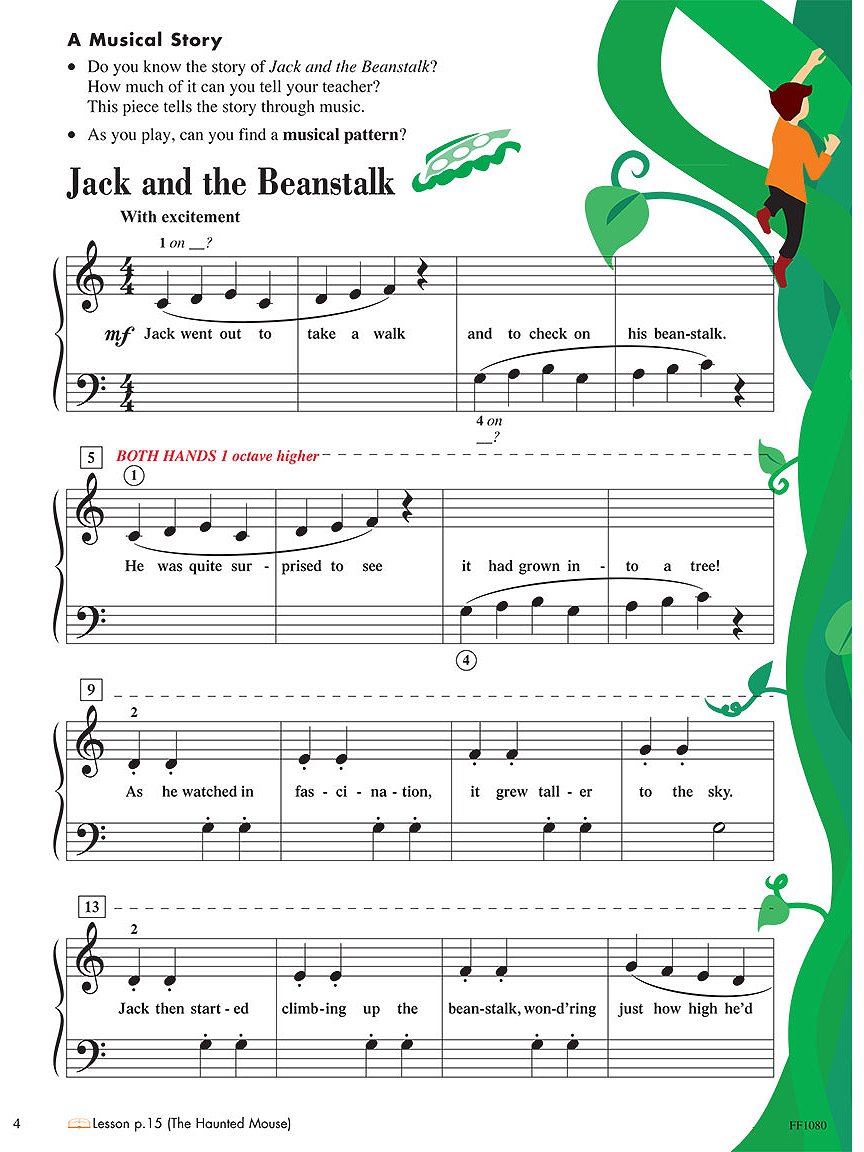
Piano Adventures: Jack and the Beanstalk

The piano series I usually teach from, Piano Adventures, has a song in the Level 1 Performance book entitled "Jack and the Beanstalk."


I hadn't thought anything about it was especially blog-worthy; musically I like how it uses a step-wise ascending pattern to portray Jack climbing up the beanstalk, and at the end the student gets to portray Jack "falling" down through falling not clusters that they enjoy playing. But I did realize recently that in the words, this song omits the giant entirely.

I'm sure it has to do mostly with finding words that fit in a short little song, but I also wouldn't be surprised if the creators of the series wanted to avoid hinting that Jack caused a violent death. We in the fairy tale world lament how these stories become so sanitized and made family friendly, but I do understand how you'd want to avoid being sued by the three upset parents out of the thousands of happy parents and teachers. Being Level 1, this book is generally played by fairly young students anyway.

Also-their bio in Amazon says that the creators of this series, Nancy and Randall Faber, have been commissioned to write a version of "Snow Queen" for narrator and orchestra. This could be a great way to introduce young kids to that fairy tale, especially those who have so recently been exposed to/obsessed with  "Frozen"! I can't find any other information on it though, if anyone else knows any details please chime in via the comments...

Thursday, March 6, 2014

Sleeping Beauty tidbits

Usually we have no idea where folktales originated, or what initially inspired them. This Alaskan tale was inspired by Mount Susitna, or The Sleeping Lady (who looks like the profile of a woman sleeping on her back):

"The Sleeping Lady
Legend tells us that a millennia ago, the Great Land known as Alaska was inhabited by a race of giants.  Among these people was a beautiful young maiden and a handsome young man whose devotion to each other was admired by all the villagers.  Wedding preparations were underway when word reached the village of a warring tribe approaching from the north. 
 
After a village council it was decided that the young man would bring gifts to the invaders to show the peaceful and friendly intentions of the villagers.  Keeping herself busy while waiting for the young man's return, the maiden eventually grew tired and laid down to rest.
 
Soon after, word reached the village that the invaders rejected the offer of peace and a battle ensued in which the young man was killed.  The villagers, gazing at the sleeping maiden, did not have the heart to wake her. 
So there she rests today, still waiting for news of peace and the return of her love . . . "
 
William A. Breakspeare
 
Technically a legend rather than a fairy tale, and apparently there's even controversy about how authentic it really is*-  but such genres have a way of blurring together with each other. The image of a sleeping woman is prominently featured in fairy tale lore, and is a controversial one, especially for modern feminists who see it as promoting the idea of the woman being helpless. 
 
By the way, is anyone else bothered by the Sleeping Beauty reference in Katy Perry's new hit Dark Horse? Maybe you all listen to more quality music than I do... From the rap section by Juicy J:
 
"That fairy tale ending with a knight in shining armor
She can be my Sleeping Beauty
I’m gon’ put her in a coma
Woo!"

The prince of the fairy tale (unless the writers were referencing Basile's version in which the prince takes advantage of the princess in a coma and rapes her, which I HIGHLY doubt) is supposed to get her OUT of the coma, not INTO it. Despite my doubts that it was influenced by Basile, I definitely get creepy rape vibes from the idea of a man putting a woman into a coma...
Honor C. Appleton

*If you read the article, it claims that the Sleeping Lady story is definitely NOT ancient folklore. The sources are a former student who says about a story she wrote in 1964, "I think I made the story up, although I can't definitely say for sure,"  and Ann Dixon who said "the tale probably originated with prospectors or homesteaders sometime between 1930 and 1950." Sounds like a legit folk tale to me...even if it isn't hundreds and hundreds of years old, but can they even prove it didn't exist before the 1930s?

Monday, August 12, 2013

Fairy Tale Entertainment: Chicago

I've thought about doing a post like this before, but decided against it, since I think most of you don't live in the Chicago area and this wouldn't be of special interest to you.

However, after hearing ads for two fairy tale-inspired events in one set of commercials while listening to the radio this morning, I thought it might be interesting just to see how much of our art is influenced by fairy tales, in just one season of one city's entertainment. This is not even an extensively researched list, a few of these I had heard of and I went through the CSO schedule and listed those titles which included fairy tale subjects (this doesn't include programs where only one piece may be fairy tale inspired).


Description: "This ancient and beloved Chinese fable chronicles the tale of a gentle serpent spirit who transforms herself into a beautiful young woman to find love in the human world. Funny, moving, and stunningly staged, The White Snake is a ravishing theatrical spectacle that will enchant and delight."
(So this appears to be unrelated to the Grimm's tale of the same name)

  • Chicago Symphony Orchestra:
Once Upon a Symphony: Stone Soup October-November
Mother Goose and More November
Program includes:
Tchaikovsky Waltz from Sleeping Beauty
  • Mussorgsky Tuileries from Pictures from an Exhibition
  • McBurney Nursery Rhymes
  • Ravel Selections from Mother Goose Suite
  • Prokofiev Midnight from Cinderella
  • Humperdinck Selections from Hansel and Gretel
  • Pictures From an Exhibition in December (Includes Baba Yaga's Hut)
    Once Upon a Symphony: Three Little Pigs in March-April
    Adventures with Aladdin in May-This is really just Rimsky-Korsakov's Scheherezade, I find it interesting they used the more familiar fairy tale character to advertise the concert

    • Ballet Preljocaj Blanche Neige (Snow White), at the Harris Theater May 2-4

    *InkGypsy at Once Upon a Blog covered this ballet back in 2012
    I'm sure there's much more happening this year-especially in theater, which I don't follow as much as I do classical music/ballet. If I find more I'll try to remember to update this list, or feel free to send links my way in the comments!

    Sunday, July 21, 2013

    Fairy Tales in the Russian Ballet

    Interwoven through the history of Russian Ballet are ballets based on fairy tales and folklore. Early on, Russian folk tales provided the source for plots because it provided a sense of national pride for the audience. Ballets were based on fairy tales that are little known today, such as The Little Hump-Backed Horse, a well-known fairy tale (at the time) by Yershov, premiered in 1864, or The Goldfish, inspired by Pushkin's fairy tale. The former was a success and the latter not, although both tales were altered very much from their original sources (sound familiar?). In ballets, plot is only a part of the formula that makes it successful or not-much is also dependant on the music, the choreography, and the quality of dancers themselves. However, understanding the plot and its source was nonetheless important. The 1867 ballet The Fern's success was credited not to  Sokolov's talents in choreography, which were not outstanding, but the fact that he had a "better understanding of Russian folklore."

    Scene from The Goldfish, 1905

    In 1877 we come to the ballets which are well-known and loved still by Tchaikovsky, starting with Swan Lake. The element of a swan maiden is a popular theme in many Russian fairy tales, and the creators of the ballet adapted the specific plot to suit their purposes. It is Tchaikovsky's music that is recognized as the most successful element in this production. His "portrayal of the inner spiritual state of the heroes through music was an important discovery destined to turn over a new leaf in the history of ballet music and upset customary ballet cliches."

    Later, in 1888, Tchaikovsky was invited to write music for another ballet based on a fairy tale-this time using Perrault's Sleeping Beauty as the source. Ironically, the choreographer, Marius Petipa, didn't like using magical elements and fairy tales in his ballets, as he thought they weren't serious enough. However, he was ordered by the Directorate of the Imperial Theaters to use Sleeping Beauty and he transformed it to become something he wanted to work on.
    Maria Petipa as The Lilac Fairy in Sleeping Beauty

    Again, critics hail Tchaikovsky's music as transforming the history of ballet. Academician Boris Asafiev claimed that Sleeping Beauty was "a new form of musical-choreographic action." Asafiev claims that through the progression of the music, you can even trace the princess' maturing and growing up. As a musician I wish Roslavleva went into more detail on this one...

    In 1892 production started on The Nutcracker*, with a detailed program provided by Petipa, but due to illness, the project was taken over by Lev Ivanov. Tchaikovsky's music suggested "much broader vistas and a greater range of human feelings." Ivanov used the music as his primary inspiration, portraying, in Asafiev's words, "the ripening soul of a little girl, at first playing with dolls, and then arriving at the dawn of love through dreams of a brave and manly hero-in other words the process of the 'education of sentiments'".

    Scene from The Nutcracker, Mariinsky Theatre, 1892

    It seems that the combination of fairy tales and music created a new direction for ballets. No longer just pretty entertainment, ballet could be a deeper exploration of humanity. Fairy tale scholars would later see the tales as exploring the human subconscious, revealing universal stages of human development. Afasiev's descriptions of the music indicate that this process was already beginning in Russian ballet.

    Also unrelated to fairy tales, but I find it fascinating to see how far ballet technique has come in the past couple hundred years. Even in the late nineteenth century, double pirouettes en pointe were considered a great rarity, whereas they're now considered standard for any ballet student. That partly has to do with the development of specialized pointe shoes, but ballet is so different now than it was then.

    *No, the Nutcracker is not technically a fairy tale, but I really really like it
    **All information taken from Natalia Roslavleva's book, Era of the Russian Ballet: 1770-1965

    Saturday, May 18, 2013

    Classical versions of Ugly Duckling

    I was watching the show Dance Academy on Netflix instant play because I will watch pretty much any ballet movie or show that has ever been created, and they referenced variations from Ugly Duckling, so I had to try and find it online.

    Didn't find that many details-wikipedia says a company in Florida did it in 2009, but I couldn't find that on youtube. I did find these excerpts from Redding Dance Theater:

    I don't know if the two versions even have the same music or choreography, or just inspired by the same story. Either way, when people combine ballet and fairy tales, I drop everything and watch them.

    Then I also found this soprano solo by Prokofiev. Normally I LOVE all things Prokofiev, but to be honest this music wasn't really doing it for me. Other students at my Conservatory probably would have judged me for saying that, but...there you have it.


    And then just for fun, I grew up watching this 1939 Disney version of the Ugly Duckling

    I remember finding it slightly traumatizing. I felt so sorry for that little duckling. Mainly the big wooden duck at 5:38 terrified me as a young child...especially that moment at 6:21 when it's coming at him! And then his pathetic crying right afterwards! Maybe it's just childhood emotions but I teared up just now, rewatching it...

    Also, for fans of musicals, I was in Honk! in high school. It's a pretty cute family musical. Interesting fact as I look back: I was in 6 musicals in school, and three of them happened to be versions of fairy tales.

    Saturday, January 12, 2013

    Train-Mermaid


    The song "Mermaid" by the band Train. Partial lyrics are below:

    "Can't swim so I took a boat,
    To an island so remote
    Only Johnny Depp has ever been to it before
    Stayed there till the air was clear
    I was bored and out of tears,
    Then I saw you washed up on the shore
    I offered you my coat, thank goddess love can float

    Crazy how that shipwreck met my ship was comin' in
    We talked till the sun went down
    Love on the Puget Sound
    My treasure map was on your skin

    Beauty in the water, angel on the beach
    Ocean's daughter,
    I thought love was out of reach 'til I got her,
     had I known it could come true I would have wished in '92, for a mermaid just like you
    Whoa, just like you, whoa

    Sharks green with envy they wonder what you see in me
    Funny but sometimes can't help but wonder that as well
    Now life is a holiday, making up for the years I paid
    The way to this heavenly bay... it went through hell"

    Thursday, August 2, 2012

    Rimsky-Korsakov's Scheherezade


    Tonight in Chicago the Grant Park Symphony Orchestra played Rimsky-Korsakov's "Scheherezade." The imposing opening theme is the Sultan, answered by Scheherezade, represented by the solo violin, who weaves the movements together as the narrative voice. In the first movement, The Sea and Sinbad's Ship, listen for the strings with their slow arpeggios, the undulating swells that accompany the movement are like waves.

    Beyond that, don't look for too many details. The movements themselves aren't specific to one story in the Arabian Nights, but deliberately ambiguous. Sinbad has multiple voyages, so the first movement could describe any of them. There are three tales told by a Kalendar Prince, and multiple tales feature love between a Prince and Princess, the second and third movements. Rimsky-Korsakov said, "I meant these hints to direct but slightly the hearer's fancy on the path which my own fancy had traveled, and leave more minute and particular conceptions to the will and mood of each listener. All I had desired was that the hearer, if he liked my piece as symphonic music, should carry away the impression that it is beyond doubt an Oriental narrative of some numerous and varied fairy-tale wonders." The last movement is an exciting one: (and features some wicked fast double tonguing for winds, I might add)

    Thursday, May 31, 2012

    Ballet and fairy tales-article

    In my last post I shared my love for ballet combined with fairy tales. For me, the combination of beautiful dancing, costumes, music, and story is such a powerful and emotional experience. I found an online article that highlights the importance of fairy tale plots within the history of ballet. Here's an excerpt:

    "Fairy‐tale ballets have drawn upon four main sources: fairy bride legends (for example, Swan Lake and Giselle), folk fairy tales (Cinderella, The Sleeping Beauty), literary fairy tales (The Nutcracker, The Red Shoes), and stories of toys, puppets, or automata that come to life (Coppélia, Petrushka). During its romantic period—from the 1830s to the 1850s—ballet was dominated by the fairy bride motif. Towards the end of the 19th century—and again in the 1940s—folk tales, ‘live toy’ stories, and literary fairy tales (particularly those of Hoffmann and Andersen) became common sources of inspiration. A more recent development, dating from the 1980s, has been an ironic, revisionist approach to familiar fairy tales, often with psychological or strongly ideological overtones."

    Click here to read the full article.

    Most people are familiar with the Tchaikovsky ballets, but slightly less known is Prokofiev's "Cinderella", one of my all time favorite musical versions of a fairy tale. Here is the Royal Ballet and the pas de deux between the Prince and Cinderella:

    And here is the Bolshoi and the midnight scene. Listen for the the musical clock that starts around 1:45-I love using this when teaching music to children! Kindergarteners love to listen for the clock and then count the number of chimes to see if it's midnight, they get really into it!

    Thursday, April 5, 2012

    From The Dark Forest

    I try not to simply repost things, but had to feature a couple of recent things on The Dark Forest:
    First of all, I can't believe this Rachmaninoff etude existed and I'd never heard of it:

    "Little Red Riding Hood and the Wolf" by Rachmaninoff, one of my all-time favorite composers!i
    Then, in her post on Passive and Dumb heroines, Megan addresses the fact that traditional princesses are always attacked for being, supposedly, so anti-feminist. When I first started reading about fairy tales I was offended at this assumption but eventually grew so used to it I started to see the tales that way myself. And it is important to realize some of the implied messages that come across in many versions of fairy tales, and yes a lot of the females we're familiar with do take more passive roles than their male counterparts, but Megan defends Sleeping Beauty, Cinderella, and Snow White and points out their good qualities, even in the old, non-feminist versions. It's really a great post and so refreshing, because I get a little tired of the super feminist warrior princesses we see these days, because it seems that anything less is sexist, but that's simply not true.

    Saturday, March 17, 2012

    The Young Piper

    An Irish tale, in honor of St. Patrick's Day-


    A good, honest couple named Mick and Judy lived with their four boys. The younger three were boys to make their parents proud, but the oldest was miserable and ugly, with dirty matted hair and a greenish yellow face, a mouth full of sharp teeth ever since he was a year old, and who was always screaming or yelping.


    The neighbors all suspected that he was a changeling, for every time they would gather around the fire and talk about religion and good things, the child would holler "as if the divil was in him in right airnest." The neighbors advised her to burn him with hot tongs, or throw him out on the dunghill, but Judy was too loving to do any of those things to her child. They advised she get a priest to see him, but she never got around to having the priest come. The child continued to play pranks, until one day Tim Carrol, the blind piper, came.

    During Tim's visit, he brought out his pipes and began to play, and the child leapt out of his bed and began to dance with glee. The boy wanted to play the pipes himself, and Tim consented to let him play-and the child who had never played pipes before in his life played a tune as well as anyone.
    The family was shocked. Tim claimed that the boy was a leprechaun, and offered to teach him, which thrilled the boy's parents. His father Mick went out and bought him a set of pipes, which delighted the boy. He immediately started playing, and soon news of his talent spread, and people came from all around to hear him play. Everyone who heard him felt the urge to dance, some said the furniture was inclined to move when the boy played his pipes.

    Besides the Irish tunes the boy played, he also had his own tune he made up, and when he played it, people felt compelled to dance, yet they weren't in control. The child played many pranks on people, causing his brothers to burn themselves or break themselves on furniture, making the animals wild, upsetting milk jugs and even killing neighbors' animals or causing barn roofs to fall in.

    Since the boys' parents wouldn't hear of anyone hurting their child, their neighbors asked them to leave on account of their child. As the cart was moving their family over a bridge, the piper sat up and began to wail. His mother tried to comfort him, saying their was nothing to be afraid of, and eventually the frustrated father got out his whip and cracked it at the boy. The boy jumped, took his pipes, "an' lept clane ovir the battlemints o' the bridge down into the wather."

    His family was horrified and went to look for him, and saw him sitting on a wave, playing the pipes as if nothing had happened. They ran after the boy but he disappeared.
    "No one ivir led eyes an him sence; but the gineral belief is, that he wint home wid the pipes to his own relations-the good people-to make music fur thim."


    -From Thomas Keightley's "Fairy Mythology"
    Top Image from here

    Monday, November 21, 2011

    The Enchanted Lake

    Liadov-"The Enchanted Lake-Fairy Tale Picture", Opus 62,

    From this site:
    "The composer referred to The Enchanted Lake (1908) as a "fable-tableau," and it was his favorite among his compositions: "How picturesque it is," he wrote to a friend, "how clear, the multitude of stars hovering over the mysteries of the deep. But above all no entreaties and no complaints [which he associates with the sounds of trumpets and trombones, which are banished]; only nature -- cold, malevolent, and fantastic as a fairy tale. One has to feel the change of the colors, the chiaroscuro, the incessantly changeable stillness and seeming immobility."

    The piece is indeed a marvel of mystical serenity, the waters gently stirring under starry skies, in suggestively shifting major and minor thirds and ninth chords supported by deep pedal points, with the "enchanted" sounds of harp and celesta, and delicate flute traceries (all in the Rimsky manner)."

    Monday, October 24, 2011

    In the Hall of the Mountain King

    The Woman in Green: Besides those rags you have other clothing?
    Peer Gynt: Ah, you should see my Sunday garments!
    WIG: My week-day garments are gold and silver.
    PG: It looks to me more like tow and grasses.
    WIM: Yes. There's just one thing to remember:
    We mountain folk have an ancient custom;
    All that we have has a double shape.
    So when you come to my father's palace
    It would not be in the least surprising
    If you were inclined to think it merely
    A heap of ugly stones and rubbish.
    PG: That's just the same as it is with us!
    You may think our gold all rust and mildew,
    And mistake each glittering window-pane
    For a bundle of worn-out clouts and stockings.
    WIG: Black looks like white, and ugly like fair.
    PG: Big looks like little, and filthy like clean.
    WIG: Oh, Peer, I see we are splendidly suited!

    This passage is from Ibsen's play "Peer Gynt," which is (loosely) based on Norwegian folklore. It strikes me for multiple reasons-the characters here are lying but it's a common aspect of Faerie lore that the enchanted person may see a beautiful palace full of riches, which in reality is a shack full of rags and broken utensils, or something to that affect. Yet, if there are two possible ways of perceiving, who's to say which version of the Faerie world is real? Even when the literal facts don't change, sometimes all it takes is a little imagination and contentment to make a situation enchanting for one person but miserable for another. The aspect of not judging by initial appearances of course brings to mind Beauty and the Beast, but the element of deception also has similarities to the Emperor's New Clothes.

    After this part of the play, Peer goes to the Hall of the Mountain King to marry his new bride (the Woman in Green is really the Troll King's daughter), but is turned upon by the Trolls when he isn't willing to have his eyes gauged out so that she will seem beautiful to him. Don't feel too sorry for Peer though-he only wanted to marry her because he heard she was rich. Hence this very famous classical piece, which I bet you've heard even if you're not into classical music. Below is a metal version by Apocalyptica.

    Thursday, September 22, 2011

    A house-cleaning playlist

    Disney princesses get a bad rap for doing domestic chores so often, but you know what? I do domestic chores too. I seriously listen to these songs every time I clean my floors: