Showing posts with label Hans Christian Andersen. Show all posts

Tuesday, January 17, 2017

Fairy Tale Fashion: The Snow Queen

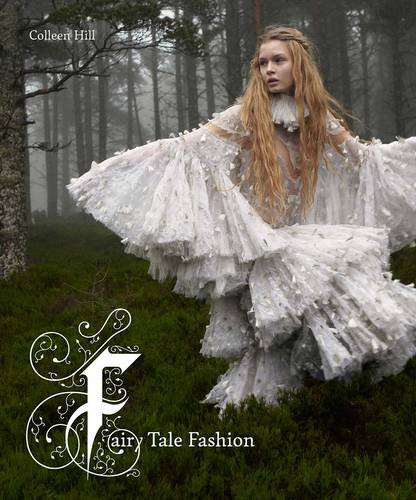
One more post from Colleen Hill's Fairy Tale Fashion!
In her essay on Andersen's "The Snow Queen," Hill informs us that the fairy tale was initially conceived as a short, ballad-style poem about a young woman and her lover, a poor boy who was abducted by the Snow Queen. The Snow Queen was then more of a sexual predator. The story evolved into the tale we know today, of two children separated when the boy, Kay, gets a piece of an evil mirror lodged in his eye that turns him into a cruel boy who mocks the things he used to love and follows the Snow Queen to her ice palace.

The tale uses opposing imagery-the natural, warm beauty of the rose verses the stark symmetry of mirrors and ice/snowflakes. The mirror in this tale is unusual in that, while mirrors usually tell the truth (such as the mirror in "Snow White" that is bold enough to bluntly tell the Queen when there is someone more beautiful than she), this mirror is deceptive-it distorts reality, causing beautiful things to seem ugly. (In fact, I sometimes thought of this mirror when I was in my first trimester-when foods I usually loved became disgusting to me and activities I enjoyed lost interest for me because of the constant nausea-I felt like I could relate to Kay).

Mirrors usually represent vanity in stories. The theme of vanity is also developed in "Snow Queen" by the reference to Gerda's red shoes. When she goes to search for Kay, she intentionally puts on her new red shoes that Kay has never seen before, but when she goes to the river she is willing to sacrifice her prized possessions to gain information about his whereabouts (but the shoes are returned to her because the river does not know where he is). Interestingly, this tale was written just four months before Anderson wrote the infamous tale "Red Shoes" in which the desire for the colored footwear is completely and repeatedly seen as selfish.
From the "Snow Queen" section of the Fairy Tale Fashion exhibit at the Fashion Institute of Technology. Far left; white fur cape by J. Mendel, second to the left; not in the book, second to the right; Alexander McQueen Fall 2008 dress inspired by snowflakes, far right; Tom Ford Spring 2014 dress that imitates shards of a broken mirror

Hill interprets the red shoes as objects of pride, even for Gerda-saying that by wearing them she was initially hoping to impress Kay, but the difference between Gerda and Karen from "Red Shoes" was that Gerda was willing to give up her shoes. This may be, especially given Anderson's feelings about red sheos, but I didn't necessarily read it that way in "Snow Queen." It's natural for a child to be excited to show her friend a new toy or possession, without necessarily trying to impress or show off to your friend. If Gerda had taken a beautiful red rose and tucked it behind her ear with the intention of showing Kay, would that be interpreted as vanity? The rose would still be beautiful and displayed on Gerda, but fairy tale characters who request roses rather than clothes and jewelry are held up as the example of being non-materialistic, like Beauty in "Beauty and the Beast." Yet roses are a symbol of her friendship with Kay-when staying with the old woman, it was seeing an image of a rose that reminded Gerda of her quest to find Kay. Could the wearing of the red shoes even have been Gerda's attempt to remind Kay of their beloved roses, since a real rose wouldn't survive a long journey? The colorful roses of Kay and Gerda's childhood playdates are a stark contrast to the colorless white of the Snow Queen's palace.

Red Morocco leather shoes, from 1800-1810

Although, it was more of a natural assumption at the time to associate red shoes with luxury, since red dye was more difficult to produce, and therefore more expensive, so red was a color only the wealthier could afford. But it seems that illustrators to tend to intentionally bring out the contrast in warm colors associated with Gerda, her friendship with Kay, and her journey to find him, as opposed to the cold realm of the Snow Queen. See Arthur Rackham's illustration of Kay and Gerda in their garden, and Edmund Dulac's image of Gerda at the old woman's house:
Compared with the Snow Queen/her palace by the same illustrators:
Although, I may be too quick to defend the wearing of red, just based on our own modern culture, where bright colors are just as easily accessed as neutrals. If anything, we tend to associate good things with characters who wear bright colors, aligning them with bright, joyful personalities. What do you see as the significance of Gerda's red shoes?

Thursday, December 24, 2015

The Fir Tree and the Snowman

Hans Christian Andersen has some cold weather appropriate fairy tales, but fair warning; they are among his most depressing and pessimistic.
Vintage Postcard

"The Fir Tree" (summary, full text)is a tale about a young tree who can never appreciate the stage of life he is in-he longs to be bigger, and once he is big he wants to be cut down like other trees, and once he is cut down and made into a Christmas tree, his glory lasts for only a night and he is discarded and eventually burned. On the one hand, the importance of being content with your current life situation and appreciating what you do have is something that I need to be reminded of sometimes, but in the tale it comes across as a bit preachy. Scholars say that, although Andersen had already written his share of sad tales, "The Fir Tree" is the first to express the pointlessness of life.

The story, when retold, is sometimes given a more hopeful ending-like following a pine cone from the tree that is thrown into the forest, to perhaps become another tree. It's been made into a children's book and I remember flipping through it once and thinking they made the ending a lot happier but now I don't remember how...


The tale has similarities to a later story of Andersen's, "The Snowman," (summary, full text) in which a snowman falls in love with a stove, and goes the way of all snowmen and melts. The story is thought to express Andersen's frustration in his own love life (which reads like a soap opera...someone should really consider making a tv show out of Andersen's life, you can read a little of the background for "The Snowman" on wikipedia).

This version of "The Snowman" has probably been overshadowed by Raymond Briggs' similarly tragic story, but at least Briggs gives the Snowman a sweet friendship with a little boy, and a magical night's adventure to keep it more bittersweet and less outright tragic. The problem of inevitable melting is solved by Frosty the Snowman, who is made of magical Christmas snow and able to come back every Christmas. Although Frosty began as a song in 1950, he has become a sort of modern folk tale, and he and other characters such as Rudolph have been ingrained into the idea of traditional Christmas lore.

Hopefully this post wasn't too much of a downer-Merry Christmas/happy holidays, dear readers!

Also-for more on Andersen's sadder Christmas tales, check out what Aiyanne Chan wrote about the history of Andersen's "Little Match Girl" over at Fairy Bat Tales!

Saturday, September 26, 2015

Free Hans Christian Andersen online course

Reader Julia Mavroidi alerted me in the comments that there is a free online course available this fall on the fairy tales of Hans Christian Andersen! I'm not sure if I'm willing to give up the 4 hours a week it would take but I'm intrigued...has anyone taken classes through FutureLearn before? If any of you take this class, let me know what you think of it! More information here, it starts October 19 for only 6 weeks.


ABOUT THE COURSE

This free online course will introduce you to some of Hans Christian Andersen’s most popular fairy tales, share the story of the writer himself, and discuss his cross-cultural importance today, as the inspiration behind many popular books and movies.

Interpret Hans Christian Andersen’s fairy tales with experts from his birthplace

You will learn with experts from the HC Andersen Center at the University of Southern Denmark – an internationally renowned research institution located in the writer’s birthplace, Odense.
Each week, these experts will guide a discussion, analysis and interpretation of one of Hans Christian Andersen’s fairy tales, including:
  • The Tinderbox
  • The Travelling Companion
  • The Little Mermaid
  • The Snow Queen (the inspiration for Disney’s Frozen)
  • The Story of a Mother
  • The Red Shoes
You will explore the themes of each story, and investigate how they both conform with and digress from the fairy tale. This genre became very popular in the period of literary history to which Hans Christian Andersen belongs, Romanticism, when childhood was discovered as an age that is important in its own right.
But what Hans Christian Andersen did with this genre is absolutely unique - there are no other writers of fairy tales like him.

REQUIREMENTS

You will need a basic ability to read and understand Hans Christian Andersen’s fairy tales in English. Otherwise, a curiosity about and a love for the fairy tale genre is the sole prerequisite for the course.

Friday, September 18, 2015

Hans Christian Andersen around the World (in monuments)

The other day, Tabled Fables had this posted:
From passport couture: "I never expected Hans Christian Andersen to be in Chicago, but I'm excited to run into him."

I never expected to run into HCA in Chicago either, and I live here!! Well, not in the city proper, but I've lived in the Chicago area my whole life. I need to get to Lincoln Park at some point and see this in person!

I was also curious as to why we have a statue of HCA among a bunch of famous Chicago/Illinois people. Most people might go for the Grimms as the most famous fairy tale collectors (maybe they didn't want to make two statues??). I'm pretty sure Andersen never visited here or had any special Chicago connections...
View of Lincoln Park in Chicago

It didn't answer my question but I did find some more information on the history of the monument:

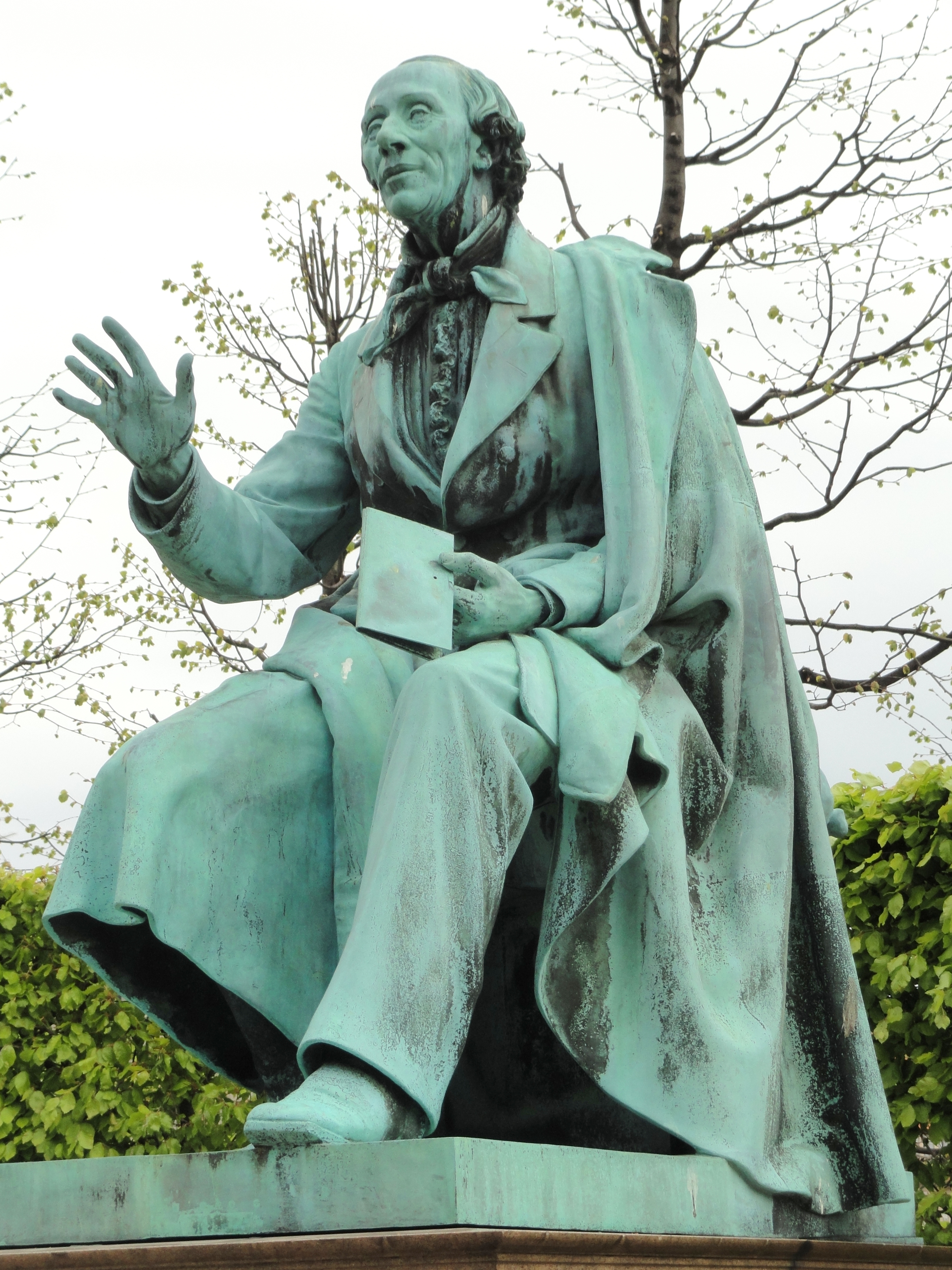
"Soon after members of Chicago’s Dania Society suggested that the city should erect a monument to Andersen in 1891, a committee formed and began raising money for the eight-foot-tall bronze sculpture. Donations included pennies and nickels from school children. The Hans Christian Andersen Monument Association hired Danish sculptor John Gelert (1852–1923), who had arrived in Chicago in 1887, and received his first commission for the Haymarket Riot monument (which was later considered controversial). Gelert later explained that “he had the advantage of studying several good photographs of Andersen taken at various times in his life.” Gelert portrayed the children’s author sitting with a book in hand and a swan at his feet, alluding to his world-famous story."

(emphasis mine)

Hans Christian Andersen, also with book and duck, can also be found in Manhattan:

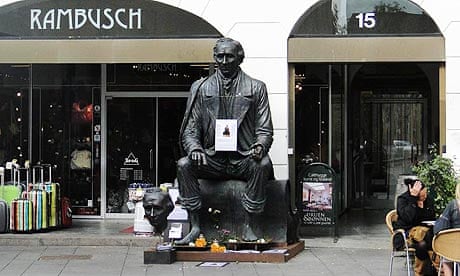
And, as you might expect, in Copenhagen (where the famous Little Mermaid statue also is):

And a museum in Odense (HCA's birth town):


Through the Scandinavian Heritage Association in North Dakota:
And apparently, this sculpture in Odense was going to be drowned in a harbor??

HCA can also be found in Slovakia
This time without a duck and with a snail...and whatever that is on his back? Am I a bad fairy tale blogger if I don't know what the snail is from?

And Solvang, California

Out of curiosity, I tried to find other statues of the brothers Grimm to compare. It seems that they are most honored in monument form in Germany but not outside. (Let me know in the comments if I'm wrong!) Isn't that interesting, though? The Grimms are arguably more popular, is it just the cost issue of having to do both brothers verses one HCA?

Wednesday, August 12, 2015

Very Tiny Children

Whether we're reading "Tom Thumb", "Hop-o-My-Thumb", or my personal favorite, "Thumbelina," people have been fascinated by stories in which the heroes are extremely small, sometimes only the length of an adult's thumb. Why do we tell stories that feature such impossibly tiny characters? The themes and motifs are different when featuring males verses females, so here's a brief look at the significance of a tiny heroine in "Thumbelina."

We had a cartoon version of it that I would sometimes watch growing up. I remember thinking that being kidnapped and forced to marry a mole (and toad) was kind of exciting but really creepy. I was repulsed by the idea and glad when she escaped, which is interesting from someone who was also very familiar with fairy tales like "Beauty and the Beast" and "The Frog Prince" in which I did root for the main character to fall in love with the strange husband.

Maria Tatar suggests that this tale is another commentary on unnatural arranged marriages (again, like "Beauty and the Beast,") which makes sense when you look at the story. Although, it's a little more unusual for Andersen, a male, to be making a statement about that (especially since Andersen was always rejected by the women he fell in love with).

Heidi Anne Heiner points out that a central theme of the tale is one that is prominent in many of Andersen's other stories-that of being an outsider trying to fit in, and finally finding a place to belong (such as "The Little Mermaid" and "The Ugly Duckling"). Andersen identified with many of his main characters, feeling like he also didn't fit in with the rest of society-and that's something we can probably all relate to at some point. Heiner also contrasts the characters such as the toads, mouse, and mole with the swallow who rescues Thumbelina at the end; the first all try to force Thumbelina to live in a world where she doesn't belong and is unhappy, such as the cold dark underground with the mole. The swallow recognizes Thumbelina could not live with him. Although the emphasis on Thumbelina finding the tiny Prince beautiful at the end makes it seem like a more shallow conclusion, I think there's something to be said for finding the right fit, and finding where you belong. I'm sure many of you can think of examples of people you've dated who, though they may have been great people, just wouldn't have been a good match-it would be like trying to force a mole and a tiny woman to live together.

Still, I wonder what the significance of having a very tiny heroine has, verses a swan among ducks, or a Mermaid among humans. Literary examples of tiny people were well known at the time, such as the Lilliputions in Gulliver's Travels. Heiner says that Andersen had a close friend, Henriette Wulff, who was "very small, very frail, and hunchbacked." He may have had her in mind.

To me, someone so extremely small is not only different from those around them, but extra frail, delicate, and in need of help. It's a bigger responsibility for the caregiver to keep them safe. Incidentally, Heiner also points out that the beginning of this story is one of the few examples in fairy tales of a mother and daughter living happily together (the other being "Snow White and Rose Red"), until Thumbelina is kidnapped.

I was reminded of this fairy tale recently-Tony and I are in the stage of our lives where friends and family are starting to have babies, and the other day we were introduced to our friends' month old baby for the first time. Whether or not you've seen newborns before, I think the overwhelming reaction to seeing such a small child is to comment, "he's so TINY!" I'm one of those people that even gets a bit nervous watching other people handle such little, fragile children; I don't feel comfortable holding babies until they're a little bigger, because I'm somewhat afraid I'll drop them. I wondered if, to some parents, fairy tales about tiny children reflect the way they all feel at first: "I'm responsible for this tiny, helpless, human being?"

What are your reactions to fairy tales with tiny protagonists?

Source: Surlalune's annotations for Thumbelina; annotations by Heidi Anne Heiner, Kathleen O'Neill, and Christine Ethier

Illustrations:    Maxwell Armfield,  A.W. Bayes, Mabel Lucie Atwell, Harry Clarke, Eleanor Vere Boyle

Wednesday, February 11, 2015

The Irony of Princess and the Pea

Hans Christian Andersen's story of "The Princess and the Pea" tells of a Prince's quest for a "true" Princess. According to the King and Queen, true royalty can only be tested by one's sensitivity; the ability to be upset by a pea under a stack of mattresses.
Arthur Rackham

The whole episode is meant to be exaggerated and funny, yet with an element of truth to it. Heidi Anne Heiner of Surlalune says, "Previous versions of the tale had the princess learning about the test from a sympathetic helper. She then passes the test with her cunning and foreknowledge. Andersen, on the other hand, liked the idea of a princess' true sensitivity and thus makes the princess an innocent victim of a bad night's sleep."

Jack Zipes points out the irony of the fact that the Prince traveled all over the world, when in fact he only needed to stay at home, because the True Princess came to him.
Kay Nielsen

Yet an even more glaring irony occured to me that I can't believe I never thought of before: in stark contrast to the Princesses' inability to sleep because of the pea, she travels by herself, through a rainstorm, to get to the Prince's palace. When she arrives, "what with the rain and the wind, she was in a sad condition; the water trickled down from her hair, and her clothes clung to her body."
Arthur Rackham

A "true" Princess would never travel alone, on foot, through a rainstorm! She would have an entourage making her journey as comfortable as possible, probably riding in a beautiful carriage, and being announced by trumpet fanfare and accompanied by ladies in waiting. Whatever sensitivity would lead to sleeplessness caused by a little pea would most certainly ensure that she would never even leave the door of her house in such conditions.
Kay Nielsen

According to Heiner's comment above, I wonder if Andersen even noticed the irony of this situation, but the rainstorm travelling episode certainly seems to indicate the folk tales in which the Princess passed the test by cleverness, not by being spoiled. Maria Tatar's and Jack Zipes' reflections on the tale would indicated that Andersen was motivated partly by criticizing the upper class, poking fun at their obsession with establishing bloodlines; yet at the same time Andersen had longed his whole life to be accepted by this same group of people, so he was also vicariously living through the Princess.

This post by Carol L Ward has the summaries of several folk versions. It's likely that the one Andersen had heard in childhood, and thus based his story on, is the Swedish "Princess Who Lay on Seven Peas." I can't seem to find a fell text version online though, let me know if anyone has a link!

Saturday, November 8, 2014

Jespherhus: Hans Christian Andersen Fairy Tale Garden

These images are all from Jesperhus, a park in Denmark that includes a Hans Christian Andersen fairy tale flower garden! 

According to Wikipedia, 6 of Andersen's tales are recreated with flowers. I can't find a list of the six tales, only images for these four:

Ugly Duckling (I assume)

Princess and the Pea

The Tinder Box

The Swineherd

Has anyone been there/know what the other two tales are?

UPDATE: Reader Rossichka shared in the comments that this statue of Little Mermaid and one of Thumbelina is also at the park. This one has gotta be Steadfast Tin Soldier. But not being made of flowers, I wonder they count? This would make seven total.


Sunday, September 28, 2014

Fairy Tale Endings: Happy, Bittersweet, Tragic

Roland Risse

Fairy Tales are often criticized for being simplistic, and for providing unrealistic happy endings. Of course, when you begin to familiarize yourself with more fairy tales, you realize this simply isn't true in all cases; however, many of the most well-known fairy tales do end happily, and happy endings remain true to the "fairy tale formula."
John Batten, "Tattercoats"
Beloved stories like "Cinderella," "Jack and the "Beanstalk," "Sleeping Beauty," "Frog Prince," and so many more end in the most traditional way: usually a wedding, while the villain gets punished. Yet even among the favorites, there are exceptions. There are unhappy versions of Cinderella (see here and here), Andersen originally wanted his Little Mermaid to end with her death and had to adjust the story to please his editors, Perrault's "Little Red Riding Hood" is eaten at the end.

Yet still, fairy tales that have become popularized are predominantly happy.

Kay Nielsen

But the "happily ever after" stories aren't the only form of fairy tales. There's another category I would call "bittersweet." Although there is a form of resolution at the end, it isn't perfect; there is still some physical evidence of trauma left after the story is done. For example, in the tale Juniper Tree; while in the Grimms' version the bird is transformed back into a boy, in other versions, such as the English The Rose Tree or the Scottish "Pippety Pew", the child remains a bird. But they aren't completely tragic stories; the bird is a beautiful creature, who sings a song which reveals the truth, rewards the kind father and daughter, and kills the evil mother. There is still life after tragedy, but the life is different than it was before. There's a sort of comfort and realism in this fact-it's not an empty assurance that things will be fine, but hope that a horrible situation can be redeemed.
Eleanore Vere Boyle

Another fairy tale with a bittersweet ending is "The Wild Swans." The princess is united with the good King and her brothers transformed back into humans-all except the last one, who will forever remain with a wing for an arm; a reminder of their enchanted state, and the fact that curses will often have consequences. Andersen's "Little Match Girl" is another very sad tale in which the Match Girl dies, although the story makes it clear that her life is very unhappy, and in her visions she sees her Grandmother welcome her into Heaven, so even in that unfortunate tale, there is hope.
Anne Anderson

Then, there are the fairy tales that are completely tragic. You won't find these in collections of children's tales, but they abound in the collections of Schonwerth, the Grimms, and Andersen. Hans Christian Andersen just loves to feature helpless creatures with no control over their destiny; besides "Little Mermaid," which I mentioned before, "The Steadfast Tin Soldier" ends with him being burned in the furnace. Throughout the whole tale, he never makes a move or utters a word to help himself; I like to think Andersen was playing on the fact that, while he might have had feelings, at least in the eyes of the child who played with him, he was, ultimately, a toy; incapable of actually doing anything to defend himself.
Kay Nielsen

Along the same vein, a random little story of Andersen's called "The Money Pig" is about a toy piggy bank. After describing some of the games the toys played in the nursery, the money pig falls off the shelf, shatters, and his pieces are swept into the dustbin. The tale leaves you with no sense of purpose or hope.

Of all the tales I've ever read, I still think the creepiest is the Grimms' "How children played Butcher with each other." It's not just that there's a tragic death, which happens in other tales-but there's no villain or motive; it's just children being shockingly ignorant and cruel.

Many of the stories in Schonwerth's collection weren't meant as much to entertain, but to warn people about local superstitions. You might find stories about certain events which were interpreted as foretelling doom or death; warnings about how to recognize Drudes or witches, or stories such as "Death of a Woman in Childbed" in which a woman dared to comb her hair after giving birth, on a Sunday while everyone else was in church, and died because of her unbelief. Or this other, very short and sad tale, "Till Death..."

"A girl had committed herself to being eternally faithful to her beloved; he died serving in the war, and she began a new relationship. One night, her former beloved appeared on a white horse and took her away to his grave where she was found dead in the morning."


Edmund Dulac

I think there's a place and purpose for each kind of tale. Sometime we just need an escape: a happy, predictable tale to comfort or give us hope. Other times we want a little more realism, and sometimes we want send warnings, or just to be a little scared, which is a form of challenging ourselves/having fun with friends and giggling at ghost stories. It's unfortunate, though, that few people realize the spectrum of fairy tales that are out there; some people think fairy tales are too violent and old-fashioned and unsuitable entertainment for children; others think they're too simplistic and perfect, and not realistic enough. But whatever your preferences and purposes, there's always some fairy tale, in some version, that could be helpful.

Monday, July 21, 2014

Other Danish Mermaid Tales

Andersen's "The Little Mermaid" is the most well-known Danish mermaid tale, although that was based on literary French stories. So it's interesting to compare this famous story with other tales that have been recorded around the same time. These are from Surlalune's Mermaid and other Water Spirit Tales From Around the World book.

"Agnete and the Merman" by Jens Baggesen is a creepy and tragic tale. It tells of a merman who comes from the sea, professing his deep love for the human Agnete (a gender reversal of the Melusine/Undine/Little Mermaid stories). She loves him too and agrees to go down into the sea with him; they live for two years happily and she bears him two sons.
Margaret Tarrant

But Agnete hears church bells coming from land and desires to go back; she promises her husband to return by morning. She follows the midnight church bells and sees her mother. Her mother pleads with her to come back to land; she has abandoned not only her parents by joining the merman, but her two human daughters. Agnete claims she must go back to her new family, but then she is told that her father, after searching for her in vain, killed himself; the church bells she had heard were for his funeral. She then turns around and sees her mother's name on a grave-time passes differently under the sea (as it often does in Faerie) and the conversation with her mother was either with her ghost or vision from the past.

The poem "Agnes" by Adam Gottlob Oehlenschlager is essentially the same story with some minor differences, Agnes stays underwater 8 years and bears 7 children instead of two; she does not encounter her parents' funerals or tombstones but seems to die randomly after returning to the surface.
W. Heath Robinson

There were different versions of this old Danish ballad floating around, even Andersen himself had written a version of Agnete and Merman earlier in his life.

Another mermaid story, "The Mermaid's Prophecy," illustrates a mermaid that was captured by the King and Queen to tell their fortune. Unfortunately for the Royal couple, the Queen's death is predicted.
Arthur Rackham

It seems that a vast majority of folk mermaid tales are tragic. In romances, they center on lovers from two different worlds, and whether the maiden was originally human or from the sea (as in selkie stories), whether she actually loves her husband from a new land or not, she tends to inevitably feel the pull back to her original home.

Other non-romance tales focus on the supernatural abilities of mermaids. Not all of these are tragic-there is a humorous tale from Denmark called "Hans, the Mermaid's Son." The offspring of a mermaid with a human has super strength and ventures onto land to find work. He is disliked for his odd ways and how effortly he shows up the workers around him; his boss keeps trying to kill him off. Yet the mermaid's son is ignorant of all these attempts to hurt or kill him; he is so strong he is practically immune to their tricks. The story is similar to many fairy tales of the simple, yet kind-hearted fool who ends up victorious-in the end he makes sure everyone around him has plenty of riches, and being tired of living among mortals, goes back to the sea.
Edmund Dulac

When you compare these and other mermaid tales to "Little Mermaid" and the other literary tales of the time, you notice that the mermaids of lore who are so otherwordly and powerful have been reduced to foolishly lovesick teenagers. Yet while many see this as mysoginist, Andersen himself identified with the Little Mermaid, as have many others, male and female (such as Zemlinsky the composer), who experienced non-requited love. While most people today are shocked at the tragic ending, that part is actually the most consistent with traditional mermaid tales.