Showing posts with label vampires. Show all posts

Thursday, October 30, 2014

Schonwerth: Jack-o'-Lanterns

"Jack o' Lanterns are commonly thought of as ghostlike creatures, mostly Poor Souls, who are awaiting redemption. They are like Fiery Men in miniature...When you see them, you are not allowed to talk loudly to them, much less ridicule them, otherwise you will be led astray."

-So say the notes provided by M. Charlotte Wolf in the collection of Schonwerth tales, describing the folklore surrounding Jackolanterns in Bavaria. The collection includes this story:

75. Jack- o'-Lanterns

"A man from the village of Breitenwun near Velburg went home one night from the country fair, rather drunk. On the way, little lights were bobbing along before him, whereupon he called out to them, "If you give me light so that I may find my way home, I will give each of you a Taler [coin]."

Even more merrily the little lights bobbed along before him until the man reached his village. Then he said, "Now you can go home again; I don't need you anymore."-However, the little lights did not go home, but went in front of him, to his house, and from there into his sitting room, and they lighted the farmer's way to bed, and they kept glowing until he fell asleep. And so it happened every night; as soon as daylight faded, they were around him. Then he built a chapel in the village and paid for an eternal flame. As soon as it burned for the first time, the little lights were no longer seen. -The little chapel still stands today, but the eternal flame has gone out."
Arnold Bocklin, painting of will-o'-the-wisp

Versions of Jack-o'-Lantern tales are found all over Europe, but they are thought to originate with "the phenomenon of strange lights flickering over beat bogs", also known as will-o'-the-wisp, according to Wikipedia. You can read a different version from Ireland over at Fairy Tale Fandom.

Again from Wikipedia: "Jack-o-lanterns were also a way of protecting your home against the Undead. Superstitious people used them specifically to ward away vampires. They thought this because it was said that the Jack-o-lantern's light was a way of identifying vampires and, once their identity was known, they would give up their hunt for you."
Happy Halloween!

Thursday, October 6, 2011

Panna a Netvor

Not to repost from Surlalune, because I think you all follow Surlalune anyway (and if you don't, you should), but I just wanted to throw in my two cents about a movie that was discussed last month- a 1978 Czech version of Beauty and the Beast, Panna a Netvor. (On Surlalune, you can read a very thorough and tantalizing review by guest writer Megan Kearney). I've gotten to the point where, if there's a version of Beauty and the Beast I haven't even heard of yet, it's probably not that good...but this one really is good and I was ecstatic to watch it! Now it is a little bizarre, sort of in the tradition of the Cocteau, but it's richly symbolic and has good exploration of the characters, especially the Beast.

And it is pretty dark-people get murdered (not typical for BATB,) it's kind of like an old haunted house movie meets a vampire romance. Seriusly-if you like the concept of Twilight but are appalled by its lack of quality, this movie is for you. The plot is basically: a supernatural creature feared by man is tortured by his love for a woman verses his animalistic bloodlust for her as well. Sound familiar?? Only this version has good acting and scriptwriting! Possibly the only intelligent review I've ever found of Twilight has to be this one from The Oatmeal...seriously, you should click through and read it because it's so funny but so true...

Tuesday, February 8, 2011

Fairies and the future of vampires


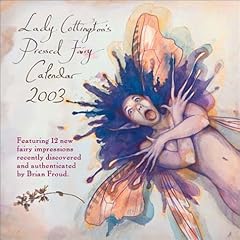
Pressed fairies-Brian Froud

Every time I learn about fairy lore-as in actual fairy beliefs and not literary stories with fairy characters-I'm surprised by the chasm between the two. In popular culture fairies are synonymous with not only innocence but the saccharine-even a nine year old I know recently commented along these lines (everybody only says nice things in fairy tales, she said, which "isn't what real life is like." I was quick to point out that "real" fairy tales aren't like that at all).

Yet the more authentic world of supernatural folk wasn't like this at all. In fact, I'm not sure I've ever come across lore of a truly benevolent fairy-some house elves will do work for payment, but not out of the kindness of their hearts; they are quick to revenge if they feel offended and love pranks, from mild to dangerous to deadly. Fairies could be harbingers of death, or have bloodlust themselves. Female fairies and sirens would seduce men and lure them to their deaths. You can read back in my archives with the "fairies" tag or probably do a simple google search to quickly find out more specifics. I've enjoyed the books "Strange and Secret Peoples" by Carole G. Silver, "The Vanishing People" by Katherine Briggs and "Fairy Mythology" by Thomas Keightley.

We know when and some of why the shift happened from fairies being dangerous and dark to childish and simple-starting with the French salon fairy tales and through the Victorian era, influenced by literary stories and the idea that stories should be moralistic. But I still wonder what that transition time was like. Maybe the fairies in tales didn't represent fairies of thought. Example: vampires.

I know I keep going back to this, and in theory I really don't care that much about Twilight either way, although I am a purist so I prefer Bram Stoker or reading books about Vlad the Impaler. But to understand the huge transition fairies went through in popular understanding, it's like imagining that in the future people will have no ideas that vampires are supposed to suck your blood and have no control over that bloodlust-"vampire" will come to only mean a lovesick and attractive person, unrealistic and cheesy and only belonging in teen and children's fiction. If it seems fantastic that the original definition of vampires should be lost, that's the same thing that happened to fairies of yore. And who can deny that vampires have grown in popularity with the general population lately? Their very trendiness proves that we don't find them frightening but exciting, which after a while-and probably already has-turned cliche. But just as we imagine that these supposedly dark and dangerous vampires could be desperately in love with us because their struggle to conquer their dark longings reveals the depth of their love, and therefore the inherent worth of the human in question- maybe the good will of fairies in tales didn't represent the goodness of the fairies themselves, but the extreme nature of the goodness and beauty of the humans they helped. I'm not saying I think that's the way it was, but just one possible way of looking at early fairy tales, or a possible reason for the shift in fairy beliefs.

Okay, for some reason Blogger DOES NOT want me to post this youtube video, but here's a link to a funny Twilight parody that highlights how out of place Dracula feels in the Twilight culture: http://www.youtube.com/watch?v=1glNuQiE77E

Monday, February 22, 2010

The Truth about Dracula

For those interested in the Twilight phenomenon or not, The Truth About Dracula is a fascinating read. Though this might not seem directly related to fairy tales, as I pointed out in my post on Victorian beliefs about fairies, the beliefs in dark supernatural beings are more prominent in folklore than we often realize.

Written by Gabriel Ronay, this book traces beliefs and legends about vampires through history, extending beyond Bram Stoker's famous figure. The man who inspired the book Dracula was Vlad the Impaler, or Vlad III, Prince of Wallachia (1431-1476). As his nickname would imply, Vlad was famous for impaling people, and for the very slightest of reasons. But he didn't stick to just impaling; he also invented various kinds of torture. For example, (do not finish paragraph if you are squeamish/hate reading about torture), once he created a giant pot with holes in the lid, through which the victims' heads would be forced. The pot would be filled with water, then the water boiled, so Vlad could watch them scream in agony as they boiled to death.

Not exactly a guy you'd want to run into in a dark alleyway, but people have defended him. People expected different things from royalty back then than they do from government now--it was commonly believed that rulers had to punish the people every now and then, just to remind them who was in charge.

But vampirism isn't something we can actually accuse of Vlad the Impaler. The closest predecessor of a vampire, (as far as an actual person goes), would be Countess Elisabeth Bathory (1560-1614).

Elisabeth came from a very prominent family that had intermarried so many times, by the time they got to her, she was already kind of psychotic. Convinced that bathing in the blood of young virgins would help her become beautiful, she lured young peasant girls to her castle, which was really a torture chamber. She was also sexually turned on by seeing other people bleed and would get into ecstasies as her accomplices tortured and killed her victims. And, yes, she sometimes drank the blood as well as bathe in it. She was guilty of 650 murders.

Sadly, this obsession of hers was allowed to escalate to the point that it did, mainly because of the importance given to class and family name. The families of the young peasant girls were virtually powerless to do anything, because peasants were considered to be next to nothing. Only when the countess was led to believe that the real secret to youth and beauty was in bathing in the blood of girls of respected families, people finally started to take notice. Even when she was found guilty of kidnapping, torturing, and murdering hundreds of girls, she got off merely with house arrest, because of the fear of her family.

This book is very disturbing and not recommended for the faint of heart, yet once you start it's hard to tear yourself away. A fascinating read, I finished it in a day. Highly recommended for anyone interested in this subject.