Showing posts with label Santa Claus. Show all posts

Friday, December 29, 2017

Santa: Evidence Wanted

I had another Christmas post planned for last week, but then...Baby decided he had other plans (that involved refusing to nap for a while).


Thomas Nast

But I did want to share this fascinating article from npr (which I found via this post by Maria Tatar, which includes other links to interesting and related articles). Researchers studied how easy it was to get children to believe in a fantastical creature, a made up "Candy Witch" who would swap candy for toys at Halloween. It certainly applies to children who believe in Santa Claus, a topic that has been more pertinent as Tony and I wonder how we'll navigate the issue when our son gets older, as well as fairy tales in general and how they are perceived.

The article states, "Children are generally pretty sophisticated when it comes to differentiating fantasy from reality, even though they often have rich fantasy lives populated by imaginary friends, fueled by fictional stories, and used to generate the diverse make-believe worlds that form the backdrop to imaginative play and pretense. As early as preschool, children begin to understand that appearances can be misleading." (emphasis mine)

In their experiment, they found that children were more likely to believe in the Candy Witch if they had evidence to prove it (such as overhearing their parents making a call to the Candy Witch and finding some candy swapped for toys). Also, younger children (around 3 or 4) were no more likely than slightly older children (up to 7) to believe-evidence was more important than age, until around 8, when belief in fantastical creatures significantly decreases. But not every child believed, even those told about the Candy Witch by their teachers and parents.


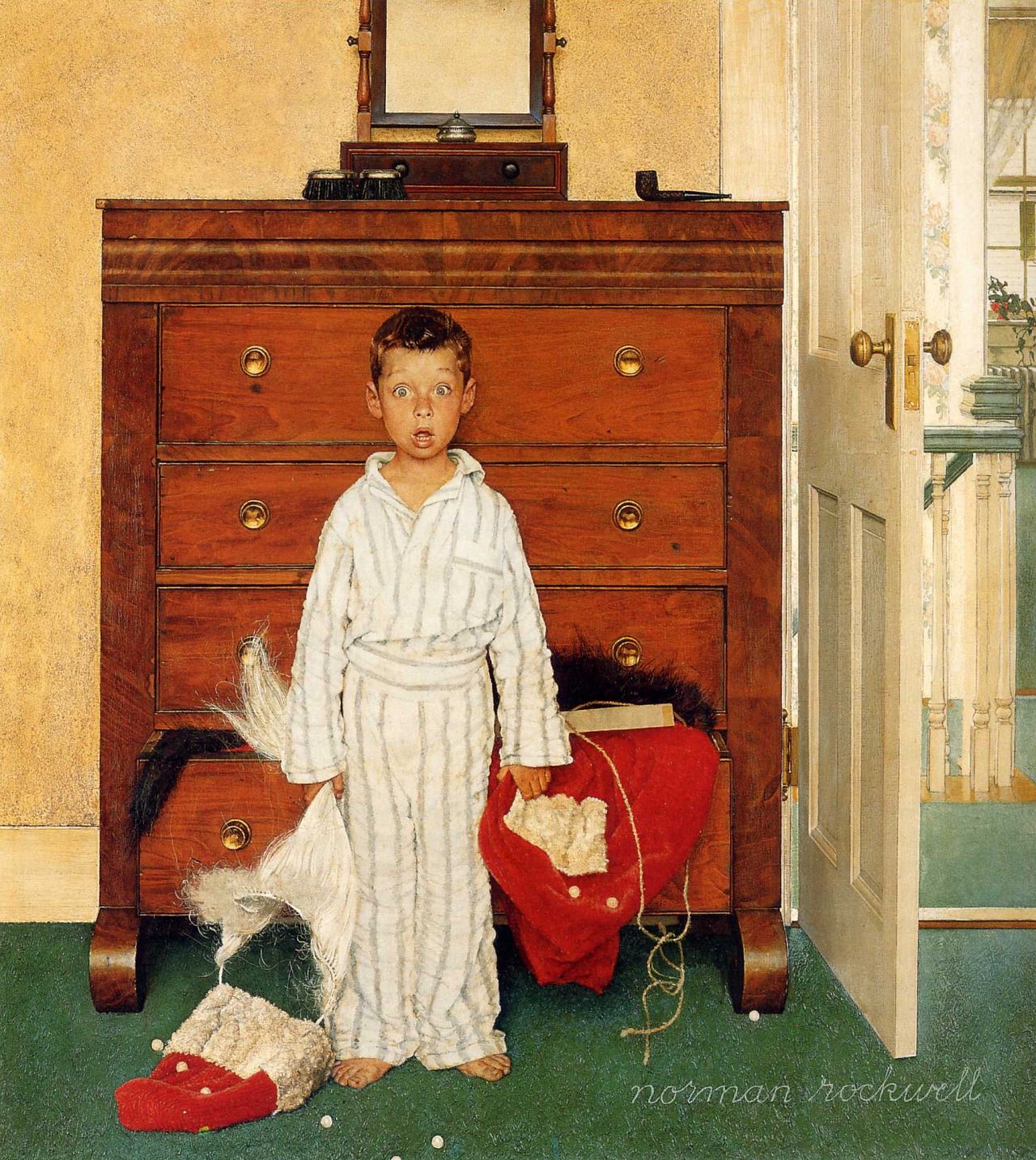
Norman Rockwell

So not every child will just accept everything told them, even young ones, or from trusted sources. Children observe and weigh evidence as they conclude what is or isn't real. Personally I think that Christmas movies, which usually tend to be all about how Santa Claus is real and portray believers as "good" and skeptics as villains, are a pretty significant influence as well.

Parents, how do you handle Santa Claus in your house?

Monday, December 18, 2017

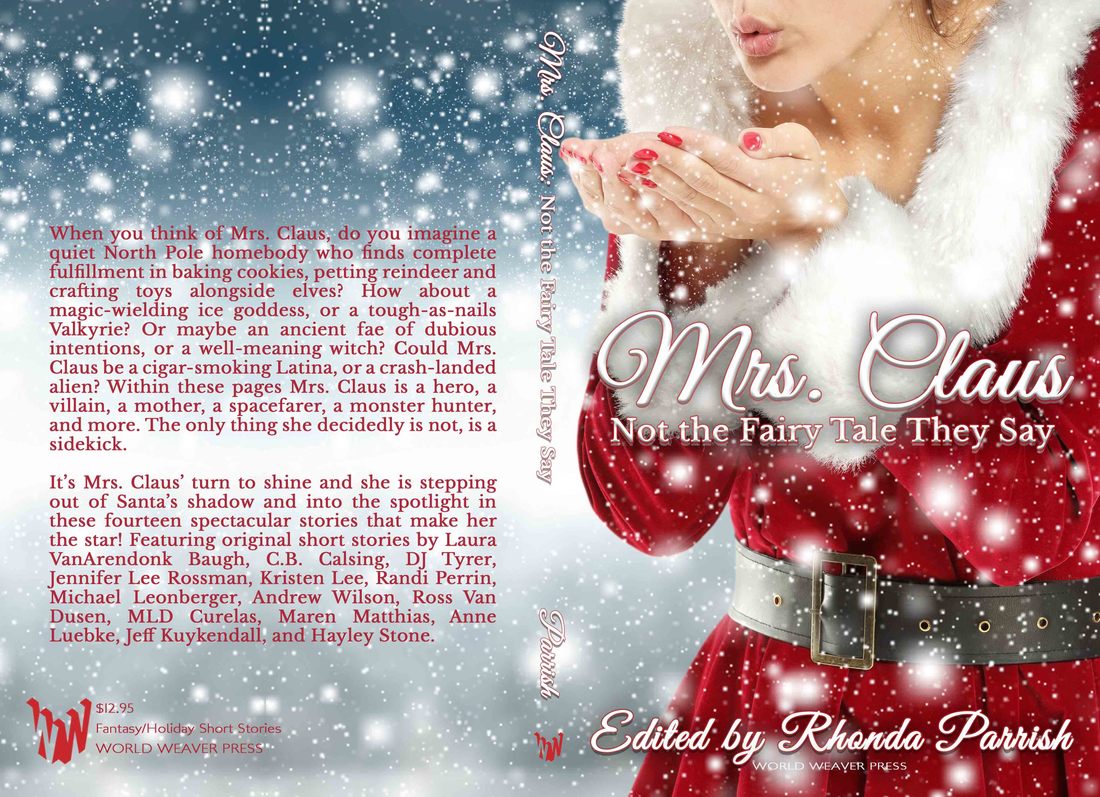
Mrs. Claus: Not the Fairy Tale They Say

World Weaver Press has a new Christmas collection this year! Mrs. Claus: Not the Fairy Tale They Say, as the title suggests, features Mrs. Claus in several different reimaginings. I knew I wouldn't have time to read  it this year (I'm still working on my Krampus stories!) but it may be of interest to you readers. I'm fascinated with the evolution of the Santa myth, and it's interesting that St. Nicholas managed to gain himself a wife as he became the family friendly figure he is today. I've read a bit on the history of Christmas traditions and Santa Claus, but Mrs. Claus doesn't feature much in those books and now I'm even more curious about her history.


Wednesday, December 13, 2017

St. Lucia's Day

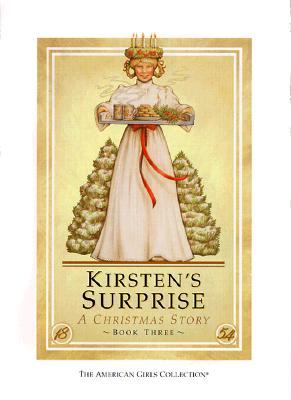
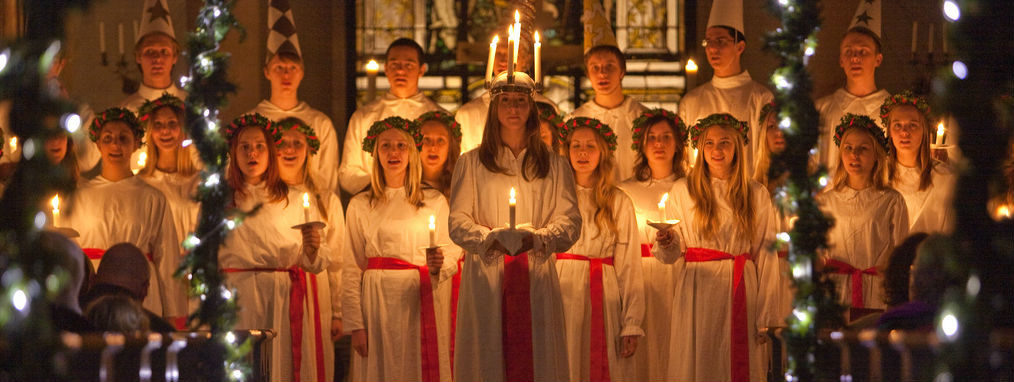
Happy St. Lucia's Day! Most Americans don't celebrate (or even necessarily know what it is) and I probably wouldn't either if it weren't for my beloved American Girl Doll stories featuring Kirsten, who appealed to me because I'm partly Swedish too.

The celebration involves the stories of St. Lucia, who supposedly gave all her wealth to the poor and was martyred for her faith. It's also a celebration of light, as most celebrations around the Winter Solstice tend to be, and would be especially appreciated in Scandinavia with so little sunlight this time of year. The traditional costume involves a wreath of candles worn on the head, because St. Lucia needed both hands free to bring food and supplies to Christians hiding in the catacombs.

Yet there's a different Lucy character in Scandanavia, Lussi. From Wikipedia: "Lussinatta, the Lussi Night, was marked in Sweden 13 December. Then Lussi, a female being with evil traits, like a female demon or witch, was said to ride through the air with her followers, called Lussiferda. This itself might be an echo of the myth of the Wild Hunt, called Oskoreia in Scandinavia, found across Northern, Western and Central Europe. Between Lussi Night and Yule, trolls and evil spirits, in some accounts also the spirits of the dead, were thought to be active outside. It was believed to be particularly dangerous to be out during Lussi Night. According to tradition, children who had done mischief had to take special care, since Lussi could come down through the chimney and take them away, and certain tasks of work in the preparation for Yule had to be finished, or else the Lussi would come to punish the household. The tradition of Lussevaka – to stay awake through the Lussinatt to guard oneself and the household against evil, has found a modern form through throwing parties until daybreak. Another company of spirits was said to come riding through the night around Yule itself, journeying through the air, over land and water."


The article later suggests that the folklore of Lussi and the traditions of St. Lucia combined to become the modern festival, but how interesting that there would be two opposite sides to the tradition. Riding through the air and coming down the chimney punishing children, Lussi sounds a lot like a combination of Santa Claus and his many scarier counterparts, such as Krampus. It seems that older traditions recognize the duality of powerful forces more so than our current cultural myths which usually only emphasize the friendly halves (at least in America. Other cultures still observe the punishing figures as well, I'd be curious to learn more about how they're celebrated!)

Monday, December 19, 2016

He Sees You When He's Creepin': Tales of Krampus

Kate Wolford and the lovely folk at World Weaver Press were kind enough to send me a copy of He Sees You When He's Creepin': Tales of Krampus. While I haven't had as much time as I would like to curl up by the tree and read, I've been able to read a few of the stories here and there!

Book description:

Krampus is the cloven-hoofed, curly-horned, and long-tongued dark companion of St. Nick. Sometimes a hero, sometimes a villain, in this anthology, he’s always more than just a sidekick. You’ll meet manifestations of Santa’s dark servant as he goes toe-to-toe with a bratty Cinderella, a guitar-slinging girl hero, a coffee shop-owning hipster, and sometimes even St. Nick himself. Whether you want a dash of horror or a hint of joy and redemption, these 12 new tales of Krampus will help you gear up for the most “wonderful” time of the year. 

The character Krampus is a fascinating one, so I was eager to learn more about him. I was excited to see the first two stories in the book were by authors whose stories I had particularly enjoyed from Frozen Fairy Tales. Steven Grimms' "Villainess Ascending" is the first-his twisted reworkings of fairy tales are well written and I enjoyed his imagining of Krampus interacting with a Cinderella in Vienna around 1800 (and another fairy tale character makes an appearance too!). I also enjoyed the historical details, such as using Schonbrunn Palace as the setting:

In the next story, Lissa Marie Redmond's character James made his second appearance since Frozen Fairy Tales. This modern story is much more lighthearted in tone. For example, I laughed at the line "So I did what any millenial with a problem would do, I went upstairs and googled it." (So true!)


One of the interesting things about reading a collection of Krampus stories is seeing the various ways he is portrayed-sometimes he's a clear villain, others he's really the victim or the hero. It's an interesting concept to explore what would go on in the mind of the monster who is sent each year to violently harm naughty children...does he relish his work? Is it just a job to him? Is he trapped in that role? Along with that, there are some interesting looks into what might motivate Santa/St. Nicholas (and warning-he is not always the classic jolly old soul!). As Wolford points out in the introduction, Krampus in folklore isn't viewed as the anti-Santa, a demon to be destroyed, but his partner. Although his methods might be extreme, his role provides a balance to the gift-giving St. Nicholas. In fact, it's interesting that many authors (of the stories I've read so far) are more sympathetic to Krampus than capitalized on the opportunity to make him into a Christmas horror story.

I've been pondering our own, modern cultural Santa/behavior myths as well. I wouldn't advocate giving children no presents, or coal, on Christmas if they've been especially "naughty" that year, but the threats we tend to give (Elf on the Shelf reporting on your behavior to Santa, for example) are so empty, it seems like a cheap way to influence behavior if there will be no follow through (I'm a teacher, and threats without consequences are a recipe for chaos, not better behavior!).

Austrian Greeting Card

So far another standout story I've also really enjoyed Anya J. Davis' "The Business of Christmas." It's a clever look into how Santa and Krampus might have developed their operations over time to fit in with our modern culture and technology.

While some of these stories might be a little more dark or cynical than typical holiday fare (which might be a perk for some people tired of extra cheesy Christmas entertainment), not only are they thought provoking, but they retain a sense of the wonder and magic of Christmas. I look forward to reading more!

Sunday, December 6, 2015

How St. Nicholas Became American Santa

I've read other books on the history of Christmas tradition/Santa Claus before, and shared some of my findings here. It's not technically a fairy tale, and I usually try to avoid myths and legends to keep blog material more focused, but I make some exceptions because I really love Christmas and it's an interesting topic that influences all of our lives this time of year in some way.

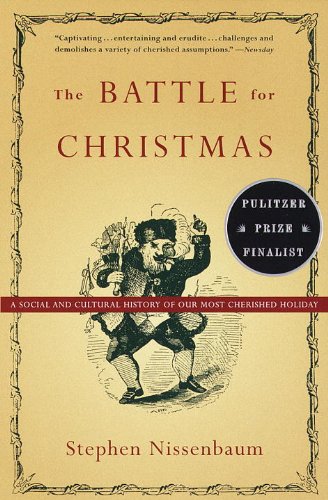
I'm finding Stephen Nissenbaum's "The Battle for Christmas" to be the most in depth look at the American Christmas tradition I've read so far, and incredibly fascinating. In other books/articles I've read, there's almost always some attempt made to link Santa to various European traditions-the legend of St. Nicholas and the stocking, even the bizarre article I linked to last year about how the visions of flying reindeer came from a small Siberian tribe getting high off of mushrooms. While interesting, Nissenbaum claims that none of these traditions had any direct influence on the creation of the American Santa Claus. Other traditions were later incorporated, especially as America grew more diverse, but "The St. Nicholas ritual did not cross the Atlantic," at least not in the way we think. The Puritans who settled in America avoided holidays, and especially celebrations of saints days, since they were not Catholic.

In order to understand the creation of the American Santa Claus one needs to look at the Christmas traditions that were part of American life and the concerns of the people who did reintroduce St. Nicholas to December. Christmas in New England in the 17th century was shockingly different than today's celebrations. You may have heard of the Puritans, or Massachusettes itself, declaring that it was illegal to celebrate Christmas. This seems harsh and completely unnecessary, but actually most of us probably wouldn't approve of the way Christmas was celebrated at the time either. It was seen as a time when the working class could essentially get away with anything. It was, historically, the one month of the year that farming communities could actually enjoy fresh meat and alcohol before it had to be preserved or would spoil, so drinking and eating to excess was part of the tradition. Raucous behavior, indulging in physical and sexual appetites, were all part of the Christmas season the Puritans fought against.

Another part of the celebration was wassailing, a term I vaguely thought of as meaning caroling and drinking spiked egg nog or something similar. Wassailing was actually the practice of the poor people entering houses of the rich and demanding food and drink. For generations, in Europe, the upper class tolerated this practice; it was a seen as a way for the working class to let off steam in a confined way, and for the landowners to assuage any guilt for being harsh masters during the year. It was a time of socially switching roles, which actually served to enforce the usual roles of masters/servants for the rest of the year. (Knowing this, the verses of "We Wish You a Merry Christmas" make much more sense, as the singers demand "Bring us some figgy pudding" and then threaten "for we won't go until we get some.")
English figgy pudding

In America, the working class still hung on to this tradition of disrupting the houses of the more wealthy, but unlike their ancestors, the upper class was not willing to participate. Christmas and New Year's were a time of invasion of privacy for the wealthy, or for gangs standing in their lawn all night banging on drums and playing fifes. The police had little ability to identify and punish the groups of disguised individuals roaming the streets.

Enter the Knickerbockers-or the group of elite New Yorkers whose writing introduced St. Nicholas to the population, presenting him as a quaint New Amsterdam tradition of Dutch descent, when no records indicate his presence in America before John Pintard published a broadside in 1810. (The Knickerbockers weren't even Dutch, but British Americans). St. Nick was then  mentioned in the writings of other Knickerbockers, Washington Irving and most notably Clement Clark Moore.
John Pintard's Broadside that reintroduced St. Nicholas to America

Till that point, St. Nicholas was still represented as he was known in Europe-a powerful bishop who came not on Christmas Eve, but his name day, December 6 (Happy St. Nicholas Day!!). He would reward the good children but punish the bad-in what Nissenbaum calls a mini version of Judgement Day, meant to inspire fear in children.
Jan Steen's "Feast of St. Nicholas" portrays children on both the naughty and nice lists; the boy on the left is crying and being mocked by the other children

Everything changed with Clement Clarke Moore and his legacy, "The Night Before Christmas." The vision he presented of Santa Claus was unlike any image of St. Nicholas before.

1. St Nicholas lost his power and authority. Instead of being a tall bishop wearing his robes, Santa Claus became a tiny elf (Santa in the poem did not have to use magic to fit down the chimney, because he and his reindeer were all miniature).

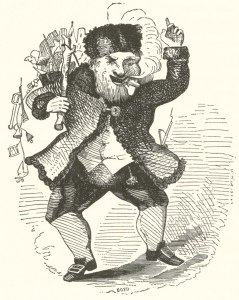
2. St. Nicholas became one of the working class. The pipe that he is described as smoking is "the stump of a pipe," which at the time was something only the working class would smoke-the upper class smoked long pipes.

These two changes made Santa much  more akin to the working class visitors that disturbed the writers of the Knickerbocker group, only the nature of his behavior was significantly different.

3. Rather than demanding, Santa Claus "said not a word" and gave generously

4. The lamented "old fashioned" Christmas tradition of giving to the needy and inverting social status remained, but now in a way that did not require the rich to mingle with the poor or tolerate their disruptions. The tradition was now family focused, and it was children who became the grateful recipients of gifts. In fact, Moore's poem mentions nothing about the threat of a switch or a lump of coal-Christmas is now not a time of fear but of goodwill toward all.

This poem was designed to meet the needs and fears of the upper class feeling threatened by the expanding working class (the previous year, Moore's estate had been disrupted as New York expanded its grid system of streets, paving Ninth Avenue through his property). Yet, it became a classic-because it was malleable enough to meet the desires of America as a whole. Santa evolved more after that, becoming fat and jolly and the myth grew, but Santa Claus as we know him can really be traced back to New York in the early nineteenth century.

Again, I've read about some of these interesting "fun facts" of Christmas history before but Nissenbaum really explains how some of these seemingly bizarre traditions developed and then evolved.

First Santa illustration-published with Moore's original poem
Left Santa illustration-Thomas Nast

Friday, October 16, 2015

At Willow Web-Scary Folklore: Motivating Children's Behaviors


"Baba Yaga and Vasilisa"- Milo Neuman

Today I'm posting over at The Willow Web as part of Amy's Halloween series! Hop on over and join the discussion about the ways that modern parents still use folklore to motivate their children to behave-whether threatening monsters who will punish or benevolent characters who reward. We'd love to hear from you-what supernatural creatures did your parents threaten you with? What do you think of using folklore in parenting? 


Wednesday, December 24, 2014

Fairy Tales and Elf

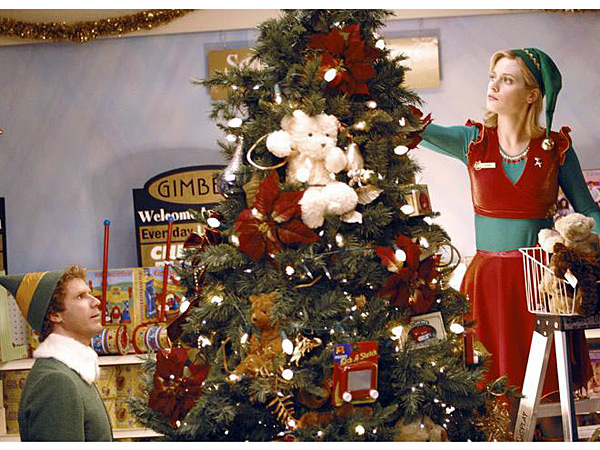
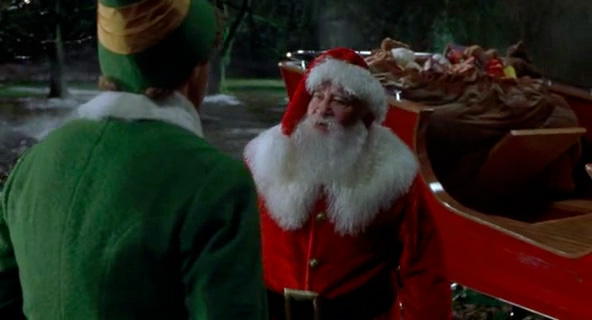
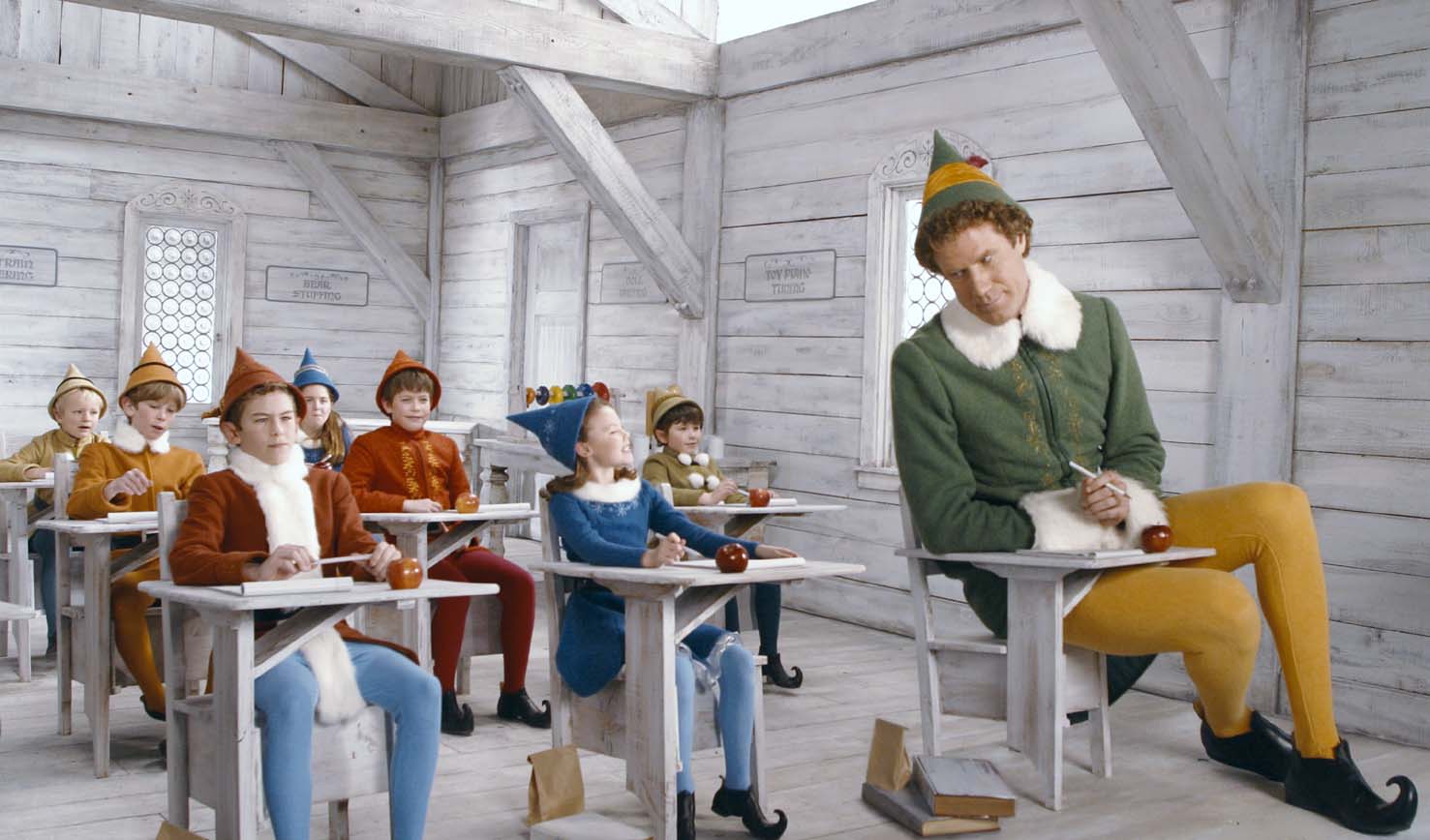
So, I was watching Elf with the commentary the other day (because no Christmas season is complete without watching "Elf" at least once...) and Will Farrell said something interesting. He was talking about the scene at the end where Buddy finds Santa in Central Park, the sleigh is broken, and they're being threatened by the fictitious Central Park Rangers. And he said that, in all the classic fairy tales, there's some element of danger and fear, and that that was their "dangerous" addition.
(Not a very good picture, but part of the idea was to keep the Central Park Rangers hidden and therefore more mysterious and ominous a force).

I appreciated his recognizing that fairy tales are actually rife with danger and scary parts, as opposed to the all-to-prevalent view that the fairy tale world is more like the North Pole of this movie, where things are so childlike and innocent that to call someone a "cotton-headed ninny muggins" is shocking. Of course, the Central Park Rangers are hardly even frightening, although the director Jon Favreau did say they were secretly an homage to the ringwraiths in Lord of the Rings.

Also: This Cinema Blend movie review of "Elf" claims that the story  "borrows heavily from other well known tales (most obviously “A Christmas Carol” and “The Ugly Duckling”)", but nowhere did either Favreau or Farrell ever mention those stories, although they did discuss their inspirations and the motivations behind plot elements and changes to the script. (One of them did, at one point, compare James Caan's character to Scrooge). I think it just goes to show how powerful the classic fairy tales are, that people assume any similar story is "borrowing" material. The concept of someone who feels like they don't belong is a very universal problem; all of us at times question our identity or purpose in life. But of course, we're all familiar with Andersen's fairy tale, so we can't really prove it doesn't subconsciously influence the stories we create...
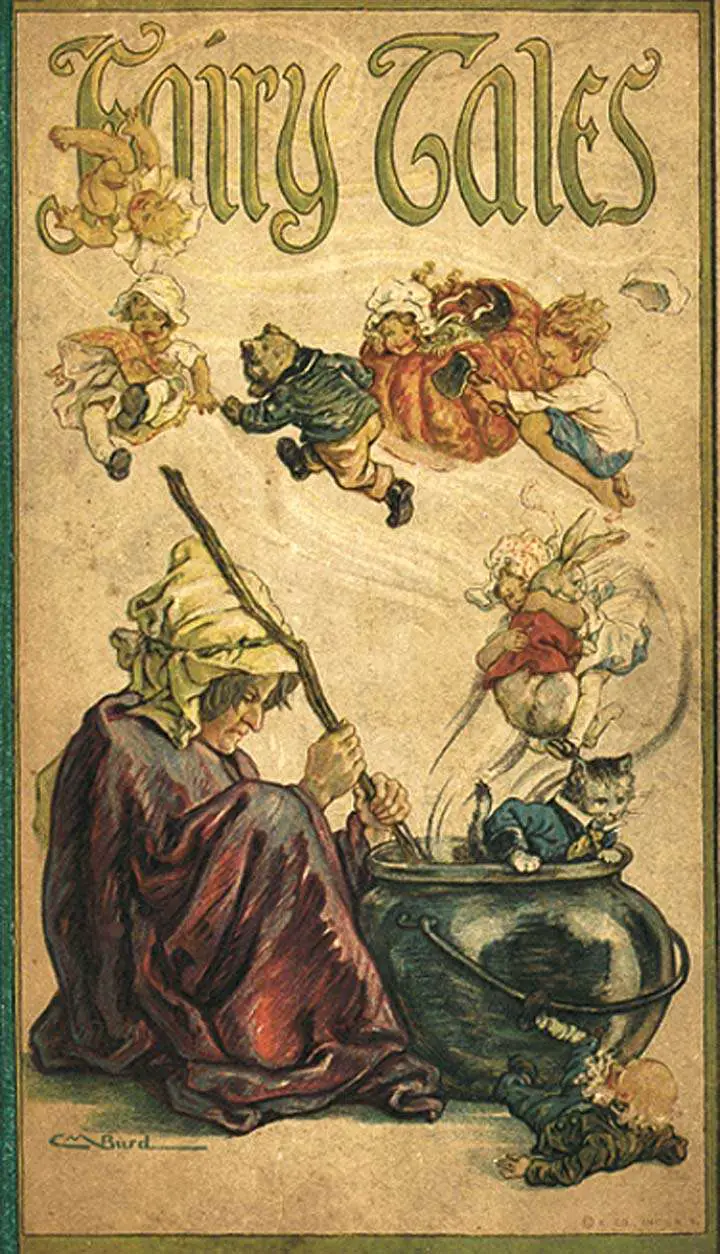
Milo Winter

Merry Christmas!! I hope you are all able to spend time with friends and family, however you celebrate the holidays!

Monday, December 8, 2014

Santa and the 'Shrooms

Haddon Sundblom-Coca Cola ad

A friend of mine sent me this article, Santa and the 'Shrooms: The Real Story Behind the "Design" of Christmas, by Holly McWhorter. Basically, the premise is that Santa's traditional red and white coat actually stems from old traditions of the Kamchadales and Koryaks of Siberia involving hallucinogenic red and white mushrooms, called "fly agarics".
Vintage holiday cards, via the article

Before passing it off as ridiculous, it's a pretty interesting article and they make connections not just between the colors of the mushrooms and Santa's coat, which in itself would be quite a stretch, but to many other traditions about Santa, from his reindeer to why he comes down the chimney. 

The article describes a solstice ritual of the Siberian people in which the Shaman would go out and gather these mushrooms, which were enjoyed by reindeer and people alike, and would give them a high, which could explain some of the stories about flying reindeer and such. McWhorter goes on to describe the actions of the Shaman:
"But how would he get into a yurt whose door was blocked by several feet of snow? He’d climb up to the roof with his bag of goodies, go to the hole in the center of the roof that acted as a chimney, and slide down the central pole that held the yurt up over the fireplace. Then he’d pass out a few ‘shrooms to each guest, and some might even partake of some of the ones that had been hung over the fire. Clearly, this idea of using the chimney to get in and pass out the magic mushrooms (and other goodies) had sticking power. Interestingly, even as late as Victorian times in England, the traditional symbol of chimney sweeps was a fly agaric mushroom — and many early Christmas cards featured chimney sweeps with fly agarics, though no explanation of why was offered."

The article claims that this ritual is the origin of the Santa myth, which got later mixed in with other traditions such as the Dutch Sinterklaas. I think that's maybe stretching it a bit much-many European cultures had some form of gift giving spirit, or mischievous house elf, or a possible relation to Santa. The influence of St. Nicholas can't be ingnored, because where this article claims that hanging mushrooms in a sock over the fire was the origin of stockings, that has also been attributed to a legend of St. Nicholas. It seems a little odd to me that the traditions of such small, isolated tribes should have spread and grown throughout Europe over the years; the article claims the traditions were carried to Great Britain by ancient druids. I'm sure that some elements of this tradition did get incorporated into the modern Santa, but I find it extremely unlikely that these traditions would have been spread all around Europe in bits and pieces, then later all brought together again when those descendants immigrated to America, where they were all joined together again in a remarkably similar way.

Debating origins is pretty tricky and ultimately impossible to know for sure, but I found the article interesting. Red is such a significant color in Santa Claus history as well as fairy tales, especially "Snow White" and "Little Red Riding Hood". Could the use of this color in these stories could also be related to these mushrooms, which are also often pictured alongside fairies? I also posted earlier this year about the possibility that the traditions of witches flying on brooms were also caused by a hallucinogenic plant that would give the eater illusions of flying. It's not too much of a stretch to see that as a possibility, but at the same time, flying is a pretty universal human wish, and a common dream. I don't think we need to be high, necessarily, to create stories about flying.
Elsa Beskow
Selina Fenech


Also, I've done a fair bit of reading into the history of Santa and Christmas traditions, and this is the first I've heard of any of it being related to mushrooms and highs. 

Something else to keep in mind whenever looking at possible origins of either Santa Claus or various related fairy tales is that, statistically, some coincidences are bound to happen. If you compare our Christmas traditions with every ancient culture's Winter Solstice, you're more than likely to find some parallels, it doesn't necessarily mean they're related. Still, pretty interesting to consider!

Friday, July 18, 2014

Richard Dawkins on Fairy Tales

I had almost missed this post over on Surlalune, so make sure you read it if you haven't already: the fairy tale community responded to Richard Dawkins' statement that fairy tales could be detrimental to children. Hop on over to the post to read more about what he actually said (and his later amendment), and the fairy tale defenders discussing their worth-all very interesting stuff. I've partly addressed the possible benefit of fairy tales/fantasy before, even from an intellectual perspective, in my post on what Einstein may have meant when he (supposedly) said "If you want your children to be intelligent, read them fairy tales. If you want them to be more intelligent, read them more fairy tales."

I just find it interesting that Dawkins assumed that children who read fairy tales automatically believe in them. I never believed fairy tales were true, what's more is in all my interactions with children I feel like I've never had to have a discussion with them about what's possible and impossible-they get that a pumpkin turning into a coach and fairies granting wishes is magic. I do think that, possibly, the difference between most children and most adults interacting with fairy tales is that children tend to want the fairy tales/magic to be true, but they can also be pretty shrewd/skeptical. We shouldn't underestimate children and their potential.

Furthermore, to equate fairy tales with Santa and with God is just illogical. Santa is a cultural myth-many parents go to great lengths to convince their kids that Santa is real, and when we throw in movies and mall Santas it's a completely different story than we have with fairy tales-except in rare cases no one is actively trying to provide their kids "proof" that Cinderella was at the ball or Snow White bit the apple.

And God is a whole other matter. You can find very intelligent scientists who believe in God or the possibility of God, bu you won't find any who believe in Santa Claus.

Plus, Dawkins seems to assume that anyone unveiling the "truth" about childhood beliefs will be damaged by that. I personally think that, when I read tales of magic and wonder, it often helps me appreciate the beauty and wonder of creation. I also talked a little about this in my post on Mermaid hoaxes.

Anyway, I'm curious as to how you all reacted with fairy tales when you were little. Did you/anyone in your acquaintance believe in fairies? Was there a moment of discovering the "truth" that affected you in any way?

Friday, December 28, 2012

Scary Night Visitors

From BBC News, Bogeymen: Five Scary Visitors in the Night by Lucy Proctor describes some little known, scary alternatives to the gift-giving Santa Claus, such as the Gryla from Iceland:

"Her story goes back to pagan times, but in more recent centuries she has become part of Christmas - making the trip down to the towns and cities, searching for naughty children.

She returns to her cave with a bag stuffed full of crying youngsters, whom she boils alive and gobbles up."

And Zwarte Piet from the Netherlands:

"Until the 19th Century, Sinterklaas did his own dirty work, bringing good children presents, but taking bad ones away in his sack for re-education and a beating.

But in 1850, children's author Jan Schenkman drew him with a black servant, who later became known as Zwarte Piet. It is now Zwarte Piet's job to go down the chimney to deliver presents and catch the less fortunate children."

It's a fun, quick read with some surprising information-although maybe less surprising if you're already familiar with the dark side of folklore and how it has become more and more tamed over the years.

Sunday, December 16, 2012

Yes, Virginia

In 1897, a young girl named Virginia O'Hanlon wrote a letter to the New York Sun, asking the editor whether or not there really was a Santa Claus. The now-famous response began "Yes, Virginia, there is a Santa Claus," as Francis Pharcellus Church went on to explain not only that he existed, but why believing in him was such an important thing.

Church encouraged his readers to consider what a world would be like without Santa Claus and how dreary that would be: "there would be no childlike faith then, no poetry, no romance to make tolerable this existence. We sohuld have no enjoyment except in sense and sight. The eternal light with which childhood fills the world would be extinguished. Not believe in Santa Claus! You might as well not believe in fairies!"

I don't think it's wrong to join in the cultural practices of Santa Claus lore, we did in my family growing up although my parents didn't emphasize the Santa Claus part, and I can't remember a time when I actually believed in Santa Claus, so I realize I'm probably coming from a minority perspective. But I disagree with the idea that if you don't believe in this specific story that there is nothing "to make tolerable this existence." Really? The only thing that makes life worth living is a fat man on the North Pole who gives you whatever you want once a year? That's a pretty pathetic view of life on this earth.

I realize Church was probably not so concerned with the particular details of what Santa does on Christmas Eve as the fact that he believes children should believe in wonderous things, which I agree with. But the fact is, there are plenty of wonderful things in this world that really do exist. You can still view the world through a lens of wonder and awe without being naive and believing lies. As we learn more and more about science we see the beauty and mystery of Nature, from the cosmos to the microscopic, and we realize there is so much more to our existence than we can ever comprehend.

Thomas Nast

I find it interesting he compares belief in Santa with belief in fairies, not only because of my interest in fairy tales, but because belief in fairies is not generally encouraged among children the way belief in Santa Claus is. Most children go through some sort of disillusionment when they discover where their presents really come from, although apparently most manage to get over it without ruining trust in their parents, but I'm a big believer in being honest with kids so I'm not sure how I would handle the issue myself. My parents wanted us to experience the joy of giving as well as receiving, which is part of the reason they didn't go to extreme lengths to keep us believing our presents magically appeared every year.

I think it's more important to emphasize the real heroes in life-those who spend their lives making the world a better place, those who work and volunteer in charities and schools, firefighters and policemen and women and members of the military-those who risk their lives making our lives safer. You don't have to have a superpower to be a hero, and even if Santa Claus doesn't exist the way the Christmas songs say he does, I do believe in the miraculous. I agree with this quote which is also part of Church's "Yes, Virginia" editorial: "there is a veil covering the unseen world which not the strongest man, nor even the united strength of all the strongest men that ever lived, could tear apart."

Sometimes we do get glimpses of what lies beyond the veil. Santa Claus, and fairy tales, can help us imagine what this world could be like, but are only guidelines.

Thursday, December 6, 2012

Happy St. Nicholas' Day!

Although Santa isn't technically a fairy tale, the more I learn the more I'm amazed by the paralells between the evolution of faerie and the evolution of St. Nicholas to Santa Claus.

Fairies were once feared and regarded to be unpredictable creatures, who could range from malevolent to merely capricious pranksters, but hardly ever in the history of fairy lore were fairies the beneficient, wish-granting characters they are painted as today, nor were they necessarily miniature and winged.

St. Nicholas was not fearsome in the sense that he was evil or unpredictable, but he was held in awe by his followers. According to legends, he not only had the power to predict and prevent disasters, but to restore the innocent to life, as well as take a life as punishment for crime.

Read my post from last year on the stories of the three girls rescues from prostitution or slavery, which is thought to be the origin of the tradition of hanging stockings, or the story of the three murdered students St. Nicholas brought back to life (which includes gruesome details, much like the fairy tale Robber Bridegroom).

St. Nicholas was also the patron saint of sea travelers, and many stories include him appearing in dreams, or in person (even after his death) to sailors to warn them of storms and redirect them, work with them, even restore a sailor to life who had perished in a storm. Because of the story of the students referenced above, he became the patron saint of students as well. Over time, illustrations and versions of that story created students that were younger and younger, until they became children, and he eventually became the patron saint of children in general. There is also a story of him returning a boy from slavery to his parents on his feast day (today, December 6!) which aided in his image as protector of children. In fact, as stories developed and spread throughout Europe and Russia and parts of Africa, he became the patron saint of practically everyone-from pawnbrokers to vagabonds. He also eventually came to be associated with restoring happiness and wealth, and later into the Giver of Gifts we know him as.

St. Nicholas was also associated with stories involving the number three-three generals or three students saved from death, three episodes-a characteristic of folk tales as well.

Throughout the Middle Ages, it became common for plays to be performed on his feast day enacting scenes of his life and miracles. Though the plays could get a bit bawdy at times, or light-hearted poking fun at an image usually regarded with supreme reverence, the happy ending justified the rest of the play. Already we see a beginning of a transformation of attitudes-from fear and awe of his earlier worshipers, to a figure of celebration and fun.

Though there may be some remnants of folklore in the Santa Claus traditions we currently have (the Swedish Jul-Bocken, or Christmas buck, that bore presents, relate to Santa's reindeer, and his fur coat is similar to that of Pelz-Nicol in southern Germany) Santa Claus as we know him is the product of three specific men in New York in the nineteenth century.


Washington Irving wrote a spoof history of the Dutch immigrants that included references to St. Nicholas, thus reminding the American population of this once-venerated figure in Europe. Influenced by this, Clement Clarke Moore wrote his famous "A Visit From St. Nicholas" (now more commonly known as "The Night Before Christmas") in 1822.  Thomas Nast's illustrations of Santa Claus transformed him from the once thin (literally, thin enough to fit through a chimney) to the rotund figure we see in so many commercials, shopping malls, and storefronts around this time of year. Rather like Charles Perrault did to Cinderella, the elements we now think of as ageless really sprang up due to these three men-building toys in the North Pole, records of good and bad children, receiving and answering children's letters, and driving his reindeer-none of these ideas were associated with Santa previous to New York in the early nineteenth century.
 To put this in perspective, as Santa Claus was becoming more and more a jolly children's figure, the standard fairy tale versions we know were being created-the Grimm brothers' collection first published in Germany in 1812. The relatively new phenomenon of children's literature was affecting the images of folk tales and saints alike, transforming them into "child-appropriate" in such a way that their earlier histories have become all but erased from present knowledge.

What does this history of Santa Claus mean? In the words of Martin Ebon, the versions of Santa Claus reflect the surrounding culture more than anything else, as we adapt our folklore to meet our needs (just like the evolution of fairy tales).  Wherever there was a need, St. Nicholas was there to calm fears and instill hopes-from the dangers of the sea, to those of travelling students, to the vulnerability of children in general. "He is what he is today, as Santa Claus, because we yearn for a season of altruism, childlike innocence, and 'Peace on Earth.'"

*All information from Martin Ebon's Saint Nicholas: Life and Legend

Sunday, December 18, 2011

The Legends of St. Nicholas


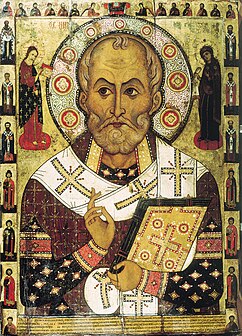
St. Nicholas was a real man born in the third century, in what was then Greek but now part of Turkey. He was known for being exceedingly generous, giving all he had to the poor and expecting nothing in return, and is considered a saint of protecting children as well as sailors.

Over time, of course, legends have grown out of this man and I'm sure there's some truth to some of the stories about him but much has been exaggerated. You may have heard the story that is supposedly the origin of stockings-there was a poor man with three daughters and he had no money for their dowries. Because of this he would be forced to sell them into slavery, but on three occasions, a bag of gold was thrown in through the window, so his daughters were saved from slavery. One or more of these bags of gold landed in a stocking drying at the fireplace, and that's where the tradition came from (also, the balls of gold could be the origin of putting oranges in Christmas stocking, a tradition which my father had growing up but which I think has been largely lost, at least in America).


There are other lesser known stories about St. Nicholas-such as magically whisking an enslaved boy back to his parents on St. Nicholas' Day (December 6). Another story I heard in France earlier this year-we were staying very near a Cathedral dedicated to St. Nicholas, with an American who's been living in France, and she was shocked by the violence of this story, but it's really not too different from a lot of fairy tales. Anyway, three students (or children, in the French version) were murdered by an innkeeper, who hid their remains in a pickling tub. Nicholas stayed the night at the inn and dreamed the crime, and summoned the innkeeper. Nicholas prayed and brought the children back to life. I don't know what happened to the innkeeper-neither the story I was told nor this site has anything on it.

Images by Elisabeth Jvanosky and also from the link just above

Tuesday, December 7, 2010

Jultomten

In general, our modern Santa Claus came from a historical figure, St. Nicholas. But in Sweden, their Santa Claus figure was actually once a house elf.
The Swedish tomte is the equivalent of a hob, brownie or house-elf found in other parts of Europe. They live in houses and can be quite helpful, but very nasty if denied their usual salary (porridge with butter on Christmas night) or if he felt offended, after which he would punish people-sometimes harmelss pranks, other times killing those who ate his porridge.
Denmark's house elf, the nisse, started bearing presents on Christmas around the 1840s, and the Swedish tomte followed his example. Jenny Nystrom illustrated the tomte as a more Santa Claus-like figure-wearing red with a white beard (illustrations shown above). He had a goat rather than reindeer, and though over time he's been more and more influenced by the Western Santa Claus, some in Scandinavia still leave out porridge for him (I'd rather have cookies, myself...).

Other Swedish Christmas traditions come from ancient folklore. Long ago people believed that the dead would come back to visit their homes on Christmas, so lights were left on, beds were left open (the people slept on the floor), bath houses were warmed, and food was left out for them. Some of these traditions have been attributed to being for the Christ-child, but that's not where they originated. There was much superstition attached to every activity done on Christmas-for example, if a light went out during the night it was an omen of death in the coming year, and I wonder if that's the original reason for why we still have outdoor Christmas lights on through the night. Sleigh bells served the purpose of making noise to keep away goblins and demons. Goblins were supposedly often present at Christmastime, and there are many stories of people who were whisked away to another spirit world on Christmas. Christmas, like fairy tales,
tends to have a reputation that it's mainly for children (and marketing), but both things started out much darker and not exclusively for children at all.
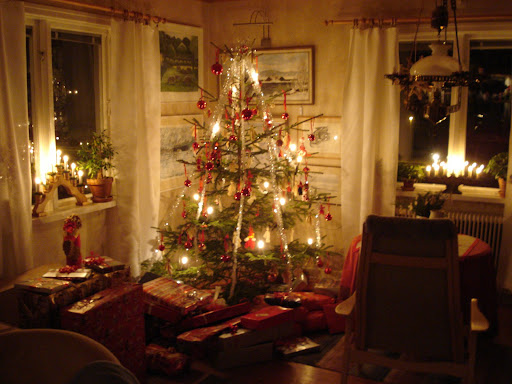
One other interesting thing-there was a belief in ancient rural communities that the well-being of a farm was dependent on the well-being of a certain tree, called an ancestral tree-often thought to be the home of the farm's house elf. Christmas trees are a relatively recent tradition in the long history of Christmas, but earlier generations may have had those associations in mind when decorating their sacred Christmas trees.