Wednesday, March 17, 2010

Alice-inspired jewelry

I was wandering around Etsy and was intrigued by this pendant, entitled "the real Alice in Wonderland":

which can be found here.
The seller justbedesigns includes this fascinating information:

"I was curious as to what influenced Lewis Carroll to write Alice in Wonderland. All of the research that I did led to Alice Liddell - a five year old girl whose family Lewis Carroll befriended. He was quite taken by little Alice and even referred to her as his "muse." His affections for Alice became more of an obsession and he was banned from seeing or speaking to her and her sisters. Carroll actually wanted to marry Alice but the family forbade it, citing his age as a huge factor -- he was more than thirty years her senior. Nobody knows if the above is for sure true -- it is all speculation. But, the more that I read about the events; the more I became intrigued. I also came to learn that parts of his diaries were torn out and pages were just missing that chronicled the trips that he took with Alice and her sisters."

Is it just me, or is there a huge increase in Alice in Wonderland-inspired products since the Burton movie started being advertised? I have been drooling over daileedose's Alice in Wonderland jewelry collection. If no one's bought me anything for my birthday (though I guess my unbirthday would be more appropriate...) I might have to snag something for myself...

Disney's Beauty and the Beast onstage


I may be going to see the musical version of Disney's "Beauty and the Beast" next week.

As much as I love Beauty and the Beast, and the Disney version, the musical is actually one of my least favorite versions of the story. Maybe it partly has to do with having been in the musical in high school and I have other associations that go along with it; however, I don't like a lot of the changes they made to the movie.

The pluses to the musical: the song "Human Again," which was originally written for the movie but cut out (and included later in the collector's dvd edition) is fun and helps develop the characters of the enchanted objects. Also, the song "If I Can't Love Her," sung by the Beast at the end of Act I, is very touching.

When I was a kid, I thought Lumiere especially was the funniest thing ever, but as I grew I found his humor more slapstick and not quite as hilarious as I once did. But who knows, this time around maybe I'll find it funny again, I'm sure his part depends largely on the actor and director.

Image from here

Additions to the movie that are not so hot:

Belle's extra songs are just cheesy. They threw them in, I'm sure, to give her plenty of solos, but the music and the words are disappointing. In one song she claims she had, "No change in heart-a change in me." What does that actually mean? How is your heart separate from yourself?

Gaston's song includes these lyrics: "You've been dreaming just one dream/nearly all your life/hoping, scheming, just one thing/will you be a wife?/will you be some he-man's property?/Good news, that he-man's me." Yes, I'm sure there's an element of humor in it, and certainly no one can go away from the show thinking he's not incredibly self-centered, but the song overexaggerates his character to the point where it's unbelievable. (Sadly, I didn't have to look up those lyrics, I still remember them from being in the play years ago).

Overall, it's like the musical targets an even younger audience than the Disney movie. Everything that should be obvious is spelled out anyway. Instead of the audience seeing Belle give up her freedom in place of her father's and letting the situation and acting relate emotion, she has to sing a song about how the castle doesn't feel like home and if the Beast thinks that what he's done is right, then he's a fool. It just trivializes what could be a very powerful situation.

Plus, the Disney movie implies that Belle stays at the castle for at least several days (although if you compare it to the timeline of the Father, it can't be very long, but I don't think the creators of the Disney movie were super careful in thinking through how much time elapses--for example, in the movie, the narrator says at the beginning that the rose would bloom till the Beast's 21st year. First of all, that's really young to be expected to have found true love for life. Secondly, Lumiere sings in "Be Our Guest" that for ten years he's been rusting, meaning the Beast was a 10-year-old kid when cursed, if you follow the logic. Which is why, in the musical, they change the rose to blooming "for many years.") But the musical makes it appear that the entire plot happens in about a day. It's harder for Belle to switch costumes in a stage version, but to have the Beast go from totally selfish and cruel to kind and gentle in a day, and for Belle to go from revulsion to being in love, is completely unrealistic. And that's the strongest asset of the fairy tale--love that is not love at first sight, but developed over time and based on character.

Another minor detraction in the live version is the costumes themselves--though often very elaborate and beautifully made, there's only so much you can do to make a human into a believable teapot, wardrobe, plate, etc. At least in animation, the characters can be the right size for their object and move appropriately. I guess that's where imagination comes in--I am a firm believer in imagination--but just compare the stage characters to the real ones:

Monday, March 15, 2010

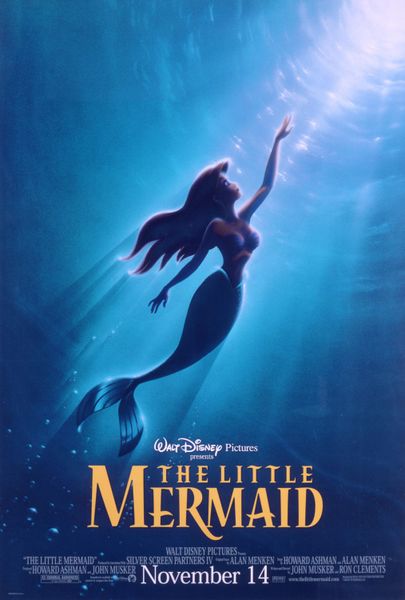
The Little Mermaid


Image from this post at Once Upon a Blog

"The Little Sea Maid" is a fairy tale written by Hans Christian Andersen. Though inspired by mermaid folklore, it is an original story, not a reworking of oral tales.


I'm trying not to start every post by comparing a fairy tale to the Disney version, but Disney is so prevalent in our culture's thinking about fairy tales as well as my own personal knowledge of fairy tales, so it's hard to avoid. So, Ariel is officially my least favorite Disney princess (aside from Pocahontas, who doesn't even count. I have a friend who wasn't allowed to watch Pocahontas or Anastasia as a kid because they were historically inaccurate, which I find simultaneously sad and awesome).

The Disney version comes across as saying: a) don't listen to your parents, they're old and narrow-minded and don't know what they're talking about. b) not only is love at first sight true, but you should risk everything--including your safety, your future, and your family, to pursue your first crush.
The Andersen version starts very similarly, with the Little Sea Maid growing lovesick over a human prince, and eventually seeking the Sea Witch to give her legs. But not only must she give up her voice, but entered into a state of constant pain ("every step you take will be as if you trod upon sharp knives, and as if your blood must flow") and give up all chances of being a mermaid or seeing her family again. She is expected to woo the prince with her "beautiful form...graceful walk, and speaking eyes." And she doesn't succeed. The Prince isn't put under an evil spell to fall in love with the witch in disguise, but some other nice and pretty Princess. Given the chance to kill the Prince to save her own life, she declines. In the end she jumps into the sea, becomes sea foam, and then joins the "daughters of the air."
Critics have pointed out that this is more of a reward for her steadfastness than a punishment, since she enters into the afterlife, but I never read it that way (even though I do believe in the afterlife). Yet I find this ending much more satisfying than the stereotypical happy ending. She made a stupid decision as a young girl and paid for it, yet there is a glimmer of hope. It may seem that, after a broken relationship, there's nothing to live for any more, but life does go on, even if it can never be quite the same as it was before. I take the fairy tale as a message against becoming passionately attatched to someone prematurely.

Which is interesting, because at the beginning of the story, when the Sea Maid reaches her fifteenth year and is finally allowed to go above the surface of the sea, oysters are attatched to the Princess' tail, to show her high rank. The Sea Maid protested, "But that hurts so!" but the reply is, "Yes, pride must suffer pain." Later, the Sea Maid endures much more pain because of her love for a human. I don't know if I would call lovesickness "pride," per se, hers is more foolishness than anything else, or the fact that she was forced to wear oysters, for that matter. Andersen had his own moral agenda, which Maria Tatar elaborates on more in this book.
To be honest, I think the main reason Ariel is so popular among little girls today is because she is a mermaid, and mermaids are cool, not so much because of her story. Lore about sea maidens generally tells a very different story--sirens who lure men to their deaths, or women kidnapped and forced to marry mortal men, but who escape as soon as they recover their seal skins. Mermaids have been made innocent and harmless much like fairies have.

Saturday, March 13, 2010

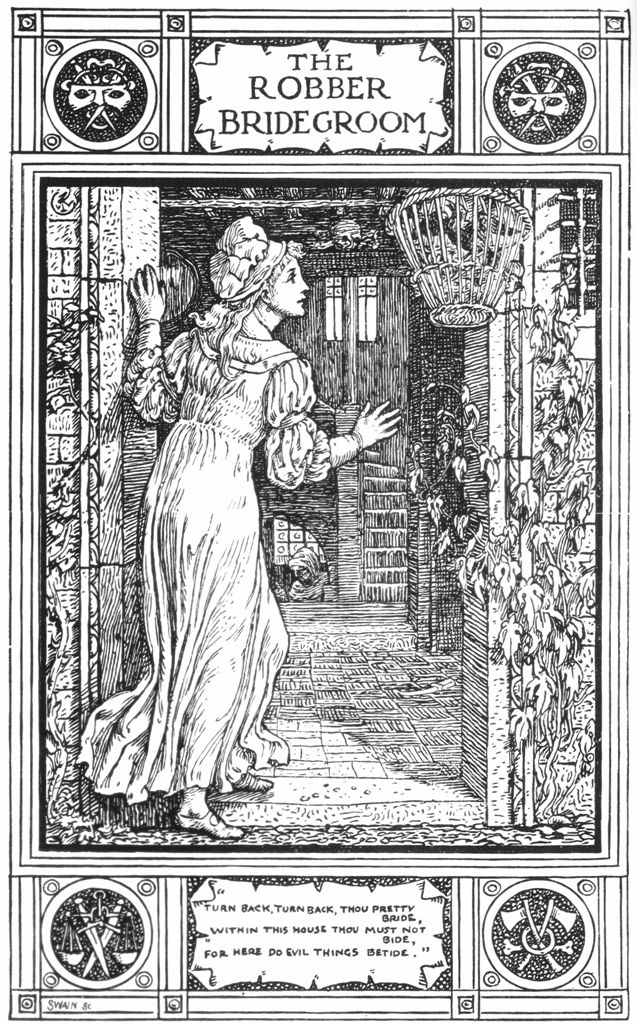
The Robber Bridegroom

This lesser known Grimm fairy tale is very dark. I love hunting through my Grimm books to find treasures like this--Cinderella and Red Riding Hood and all the classics are wonderful but there are so many other fascinating tales.
Here is Wikipedia's summary, although read the full text if you can, it's so much better--

"A miller wished to marry his daughter off, and so when a rich suitor appeared, he betrothed her to him. One day the suitor complained that the daughter never visited him, told her that he lived in the forest, and overrode her reluctance by telling her he would leave a trail of ashes so she could find his home. She filled her pockets with peas and lentils and marked the trail with them as she followed the ashes.
They led her to a dark and silent house. A bird in a cage called out to warn her that she entered a murderer's house. An old woman in a cellar kitchen told her that the people there would kill and eat her unless the old woman protected her and hid her behind a barrel. A band of robbers arrived with a young woman, and they killed her and prepared to eat her. When one chopped off a finger to get at the golden ring on it, the finger and ring flew through the air and landed in the bodice of the hiding woman. The old woman discouraged them from searching, because the finger nor the ring were likely to run away: they'd find it in the morning.


The old woman drugged the robbers' wine. As soon as they fell asleep, the two living women fled. Wind had blown the ashes away, but the peas and lentils had sprung up into seedlings: the two followed the path of plants and reached the young woman's home.
When the wedding day arrived and the guests were telling stories, the young woman said that she would tell a dream she had had, and told of her visit to the robbers' den, her bridegroom punctuating it with "My darling, you only dreamed this." -- or the robber punctuating with exclamations that it was not so in the Mr. Fox variant -- until she produced the finger of the dead girl and showed it to the company.
The robber bridegroom and all his band were put to death."
Second image from Surlalune Fairy tales. First from here.

Wednesday, March 10, 2010

The Twelve Dancing Princesses-Ruth Sanderson


Ruth Sanderson's retold and illustrated "The Twelve Dancing Princesses" is full of exquisitely detailed oil paintings that kept me staring at the pictures as a child...and as an adult.


My sister had put these gold leaves in the page where Lina (Sanderson's name for the heroine) approaches Michael (the soldier/commoner of this version) with the leaves from the gold forest he put in her flower bouquet (Michael gets work as the Royal Gardener. Overall the story is pretty true to the Grimms', though.)

Once, I was telling this fairy tale as a bedtime story to some little girls I babysit. When I got to the part where the eldest Princess claps her hands and the trapdoor in their room opens (although in one of my Grimm translations, she doesn't clap her hands, but just taps the bed), the oldest girl, who was then about 6, got all excited and said, "If WE clapped our hands, maybe a door will open up in OUR room!" Sadly, it didn't work. I love the optimism and enthusiasm of children, though.

Monday, March 8, 2010

Maria Tatar: Off With Their Heads!: Fairy Tales and the Culture of Childhood

To sum up this book very quickly: Life in the Victorian times sucked if you were a woman or child because men had complete authority. The fairy tales collected and published during this time were not the "authentic" versions of the tales, as we often think they are today, but altered from the oral tales to encourage complete submission to authority (children to adults, women to men.)
First of all, let me preface by saying: I've heard feminist arguments before that I thought were weak and/or failed to take into account the culture and context in which the tales were created. Things like "the fact that Sleeping Beauty and Snow White are in coma-like-death clearly indicates that men want their women passive." Which I didn't buy into. First of all, a couple tales in which women are immobile for a while doesn't indicate that those circumstances are set as the ideal for all women everywhere. Secondly, the sleep is clearly a curse, not the desired state of being. The happy ending occurs only after the heroine has been awakened, therefore giving mixed signals at best.

Another slightly better argument I've heard: "Since females in fairy tales do domestic chores and then have a happy ending, this means that domesticity is a trait of the desirable female in the eyes of the storyteller." But again, nearly always, the chores are represented as an undeserved punishment imposed by (usually) a cruel mother/stepmother. The happy ending includes the female, generally, as married to a Prince and therefore never in need of doing housework again. But consider it as well in the context of the culture--in a time when most people were living off the land, women did housework. Housework itself is not demoralizing or degrading, someone has to do it. I think it totally natural that women would pass the time cooking or cleaning by telling stories and imagining that someone hardworking like them would be rewarded so richly. Plus, at the time, men weren't going into the office and leaving all the chores to the women, they were probably working in the fields or doing their part to supply the family with their needs. But the interesting thing about this argument is the fact that there is a notable lack of males who ever do their own chores in tales. Males tend to go on supernatural quests, while females end up doing chores somewhere in their adventure. But one more thing--Cinderella often gets accused of being too passive. But what options did she have? She couldn't go out, get a GED, and work her way through school. Back then women could be wives, be servants, be a teacher if they were educated themselves, or be prostitutes. Those were pretty much their only options. If Cinderella had run away, it would have been to be a servant to someone else who probably would have treated her about the same.
All that to say, I think Maria Tatar has the best arguments I've read to describe the reality of gender roles in folktales. She does take into account the cultural context, and also analyzes the trend of the tales through different cultures and time periods, rather than picking apart details of a certain version and assigning them meaning, even if it's a meaning most educated people wouldn't necessarily pick up on, much less uneducated peasants telling tales among themselves.

Chapters 1-4

The Victorian age witnessed the birth of children's literature as its own genre. Stories for children were made specifically to induce fear of disobeying. While this summary may not seem to surprising--as an educator myself, I know firsthand the need for obedience in the classroom--but the many specific examples she quotes of excerpts from literature or actual childrearing practice are shocking. In stories, one disobedient act by a child would be punished by often a painful death, if not the deaths of others around them. Parents were encouraged to beat and whip their children for mild offenses, even infants. Tatar gives examples of oral fairy tales, and then the written Victorian versions (mainly the Grimms), and it's clear that the tales were altered to fit in with this harsh trend in childrearing. (What I really wish someone would publish is the complete original notes the Grimms took while listening to their oral sources, then the first edition, and the subsequent versions, to trace the evolution even within the Grimms themselves. Some revisions are surprising, but some tales have very little editing.)

Tatar also refers often to Maurice Sendak as a more modern contrast to the Grimms, which was very enlightening, since I was only familiar with his "Where the Wild Things Are."


From chapter 4-"This simple fact of children's literature as a product of adult reconstructions of childhood's realities does much to unravel on of the mysteries of fairy tales...whenever a book is written by adults for children, there is a way in which it becomes relentlessly educational" (p.92)

Chapters 5-7

The next section of the book deals with women and girls. I had known life wasn't ideal for women in Victorian times, but the more I learn the more horrified I am. Women now tend to long for the old-fashioned man with manners and chivalry, and I think we think every man back in the day was a Mr. Darcy from Jane Austen's "Pride and Prejudice." I've always preferred the Bronte sisters to Jane Austen--their novels introduce a slightly darker side to Victorian life. Especially Anne Bronte's "The Tenant of Wildfell Hall," the lesser known of the Bronte novels, but probably more indicative of what life was really like for a typical woman. If anyone wants to learn about life for women in Victorian times through a novel, read this book. Warning: you will get very angry while reading this book.

That had nothing to do with Tatar, by the way. Tatar again cites cultural views of women and their role, as well as lesser-known tales and versions to give a more complete picture. Like children in the didactic tales, women are often severely punished for things like disobeying their husbands. "Even the harshest penalties remain unchallenged when women begin breaking all the rules in the book of feminine behavior by taking steps in the direction of acquiring knowledge and power" (p.119). Males actually get off pretty easily for more severe sins--think of the father in Donkeyskin, most versions of that tale end with the Princess reconciled and living happily with him. Daughters are expected to be completely devoted to their fathers, then transfer that total (even blind) devotion to their husband--while, of course, still remaining on good, obedient terms with their father. "Never once do these stories show a heroine making a move in the direction of autonomy--the tales ceaselessly turn on the question of retargeting the object of the woman's devotion."

Tatar points out a very interesting contradiction existing in most tales--characters are applauded for disdaining worldy wealth and then rewarded with...worldly wealth. I had noticed this in "Beauty and the Beast," that the sister that wants a simple rose rather than the jewels and expensive clothes of her sisters is given more dresses and jewels than she could ever wear, as well as a complete life of luxury. Tatar explains this as the affect of didactic morals being placed into a tale that was not originally didactic, therefore has competing messages. I definitely agree, but I think another way to view this would be to think of the riches (or even the handsome prince at the end of Beauty and the Beast) as symbolic: to those who appreciate the simple things in life and are content rather than always wanting more, those simple things provide genuine pleasure. The Beast, which is initally seen as ugly, ceases to be ugly once Beauty gets to know him because she sees the beauty of his character.

Chapters 8-10-Violence, Cannibalism, and the Juniper Tree

Tatar explores the surprising amount of violence found in most tales, especially the un-moralized oral tales, but also the extemity of the violence found in moralizing tales when punishing the villain. Food itself also plays a very significant role in folktales. Tatar again alludes to culture--to a people often exposed to starvation, infant deaths, deaths of mothers giving birth, and child abandonment, some of the more dark themes explored in fairy tales make more sense. Returning again to the subject of gender roles, she talks about how a "happy ending" often consists of father and children living happily without the mother. A lot of this could be attributed to the reality of stepmothers stepping in after a mother had died in childbirth, who would desire for her own children to have what inheritance there was. Or, it could be attributed to the fact that these tales were largely collected and published by men, who felt more comfortable with female than male villains.

The epilogue contains a very interesting critique of Disney's "Snow White." I don't think Disney consciously knew he was, as Tatar claims, creating "a complete absorption of maternal figures into the realm of evil" (232)--as Tatar does point out, he was really just following the trend the Grimms before him paved the way for. And for those who attack Disney as being chauvenist, while there are good arguments against him, consider again the context--Snow White came out in the 1930s, Cinderella and Sleeping Beauty in the 1950s. American notions towards women were very different then than they are now. Not that that completely excuses Disney, but people back then weren't aware of what messages they were implying as much as they are today.


To close, a quote from the epilogue:
"No fairy tale text is sacred. Every printed version is just another variation on a theme--the rewriting of a cultural story in a certain time and place for a specific audience." (229)

Friday, March 5, 2010

Alice in Burtonland


The Chicago Tribune had a pretty good review of Tim Burton's Alice in Wonderland. I'm kind of a purist when it comes to books I like being made into movies, so though I love Tim Burton, I'm almost afraid to see the movie. The fact that it's a sequel to the original story could be an opportunity for some really interesting creative ideas, but also could be a reason to separate from the heart of the original story even more than a typical remake would. Apparantly there's a big battle between the Red and White Queens. As much as I love a big epic fantasy with action and excitement, that's not the point of Wonderland. Wonderland is a place of nonsense and absurdity, more like a dream than our world. Good and evil, or enough consistency in plot to carry through an entire battle, seem out of place in Wonderland (which is apparantly called "Underland," an interesting choic, makes it seem more sinister. Not that I mind sinister). In fact, the fact that Alice can go there as an adult seems like that shouldn't be; as if, like Neverland, Wonderland should be reserved for children.

But these are my own personal reservations, I can't really say until I've seen the movie. I'm too cheap to see movies in theaters much so it will probably be a while before it's available on Netflix, but I'd love to hear other people's opinions as they see the film.

Oh and this gives me an excuse to show off my teapot.


Thursday, March 4, 2010

Robin McKinley and Beauty and the Beast

I've given my opinion of my favorite children's picture book version of Beauty and the Beast. My favorite novel version is probably the best known, but there's a reason for that-
I have read and reread Robin McKinley's "Beauty" so many times. Her first novel, she takes the essence of the Villeneuve/Beaument story and fleshes out the characters. While it almost seems that Beauty is a little too resistant of living in a luxurious castle to be realistic, as one of the many girls guilty of getting too much pleasure out of material things, I always held Beauty as a role model.

Some elements may seem similar to the Disney version--the invisible maids are rather reminiscent of the enchanted objects (especially Mrs. Potts)- and these are the only versions I'm aware of where Beauty and the Beast are not alone in the castle. But the credit would go to McKinley for any creative ideas, since her book came out in 1978, and the Disney in 91.

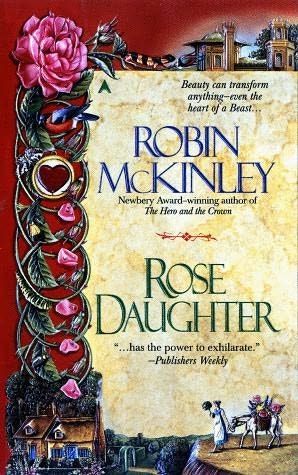
Years later, in 1997, McKinley wrote another novel version of Beauty and the Beast, "Rose Daughter." In the author's note, McKinley describes how she came to do two different novel versions of the same story--she was asked to write a short story version of the tale for an artist to illustrate. At first she declined, already having written her own version of the story, but having learned more about gardening (and roses in particular) and having more ideas since her earliest novel, she decided to give it a go anyway. The short story turned into a novel.
"Rose Daughter" is also a good read, but for me it will never have the simple magic of "Beauty." The characters all basically have the the same personality (McKinley has loving sisters rather than the traditional fairy tale evil sisters). She adds several interesting elements, but it almost becomes too much. Between the nightmares, the dying roses, the prophecy of the three sisters, the episodes with the animals, the scenes changing from Beauty at the Beast's palace back and forth to her family back at home--the main plot is almost lost. Interestingly, though "Rose Daughter" is a longer book, in terms of actual conversations that Beauty and the Beast have, there are more in "Beauty." And isn't that the whole point of the story-the developing of their relationship?
The one thing I really love about this version and SPOILER DONT READ ANY MORE IF YOU WANT TO BE SURPRISED is how at the end, Beauty accepts the Beast the way he is, though he could have been transformed into a handsome man if she chose. Though the practicalities of being married to a Beast would be unfortunate if translated literally into real life, in most versions, the audience knows the Beast will become a handsome prince, so it almost cheapens the moral. Beauty is commended for loving the Beast for who he is and not for what he looks like, therefore...he becomes attractive. As if she loves him more when attractive, doesn't that therefore contradict the moral? And if she doesn't love him more when attractive, why is that the final reward?

Tuesday, March 2, 2010

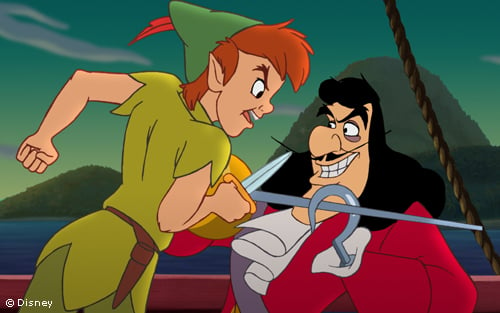
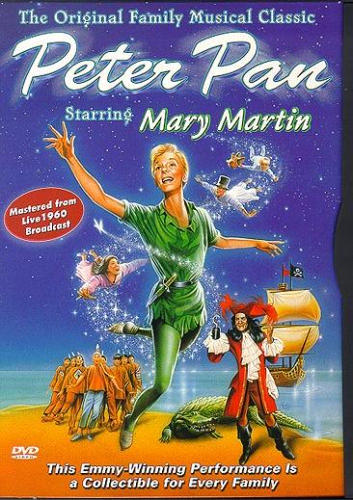
Peter Pan: From Disney to J.M. Barrie

The title of that post is, obviously, chronologically incorrect as far as the history of the story of Peter Pan goes. But, as far as my own knowledge went, and I think most people had the same experience--we grew up watching the Disney films. Later on, I became interested in the history of fairy tales before Disney and reading what I thought were the "authentic" tales found in the Grimm collection-or, in this case, the J.M. Barrie play (which really is the authentic version).
I used to have(/still do) a conspiracy theory about the Disney version. Captain Hook is the supposed villain, but what did he ever do? We have no record of evil deeds he did to Peter Pan before Pan a) sliced off his hand, and b) fed Hook's hand to the crocodile, who now has an insatiable craving for Hook. If I were Hook, I would certainly want revenge on the cheeky little boy who can fly and imitate voices and therefore has the advantage in everything. What good does Peter do? All he does is flirt (Wendy, Tinker Bell, Tiger Lily, the mermaids).

Just to clarify, I don't really have a vendetta against Peter Pan. I love the movie, and especially the ride at Disneyland. I love the part where you fly over London!
The Disney movie was based on the play I mentioned earlier, written by J.M. Barrie. The little of the history of the play I know, I know from the movie Finding Neverland, which, of course, isn't entirely historically accurate, but makes a nice movie. According to IMDB:

"After the death of two of Barrie's close friends, Arthur and Sylvia Llewelyn-Davies, he adopted their five sons: Peter, Jack, George, Michael and Nicholas. Barrie was very close to all the boys, and was heartbroken when Michael drowned in 1921 and George was killed in action in 1915. Their brother, Peter Llewelyn-Davies, also committed suicide on April 5th, 1960.

"From 1928 onwards, all royalties from the sales of Peter Pan were donated to the Great Ormond Street Hospital. In 1987 (50 years after Barrie's death), when normally royalty rights would have expired, by a special act of Parliament, royalties were allowed to continue going to the hospital in perpetuity."

Recognize any of those boys' names? Peter should be obvious. The boys who go to Neverland are Michael and John--Jack's real name could be John. And Mr. Darling's first name was George. Looks like poor Nicholas got the shaft. (By the way, that's really cool about the royalties going to the hospital).

Anyway, the play is very funny. Though written as a play and performed as a play, half of the funny parts are in little sidenotes given in the stage directions, so it's really meant to be read.
Also, reading the play made me appreciate the different versions better-Disney, the musical, the P.J. Hogan movie from 2003. Though all different, they all stayed pretty true to the original script. Even the movie Hook, though supposedly a sequel, has a part where the boys are eating imaginary food, which is what they eat in the play.
Fun fact: In the dedication, Barrie describes how it came about that one needed pixie dust to fly. Apparantly, lots of children were playing Peter Pan and injuring themselves trying to fly. Parents requested that pixie dust be added as a prerequisite to flying. This was a good idea, and would probably decrease Peter Pan related injuries due to the fact that pixie dust is scarce, so he put it in his play.

Monday, March 1, 2010

Faeries in our midst


My family likes to vacation on the beautiful Lake Superior.


Who knew that Minnesota was home to some small, friendly faeries? I found this while out hiking last summer:


If you open the little door to Fairy Manor, there was paper and a pencil inside to leave the fairies a lettre. I did, and on my way back I peeked in again to see if my message was still there, but it wasn't, the Fairies had already taken it.