I always loved the song "Pink Elephants," but the first time I watched Dumbo as an adult I was kind of shocked that the whole thing is a drunken delusion.
Dumbo isn't the only classic Disney to involve drunkenness, or to make it humorous.
Check out Sir Hiss from Robin Hood at 3:30
The Kings-and the Page-drink a little too much in Sleeping Beauty
"Let me fill up your glass-that glass was all full!" Heehee
And of course, Gaston's tavern song.
LeFou: More Beer?
Gaston: What for? Nothing helps. I'm disgraced.
LeFou: Who, you? NEVER! Gaston, you've got to pull yourself together!
In addition to these, David Koenig cites 12 other Disney films which include characters drinking: Pinnochio, Fantasio, Saldos Amigos, Make Mine Music, Adventures of Ichabod and Mr. Toad, Sword in the Stone, Aristocats, Rescuers, Pete's Dragon, Great Mouse Detective, Who Framed Roger Rabbit, and Hunchback of Notre Dame. Pocahontas was mentioned but dismissed as not qualifying for "heavy drinking."

Thursday, April 29, 2010

Wednesday, April 28, 2010
Historical evidence for mermaids?
This article describes an old museum exhibit that took the viewer through a series of mythical creatures and the historical basis for them. But one thing I never knew-Christopher Columbus wrote in his journal that he saw a mermaid, but that it was "not as pretty as they are depicted, for somehow in the face they look like men." Modern scientists claim what he really saw was a manatee, and at the exhibit they would superimpose a picture of a manatee over a mermaid to explain the confusion. But...really? Here's John William Waterhouse's mermaid:
 Here's a manatee. I don't see any resemblance at all. Maybe Columbus needed glasses.
 The article goes on to say that John Smith also saw a mermaid, but unlike Columbus, he thought she was "by no means unattractive."
Supposed "real mermaid"
Here's a manatee. I don't see any resemblance at all. Maybe Columbus needed glasses.The article goes on to say that John Smith also saw a mermaid, but unlike Columbus, he thought she was "by no means unattractive."Urban legends describes how the supposed washed-up skeleton of a mermaid that was sent around by email is a hoax. Taxidermists would combine bodies of monkeys with fish. Mermaid.net has interesting reading on the evolutionary possibilities of mermaids existing, though admits that there is no proof.
Supposed "real mermaid"
Tuesday, April 27, 2010
Wicked: Book and musical
Not too long ago, everyone was obsessed with the musical "Wicked." It seemed to be that people were most enthusiastic about the music. When I saw the musical myself, it wasn't necessarily the music I loved-it was fun and catchy, and I do think "Defying Gravity" would feel great to belt out-but not really excellent. What really caught me about the musical was the plot.
 I love the idea of twisting traditional plots-making Elphaba the true hero and tying in the characters we know of as Tin Man, Scarecrow, and Cowardly Lion to people in Elphaba's past. But the message really got me-one that I specifically needed to hear at that time in my life, as well as in general-about the importance of not sitting back and letting evil happen, but going out and doing something about it, even if it may cost you.
 I love the idea of twisting traditional plots-making Elphaba the true hero and tying in the characters we know of as Tin Man, Scarecrow, and Cowardly Lion to people in Elphaba's past. But the message really got me-one that I specifically needed to hear at that time in my life, as well as in general-about the importance of not sitting back and letting evil happen, but going out and doing something about it, even if it may cost you.
I had heard negative things about the book but wanted to read it for myself anyway. Those who have gone from the musical to the book, like I did, may be shocked at how different they are. Both of them took creative liberties, but the approaches are entirely different.
The musical turns the world of the Wizard of Oz upside down. What was once black is now white, what was white is now black-but the world is still one of black and white. The book does not attempt to villainize Elphaba, or to make her out to be a heroic victim. Maguire's purpose was to explore the character and history of the Wicked Witch of the West in a way that fits in more closely with the original books and movie. Not to implicate her from all wrongs, but to create a scenario in which a person would be so obsessed with her sister's red shoes (silver, in the original). And, if the witch did have green skin, how would that affect her upbringing and ultimately the person she became?
The book is definitely an adult book, in contrast to the family-friendly musical. It's more dark and gritty and doesn't even feel very much like a fantasy because the fantastic world of Oz is so like our world. If I had read the book first I probably would have appreciated its approach more-it wasn't till I had time to process afterwards that I understood it better.
Beastly females
In college I took a fantasy class, and I wrote a paper on C. S. Lewis' Till We Have Faces. The book retells the story of Cupid and Psyche from the perspective of Psyche's sister-named Orual-who is tremendously ugly yet not evil like the classic stepsister stereotype. In my paper I explored the concept of inner and outer beauty, and how beauty is perceived and treated.
 This is a theme that fascinates me, but I was surprised to discover in my research that few other authors touched on the subject. In fact, given the importance of the theme in the book, it's pretty much ignored in most papers and books.

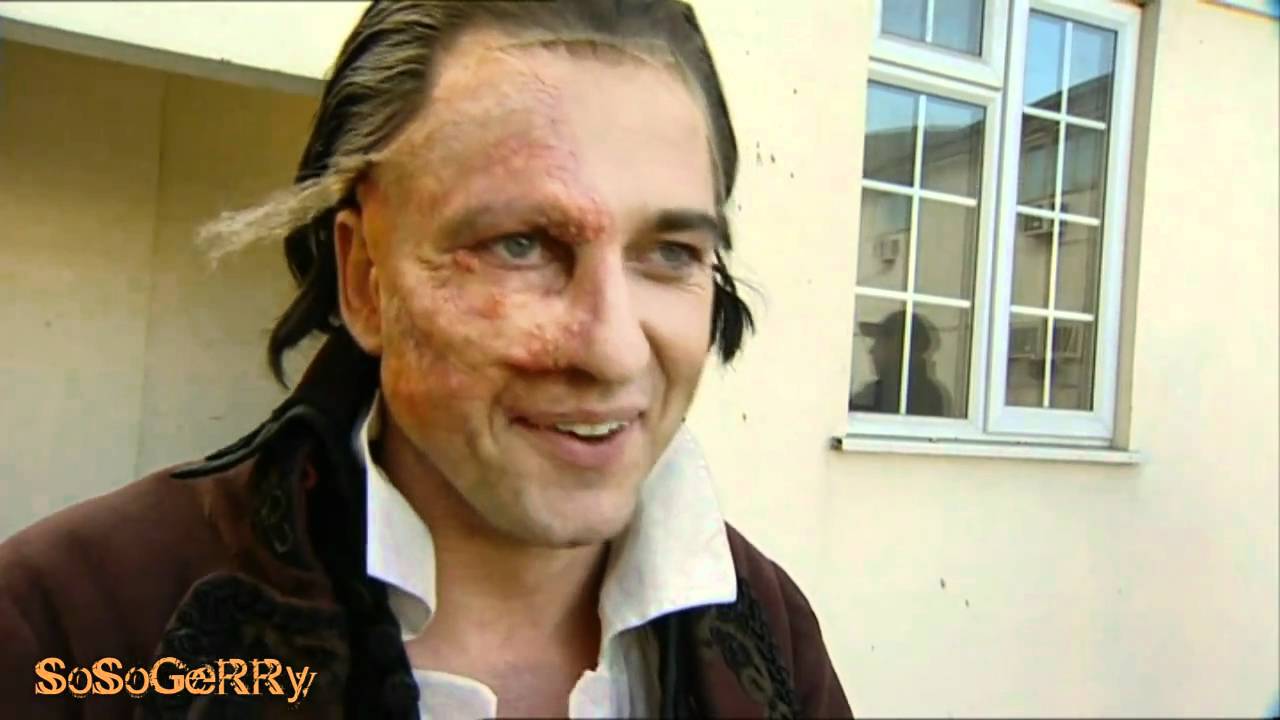
 EDIT: Gerard Butler as the Phantom in a makeup test, without mask
Yet what about examples of Animal Brides or females with deformities? Though folklore has examples, virtually none remain in common knowledge. Even with historical Animal Bride tales, generally the animals take beautiful forms-swans or cats-and there is little struggle to win male affections. There are seal maidens, but they shed their seal skins and then the men fall in love with their naked human forms.

The Frog Bride (illustrated above by Kay Nielsen), is one of the exceptions. But very few people know that the Frog Prince is sometimes a Frog Princess. Why do we ignore this theme? Why do we only have animal grooms?
My theory is that we, as a culture, can't even stand the idea of an ugly female. Females themselves are willing to love the Beast-but don't want to be the ugly, vulnerable one themselves. I'd be interested to know how popular Beauty and the Beast is among males. Do they mind picturing themselves as the Beast? Or can they stand it as long as Beauty stays hot the whole time? From my limited experience, it APPEARS as though men tend to judge women by more shallow standards. Please contradict me if I'm wrong. However, there are some exceptions to the rule: Gail Carson Levine's Fairest. This book features a hideous girl with a beautiful voice in a land where singing is valued as highly as beauty. I would LOVE to live in a land like that (I am definitely one of those people who wishes every deep emotion would trigger backup music and a song with choreographed dancing). It's a very good story-I found it on the bookshelf of a girl I was babysitting one day and started it, and after I went home I had to go to the library and finish it. Then there's Penelope, in which Christina Ricci's character has a pig snout for a nose. Yet first of all, these examples are hardly classics like the male versions I mentioned before, and I also wonder about their implied messages. Fairest has good messages about how each girl is beautiful on their own, but seems to put a lot of pressure on the boys to fall in love (basically) at first sight-yet now they're not supposed to judge by beauty, but instantly know character. If boys do judge by appearances-and let's face it, we all do to some degree, should we ignore that fact? No one would claim that beauty/appearance doesn't matter at all. How do we deal with it in the world in which we live?
And one Netflix commenter pointed out that Penelope seems to indicate that any physical flaw will result in being treated like a complete monster, and that true happiness ends in looking like a beautiful celebrity. Of course, that's sort of the message implied by the old versions of Beauty and the Beast as well. Another commenter-I tried to find the exact quote but it was left a while ago-said something to the effect of, "This movie is stupid. I kept waiting to see Christina Ricci cuz she's hot but she had that stupid pig nose on the whole time."
What do you think?
 This is a theme that fascinates me, but I was surprised to discover in my research that few other authors touched on the subject. In fact, given the importance of the theme in the book, it's pretty much ignored in most papers and books.
I learned some interesting things about C. S. Lewis as well-for example, his wife was not considered especially beautiful, and for a while he himself treated her like one of his male friends. This is also a theme of the book-how Orual is despised as a female and at best is treated like "one of the guys," all because of her ugly face. Only by veiling it can she ever hope to be treated like a woman.
Not only do critics of the book ignore the topic of female ugliness, but I think culture at large avoids it. Women love Beauty and the Beast-it is still far and away the favorite on Surlalune Blog's favorite fairy tale poll. Other popular stories involving beastly/deformed males include the Hunchback of Notre Dame, The Elephant Man, and especially Phantom of the Opera. You'd have to live in a cave not to know that (at least some) girls find the Phantom to be eternally more attractive than Raoul.
Yet what about examples of Animal Brides or females with deformities? Though folklore has examples, virtually none remain in common knowledge. Even with historical Animal Bride tales, generally the animals take beautiful forms-swans or cats-and there is little struggle to win male affections. There are seal maidens, but they shed their seal skins and then the men fall in love with their naked human forms.
The Frog Bride (illustrated above by Kay Nielsen), is one of the exceptions. But very few people know that the Frog Prince is sometimes a Frog Princess. Why do we ignore this theme? Why do we only have animal grooms?
My theory is that we, as a culture, can't even stand the idea of an ugly female. Females themselves are willing to love the Beast-but don't want to be the ugly, vulnerable one themselves. I'd be interested to know how popular Beauty and the Beast is among males. Do they mind picturing themselves as the Beast? Or can they stand it as long as Beauty stays hot the whole time? From my limited experience, it APPEARS as though men tend to judge women by more shallow standards. Please contradict me if I'm wrong.
However, there are some exceptions to the rule: Gail Carson Levine's Fairest. This book features a hideous girl with a beautiful voice in a land where singing is valued as highly as beauty. I would LOVE to live in a land like that (I am definitely one of those people who wishes every deep emotion would trigger backup music and a song with choreographed dancing). It's a very good story-I found it on the bookshelf of a girl I was babysitting one day and started it, and after I went home I had to go to the library and finish it. Then there's Penelope, in which Christina Ricci's character has a pig snout for a nose. Yet first of all, these examples are hardly classics like the male versions I mentioned before, and I also wonder about their implied messages. Fairest has good messages about how each girl is beautiful on their own, but seems to put a lot of pressure on the boys to fall in love (basically) at first sight-yet now they're not supposed to judge by beauty, but instantly know character. If boys do judge by appearances-and let's face it, we all do to some degree, should we ignore that fact? No one would claim that beauty/appearance doesn't matter at all. How do we deal with it in the world in which we live?And one Netflix commenter pointed out that Penelope seems to indicate that any physical flaw will result in being treated like a complete monster, and that true happiness ends in looking like a beautiful celebrity. Of course, that's sort of the message implied by the old versions of Beauty and the Beast as well. Another commenter-I tried to find the exact quote but it was left a while ago-said something to the effect of, "This movie is stupid. I kept waiting to see Christina Ricci cuz she's hot but she had that stupid pig nose on the whole time."
What do you think?
Monday, April 26, 2010
Disney: Helping to educate your child since 1928
I went to a disability ministry conference over the weekend and attended a session entitled, "How to use Disney movies to help your child speak." Needless to say, I was pretty psyched about it, and the speaker was also really good.
The premise of his talk was to meet the kids where they're at-to use children's interests and obsessions as teaching tools. This is a common educational tool, but children with special needs (especially autism) tend to have obsessions, and Disney pops up a lot as being a common obsession. Many children with autism with perseverate, or quote the same line over and over again, whether or not it fits in with the context. They'll quote lines from their favorite movies or songs, and the astute Disney student can often recognize the movie or song being quoted. The speaker shared some of his research on using Disney movies as teaching tools and how they can be used to teach various concepts.
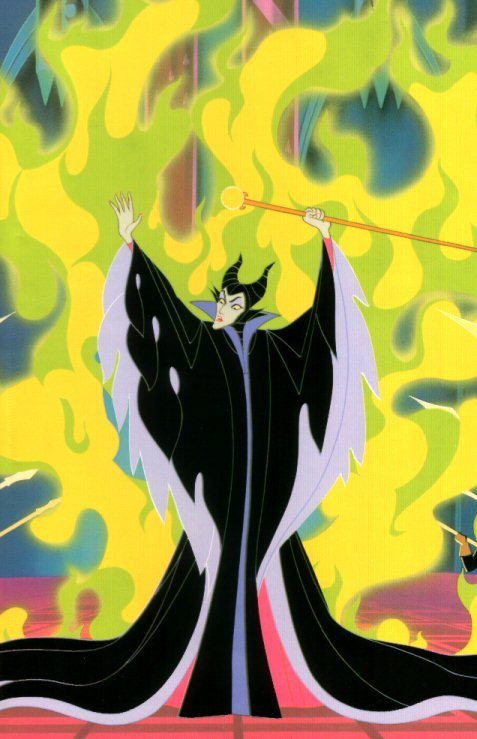 He mentioned a child who got in trouble in the playground for repeatedly yelling, "Stand back, you fools!" Eventually his teachers figured out he was quoting Maleficent.
 He showed us these fascinating pictures drawn by a child. (He promised he would have the outline posted on the web later that day, and I haven't found it yet. I'll keep checking and load the pictures if I can, or at least link to the site.) The child had drawn Jafar, only the drawing was a red, completely unidentifiable blob. The researchers taught the child about parts and wholes-everything is part of a whole, and has its own parts. After a short amount of time, the child drew Jafar again, but this time the picture had limbs and was recognizably human. After a little more training, the child drew Jafar a third time, but this time the resemblance was unmistakable.
 This particular child had an obsession with Disney villains. The speaker, in trying to guess why the child fixated on villains and not on Princesses, Princes, etc., theorized that it was because the villains were different, just as the child sensed he was different. Which is interesting, because the heroes are ostensibly supposed to feel as outsiders. Snow White and Cinderella are abused and treated like servants, Belle doesn't fit in, Sleeping Beauty is raised all alone in a forest, Jasmine doesn't fit in as a Princess and disguises herself as a commoner, Mulan disguises herself as a boy, Ariel isn't satisfied with being a mermaid, etc., etc. Only the viewer isn't really convinced that these princesses are outsiders, as they are obviously the most attractive and have the best character. Not that it would be easy to create a character that was convincingly realistic, yet that the viewer identified with and wanted to emulate.
This came up when I searched for "Disney Princesses." An attempt to make them more human and relatable?
But overall, Disney movies-as well as other movies-are great teaching tools in general for kids with special needs. While some teachers might shy away from using movies because it's "cheating," movies provide great modelling of correct grammar, plotlines, realistic facial expressions (especially good for people with autism), and in tune singing. Plus, if a teacher uses a still shot from Mary Poppins, for example, to review vocabulary, then every time the child watches that movie again, the vocabulary words are reinforced, unlike a random worksheet.
Sunday, April 25, 2010
Little Red Teapot

 How cute is this Little Red Riding Hood teapot? Link to Modcloth (where it is, unfortunately, currently out of stock)
Mad(ly cute) tea party
 If this little reading nook were in my house as a child, I would have spent all of my time here.
 Note the teeny tiny teaset on top of the book!
 Pictures from a local house my roommate was housesitting.
Fairies and ballet
Fairy tales are interwoven into the history of ballet. In the beginning, only men were ballet dancers, until the 1680s when women started dancing as well. They danced in heeled shoes then, and large dresses. As time went on, skirts got higher and higher and evolved into the modern tutu. Marie Taglioni is credited with being the first dancer to dance on pointe-on the very tips of the toes. As difficult as this is today with specialized pointe shoes, the first pointe dancers just stuffed the toes with cotton or fabric.
 Marie Taglioni is most famous for her role in La Sylphide, in which she debuted this new style of dancing. David Barber's summary of the ballet: "La Sylphide tells the story of a young Scotsman named James who's about to get married to a woman he's not sure he loves. (She's his cousin and her name's Effie, neither of which may have helped.) The night before their wedding, he falls asleep and dreams of a beautiful winged fairy, a sylphid or sylph, who flies down and tries to lure him away. He follows her into the forest, but thanks to an evil spell by the neighborhood wicked witch, her wings fall off and she dies. At the end of the ballet, some of her sister sylphs fly down to carry her away, leaving James alone in the woods while Effie goes off to marry someone else entirely. Bummer." (Taken from Barber's Tutus, Tights, and Tiptoes: Ballet History as it Ought to be Taught-apparantly really cheap on Amazon).
 Marie Taglioni dancing the role of the Sylphide. The new technique of dancing on pointe helped convey the otherworldiness of the fairies, as they seemingly floated across the stage.
 Since then, fairy tales have popped up as sources for most of the famous ballets. Giselle features a group of Wilis, spirits of dead women who dance men to death. Above picture of the American Ballet Theater. Chopin's Les Sylphides, Stravinsky's The Firebird, and Prokofiev's Cinderella are all examples of standard ballet repertoire that features a fairy tale and/or fairy characters.

Marie Taglioni is most famous for her role in La Sylphide, in which she debuted this new style of dancing. David Barber's summary of the ballet: "La Sylphide tells the story of a young Scotsman named James who's about to get married to a woman he's not sure he loves. (She's his cousin and her name's Effie, neither of which may have helped.) The night before their wedding, he falls asleep and dreams of a beautiful winged fairy, a sylphid or sylph, who flies down and tries to lure him away. He follows her into the forest, but thanks to an evil spell by the neighborhood wicked witch, her wings fall off and she dies. At the end of the ballet, some of her sister sylphs fly down to carry her away, leaving James alone in the woods while Effie goes off to marry someone else entirely. Bummer." (Taken from Barber's Tutus, Tights, and Tiptoes: Ballet History as it Ought to be Taught-apparantly really cheap on Amazon).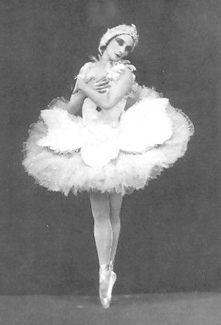 Marie Taglioni dancing the role of the Sylphide. The new technique of dancing on pointe helped convey the otherworldiness of the fairies, as they seemingly floated across the stage. Since then, fairy tales have popped up as sources for most of the famous ballets. Giselle features a group of Wilis, spirits of dead women who dance men to death. Above picture of the American Ballet Theater. Chopin's Les Sylphides, Stravinsky's The Firebird, and Prokofiev's Cinderella are all examples of standard ballet repertoire that features a fairy tale and/or fairy characters.
Picture by Don McMurdo, Australian ballet, Swan Lake
But the most famous ballets are the three Tchaikovskys- Sleeping Beauty, Swan Lake, and The Nutcracker. The combination of plot, music, costumes and scenery together with dance make all of the above instant classics. It's so unfortunate that both fairy tales and ballet have become culturally associated with little girls, and become something that every girl is interested in and then "grows out of." Ballet is a beautiful and incredibly difficult art form- in fact, few professions (if any...) require the amount of discipline and commitment demanded from a professional ballet dancer.
Thursday, April 22, 2010
Beauty and the Beast: Marvel style
 I really love X-men, and I really REALLY love Beauty and the Beast. The two combined is brilliant. I need to get my hands on this somehow.
Henry Bett
I've referenced Henry Bett lately, and that's because I've been reading his book Nursery Rhymes and Tales:Their Origin and History. (Out of print-the link here is to the one copy available on amazon, $153.81). From 1924, it can be a bit shocking to the modern reader in its non-P.C.-ness. For example, Henry Bett quotes an African man who was wondering what is the cause of various forces of nature. Bett claims, "This, of course, represents an unusual level of thought for a savage mind. It is a speculative and sceptical mood rather uncommon in an uncivilized race." Which is not only quite an untrue claim to begin with, but opposes his whole thesis, which is that myths and tales were ancient people's ways of trying to explain natural phenomenon. They wouldn't be trying to explain anything if they weren't first wondering how it came about.

Other than that, Bett has a very interesting book. He not only takes current (or, what was current in 1924) tales and rhymes, but has many related examples through different cultures, and then cites historical facts and customs that relate to the tales and rhymes as we know them today. He claims that our tales and rhymes are rooted in historical fact, which have evolved and become distorted over time. He talks about the practice of burying people alive in the foundations of a house or bridge to appease the devil as the source of the rhyme "London Bridge is Falling Down," (which may or may not have been the case, although there's no reason to think a person was specifically buried under London Bridge,and there are other guesses as to the meaning of the rhyme) as well as the custom of baking pies in such a way that live birds can actually fly out of it when cut, such as in "Sing a song of sixpence."

Most modern analysts of tales assume they hold symbolic meaning. Which is surely partly true, but we can't forget the tales are very much the products of the cultures from which they came. Bett talks about certain fairy tales I've already posted about, Little Red Riding Hood and Bluebeard. For more on the history of nursery rhymes, you can visit this site.

Other than that, Bett has a very interesting book. He not only takes current (or, what was current in 1924) tales and rhymes, but has many related examples through different cultures, and then cites historical facts and customs that relate to the tales and rhymes as we know them today. He claims that our tales and rhymes are rooted in historical fact, which have evolved and become distorted over time. He talks about the practice of burying people alive in the foundations of a house or bridge to appease the devil as the source of the rhyme "London Bridge is Falling Down," (which may or may not have been the case, although there's no reason to think a person was specifically buried under London Bridge,and there are other guesses as to the meaning of the rhyme) as well as the custom of baking pies in such a way that live birds can actually fly out of it when cut, such as in "Sing a song of sixpence."

Most modern analysts of tales assume they hold symbolic meaning. Which is surely partly true, but we can't forget the tales are very much the products of the cultures from which they came. Bett talks about certain fairy tales I've already posted about, Little Red Riding Hood and Bluebeard. For more on the history of nursery rhymes, you can visit this site.
Subscribe to:
Posts (Atom)