So it's not groundbreaking in the realm of fairy tale interpretations, many of the jokes have been make before, but still pretty funny, in my opinion. For example, Cinderella ends: "And so, two people who danced together one time, entered together into an ill-advised, long term relationship. And they lived happily ever after for seven months..."
Monday, January 20, 2014
Family Guy's Grimm Job
If Family Guy is up your alley, you should check out the episode that just became available on regular hulu, Grimm Job. It's a fairy tale mashup that, while humorous, is also irreverent and inappropriate at times. Definitely not child appropriate.
They interpret Jack and the Beanstalk, Little Red Riding Hood, and Cinderella, with some other fairy tale characters thrown in for good measure. The characters sometimes speak with the irony of those who are aware that they're in a fairy tale and what's going to happen, which adds some funny lines. And while mainly just being goofy, they do sort of touch on some issues such as violence (at the end of LRRH) or how certain famous scenes are less than believable, if you were to take the story seriously (Stewie/Little Red refuses to act out the "my what big ___ you have, Grandmother" because, as he says, it's obvious the wolf is not a human woman and it's insulting.) That's one big question people have about fairy tales, is what attitude are we supposed to read them with? Suspension of disbelief/the innocence of a child? Or just accepting that it's unrealistic? Can we read into subtle things if there also appear to be glaring plot errors? Were people "back then" really that gullible?
So it's not groundbreaking in the realm of fairy tale interpretations, many of the jokes have been make before, but still pretty funny, in my opinion. For example, Cinderella ends: "And so, two people who danced together one time, entered together into an ill-advised, long term relationship. And they lived happily ever after for seven months..."
Friday, January 17, 2014
Scottish Ballet: Hansel and Gretel
Once Upon a Blog covered this back in July, but I just found a review for the Scottish Ballet's Hansel and Gretel via Kingdom of Style. Seems like a great opportunity if you live in that region of the world, there are performances through early February. Click through to read the full review, but from the images below it seems like total eye candy. I love how they used giant sets and props to make the adult dancers seem like children.
They made a rather significant plot change, that instead of being abandoned by their parents, Hansel and Gretel sneak off by themselves to rescue their friends, for children in their village have been disappearing. The children are thus courageous heroes, and they avoid making the parents evil. I feel like I've noticed this being a pattern in several retellings of Hansel and Gretel, taking the blame away from the parents. Is it just another example of altering fairy tales to make them more and more child-friendly, or is it a positive way to avoid negative stereotypes of mothers/stepmothers in particular in fairy tales?
Return of the newlywed blogger
I'm back!
Still trying to settle into our new home, legally change my name, etc. But the wedding and honeymoon were wonderful. While I'm still catching up on other fairy tale news since I've been gone and haven't had time to research yet, I thought I'd share a few pictures.
I wasn't originally going to have any sort of fairy tale theme to the wedding, but we found these great (and affordable!) invitations via Bed Bath & Beyond:
And from there other people started catching on too. We started getting fairy tale-themed cards and gifts, and it gave me an idea for reception tables. Each table, instead of a just a number, was also a fairy tale:
Of course I put myself at Beauty and the Beast :)
I also decorated the escort card table with vintage fairy tale books. The best part was I already owned all of them so it didn't cost me anything!
Okay, that's the last of the wedding-themed posts, I promise :) I hope to be posting more regularly soon!
Still trying to settle into our new home, legally change my name, etc. But the wedding and honeymoon were wonderful. While I'm still catching up on other fairy tale news since I've been gone and haven't had time to research yet, I thought I'd share a few pictures.
I wasn't originally going to have any sort of fairy tale theme to the wedding, but we found these great (and affordable!) invitations via Bed Bath & Beyond:
And from there other people started catching on too. We started getting fairy tale-themed cards and gifts, and it gave me an idea for reception tables. Each table, instead of a just a number, was also a fairy tale:
Of course I put myself at Beauty and the Beast :)
I also decorated the escort card table with vintage fairy tale books. The best part was I already owned all of them so it didn't cost me anything!
Okay, that's the last of the wedding-themed posts, I promise :) I hope to be posting more regularly soon!
Sunday, December 22, 2013
Hildur the Fairy Queen
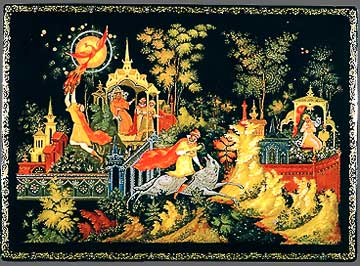
Here's an Icelandic version of the Twelve Dancing Princesses tale; this one is a slightly morbid tale set at Christmastime!
*******
Once there was a farmer who settled in the mountains. He had a housekeeper named Hildur who kept to herself but performed her duties well and was kind. Though the farmer was kind as well, he had trouble keeping shepherds, because one after another, they were all found dead in bed on Christmas morning. Hildur did not go to the Christmas mass like everyone else, but stayed at home to tend to her duties and prepare for the Christmas feast.
Finally the farmer decided not to employ any more shepherds, until a man came to him and offered his services for the winter. The farmer protested that those who had filled that same position met with a sad fate, but the man insisted he would still care for the sheep.
So he stayed with the farmer that winter, although on Christmas Eve thought it wise to stay awake. During the night, he saw Hildur approach him. He pretended to be asleep and felt her put a magic bridle in his mouth. She mounted his back and they rode to a chasm in the earth. There she dismounted; in order to follow her the shepherd rubbed his head against a stone until the magic bridle came off.
He followed Hildur, and noticed she did not act like the same housekeeper he knew. He took a magic stone out of his pocket that would make him invisible as long as he held it, and kept close behind her.
Finally they reached a great palace, where a great crowd of people came to meet her and a man dressed in purple in gold came to meet her, calling her his wife. The crowds called her their queen and treated her with respect. Two children ran into her arms and called her Mother. Hildur was given royal attire and together with her king sat down at a big feast, which was followed with dancing. But Hildur and the king did not dance, they sat and talked, and seemed to the shepherd to be very sad. At one point Hildur gave one of her children one of her rings to play with; after the child was done playing with it the shepherd snatched it up.
Finally Hildur made preparations to leave, which was met with protests by all except an old woman alone in the corner. The King begged her to stay, but Hildur said, "I cannot stay here, in consequence of the spell by which your mother has bound me, and who knows if I shall ever see you more." She told him that she had killed so many men that she would certainly be found out and punished, even though she had done it against her will.
The shepherd went back to the bridle and pretended to be asleep again as she rode him back to the farm. The farmer came in early in the morning, anxious to see whether or not this shepherd had survived through Christmas morning, and rejoiced to see him alive and well. He asked if anything strange had happened during the night.
"Nothing, except that I had a very wonderful dream." He then told the story of what had happened. Afterwards Hildur said, "If you tell the truth, show us some token to prove what you say."
The shepherd showed the ring. Hildur then said that he had delivered her from the spell that had been placed on her by her mother in law and told them the full story. She was a lowly fairy maid, but the fairy king fell in love with her. The marriage displeased his mother, who bound Hildur by a spell to become a servant in the world of woe, and every Christmas Eve, to kill a man, the only night she was allowed back to the fairy kingdom. She was to do this until she was convicted of murder and put to death, unless she should meet a man courageous enough to go with to the world of Fairies and bring back evidence. She thanked and blessed the shepherd for being the first man who dared venture into the dark roads that lead to Fairyland, but longed for her true home, and disappeared, never to be seen again in the world of mankind.
The shepherd later married and became a wise and successful farmer, but he always attributed his wealth to Hildur the Fairy Queen.
*******
Found in Surlalune's Twelve Dancing Princesses: Tales From Around the World; summarized by me
First image above, an illustration of Hildur, found on Wikipedia. No illustrator credited, but this excerpt from the same page is interesting:
"There are four Icelandic holidays considered to have a special connection with hidden people: New Year's Eve, Twelfth Night (January 6), Midsummer Night and Christmas night.[44] Elf bonfires (álfabrennur) are a common part of the holiday festivities on Twelfth Night (January 6).[45][46][47] There are many Icelandic folktales about elves and hidden people invading Icelandic farmhouses during Christmas and holding wild parties.[48] It is customary in Iceland to clean the house before Christmas, and to leave food fo the huldufólk on Christmas.[49] On New Year's Eve, it is believed that the elves move to new locations, and Icelanders leave candles to help them find their way.[50] OnMidsummer Night, folklore states that if you sit at a crossroads, elves will attempt to seduce you with food and gifts; there are grave consequences for being seduced by their offers, but great rewards for resisting."
*******
Once there was a farmer who settled in the mountains. He had a housekeeper named Hildur who kept to herself but performed her duties well and was kind. Though the farmer was kind as well, he had trouble keeping shepherds, because one after another, they were all found dead in bed on Christmas morning. Hildur did not go to the Christmas mass like everyone else, but stayed at home to tend to her duties and prepare for the Christmas feast.
Finally the farmer decided not to employ any more shepherds, until a man came to him and offered his services for the winter. The farmer protested that those who had filled that same position met with a sad fate, but the man insisted he would still care for the sheep.
So he stayed with the farmer that winter, although on Christmas Eve thought it wise to stay awake. During the night, he saw Hildur approach him. He pretended to be asleep and felt her put a magic bridle in his mouth. She mounted his back and they rode to a chasm in the earth. There she dismounted; in order to follow her the shepherd rubbed his head against a stone until the magic bridle came off.
He followed Hildur, and noticed she did not act like the same housekeeper he knew. He took a magic stone out of his pocket that would make him invisible as long as he held it, and kept close behind her.
Finally they reached a great palace, where a great crowd of people came to meet her and a man dressed in purple in gold came to meet her, calling her his wife. The crowds called her their queen and treated her with respect. Two children ran into her arms and called her Mother. Hildur was given royal attire and together with her king sat down at a big feast, which was followed with dancing. But Hildur and the king did not dance, they sat and talked, and seemed to the shepherd to be very sad. At one point Hildur gave one of her children one of her rings to play with; after the child was done playing with it the shepherd snatched it up.
"Fairy Feast", Arthur Rackham
Finally Hildur made preparations to leave, which was met with protests by all except an old woman alone in the corner. The King begged her to stay, but Hildur said, "I cannot stay here, in consequence of the spell by which your mother has bound me, and who knows if I shall ever see you more." She told him that she had killed so many men that she would certainly be found out and punished, even though she had done it against her will.
The shepherd went back to the bridle and pretended to be asleep again as she rode him back to the farm. The farmer came in early in the morning, anxious to see whether or not this shepherd had survived through Christmas morning, and rejoiced to see him alive and well. He asked if anything strange had happened during the night.
"Nothing, except that I had a very wonderful dream." He then told the story of what had happened. Afterwards Hildur said, "If you tell the truth, show us some token to prove what you say."
The shepherd showed the ring. Hildur then said that he had delivered her from the spell that had been placed on her by her mother in law and told them the full story. She was a lowly fairy maid, but the fairy king fell in love with her. The marriage displeased his mother, who bound Hildur by a spell to become a servant in the world of woe, and every Christmas Eve, to kill a man, the only night she was allowed back to the fairy kingdom. She was to do this until she was convicted of murder and put to death, unless she should meet a man courageous enough to go with to the world of Fairies and bring back evidence. She thanked and blessed the shepherd for being the first man who dared venture into the dark roads that lead to Fairyland, but longed for her true home, and disappeared, never to be seen again in the world of mankind.
The shepherd later married and became a wise and successful farmer, but he always attributed his wealth to Hildur the Fairy Queen.
*******
Found in Surlalune's Twelve Dancing Princesses: Tales From Around the World; summarized by me
First image above, an illustration of Hildur, found on Wikipedia. No illustrator credited, but this excerpt from the same page is interesting:
"There are four Icelandic holidays considered to have a special connection with hidden people: New Year's Eve, Twelfth Night (January 6), Midsummer Night and Christmas night.[44] Elf bonfires (álfabrennur) are a common part of the holiday festivities on Twelfth Night (January 6).[45][46][47] There are many Icelandic folktales about elves and hidden people invading Icelandic farmhouses during Christmas and holding wild parties.[48] It is customary in Iceland to clean the house before Christmas, and to leave food fo the huldufólk on Christmas.[49] On New Year's Eve, it is believed that the elves move to new locations, and Icelanders leave candles to help them find their way.[50] OnMidsummer Night, folklore states that if you sit at a crossroads, elves will attempt to seduce you with food and gifts; there are grave consequences for being seduced by their offers, but great rewards for resisting."
Monday, December 9, 2013
Christmas as time for Storytelling
Hey-remember when I said I was engaged? Well, the wedding is now less than a month away! Which means that in addition to working, I will be doing much wedding planning, moving to a new Chicago suburb, and doing this thing called Christmas. So don't be surprised if I'm extra scarce around here for a while...I will hopefully have more time for reading and posting around mid-January when we get back from the honeymoon!
In the meantime:
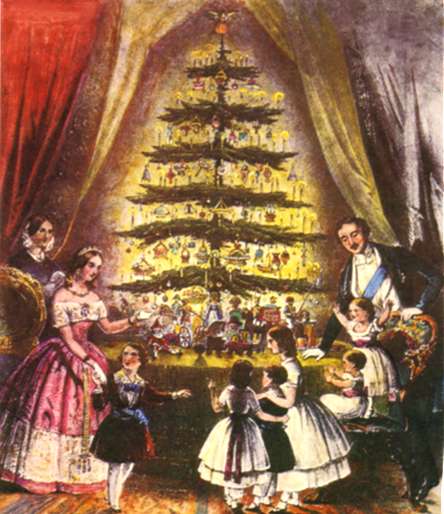
Christmas, at least in Victorian England, was seen as a time set apart for telling stories. I have a book from my library from 1881 titled "Yuletide Stories" which I originally thought would be Christmas themed, but are in fact fairy tales from different parts of Europe. Dickens wrote a series of stories, each supposedly told by a different person in a group gathered around a Christmas tree.
Christmas was also used as an idealized image of the telling of folk and fairy tales. When the Grimms published their collection, they tried to romanticize them by emphasizing the image of an old woman reciting the tales word for word, when really most of the tales were told by young friends of theirs. When the Grimm collection was translated into English, Edgar Taylor, the translator, fleshed out this image even more.
Taylor went on to name a fictitious narrator, Gammer Grethel, and invent a history for her:
"Gammer Grethel was an honest, good-humoured farmer's wife, who, a while ago, lived far off in Germany.
She knew all the good stories that were told in that country; and every evening about Christmas time the boys and girls of the neighborhood gathered round to hear her tell them some of her budget of strange stories.
One Christmas, being in that part of the world, I joined the party; and begged her to let me write down what I heard, for the benefit of my young friends in England. And so, for twelve merry evenings, beginning with Christmas Eve, we met and listened to her budget."
Even though there was no Gammer Grethel, we can try to revive the tradition of spreading fairy tales at Christmas time!
EDIT: Woops! Forgot to credit my source! Jennifer Schacker, National Dreams: The Remaking of Fairy Tales in Nineteenth Century England
In the meantime:
Christmas, at least in Victorian England, was seen as a time set apart for telling stories. I have a book from my library from 1881 titled "Yuletide Stories" which I originally thought would be Christmas themed, but are in fact fairy tales from different parts of Europe. Dickens wrote a series of stories, each supposedly told by a different person in a group gathered around a Christmas tree.
Christmas was also used as an idealized image of the telling of folk and fairy tales. When the Grimms published their collection, they tried to romanticize them by emphasizing the image of an old woman reciting the tales word for word, when really most of the tales were told by young friends of theirs. When the Grimm collection was translated into English, Edgar Taylor, the translator, fleshed out this image even more.
from The Illustrated London News, 1848
In the epigraph to his first volume, he writes, "Now you must imagine me to sit by a good fire, amongst a companye of good fellowes, over a well spiced bowle of Christmas ale, telling of these merrie tales which hereafter followe." Sounds pretty cozy...Taylor went on to name a fictitious narrator, Gammer Grethel, and invent a history for her:
"Gammer Grethel was an honest, good-humoured farmer's wife, who, a while ago, lived far off in Germany.
She knew all the good stories that were told in that country; and every evening about Christmas time the boys and girls of the neighborhood gathered round to hear her tell them some of her budget of strange stories.
One Christmas, being in that part of the world, I joined the party; and begged her to let me write down what I heard, for the benefit of my young friends in England. And so, for twelve merry evenings, beginning with Christmas Eve, we met and listened to her budget."
Even though there was no Gammer Grethel, we can try to revive the tradition of spreading fairy tales at Christmas time!
EDIT: Woops! Forgot to credit my source! Jennifer Schacker, National Dreams: The Remaking of Fairy Tales in Nineteenth Century England
Wednesday, November 27, 2013
Afanasyev-unsung hero of Russian folklore
The brothers Grimm are pretty well known for gathering tales from around Germany (although their methods may not have been the most accurate). And in general, their work was well-received-their Kinder Und Hausmarchen was popular among scholars as well as casual readers and children. Although a few people thought their tales were inappropriate, they solved that problem by making the tales more appropriate according to standards of the time.
Collecting folktales, a seemingly innocent occupation, was not as easy to do in other parts of the world. In Russia, for years oral storytellers were very popular. Storytelling was an actual occupation, as people would give them food and drink for accompanying them at their monotonous tasks and entertaining them. From peasants to nobility (such as Count Leo Tolstoy and Ivan the Terrible), children would fall asleep listening to stories. This embracing of storytelling was not always universal, like when tsar Alexei Mikhailovich ordered all the storytellers to be rounded up and their tongues cut out. He proclaimed in 1649: "Many persons stupidly believe in dreams, in the evil eye and birdsong, and they propound riddles and tell fairy stories. By idle talk and merry-making and blasphemy, they destroy their souls."
However, for most of Russian history oral tales were a way of life. Written tales, however, were a different story. The Russian Orthodox Church was very strict in its censoring. They believed that written language should be reserved for sacred religious writing and not for pagan stories. An Englishman, Samuel Collins, managed to publish some Russian tales he had collected in London in 1671, but it was a long time before Russian tales were published in Russia.
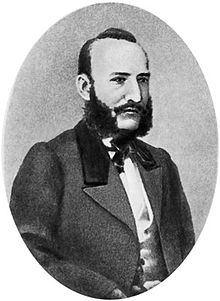
The great author Pushkin was condemned for trying to imitate the fairy tale in his writing. In 1838 five Russian stories were published by Bogdan Bronnitsin. But it was Alexander Afanasyev (1826-71) we have to thank for giving us such a complete collection of Russian tales-in fact, the largest group of fairy tales in the world.
Afanasyev published eight volumes of tales. Students of fairy tale history may be aware that the Grimms had seven editions of their KHM, but the core stories remained the same. They added and deleted a few tales, but mainly edited the stories that were already in the collection. Afanasyev, however, published new tales in each collection, totalling 640 tales. Also unlike the Grimms, he did not alter or edit the tales he received. He did not record most of them himself, but other friends and colleagues sent him tales. His tales also cover a vast distance and include many Russian districts, whereas the Grimms mainly gathered from their family friends, who were not even necessarily German in origin.
Afanasyev's first volumes were not all well-received-the Moscow Metropolitan Filaret claimed the tales were "blasphemous and immoral. They offend pious sentiment and propriety. Religion must be safeguarded from such profanity." Afanasyev unapologetically retorted, "There is a million times more morality, truth and human love in my folk legendds than in the sanctimonious sermons delivered by Your Holiness!"
S. Kamanin
To make matters worse, the freeing of the peasants from serfdom in 1861 created much violence and discontent in all classes, all over Russia. This included even more severe censorship. In 1860 Afanasyev's publisher was raided and one of his manuscripts destroyed. Afanasyev left the country for a while, and in Europe he had greater ability to publish things that would have been banned at home.
Upon returning, he was evicted from his house and dismissed from his job. He was forced to work as an assistant clerk in a court. He kept working on his own projects, and 1865 the press censorship was reformed and he was able to resume publishing works, although not genuine folktales. Sadly, he was ill and his living and working conditions were hard on him. He died in relative obscurity and in poverty at the age of 45.
Makes me all the more grateful for freedom of the press!
*Information from "Russian Fairy Tales and their Collectors" by James Riordan. Found in A Companion to the Fairy tale, edited by Hilda Ellis Davidson and Anna Chaudhri
Wednesday, November 20, 2013
Dickens and Bluebeard
Dickens is loved by fairy tale enthusiasts; the fact that he was enamored with Little Red Riding Hood as a child is fairly well known. He also claimed that "it is a matter of grave importance that fairy tales should be respected" and in general advocated for the genre. Yet he also claimed that fairy tales should not be altered from their "original form." Anyone who has studied fairy tales will know there's really no such thing as an "original" version of any tale, and probably most of us also agree there are good reasons to adapt fairy tales to changing cultures. Yet we may understand the same frustration when fairy tales are interpreted in a way we don't think does them justice, or when fairy tale variants become so prevalent the older versions get lost and fewer and fewer people are familiar with a tale's history. Dickens claimed, "With seven Blue Beards in the field, each coming at a gallop from his own platform mounted on a foaming hobby, a generation or two hence would not know which was which, and the great original Blue Beard would be confounded with counterfeits."
Dickens referred to Bluebeard in five of his novels, including Pickwick Papers, Bleak House, and Hard Times, and his journalism. In his The Uncommercial Traveller of 1860, in the essay "Nurse's Stories," Dickens recalls being told the tale of Captain Murderer, a variation of Bluebeard. The story is of the eponymous Captain who, when courting a woman, always asked if she could bake a pie crust, and instructed those who couldn't how to do so. A month after the wedding, he gave her a golden rolling pin and silver pie board, and butter and eggs and everything she needed, except for the pie filling. When his bride would ask why she saw no meat, he would reply, "look in the glass." She would then look up just in time to see her head cut off. Finally one bride, whose twin sister had already fallen victim to Captain Murderer, gained revenge by taking poison before she was killed. When the cannibalistic Captain eats the last pie, he turns blue and spotty and explodes.
Often adults debate as to how harmful it is to tell violent stories to children. Dickens would have landed on the Keep Violence Far From Children side:
"Hundreds of times did I hear this legend of Captain Murderer, in my early youth, and added hundreds of times was there a mental compulsion upon me in bed, to peep in at his window as the dark twin peeped, and to revisit his horrible house, and look at him in his blue and spotty and screaming stage, as he reached from floor to ceiling and from wall to wall. The young woman who brought me acquainted with Captain Murderer had a fiendish enjoyment of my terrors, and used to begin, I remember-as a sort of introductory overture-by clawing the air with both hands, and uttering a long low hollow groan. So acutely did I suffer from this ceremony in combination with this infernal Captain that I sometimes used to plead I thought I was hardly strong enough and old enough to hear the story again just yet. But, she never spared me one word of it...Her name was Mercy, though she had none on me."
Source: Bluebeard: A Reader's Guide to the English Translation by Casie E. Hermansson
Illustrations of Captain Murderer by Rowan Barnes-Murphy
Dickens referred to Bluebeard in five of his novels, including Pickwick Papers, Bleak House, and Hard Times, and his journalism. In his The Uncommercial Traveller of 1860, in the essay "Nurse's Stories," Dickens recalls being told the tale of Captain Murderer, a variation of Bluebeard. The story is of the eponymous Captain who, when courting a woman, always asked if she could bake a pie crust, and instructed those who couldn't how to do so. A month after the wedding, he gave her a golden rolling pin and silver pie board, and butter and eggs and everything she needed, except for the pie filling. When his bride would ask why she saw no meat, he would reply, "look in the glass." She would then look up just in time to see her head cut off. Finally one bride, whose twin sister had already fallen victim to Captain Murderer, gained revenge by taking poison before she was killed. When the cannibalistic Captain eats the last pie, he turns blue and spotty and explodes.
Often adults debate as to how harmful it is to tell violent stories to children. Dickens would have landed on the Keep Violence Far From Children side:
"Hundreds of times did I hear this legend of Captain Murderer, in my early youth, and added hundreds of times was there a mental compulsion upon me in bed, to peep in at his window as the dark twin peeped, and to revisit his horrible house, and look at him in his blue and spotty and screaming stage, as he reached from floor to ceiling and from wall to wall. The young woman who brought me acquainted with Captain Murderer had a fiendish enjoyment of my terrors, and used to begin, I remember-as a sort of introductory overture-by clawing the air with both hands, and uttering a long low hollow groan. So acutely did I suffer from this ceremony in combination with this infernal Captain that I sometimes used to plead I thought I was hardly strong enough and old enough to hear the story again just yet. But, she never spared me one word of it...Her name was Mercy, though she had none on me."
Source: Bluebeard: A Reader's Guide to the English Translation by Casie E. Hermansson
Illustrations of Captain Murderer by Rowan Barnes-Murphy
Wednesday, November 13, 2013
Rosaspina Vintage
Rosaspina Vintage's 2013 Fall/Winter Collection is inspired by "the 60s and my favorite childhood fairy tales," says creator Ale.
I wasn't too surprised to see a Little Red Riding hood cape; it's one of the most obvious ways to connect fairy tales to fashion. However, all the items are named for a fairy tale character. After the obvious ones came some that don't quite have the fame of LRRH or haven't been turned into Disney princesses. It was fun to see inspiration taken from Gerda, The Little Match Girl, and even the Nightingale.
Briar Rose pinafore
Gretel dress
Little Match Girl blouse and Nightingale shorts
Gerda skirt
It's a pretty collection (way out of my price range though) but it's fun to think of dressing in a way that is inspired by fairy tale characters, while not being costume-y.
I wasn't too surprised to see a Little Red Riding hood cape; it's one of the most obvious ways to connect fairy tales to fashion. However, all the items are named for a fairy tale character. After the obvious ones came some that don't quite have the fame of LRRH or haven't been turned into Disney princesses. It was fun to see inspiration taken from Gerda, The Little Match Girl, and even the Nightingale.
Briar Rose pinafore
Gretel dress
Little Match Girl blouse and Nightingale shorts
Gerda skirt
It's a pretty collection (way out of my price range though) but it's fun to think of dressing in a way that is inspired by fairy tale characters, while not being costume-y.
Monday, November 11, 2013
Fairy tales and Arranged Marriages
Fairy tales have been intertwined with messages against arranged marriages for hundreds of years now. The French salon fairy tales of the 1700s were largely written by feminists encouraging marriage for love; the whole notion of love at first sight which many people today criticize in fairy tales was a way of promoting the idea that women could marry young men their own ages they considered attractive, instead of older, abusive husbands, as was sadly so often the case. The whole Animal Bridegroom series of fairy tales is thought to have been largely encouragement to girls who were about to be married off to men that might seem monstrous.
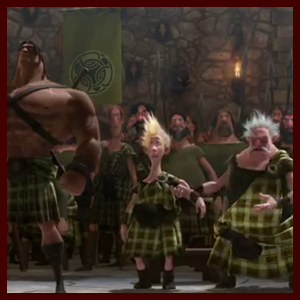
Clearly the world has changed since then. Arranged marriages are getting pretty rare these days, and the average person expects to marry for love (with a few exceptions, like the Indian and Orthodox Jewish cultures, where arranged marriages are more common). Which is why is always surprises me that the message in popular YA novels and other fairy tales seems to have stayed the same. It's no longer a provocative message, but someone merely preaching to the choir. I thought as much when I saw Disney/Pixar's Brave. No, I don't think you should force your daughter to marry, but the movie isn't watched by young princesses being forced to wed princes they don't love, but mostly young girls years away from marriage who were probably planning on choosing a spouse anyway.
I'm not saying parents are perfect these days and don't impose their will inappropriately, but the message can go too far, especially when the media acts like it's giving us this revolutionary message which it's really not. There's still a lot to be said for trusting the wisdom of parents and those who have been around longer. Though parents can make choices selfishly, young and inexperienced people in love can also act very foolishly and make decisions they regret.
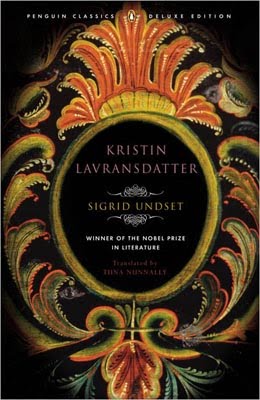
It's not a fairy tale, but I just finished reading Kristin Lavransdatter, a book written in the 1920s but set in medieval Norway. The book is about the life of a woman who rejects the man her parents arrange for her to marry and marries for love instead. I'm so used to the modern "arranged marriage=bad" message that I was expecting the book to have the same message, but it doesn't. In fact what I love about the book is it shows how complex any marriage situation is-the marriages that were approved of and those that were chosen by the couples. Neither is all good and neither is all bad; no character in the book is without flaws yet no one is without redeeming value. The book explores very messy relationships over time, and it's really a good book to have read right before getting married.
It would be nice to get more fairy tale interpretations like this. It seems these days its either the same happily ever after versions for children, which end at the wedding with happiness implied, or the twisted, dark versions being redone for adults. What about versions that are realistic without being entirely depressing or going for shock value? Books and movies that challenge you and encourage young, single people to choose their relationships wisely?
By the way, this interesting article by Ezriel Gelbfish recognizes that while not all arranged marriages are successful (and let's face it, many love marriages aren't either), statistically they tend to work. Fairy tales are cited as one of the reasons love marriages fail: “We grow up on fairy tales and movies in which magical forces help people find their soul mates, with whom they effortlessly live happily ever after...The fairy tales leave us powerless, putting our love lives into the hands of the Fates.”
Clearly the world has changed since then. Arranged marriages are getting pretty rare these days, and the average person expects to marry for love (with a few exceptions, like the Indian and Orthodox Jewish cultures, where arranged marriages are more common). Which is why is always surprises me that the message in popular YA novels and other fairy tales seems to have stayed the same. It's no longer a provocative message, but someone merely preaching to the choir. I thought as much when I saw Disney/Pixar's Brave. No, I don't think you should force your daughter to marry, but the movie isn't watched by young princesses being forced to wed princes they don't love, but mostly young girls years away from marriage who were probably planning on choosing a spouse anyway.
I'm not saying parents are perfect these days and don't impose their will inappropriately, but the message can go too far, especially when the media acts like it's giving us this revolutionary message which it's really not. There's still a lot to be said for trusting the wisdom of parents and those who have been around longer. Though parents can make choices selfishly, young and inexperienced people in love can also act very foolishly and make decisions they regret.
It's not a fairy tale, but I just finished reading Kristin Lavransdatter, a book written in the 1920s but set in medieval Norway. The book is about the life of a woman who rejects the man her parents arrange for her to marry and marries for love instead. I'm so used to the modern "arranged marriage=bad" message that I was expecting the book to have the same message, but it doesn't. In fact what I love about the book is it shows how complex any marriage situation is-the marriages that were approved of and those that were chosen by the couples. Neither is all good and neither is all bad; no character in the book is without flaws yet no one is without redeeming value. The book explores very messy relationships over time, and it's really a good book to have read right before getting married.
It would be nice to get more fairy tale interpretations like this. It seems these days its either the same happily ever after versions for children, which end at the wedding with happiness implied, or the twisted, dark versions being redone for adults. What about versions that are realistic without being entirely depressing or going for shock value? Books and movies that challenge you and encourage young, single people to choose their relationships wisely?
By the way, this interesting article by Ezriel Gelbfish recognizes that while not all arranged marriages are successful (and let's face it, many love marriages aren't either), statistically they tend to work. Fairy tales are cited as one of the reasons love marriages fail: “We grow up on fairy tales and movies in which magical forces help people find their soul mates, with whom they effortlessly live happily ever after...The fairy tales leave us powerless, putting our love lives into the hands of the Fates.”
Saturday, November 2, 2013
Villeneuve's Epilogue to BATB, part II: Letter from the Beast to Beauty
Finally! I'm excited to share the second letter which is part of Villeneuve's epilogue to Beauty and the Beast. You can read about the first in my archives, Letter from Beauty to the Beast.
As a reminder, these were translated for me by a friend, but he admitted it was very difficult work, and he is not a professional translator. But I am very grateful he was willing to take on this project! I'm not going to try to provide commentary, much of it is very confusing to me, and parts are more clear if you've read the full Villeneuve story, but it's extremely interesting to read Villeneuve's own musings on the idea of an animal bridegroom. So without further ado, here are what I found to be the most interesting excerpts:
"I ask myself why the ancient myths are permeated with such monsters, to the point where these fables that you like appear to me suddenly as a work of mourning among the gods that we have been tempted to lose. There are beasts everywhere and it would suffice during a short weakness – or refusal - for the heroes to change their appearance and that, the angels that they promise to be, they find turned into beasts. Most of these gods, bewildered on the shores of the sea where from all the aspirates that fall into ruin, do any of them choose to seduce their Beauty to make herself a beast, and not human? There would be, then, in the Beast, evidence that a human is not inclined toward him or rather to the Monster – his former form in the fables – would be the image that authorizes to speak of delinquency. The essence of man is uncertain, a nothingness at all is able to destroy it. This fiction in which we are engulfed, is probably only the result of a long story where the supernatural prepares the Beast to explain the naked form of desire. I do not want to seek revenge for my beastness by playing the role of a scholar but nonetheless, when the desire to do violence, a god does not hesitate to disguise itself as a swan or as a bull and the young woman herself from the relentless Sun to deliver not far from here her body to become another bull that came forth from the deep sea.
We were thusly made, you the Beauty and me the Beast, at this time of prior history – the universe that was the habitat of the strange fairy-tales of our story --, where humans and beasts were one and the same, before the original sin when we did not yet long for the gods and they for us. This fragment of time that we lived brought us into a porous universe, where fairy-tales themselves, antiquated remnants of wandering goddesses in the lands of the sky in rural clothing, are subjected to strange tests that require that, flying-beings as they are, the come “as snakes” to the underground world to obtain their full enlightment under the rulership of the “Mother of Times”, the great Black, the primitive night giving birth to mediocre sleep and terrible Death that brought us into time.
As a reminder, these were translated for me by a friend, but he admitted it was very difficult work, and he is not a professional translator. But I am very grateful he was willing to take on this project! I'm not going to try to provide commentary, much of it is very confusing to me, and parts are more clear if you've read the full Villeneuve story, but it's extremely interesting to read Villeneuve's own musings on the idea of an animal bridegroom. So without further ado, here are what I found to be the most interesting excerpts:
"I ask myself why the ancient myths are permeated with such monsters, to the point where these fables that you like appear to me suddenly as a work of mourning among the gods that we have been tempted to lose. There are beasts everywhere and it would suffice during a short weakness – or refusal - for the heroes to change their appearance and that, the angels that they promise to be, they find turned into beasts. Most of these gods, bewildered on the shores of the sea where from all the aspirates that fall into ruin, do any of them choose to seduce their Beauty to make herself a beast, and not human? There would be, then, in the Beast, evidence that a human is not inclined toward him or rather to the Monster – his former form in the fables – would be the image that authorizes to speak of delinquency. The essence of man is uncertain, a nothingness at all is able to destroy it. This fiction in which we are engulfed, is probably only the result of a long story where the supernatural prepares the Beast to explain the naked form of desire. I do not want to seek revenge for my beastness by playing the role of a scholar but nonetheless, when the desire to do violence, a god does not hesitate to disguise itself as a swan or as a bull and the young woman herself from the relentless Sun to deliver not far from here her body to become another bull that came forth from the deep sea.
We were thusly made, you the Beauty and me the Beast, at this time of prior history – the universe that was the habitat of the strange fairy-tales of our story --, where humans and beasts were one and the same, before the original sin when we did not yet long for the gods and they for us. This fragment of time that we lived brought us into a porous universe, where fairy-tales themselves, antiquated remnants of wandering goddesses in the lands of the sky in rural clothing, are subjected to strange tests that require that, flying-beings as they are, the come “as snakes” to the underground world to obtain their full enlightment under the rulership of the “Mother of Times”, the great Black, the primitive night giving birth to mediocre sleep and terrible Death that brought us into time.
I was the Beast and also that other thing – because our earlier states never disappear entirely --, the unknown of your nights, the one who charmed you and that you feared having lost when you returned to the place of your father. You did not know then that I was not able to be that one or the other – the Monster – in your place. These nights, that we received as ordinary
in the world of humans, did I only dream them? Were you there already my wife, as Psyché was in Love in Obscurity? I lost all memory of this dark period where I was the Beast and your Unknown One, whom you knew perhaps as it seems to suggest the narrator of our story. Had she read Apulée too much? We forget that all images are by nature deceitful, that they shape themselves only in order to assemble contradictions and gather them together: beast at the end of the day, I came in the night to trouble you in my previous form so that, by you, I rid myself of my facial image and my scales so as to be changed as human.
In light of that, you had pass through my appearance, that of the Beast, that you hold as my previous being. I would say openly – but you would mock my intension -- that the Beast ticket that would authorize the woman to be woman and that for her that is a necessary image. Also is it likely that she would consent to being her Beast-ness. If my scales, the gnashing of my teeth and my terrible voice do not frighten you any longer as on the first evening, your disdain to enter this lower world will continue. Your absence had to lack to the point of causing me to lose my life for you to risk becoming animal-like like me. That, which you do not want to admit, was in your bed and you will one day accept it because you did in fact accept to sleep with me. My scales melted in sleep and my body lost its heaviness. It was at the price of a snoring that surprised you and which, probably, worried you. Every metamorphosis requires a releasing of physical characteristics. In the morning, your Beast confessed being the Unknown-one."
*Illustrations by Margaret Tarrant
Subscribe to:
Posts (Atom)