Sunday, February 23, 2014

Fairy Tales Sell

Lately I've been noticing this huge paradox in our culture when it comes to attitudes towards fairy tales. As I've previously discussed, referring to something as a "fairy tale" can often be a very negative thing, insinuating that it is naive, childish, or anything that implies life will be perfect. The ironic thing is that 95% of fairy tale content usually involves shocking amounts of abuse, violence, and sexuality, and that includes even the most sanitized versions by Grimm or yes, even Disney.

But at the same time, fairy tales are incredibly popular and used all the time in advertising. For example, the Geico commercials I just posted refer to fairy tales (disclaimer: no, Pinocchio is not technically a fairy tale, but closely related/often mistaken as such). Partly because fairy tales are common ground-general knowledge that pretty much everyone is familiar with; and I'm sure the fact that they're not copyrighted has something to do with it. But it's more than that too. Remember this fairy tale commercial playlist? For decades companies have used fairy tale motifs to sell their products, and companies don't want to be associated with childish and immature stories-they want people to connect with positive images related to their products.

It's not just commercials, either. One of my guilty pleasures is to online shop at sites like Modcloth, where I regularly see clothes and accessories given a fairy tale-inspired name, even if the piece really has nothing to do with a particular fairy tale.
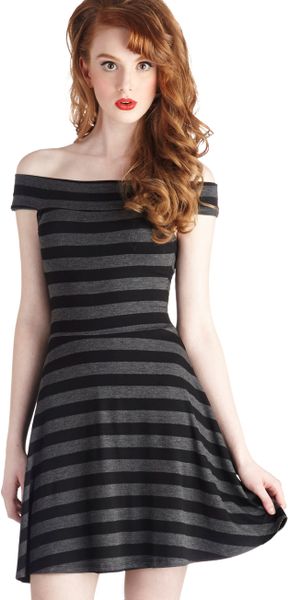
Happily Ever After party dress
Flair-y Tale boot
The clock strikes midnight gloves
Trail as Old as Time Top
Play fair-y dress

You get the idea.

Another thing I find interesting has to do with the new movie "Frozen". No, I haven't seen it yet, but from what I've heard the plot has virtually nothing to do with its original inspiration, Andersen's "Snow Queen". Sure, a snowy setting and glass shards-from what I gather only vague references. Yet they still credit Andersen's story as their source, when they could easily have marketed it as an original idea. So why even bother to say it's a fairy tale, especially a more obscure one? Did they think more people would be interested in another Disney fairy tale interpretation than a new hit feature with an original script?

When you keep your eye out for them, you find fairy tale references everywhere. I even just found out about this coffee shop in Tacoma, Washington called Bluebeard coffee. I can't find any reference to the story or why they would have named it after a fairy tale character, especially one of such ill repute...it's possible this is one of the instances where Bluebeard was confused with either Redbeard or Blackbeard the pirates, but I would hope a little more research went into the name of their store than that.

If I kept looking I could find dozens more products that reference fairy tales for no apparent reason, and then of course there's the whole line of products that ARE directly linked to fairy tales. It's no secret that fairy tales have been the source of many recent movies and t.v. shows as well. Clearly people are drawn to them and companies count on that to make their products more appealing. So my question is, how does that fit in with the very negative light many people also view fairy tales in, revealed by their vocabulary if not a conscious opinion? Do you think that with so many fairy tales being brought into focus in mainstream media and not just a side genre, that people will start to have more respect in general for fairy tales?

Thursday, February 20, 2014

GEICO Fairy tale commercials


I just saw the latest of Geico's "Did you know" series of commercials, this one featuring Pinocchio. I had mentioned the Jack and the Beanstalk one earlier, which wasn't on youtube at the time, so here it is in case you missed it:


Wednesday, February 19, 2014

Four years

As I watched my first dose of Winter Olympics, I started reminiscing about all that has changed in my life since the last Winter Olympics. I had just graduated from college that December, was still living with my parents, was only working part time and therefore had a lot more time on my hands, hadn't even met my husband yet...and I realized that that was also the month I started this blog! Today is the four-year anniversary of Tales of Faerie.

I had no idea what I was doing at the time, even now I look back at old posts and they seem immature. But one has to start somewhere, and I'm so glad I did! I have gotten incredible opportunities to connect with amazing people, to discuss topics I'm passionate about, and to learn from my wonderful readers.

So, thank you!! To all of you who share this interest in and love of fairy tales, I think it's amazing that we can create a community here on the internet. 

Saturday, February 15, 2014

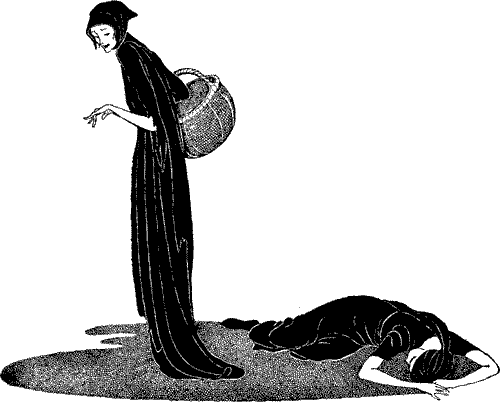
The origins of the Red Riding Hood/Cap

You may be aware that the iconic Red Riding Hood was not usually associated with the tale until Charles Perrault's version. In fact, I had previously written that there were NO instances of a red hood before Perrault, as I had read, but Once Upon a Blog's fascinating post on the latest research into the history of the tale found one instance that did include a red hood (an 11th century poem in which a little girl is wearing a red baptismal robe and escapes a wolves' den by befriending the cubs.) But fast forward to other French folktales where a girl outwits a wolf, none of which had distinctive head coverings. Then Perrault's Little Red wore not a hood, but a French cap called a chaperon. Some historical background:
"Perrault used the word chaperon, which was a small stylish cap worn by women of the aristocracy and middle classes in the 16th and 17th centuries. Since clothing was codified and strictly enforced under Louis XIV, it was customary for middle-class women to wear cloth caps, whereas aristocratic ladies wore velvet. Bright colors were preferred, especially red, and the skull cap was generally ornamental. For a village girl, in Perrault's story, to wear a red chaperon signified that she was individualistic and perhaps nonconformist."*

We today read that and probably think positively about the words "individualistic" and "nonconformist," but to Perrault such things were warning signs. His Little Red started the trend of becoming less self-reliable and more helpless and in need of male rescue. However that's a whole other discussion-I just found the facts interesting, hope you do too!

*Text from The Trials and Tribulations of Little Red Riding Hood, Jack Zipes
**Image from here, a site that gives more information about the French chaperon if you're interested. Artist was not credited as far as I could tell, please correct me if I'm wrong-

Thursday, February 13, 2014

Curiosity, Eve, and blaming women


"The ethical issues connected with Bluebeard's wife-disobedience, betrayal of trust, intrusiveness-have repeatedly preoccupied critics, who associate her disruptive behavior with the transgressive acts of Pandora, Eve, Psyche, and all those other mythical, biblical, and folkloric women who seem to be too curious for their own good or for the good of the human race." (Maria Tatar, "Secrets beyond the Door: The Story of Bluebeard and his Wives."

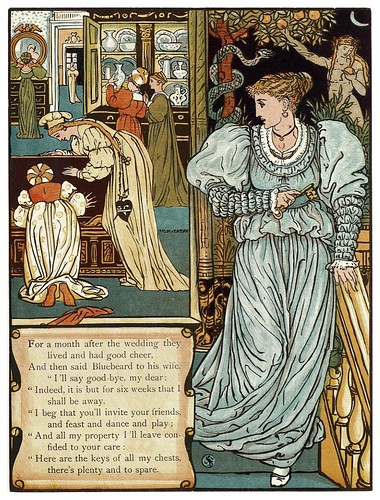
Fairy tale characters such as Psyche, many of the Animal Bridegroom heroines who followed her, and especially Bluebeard's wife, are condemned for their curiosity, which leads them to trouble. Folklorists and critics have noted this connection, as well as connecting them to the myth of Pandora and the biblical character Eve. Fairy tale illustrator Walter Crane has solidified this connection by inserting paintings of Eve and the serpent in the backgrounds of his illustrations of Bluebeard's wife (above) and Beauty from Beauty and the Beast (below).

Yet this connection bothers me because it's not actually theologically correct. Yes, Eve ate of the fruit of the tree of the knowledge of good and evil, but the main sin wasn't her curiosity-it was disobedience to the one command God gave and the pride of wanting to become like God. Yet more importantly than that for the sake of fairy tales and gender issues, Eve is never  held as exclusively responsible for the first sin in the Bible. When she took of the fruit and ate, "she also gave some to her husband who was with her, and he ate" (Genesis 3:6, ESV). This implies that Adam was there the whole time Eve was being tempted, and didn't say anything to contradict the serpent or attempt to dissuade her from eating the fruit. Therefore he was just as responsible as Eve.

God sees them as equally responsible when He punishes all three of them-the serpent, Eve, and Adam in Genesis 3:14-19. In fact, later in Scripture, Adam alone is representative of bringing sin into the world-"For as in Adam all die, so also in Christ shall all be made alive," I Corinthians 15:22.

However, for years and years the Church itself as well as those outside have seen the Fall as a picture of the sin of women who can't control themselves. The other myths and stories mentioned above have helped cement the idea of heaping the blame on women for global problems. How did this happen? Reminds me of Governor Huckabee's infamous statement that the problem with birth control is that women "cannot control their libido." Yes, it's all women's fault. Men have NOTHING to do with getting women pregnant.

Of course, we shouldn't forget that further back in fairy tale history, lesser known versions of the fairy tales feature women whose curiosity is rewarded-heroines such as in the Grimms' "Fitcher's Bird" find out the murderer's secret, and then heroically rescue and resurrect the other murdered women. Yet these tales are nowhere near as well known, sadly.

Sunday, February 9, 2014

Fairy Tale Tea

Fellow tea lovers alert!! I found these fairy tale teas on etsy. There are so many fairy tale products available these days but this is pretty unique!

From seller SimplyDeliciousMe, 6 tea blends:

"Beauty & The Beast- Black summer roses blend with a dark forest flavor for a new twist on a tale as old as time.

Cinderella-A black tea mixed with vanilla and ginger, with hints of peaches. Keep a lookout for glass slippers and step mothers

Red Riding Hood-A rich red tea blended for a forest berry sensation so good, you may want to share with grandma.

Sleeping Beauty-A soothing blend of Chamomile and Green Needle teas, for a slumber you won't have to prick your finger for

Snow White-A white tea expertly blended with Snow buds and Vanilla for a princess worthy tea.
& The 7 Dwarves- A rich earthy tea with hints of a gold tea that mimics what mining dwarves love most."

I think these are all pretty clever. The only one that seems random is Cinderella. At first I thought the peaches were a nod to the tree Cinderella/Aschenputtel climbs in to hide in the Grimms version, but that was a pear tree. In the ballet version they make use of oranges in the ball scene...anyone aware of a connection to Cinderella and peaches?

Wednesday, February 5, 2014

Dreaming Anastasia by Joy Preble


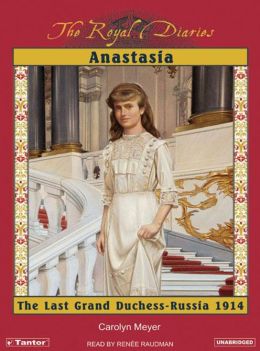
I had come across a free download of Dreaming Anastasia on Surlalune almost exactly three years ago, and finally got around to reading it this week. It caught my attention because of its unique blend of Russian folklore/Baba Yaga with the legend that Anastasia Romanov had managed to survive the shooting that ended the Russian dynasty back in 1918. Like many girls my age I was exposed to the story through the animated movie from 1997, and I also had the Royal Diaries book on Anastasia, which was the more historically accurate version. Those two things had inspired me, years later, to read up more on what actually happened.

Unfortunately the truth is not quite as romantic. First of all, it was never Anastasia's body that was missing-it was Alexei's and Maria's-the famed daughter's remains were with her family all along while the world searched for her. Even their bodies were discovered not too long ago, confirming the fact that none of the Romanovs survived the shooting. However, the story is still not without mystery-the life and death of Rasputin are fascinating and downright creepy to read about.

I'm pretty sure that, had I not already been nerdy about the Romanov family, this novel would have gotten me into it. Overall, it's not the best writing I've ever come across, even for young adult novels. Maybe just because I haven't read and YA novels in a while (at least not that weren't fairy tales set back in Once Upon a Time where none of the characters had cell phones) but I was initially shocked by the speech of the main characters, which consisted of a lot of "likes" and "whatevers" and talking about how hot certain boys were and how far they would go with them (am I sounding enough like an old lady yet? Not to mention this was my first time ever reading a book on Kindle...I know I'm old fashioned but I just like holding and flipping through books). However, it was still entertaining, if not a bit predictable. There were other factors I liked too, like references to ballet, the story of Swan Lake, and a Chicago setting.

From the book description you get a pretty good idea of the plot:

What really happened to Anastasia Romanov?

Anastasia Romanov thought she would never feel more alone than when the gunfire started and her family began to fall around her. Surely the bullets would come for her next. But they didn't. Instead, two gnarled old hands reached for her. When she wakes up she discovers that she is in the ancient hut of the witch Baba Yaga, and that some things are worse than being dead.

In modern-day Chicago, Anne doesn't know much about Russian history. She is more concerned about getting into a good college—until the dreams start. She is somewhere else. She is someone else. And she is sharing a small room with a very old woman. The vivid dreams startle her, but not until a handsome stranger offers to explain them does she realize her life is going to change forever. She is the only one who can save Anastasia. But, Anastasia is having her own dreams…

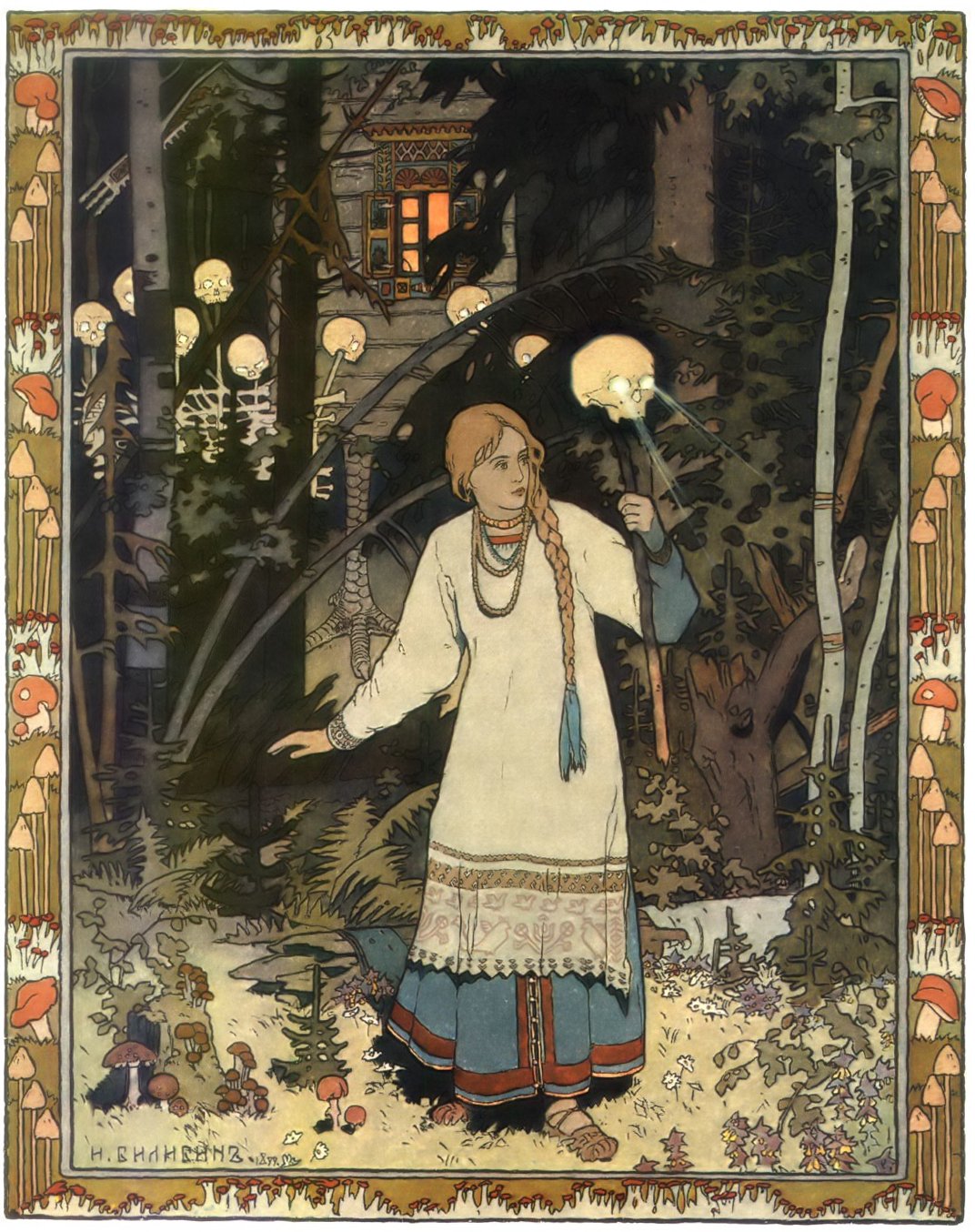
"Vasilisa the Beautiful"
Ivan Bilibin

So according to this version, Anastasia's disappearance is due to the fact that Baba Yaga took her and she is trapped in the infamous hut on chicken's legs in the forest. Throughout there is a direct parallel made between Anastasia and Vasilisa the Beautiful, who has a doll given to her by her mother who helps protect her while staying with Baba Yaga.

I liked that the book explores the complex nature of Baba Yaga. Unlike many fairy tale witches, she isn't always always evil-sometimes she assists the main characters. Although the characters wonder if she can be trusted, she ends up being entirely benevolent in this version (spoiler alert: Anastasia refers to her as "Auntie Yaga," and the witch is heartbroken that Anastasia must leave her although she helped her escape). I almost wish they had made her a little more fearsome, for someone whose home is lit by human skulls can't be all motherly...
Ivan Bilibin

I also liked that the characters turned to reading fairy tales to help them find the clues they needed to get to Baba Yaga's hut (spoiler: it involves the rule of threes so common in fairy tales). This is an element I wish more of the modern fairy tale mystery treatments would do, like Grimm (although if the characters did more of this recently I wouldn't know, I stopped watching it).

I even learned some fascinating things about the Russian language. For example, "baba" is a word they give to a girl who has lost her virginity. Makes the character Baba Yaga even more complex...also, the name "Anastasia" means "reborn" or "resurrection." No wonder it seemed so perfect that she of all the Romanovs might still have been alive...

If this is up your alley, you should definitely check out The Kitchen Boy by Robert Alexander: historical fiction but uses a lot of facts, a really exciting read on the imprisonment of the Romanovs in the weeks before they died. Also, there are sequels to "Dreaming Anastasia"-Haunted and Anastasia Forever

Sunday, February 2, 2014

1001 Nights 101

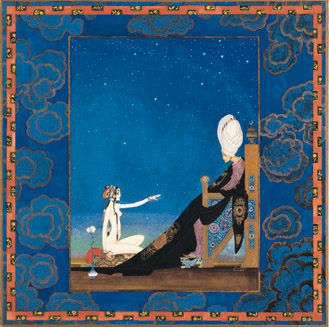
Kay Nielsen

Wisconsin Public Radio had a special on 1001 Nights today! The program To the Best of Our Knowledge discusses its history and the significance of the stories. You even get to hear from Marina Warner, who talks about her book Stranger Magic: Charmed States and the Arabian Nights. You can listen online (after the Superbowl is over ;) ).

Thursday, January 30, 2014

The Magic Mirror: A Romanian Snow White

The more I learn about Snow White tales, the more I'm convinced it is the most violent tale group. Even when compared to the obvious ones like Bluebeard, in which the husband murders multiple wives-that one shocking plotline is the premise of all Bluebeard tales. Yet with Snow White, there seems to be no end to the ways storytellers have come up with to torture the beautiful young girl. Take the Romanian tale, "The Magic Mirror":
W C Drupsteen

Once there was a beautiful woman who possessed a magic mirror, who always told her that she was the fairest woman in the land. When her daughter grew older, the mirror told her that her daughter's beauty had surpassed her, and she hated her daughter and was determined to kill her.

The woman baked a salted cake. She took the cake and a jug of water, and took her daughter into the forest. After they had gone a ways, the girl began to get hungry, and begged her mother for something to eat. "If you want something to eat, take this cake, but you must cut out your eye first," said her mother.

The mother gauged out her daughter's eye and kept walking. After a while, the salted cake made the daughter extremely thirsty. She begged for water, which her mother would only give if she gauged out her other eye, so the girl was now blind. She pushed her daughter over a slope that ended in a savage river and hurried home. The mirror conceded that the mother was now fairer than her blind daughter.

The daughter, after giving thanks to God for her safety, was instructed by the Virgin Mary to wash her eyes in a fountain, and her sight was restored. She fell asleep and was found by twelve robbers. They each wanted her for themselves, but decided to let her decide. When she woke up, they told her they were each willing to take her as a wife, but if she did not desire any of them, they would take her home and treat her as a sister. She chose the latter and went home with them.

The next day when they went out, they warned her not to answer the door for anyone. Yet by this time the girl's mother had discovered that her daughter was alive and well, and now more fair than her again. So she instructed an old hag to take a poisoned ring to her daughter in the woods.

The girl did not let the old hag in, but as she hadn't been instructed not to accept anything through the door, she took the ring. The ring made her faint and she fell down in a deathlike sleep. When the robbers returned they discovered the ring and removed it.
Jennie Harbour

The mother sent the hag again, with enchanted earrings, which also were poisoned. When the robbers discovered the earrings, the mother decided to enchant a flower, for the robbers wouldn't notice such a natural thing. And as the daughter often wore a flower, they could not undo the magic the third time, and set her body in a bier made of firs, evergreens, and flowers, and put her in the open air of the forest.

Soon the prince of the land found the beautiful girl's body, and, unable to restrain himself, kissed the dead girl fervently. He ordered them to bring her down carefully, lest anything happen to the precious statue. One of the king's men had decided to take the flower as a gift for his own beloved, and when it was removed, the girl woke up. The prince was delighted and took the girl home to marry her.

Yet her mother discovered she was alive once again. After her daughter had delivered her first baby, the mother came to be the new midwife. When the prince had gone to sleep, she put a knife in the baby's heart, and was about to kill her daughter as well, when the prince woke up and said, "don't you dare, you witch!"

"But I must murder anyone more beautiful than me!" the woman cried. The emperor jumped in between his wife and her mother and saved his wife; the story of her mother was found and she was put to death, and the couple was able to live undisturbed for many, many years.

****

I find several aspects of this story, from a 1845 collection, to be fascinating. First of all, the heartless violence of the natural mother who does not initially hire anyone to get rid of her daughter (no huntsman here), but determines right away to personally get rid of her daughter. But though she could have killed her right away (she clearly had no qualms about that), she prolongs the episode, causing her daughter to hunger and thirst, gauging out her eyes one by one, and THEN sending her to her supposed death.

Possibly more shocking is that a band of twelve male thieves-exactly who you would expect to present the most danger to a young, beautiful girl, end up protecting her. In this version they provide a fascinating contrast to the prince, who cannot control himself. The twelve men, who could easily have overpowered one young girl, restrain their desires even though they each want to marry her. You don't get that sense of sexual desire from the versions with dwarves! They love her and treat her as a sister, whereas the prince blatantly objectifies her, calling her lifeless body a "precious statue" (yes, that was a direct quote!!). I found myself disappointed she ended up with that creepy guy and wishing she had fallen in love with one of the robbers.

And then, after the wedding when many other versions end, the mother gets one more chance to be cruel. She kills a helpless baby, her own granddaughter-a piece of evil which is never undone, as many spells often are at the end of a fairy tale.

Tale found in Surlalune's Sleeping Beauties: Sleeping Beauty and Snow White Tales From Around the World.

On a totally different note: who else is psyched about the new French Beauty and the Beast movie?? Once Upon a Blog has great coverage (as always)

Sunday, January 26, 2014

Mermaid hoaxes

In the study of mermaids, sometimes the most surprising thing is not that people have believed in other species that are now believed to never have existed, but the lengths to which some people have gone to convince others of the truth of the elusive sea creatures. Think of Santa Claus and all that some parents do to keep alive the tradition and convince younger children that he is the one who leaves presents and eats the cookies and milk.
Mermaid mummy from 1682, Zuiryugi Temple in Osaka, Japan

Throughout history, and in virtually all cultures, there has been widespread belief in mermaids/mermen, sirens, nixies, or other creatures that haunt the waters. Yet we should avoid the oversimplified belief that people in the past were all gullible and believed anything they were told. There were early doubters, such as the ancient Pliny, who stated "I do not believe in sirens." Yet stories still persisted throughout the centuries-and not just in folklore and legends, but history holds numerous accounts of eyewitnesses who claim to have seen such creatures. Many of the claims even had "great scientific merit." Many highly respected people were among those who reported mermaid sightings, including Christopher Columbus, who met with three sirens "dancing on the water." A fisherman in India joined the body of an ape with that of a fish in the early 1800s, and attracted many "experienced men" who dedicated much time to research what they thought was newly discovered scientific evidence, and it was sold for a high price.

The agreed upon scientific explanation for these scores of accounts now attribute the sightings to sea creatures such as manatees and seals, and it's likely that many of the witnesses were drunk at the time. There is a story of a drunk sailor who was grabbed by a seal in the port of Constantinople and dragged into the water-it's easy to see how, in an inebriated state, the soldier might have attributed the strange circumstance to a siren who had fallen madly in love with him.

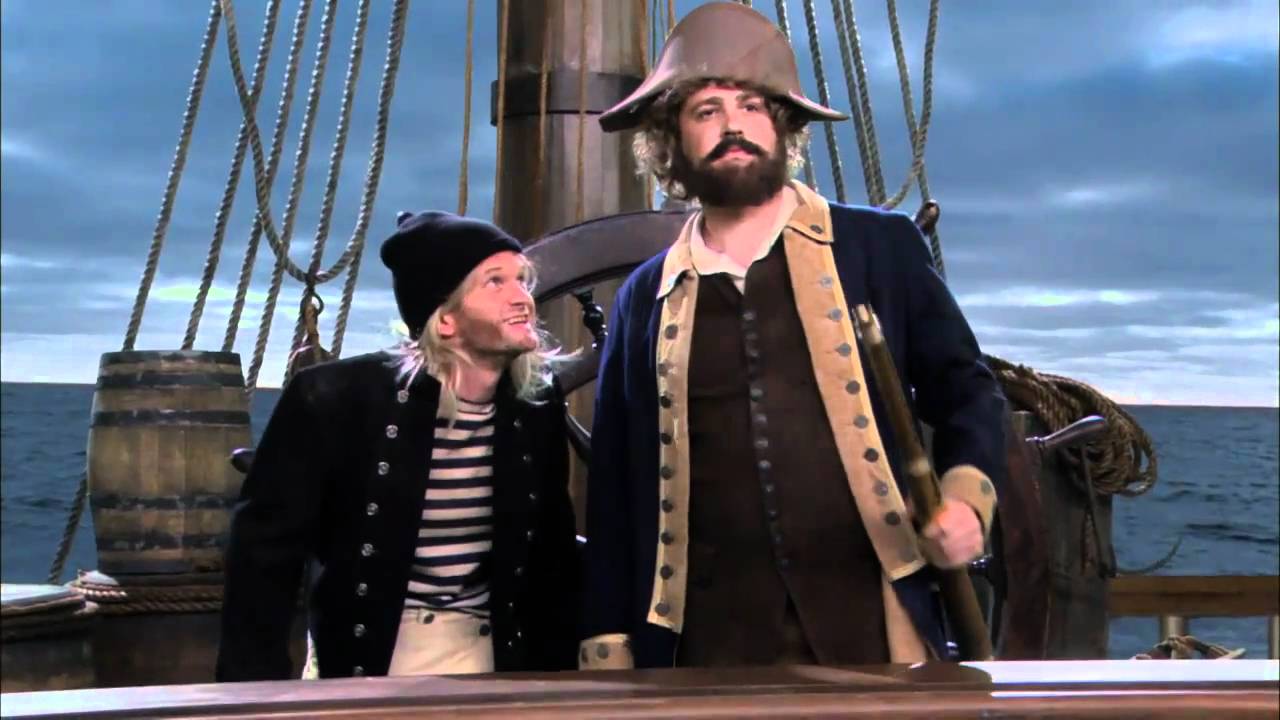
The t.v. show "How I Met Your Mother" has an episode entitled "Mermaid Theory" in which the character Barney explains the existence of mermaids as the result of sailors, who, after months and months at sea and with women in sight, eventually began to go a little crazy and see manatees as beautiful women. Unlike many of Barney's theories on the show, this one isn't entirely wrong. I'm sure strange things can happen to men trapped on a boat with no land in sight for months at a time.

Maximilian Schele de Vere describes the many humanlike characteristics of several sea creatures, who might cry when mistreated, have big emotive eyes, and some can even be taught to say "Papa." Yet I still think you'd have to be extremely drunk to mistake a seal or manatee for a beautiful woman combing her long golden locks...many descriptions of mermaids are quite detailed, down to eye color. I think in addition to drunkenness and the loneliness of sailors at sea, there must have been some other explanations, either intentional deception or simply seeing what you want to see/have always believed.

Creating mermaid remains was at a peak during Victorian times, when live mermaids or "mermaid mummies" were common carnival attractions. According to Timothy Schaffert, such mermaids were created from a variety of sources, from the remains of other animals to papier-mache, and some would even rob human graves in an attempt to make their mermaids more realistic. Not all live mermaids were willing-De Vere cites an instance when some Quakers started an investigation and rescued a woman who had been forced to wear a fish tail and comb her hair in front of spectators. Some mermaid hoaxes became quite famous, such as P.T. Barnum's Feejee Mermaid.
Replica of P.T. Barnum's Feejee Mermaid

Schaffert claims that many in the audience who flocked to see such exhibits were not themselves believers (although some staunchly believed), but were almost more interested in discovering for themselves how the mermaid had been created-there is a certain appeal to being the one to figure out how it was done, much like watching a magic show and trying to see the strings, or the appeal of mystery and detective stories.

Victorian mermaid mummy
 
The desire to delude people with hoaxes exists today in tabloids and internet claims. Some people delight in attempting to pull one over on the masses; and we masses tend to eat up sensational stories, if for nothing else to prove that we are too sophisticated to believe what the gullible do. Yet I strongly agree with this quote by De Vere: "There is, however, quite enough that is truly marvelous in some of the greater denizens of the deep, to engage our interest, and to find in them the originals of the fabled beings of whom we have spoken, without resorting to such gross and cruel deception." As with the search for fairies, if we were to discover that such things existed as diminuitive flying creatures that resemble humans, or some creature has evolved that is a combination of fish and mammal, what would that prove? Does the world need these specific combinations of beauty and wonder to be considered marvelous? I hope that the excitement that fairies and mermaids brings us can help us not to be disappointed if they don't exist, but to realize how incredible each part of creation already is.
 
 Sources:
Maximilian Schele de Vere, Wonders of the Deep: A Companion to Stray Leaves from the Book of Nature, 1869. Found in Surlalune's Mermaid and Other Water Spirit Tales From Around the World
 
Timothy Schaffert, Mermaid Hoaxes, from the Mermaids issue of Faerie Magazine: Number 25
 
Mermaid mummy images from Bayberrygallery.com