Tuesday, October 29, 2013

Treasures of the Walt Disney Archives at Museum of Science and Industry

I got to see the Museum of Science and Industry's Treasures of the Walt Disney Archives exhibit!
I was already prepared from reading in the Chicago Tribune that the exhibit focused on movie props and animation, not on storylines or specifically fairy tales. But of course, no display of Walt Disney's life would be complete without reference to fairy tales. In the article, Steve Johnson also pointed out his disappointment that the museum didn't go more into Disney's life, "the good and the bad." I was surprised by this initially, because this is not a display somewhere in Disneyland, but put on by a respected and unbiased museum-until I saw that the whole thing was put on by D23, Disney's official fan club. And really to be fair, only so much can fit into one exhibit, and it's a science museum after all, so it makes sense they would focus on animation.
 
And animation is where Disney shines most when we look back-this form of storytelling would be very different today if it weren't for Walt Disney. It's rather unfortunate that someone so innovative and forward thinking couldn't be more progressive when it came to his portrayals of women in fairy tales. In my opinion, Disney's movies really aren't that bad in and of themselves, especially compared to much of the media coming out at the same time (although you will find many who vehemently disagree with me on that)-what's really telling is looking at each fairy tale's history, and how in that sense, his ideas seemed almost backwards. And while we could have expected a little more from him, at the time critics and fans alike absolutely loved his movies-there were even fan letters from other celebrities and presidents. I don't know enough history to fully understand the attitudes of the time, but it's safe to say people had different expectations from there entertainment in Walt's early career than we do today.
Of course you won't find any of that in this museum. The only thing they mention about storyline is how Walt invented the storyboards. But, aside from that, it was still really interesting. I'd read about the multiplane camera before, another invention of the Disney company (although not actually Walt himself, as the exhibit made it seem), but only had a vague idea of how it worked. But now I understand what it is and appreciate the creativity that went into creating it.
 
I also really enjoyed seeing movie props, like the costumes from Mary Poppins, and the storybooks used for the openings of the first Disney Princess movies.
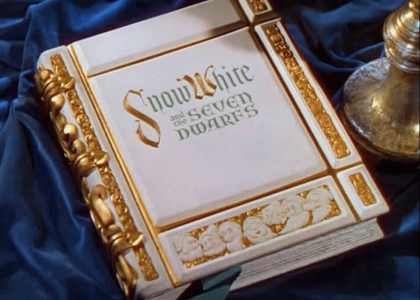
I also thought it interesting to see how, in the span of Disney's creations, though the creators of this exhibit lauded his genius as storyteller, I'd say at least 50% of his movies were taken from either fairy tales or well-known books. It's a little more challengin to create your own masterpiece then to interpret a story that is already well-loved...but whatever your personal opinions of Disney, you can't deny how influential he was. From his earliest laugh-o-grams to the present, fairy tales were integral to Disney's success, and in turn his interpretations of the tales placed him as one of the most significant people in the history of fairy tales (one fan letter the museum displayed, I think from Cecil B. Demille, said that "Germany had its brothers Grimm, and America its Disney!"). I'd recommend the exhibit to anyone else in the Chicago area who has a soft spot for Disneyana!

Wednesday, October 23, 2013

Post-Victorian Little Red Riding Hood

Over a year ago I did a post on the history of Little Red Riding Hood, and how the story that began as purely a bawdy, entertaining folktale had become adapted as a children's story that was meant to instruct the younger generation on the proper way to behave, according to Victorian standards.

 Since Perrault's and the Grimms' famous versions, many versions continued to be produced that followed the same patterns: Red Riding Hood breaks an admonition her mother gave her, thus making it a story about the dangers of disobeying, and she is rescued by a man. In Jack Zipes' The Trials and Tribulations of Little Red Riding Hood he gives us a glimpse into the next wave of Little Red Riding Hood stories-at the beginning of the twentieth century, writers began to play around with and parody what were by then familiar tales. These stories tend to fit into several categories.

Political statements
Fairy tales were used by those on all sides of the political spectrum. Werner von Bulow wrote a racist essay (published by the Swastika Publishing House, which should give you a clue) using the motif of Little Red Riding Hood as, essentially, Nazi propaganda. But there were others, like Ulrich Link in 1937, who used irony to critique Nazism through the same fairy tale. In his story, Little Red is a member of the League of German Maidens, and when the wolf is killed he is "distributed among the Reich's nutrient producers and made into meat in his own juice." Zipes points out that the traditional way of using the tale to promote conformity (stressing the young girl's need to absolutely obey elders) is exaggerated to critique Nazi conformism.

LRRH was also used to critique fascism (Evgenii Shvarts in 1937) and totalitarianism in H.I. Phillips' version, told "as a Dictator would tell it." In Phillips' story, the narrator portrays Little Red as the aggressor, and thus justifies the wolf's actions, making him the true hero.

Margaret Kassagep's story criticizes how common crime had become in West Germany in her 1980 story, where Red and her friend Wolfi both kill the grandmother to take her money.

Gender equality
James Thurber presented a very different Little Red Riding Hood than the public was used to in his 1939 Little Girl and the Wolf. She is not deceived, or even phased, by the wolf. My favorite line: "she saw that it was not her grandmother but the wolf, for even in a nightcap a wolf does not look any more like your grandmother than the Metro-Goldwyn lion looks like Calvin Coolidge." After that, the little girl calmly takes out a gun and shoots him.

O.F. Gmelin's 1978 tale features a clever girl that cuts her own way out of the wolf's belly. Angela Carter's 1979 story presents a "strong-minded child" that fends for herself and tames the wolf.

Many other versions since then have heroines that are not gullible, and/or fend for themselves without needing the aid of a hunter to come rescue her. Sometimes she is on her own, and other times she and her grandmother conspire together to overthrow the wolf (which, I might add, is what happens at the end of the Grimm version after they got rescued the first time.)

Ecological statements
In some versions, the wolf's animal nature is embraced rather than condemned. Similar to modern interpretations of Beauty and the Beast, the animal characters are seen as representing sexuality, and modern females can embrace their wild side rather than repressing it.

But there are other reasons for this as well. Now that wild animals do not present a danger to our everyday lives we don't really see them as a threat-if anything they are romanticized. They can also represent getting in touch with Nature.

Traditional versions
Of course, the traditional version that emphasizes the importance of not straying from the path is still being circulated in children's books that take out anything that might be considered too violent. The storylines brought to us by Perrault and the Grimms will not entirely disappear for a while yet.

*Illustrations by Jennie Harbour

Wednesday, October 16, 2013

Surlalune's Beauty and the Beast collection available!

My blog followers will know I'm a big fan of Surlalune's fairy tale collections, and I'm not the only one who's excited about the newest book, Beauty and the Beast Tales from Around the World. Surlalune has been providing posts about the features of the book and Once Upon a Blog has already covered it too, so I just want to quickly highlight it.
Not only will the book feature, obviously, different versions of BATB from around the world, but readers have asked me where they can get an English translation of the Villeneuve version. I've tried to dig into the Villeneuve version and have talked about it here, but the problem is, it's extremely hard to get an English translation of the text, and I've lately discovered that the only one I've found, by Jack Zipes, is not even the most accurate.

Now, for the first time, accurate English translations of Villeneuve's Beauty and the Beast will be available to the general public at a resonable price. You can read more about them at Surlalune, but Heidi Anne Heiner has included translations by Dowson and Planche. This will definitely be on my Christmas wishlist and I'll probably be posting more from it after then!

Thursday, October 10, 2013

Fairy Tale Commercials playlist


I just saw a new Gieco commercial featuring Jack and the Beanstalk. Couldn't find it on youtube yet, but I did find this playlist featuring 47 different fairy tale-themed commercials. Cinderella and Red Riding Hood are definitely the most commonly used. Some of them are recent and some are old, going back to the 80s and 90s, and a couple from the 1930s! Advertisements are some of the most globally viewed takes on fairy tales, so they give us an idea of what the general population has been exposed to in terms of fairy tale parodies, as well as what companies think will appeal to everyone. And, some of them are just plain entertaining! Enjoy-

Sunday, October 6, 2013

A Turkish Variant of The 12 Dancing Princesses

The Magic Turban, the Magic Whip, and the Magic Carpet

"Once upon a time that was no time..." there were two brothers. The younger was lazy and lived off of his older brother. One day he was wandering and found three youths quarreling with each other. Their father had left them a magic turban, which made the wearer invisible; and a carpet which, one struck with the whip, would fly the rider far away. The three youths were arguing over who should inherit the gifts.

The lazy brother told them that he would shoot an arrow, and whoever brought back the arrow first would receive all the gifts. But as soon as the other brothers left to fetch the arrow, he put on the turban, sat on the carpet, struck it with the whip, and asked to be where his older brother was.

He found himself in a large city and soon learned that the Sultan's daughter disappeared every night from the palace, and whoever could discover where she went would win her hand. So he went to the palace and pretended to be asleep while watching the Sultan's daughter, who stuck a needle into her heel, took a candle, and went out a side door.

The youth followed, with the turban on his head. The maiden came to a spirit and sat on his head, and they were about to leave, when the youth jumped on as well. The spirit complained that the maiden was too heavy, and the Sultan's daughter protested, "thou art very odd tonight, for I am neither bigger nor smaller than I was yesterday."

The group came to a garden where the trees were made of silver and diamonds. The youth broke off a twig, and the trees wept and said, "There's a child of man here who tortures us!"
Ruth Sanderson

The maiden then realized that maybe the soul of the youth was pursuing them. Later they came to a garden where the trees sparkled with gold and precious stones. The youth plucked another twig, and the trees again wept, and the damsel and spirit were afraid.
 
Then they came to a fairy castle, where slaves greeted the princess and they brought her a pair of slippers covered with diamonds and precious stones, but the youth snatched one away and put it in his pocket. The maiden could not find the other shoe, so sent for another pair, but another shoe went missing, so she finally went on without shoes.
Shoes from here

She came to a black Peri, "one of whose lips touched the sky, while the other lip swept the ground." He angrily asked the princess why she was late, and she told him about the youth coming and there being trouble on the way, and the Peri said it was all a fancy. He ordered a slave to bring them sherbet, but the youth grabbed the hand of the slave handing it to her and the diamond cup fell and broke into pieces.

The princess was afraid and wanted to go back, but the Peri ordered other slaves to bring them food. The Peri got impatient when food and forks and spoons began to disappear, so maybe it was best if the Sultan's daughter did go home early. He wanted to kiss her, but the youth pulled them apart. The Peri called for the spirit to carry the princess home, and they left. The youth took a sword from the wall and chopped off the head of the Peri. The earth groaned and a voice cried, "Woe to us, a child of man hath slain our king!"

The youth went to the carpet and it carried him back to the palace, where he pretended to snore as the princess came back.

The next morning the youth had all the people called together, and he told them the full story of where the Princess had gone. The princess denied it, but the youth brought forth the enchanted twigs, slippers, and spoons and forks. The youth saw his older brother and insisted he should claim the princess and half the kingdom.

The princess was overjoyed, for the Peri had carried her off and put her under a spell, from which she was now free. She and the elder brother were married, and had a great banquet that lasted for forty days.

*Full tale found in Surlalune's Twelve Dancing Princesses: Tales From Around the World

Tuesday, October 1, 2013

Cinderella's Pumpkins: Part 4


Image from here
Image from here
Image from here
Can't find this image again to credit the source! If anyone knows where it's from please let me know in the comments!
Image from here

Image from here

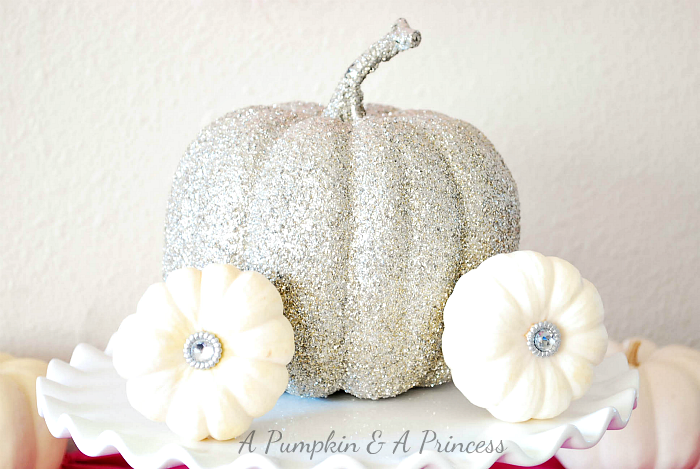
Ah, October! In Tales of Faerie Land, that means looking at the creative ways people carve pumpkins into Cinderella's magical coach! See posts from 2012, 2011, and 2010


Female leads as a Marketing Tool

Surlalune posted from an article about the upcoming "Frozen" movie by Disney, which has fairy tale enthusiasts disappointed by its lack of having anything at all to do with its original inspiration, Andersen's "Snow Queen". But I feel like I've been reading/hearing a lot lately about people complaining about lack of strong female leads in entertainment and this one quote really struck me:

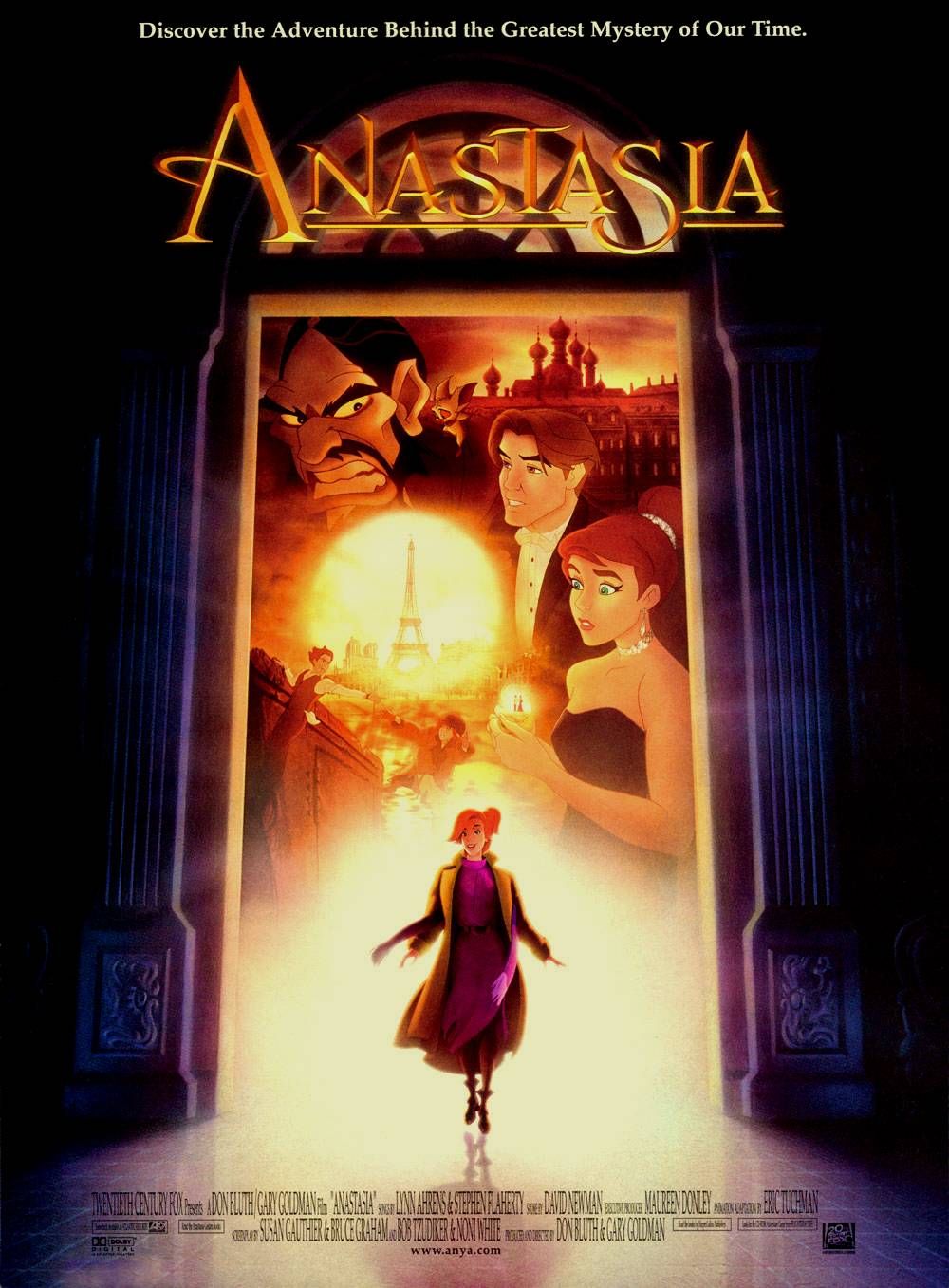
"It is a telling sign of how far gender parity has fallen in the last decade when something like this or Brave is considered noteworthy, especially as the female-driven animated features like Mulan or Anastasia used to come and go without comment in the mid-to-late 1990′s."

I think I never really got what all the fuss was about, because in my mind I had never noticed a lack of strong female leads. I have no problem relating to male protagonists, such as Harry Potter or the cast of Lord of the Rings, but also as a girl I was drawn to the classic girl stories such as Alice in Wonderland, Little Women, Anne of Green Gables, etc-and of course the classic Princess fairy tales. But the quote above made me realize that some of my most formative years were some of the most successful in terms of promoting female leads-so much so that it wasn't considered something to brag about. Can I just say that I am so disappointed Anastasia doesn't have the continual marketing that Disney princesses do and none of my students even know that movie? It hurts my heart. I swear every single girl my age can sing all of "Once Upon a December" word for word even if she doesn't admit it. Despite its historical inaccuracies it got me interested in reading about Russian history in a way that no history class ever did.

A musician friend of mine in college and I were once complaining about how we didn't like recitals or concerts that promoted only female composers. It meant that the music was chosen primarily because of the gender of the composer, not because of the quality of the music. If the music is excellent it should be featured regularly alongside the works of Bach, Beethoven, and the other male giants of the music world. It almost comes across as patronizing rather than empowering.

The same thing applies to entertainment. The world is full of males and females and so should entertainment be. If you're looking for strong female casts of characters you can certainly find them but sadly it seems our culture has become less female-empowering over time. The more we pat ourselves on the back for fecently featuring a gender that encompasses 50% of the world the sadder the situation is.

But there's also good news here. I think that if we give our young girls enough positive female role models, it's not going to destroy their self-esteem if they are also exposed to some of the most passive versions of fairy tale princesses. I grew up seeing strong and independent females as well as those who mainly waited around for their prince to come, and I didn't see the latter as representing the ideal state of the female, as many critics claim is their result. I spent my single years getting educated and pursuing my talents and hobbies (including researching fairy tales) and working in a job I love. And that's the goal of feminism, right? Equal opportunities for both genders?

What kinds of female role models did you grow up with and how do you think they influenced you, looking back?

Thursday, September 26, 2013

Hipster Witch

Lol!

Like this? Check out Hipster Princesses

Image found here

Saturday, September 21, 2013

Fairy Tales: So hot right now

"The current Hollywood vogue for fairytales has been partly inspired by the bicentenary of Grimms Fairy Tales...but Bill [Gray, University of Chichester] suggests the economic downturn may be a factor too. He says, 'These so-called fairy tales are often about surviving a (murderously) dysfunctional family in a harsh situation. Don't forget the Grimms created their book while Germany was an occupied country under French rule. Life was harsh; people did starve to death. The sort of scenario we see in Hansel and Gretel is not too far-fetched.

"'So-called fairy tales both take you out of the harsh demands of real life, but are also about finding solutions, finding hope, in hard times. And the cinema is itself a magical shelter from a bleak world-and yet can also be more than just escapism.'"

-from Faerie Magazine, Issue 24 (Either I'm blind or they didn't cite an author for that article) (Be sure to check out Heidi Anne Heiner's, AKA Surlalune's, piece on "Cinderella Through the Years")

I caught bits and pieces of the new Hansel and Gretel movie while my in-laws were watching it a few weeks ago. I agree with Christie of Spinning Straw into Gold that, while it's not one of the most significant versions of a fairy tale, it's a fun movie to watch (but definitely rated R for a reason-I would NOT recommend for younger audiences). But I was surprised that afterwards my future mother-in-law said, "That was cool! I wonder how many other fairy tales they're going to turn on their heads like that?"

We who follow the world of fairy tales know that they're EVERYwhere in media, just check out Once Upon a Blog and see how many fairy tale movies are currently in the works, but those who don't pay attention may be just picking up on the trend. Her comment reminded me that what is cliche to some of us (such as the idea of creating a "twisted" fairy tale, where some traditional plot point or character's status as good or evil is challenged) is dependent on the type of entertainment we consume. Those who don't typically seek out modern versions of fairy tales are being exposed to them, and wanting more!

Wednesday, September 18, 2013

Cocteau and Disney's Beauty and the Beast as Gay Advocates

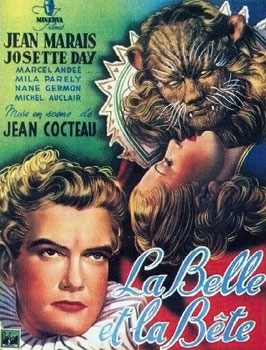
Jerry Griswold claims in his The Meanings of Beauty and the Beast: A Handbook that the two major film versions of "Beauty and the Beast", by Jean Cocteau (1946) and Disney (1991), "essentially present it as a gay version." When I read that I wondered how in the world you could conclude that from seeing the movies. With all the modern versions challenging society's views of gender roles and sexuality, these movies seem to be some of the more traditional ways of telling the story.

While I don't think a gay advocacy is obvious from plot points themselves, there is some very telling information about the creators of the films I had never heard before.

Griswold provides movie summaries; for the purpose of this post I'll just assume you're familiar with the movies' basic plots.

Cocteau: Griswold claims that Cocteau makes an effort to show a negative correlation with male heterosexuality. For example, he amplifies the horrific/creepy elements of the story. The tale is often thought to portray the anxieties a woman faces before intimacy with a man, so therefore to increase the horror is to indicate that the horror of heterosexual intimacy never really goes away. Also, when Belle sees the Beast outside her bedroom just after a hunt, paws smoking, and he is ashamed, that supposedly means that "what is ugly and repulsive...are male sexual desires and giving into them."

I think the logic there is pretty weak. But what I do find interesting is the ending. I was always bothered by the fact that the Beast turns into the Avenant character, who is clearly a villain. Griswold seems the whole ending scene as intentionally ridiculous-from the cheesy lines to the costumes. Audiences tend to be disappointed at the ending, and Griswold thinks this intentional, which I think makes more sense than taking the ending at face value. Cocteau may have been making light of the traditional storybook ending, man + woman = happily ever after.

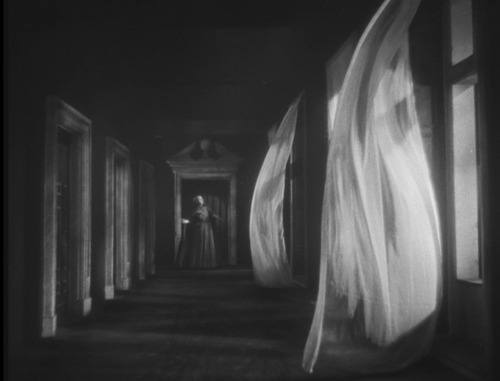
Also fascinating-Cocteau was suffering from several "painful and disfiguring skin problems" during the shooting of the film, including boils, carbuncles, eczema, and impetigo, so he may have found himself relating to the Beast physically. Not only was he homosexual, but his lover was Jean Marais, who played Avenant/the Prince. Definitely changes how you view the film to know that.

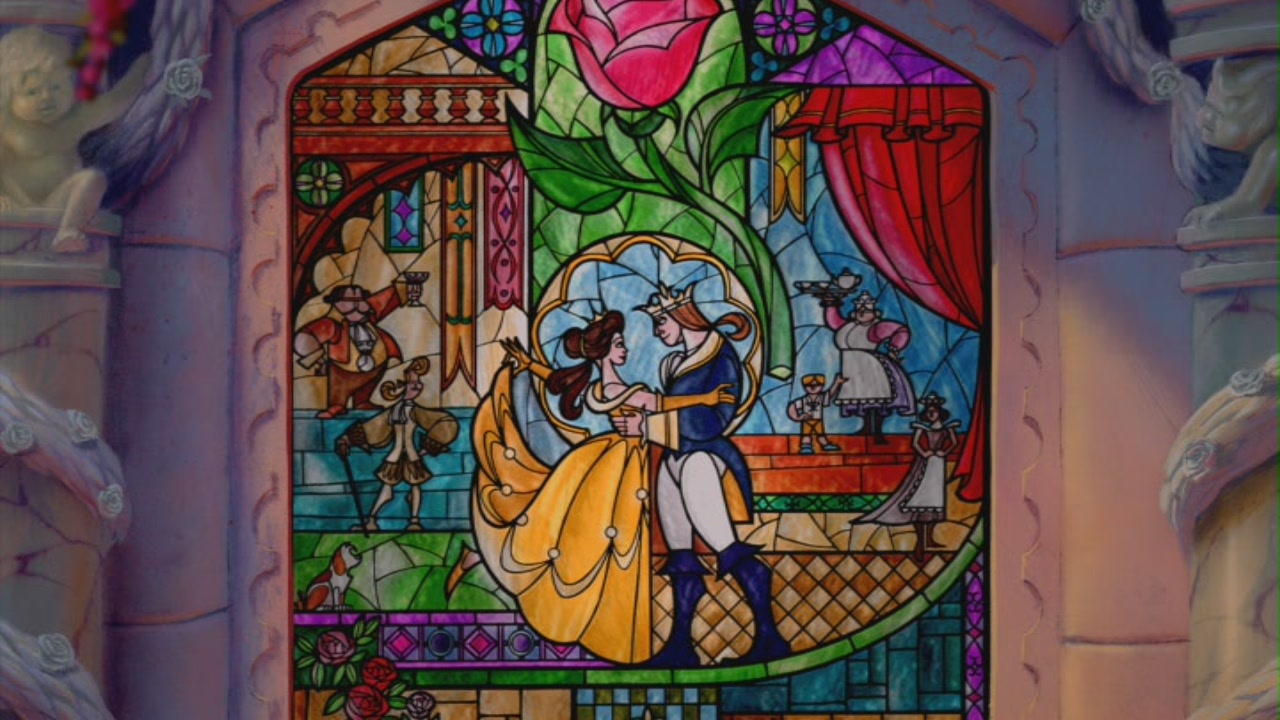
Disney: Throughout the film, Belle's character is looked upon suspiciously by the other townspeople, and their reactions are close to reactions to gay people: "strange," "funny," "peculiar," "odd," "very different from the rest of us." Now on the one hand, I wouldn't connect that to people's reactions to homosexuals specifically because pretty much anyone who's been through puberty can relate to feeling out of place and awkward in some way and the media definitely knows that. So many popular movies/books/tv shows revolve around a main character who is awkward and unpopular, and therefore everyone instantly feels a connection. Of course it's perfectly appropriate to read into the gay experience as one way to relate to Belle, I'm just not sure if I conclude with Griswold that the Disney version is "essentially a gay version." Although the lyricist, Howard Ashman, was gay, so we can assume he had experienced some of the same misunderstandings as Belle.

In his analysis of both films, Griswold sees the chauvinist male characters (Avenant and Gaston) as messages about the dangers of male heterosexuality. Sure there's dangers, but that doesn't mean all male heterosexuals are dangerous.

Griswold sees the Beast and Gaston as inverses of the other. One is essentially good at heart and ugly in appearance, the other handsome in appearance but evil at heart. Echoing the Cocteau film, the Beast can't transform into the Prince until after Gaston dies. Griswold suggests interpreting the title "Beauty and the Beast" to being about Gaston and the Beast, which is a very interesting thought. He even says that the Beast is in danger of becoming Gaston-abusing his power and masculinity, which reminds me of Snow White and how she is in danger of  becoming her stepmother, as many people have recently been interpreting that fairy tale.

So while "Beauty and the Beast" won't pop up in your Netflix cue under the gay and lesbian film sub genre, the Otherness of the Beast can definitely be a way to see the Otherness of the gay community. I have to admit this is not an area I feel qualified to write about-I am very attracted to my fiancé Tony and none of my close friends are gay, but I'd be interested to hear what this fairy tale means to people who are ostracized for being gay, if they feel a special connection to the story.

And as always there's much more in the book, this is just a summary of a few main points, I highly recommend it to any BATB fans.